
Sun, 3 May 2026: 6 pm
Echoes of Guinea
Synopsis
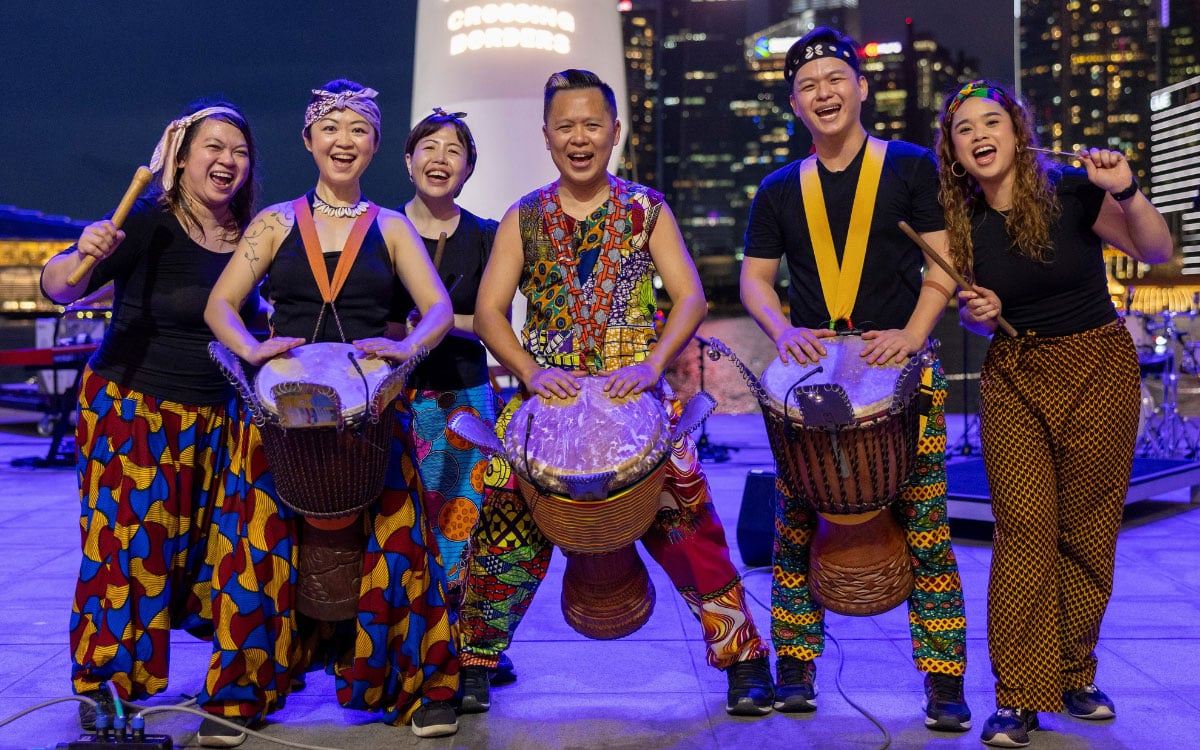
From the throbbing pulse of West Africa rise the all-consuming rhythms of the djembe, summoning its raw and ancient ancestral energy. Led by Kelvin Kew and his ensemble, Djembe Singapore Club, this performance channels the ancient voices of Mandinka tradition to stir both body and soul. Be part of this gathering shaped by technical mastery, cultural authenticity, and infectious energy, where beats speak in ancestral tongues and the djembe breathes life into an unforgettable communal experience.
In this celebration of Mandé heritage, feel the drums as they echo the continuity of a spiritual lineage—a deep resonance that calls hearts to prayer and bodies to motion, binding communities in rhythm, memory, and faith.
West African belief and the cosmic rhythm in music and storytelling
In West Africa thought, the universe itself is rhythmic. The cycle of stars, the ebb and flow of tides, the pulsing of blood, and even the vibration of atoms are part of a cosmic rhythm that holds the world together. It is believed that all of life’s rhythms can be conveyed through music and storytelling. When the drums speak and the griots sing, they carry the hopes, wisdom, folklore, superstitions, and healing of the community. And all those who are present join in this celebration of life.
There is a spiritual dimension to the way words and rhythms are brought to life in West African music and storytelling. Since the days of the Mali Empire (13th–16th century), the Mandinka people have passed down their history and spirituality through these traditions, transforming royal court customs into folk heritage that continues to shape their identity today.
The Mandinka
One of the largest ethnic groups in West Africa, the Mandinka are descendants of the Mali Empire, a society rooted in animist beliefs that flourished for centuries up until the rise of the Transatlantic slave trade. After the empire’s fall, many migrated down the Niger River to look for agricultural land. Following a series of Islamic holy wars in the 19th century, most Mandinka converted to Islam, weaving its teachings into their folk beliefs.
Today, the Mandinka are scattered across the West African nations, in Guinea, The Gambia, Mali, Niger, Senegal, and Sierra Leone. Most live in traditional rural villages, where much of life’s learning is down through songs, proverbs, and stories.
The way the music speaks
For the Mandinka, music is both language and life. Ritual and ceremony mark every milestone, such as birth, death, marriage, and harvest. Community and kinship are important values, and the cycle of life is meant to be celebrated. In honouring these moments, music, dance, and singing bring people together.
Aside from the music of the griots, drums hold a sacred place in the spiritual and ritualistic culture of the Mandinka. The djembe, a single-headed goblet drum carved from the Lenge tree and covered with goat skin, lies at the heart of these ceremonies and is said to possess a spirit of its own. It does not simply make sound; it tells stories, offers prayers, celebrates, and heals.
One of the most versatile percussion instruments on the planet, the djembe can produce a wide range of pitches through the striking or slapping of the membrane. The best drummers can make it speak, and for every occasion and activity, there is an accompanying rhythm that carries symbolic meaning.
The Mandinka call them foli, each of which carries symbolic meaning: dimba, for example, is a rhythm played for older women; fere is for friendship; jambadon, for coming-of-age circumcision ceremonies; karoninka for weddings and infant-naming ceremonies; madiba for wrestling; and countless others that mark the cycle of life.
A skilled djembe player knows not only the rhythms themselves but also the perfect moments for them rise, shift, or fade with the song and dance. Amid these drumbeats and movements, performer and audience become one, and the ancient heartbeat of the Mandinka lives on.
Artist Information
Artists
Date & Time
 Explore Offstage
More to Explore


More to Explore
Frequently Asked Questions
 View All
Frequently Asked Questions
When a show is cancelled, ticket buyers will be duly notified by the event organiser primarily via email. You may also be notified through the event organiser's authorised ticketing agent, media or any other applicable communication channels. Information will be provided on where and when you can get your refund. For postponed performances for which the date of the new performance is known, refunds are optional.
For free programmes, any cancellations or postponements will be updated on the event website and/or relevant official communication channels. As no tickets are issued, refunds do not apply.