
Sat, 5 Apr 2025: 3 pm
Jongmyo Jeryeak: Rituals for Royal Ancestors
Synopsis
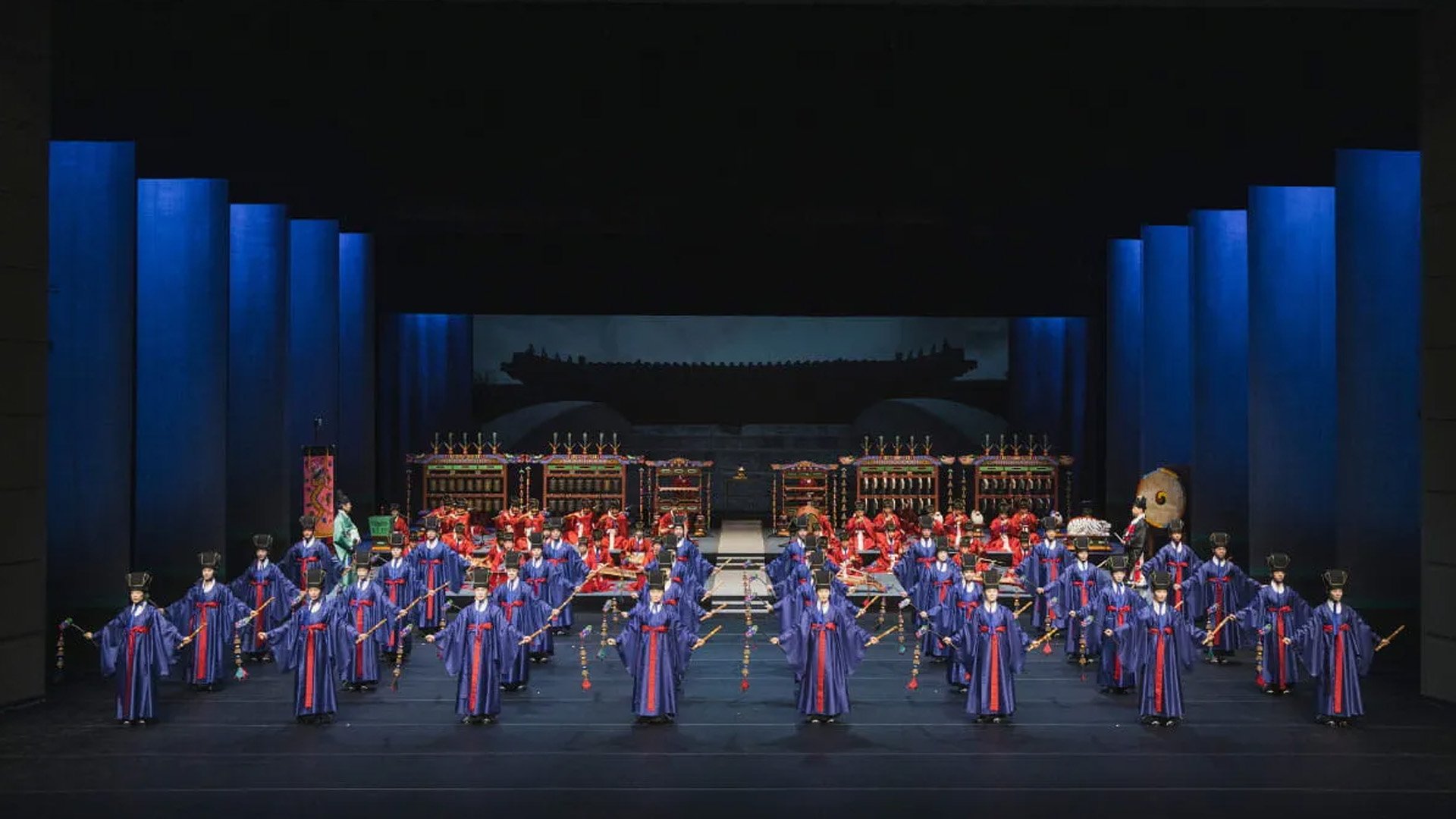
Once a year, on the first Sunday in May, the Jongmyo Shrine in Seoul comes alive with activity. The event begins with a grand procession involving over 1,000 participants, who journey from the Royal Palace to Jongmyo. Priests dressed in ritual costumes make offerings of food and wine to the spirits of deceased kings and queens in ceremonial vessels.
Originally constructed in the 14th century, Jongmyo Shrine embodies Confucian ideals of ancestral veneration, harmony, and the connection between the past and the present. It houses the ancestral tablets of deceased kings and queens of the Joseon Dynasty, where traditional rituals of ancestral worship known as Jongmo jeryeak were once conducted five times a year (once during each season with an additional one in December). Today, the rites honouring the royal ancestors take place annually.
Though the ritual has its roots in Confucianism from China, it was discontinued after the abolition of the monarchy there. In contrast, the ritual practices have been faithfully upheld in Korea since the 15th century.
Accompanying the ritual is a musical and dance performance known as Jongmyo jeryeak (pron. che-ryeh-ak), featuring an orchestra divided into two equal sections alongside 64 dancers arranged in lines and rows of eight. The music is performed on traditional Korean instruments, including the piri (double-reed flute), daegeum (bamboo flute), haegeum (two-stringed bowed fiddle) and janggu (hourglass drum).
The performance consists of two parts that symbolise the opposing yet complementary forces of Yin and Yang.
In the first part, a civil dance known as munmu begins with a step to the left. The music, botaepyong, is soft and gentle, with lyrics extolling the civil virtues of the ancestors. Dancers execute slow, controlled movements, holding a jeok (a device decorated with a dragon head or, at times, with pheasant feathers) in their right hand and a yak (small notched vertical flute) in the left. The dance serves to welcome the spirits, and occurs during the offering of gifts and the first wine offering.
The second part, mumu, is performed during the second and third wine offerings, beginning with a step to the right. This military dance features dancers holding wooden swords or spears, moving with sharper, more dynamic actions. The lively music, jongdaepyeong, reflects the military prowess of the ancestor kings and celebrates their contributions.
Come witness Jongmyo jeryeak, a spiritual and cultural expression of Korea’s Confucian heritage. This UNESCO Intangible Cultural Heritage, preserved by the National Gugak Center, is presented at the invitation of Esplanade to commemorate 50 years of diplomatic relations between Korea and Singapore.
Artist Information
Artists
Date & Time
Our Sponsors

 Explore Offstage
More to Explore

More to Explore
Frequently Asked Questions
 View All
Frequently Asked Questions
When a show is cancelled, ticket buyers will be duly notified by the event organiser primarily via email. You may also be notified through the event organiser's authorised ticketing agent, media or any other applicable communication channels. Information will be provided on where and when you can get your refund. For postponed performances for which the date of the new performance is known, refunds are optional.
For free programmes, any cancellations or postponements will be updated on the event website and/or relevant official communication channels. As no tickets are issued, refunds do not apply.