
Sun, 6 Apr 2025: 7 pm
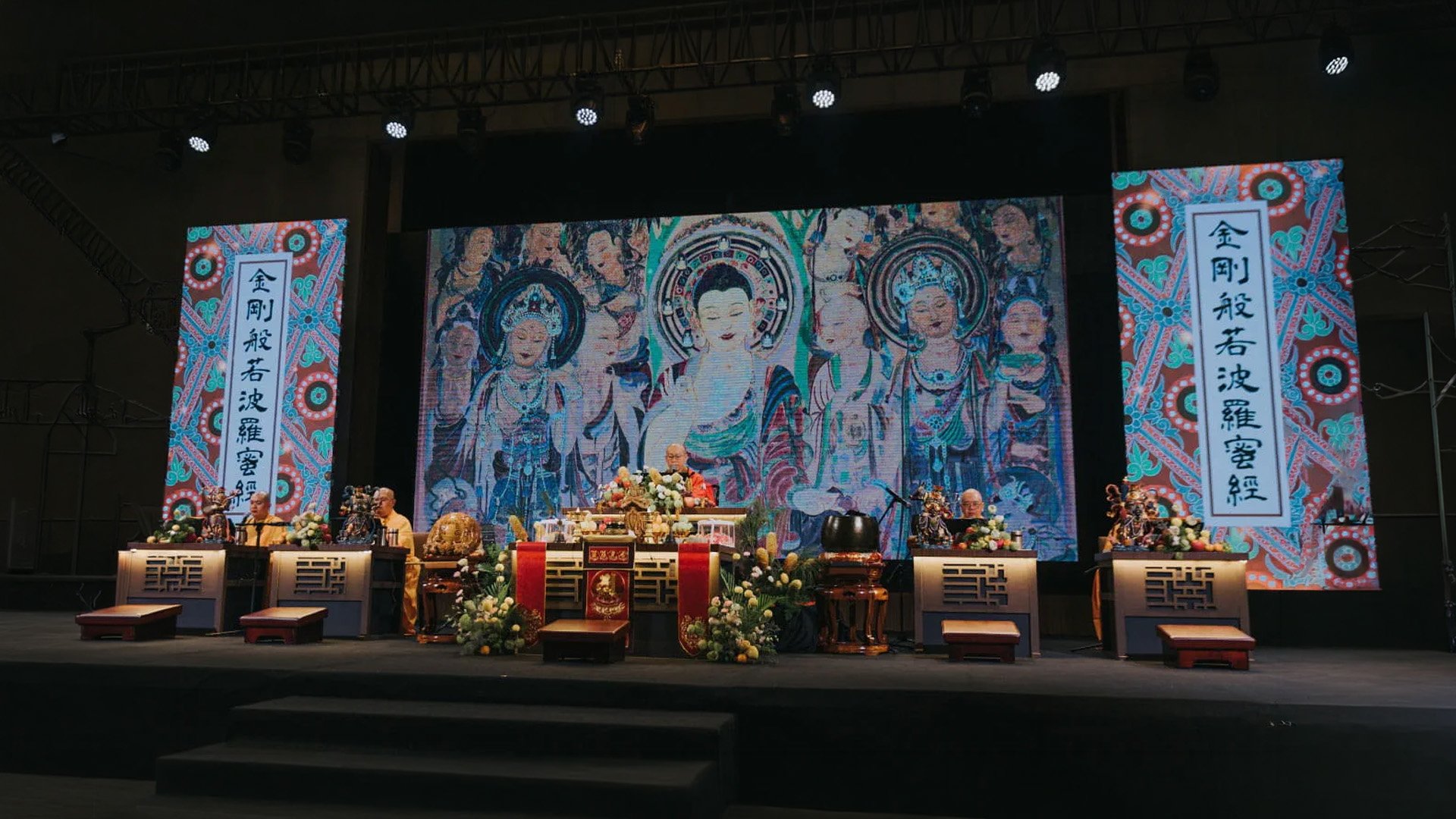
Buddhist Chants: The Diamond Sutra Liturgy
Synopsis
The transmission of Buddhism through the silk road to China began in the first Century CE during the Han Dynasty. Travelling missionaries from India spread the teachings from western parts of the land to Luoyang, where it gained favour among royalty and elites. Although the religion’s popularity fluctuated with subsequent dynastic rulers, it eventually took root to become the oldest foreign religion adopted by the Chinese people, evolving in flavour and practice to become what is known as Han or Chinese Buddhism.
As with many other branches of Buddhism, ceremonies and rituals are a part of the spiritual practice. Every monk and nun begin the day with a communal pre-dawn ceremony called the zao ke (lit. morning lesson), paying homage to the Buddha and reaffirming their commitment to the religious teachings. Believing in reincarnation and karmic cause and effect, other rituals like the Yogacara Ulka-mukha are associated with breaking from the cycles of suffering for all beings.
A rich diversity of chanting further blossomed from the classical or zheng ban style, most closely associated with the major temples and orthodox monastics. Regional styles evolved to incorporate different melodic ornamentation, where influences from the spoken inflections of local dialects came into play. Their chanting of sutras sometimes blend colourful folk influences and surprising musical ideas from the secular world. Instrumentation varies with the provenance of each tradition, from the austere beating of the mu yu (wooden prayer block), to grander expressions of ceremony featuring drums, metal chimes and bamboo flutes.
Regardless of ceremonial variations, Buddhist liturgical music continues to adapt and cater to respective devotee communities, providing comfort, whether through the familiarity of tradition, the messages of compassion, or the fostering of peace with the impermanence of life.
Join the monastics and lay members of Di Zang Lin temple for a captivating presentation of the Diamond Sutra Liturgy. This ceremony beautifully renders the profound Mahayana Buddhist text known as the Diamond Sutra, which denounces worldly existence through poetic analogies on the Buddhist concept of emptiness. In presenting the verses through music, the ceremony invites listeners to contemplate the emptiness of worldly phenomena.
Artist Information
Artists
Date & Time
Our Sponsors

 Explore Offstage
More to Explore


More to Explore
Frequently Asked Questions
 View All
Frequently Asked Questions
When a show is cancelled, ticket buyers will be duly notified by the event organiser primarily via email. You may also be notified through the event organiser's authorised ticketing agent, media or any other applicable communication channels. Information will be provided on where and when you can get your refund. For postponed performances for which the date of the new performance is known, refunds are optional.
For free programmes, any cancellations or postponements will be updated on the event website and/or relevant official communication channels. As no tickets are issued, refunds do not apply.