
Sat, 25 Oct 2025: 8 pm
Synopsis
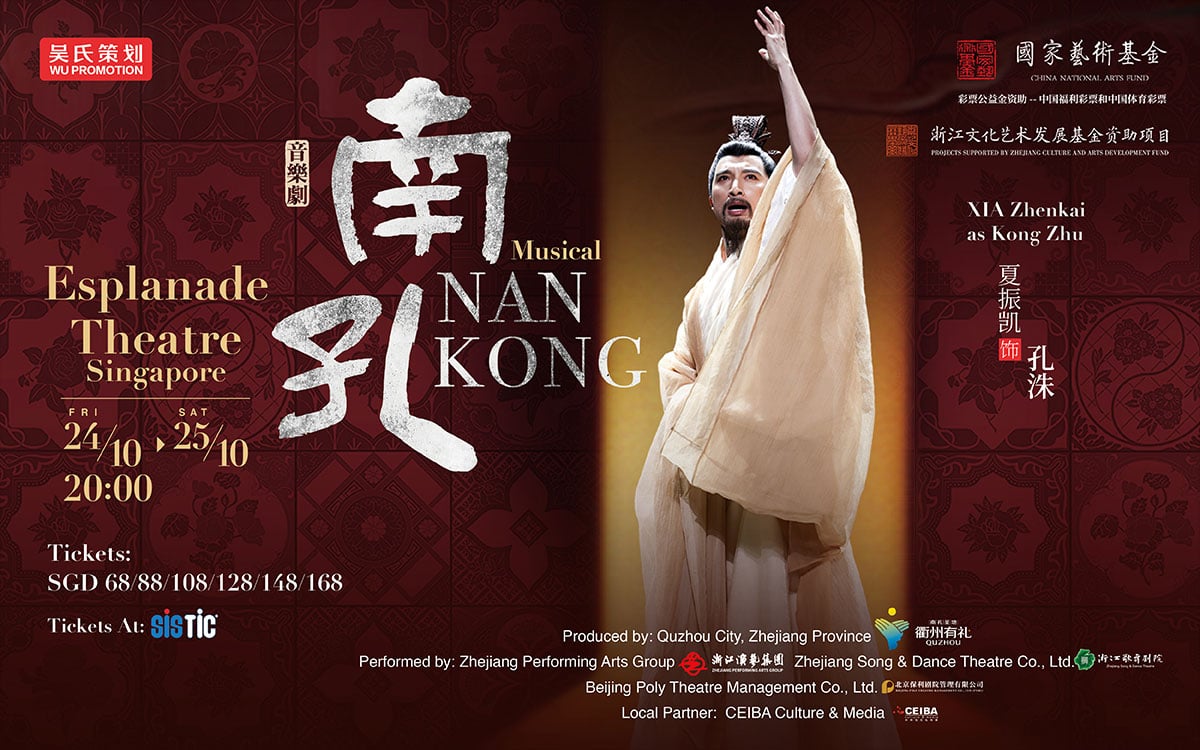
In the 19th year of the Zhiyuan era, Kublai Khan, the founding emperor of the Yuan Dynasty, learned through an investigation that “the descendants of Confucius residing in Quzhou were in fact the legitimate branch.” In order to revive the Confucian rites and values in the Yuan Dynasty, Crown Prince Zhenjin, the leader of the Han legalist faction, decided to disguise himself as a commoner and personally travel to the Jiangnan region.
During his search for virtuous talents in Jiangnan, Zhenjin developed a relationship of both mentorship and friendship with Kong Zhu, the Duke Yansheng (hereditary title of Confucius’s descendants). He also fell in love with Kong Zhu’s daughter, Kong Liu. Under Zhenjin’s encouragement, Kong Zhu rekindled his ambition to serve the country and its people. He resolved to return to the north in pursuit of opportunities to realize his ideals, and Kong Liu, too, decided to follow her father to Dadu (present-day Beijing).
At the Yuan court, Kong Zhu came to realize Zhenjin’s true identity, and his ideals gradually came into tension with the prevailing atmosphere of the imperial court.Deeply realizing that to fulfill his aspirations he must bring Confucianism from the imperial court to the common people, Kong Zhu made a righteous decision before Kublai Khan: he renounced his noble title and transformed himself from an official into a civilian. Upon returning to Jiangnan, Kong Zhu, with the Southern Kong clan at the core, fostered a flourishing Jiangnan cultural landscape marked by “poetry and ritual passed down through generations, and the emergence of virtuous talents.”
Date & Time
Tickets & Prices
 Explore Offstage
More to Explore


More to Explore
Frequently Asked Questions
 View All
Frequently Asked Questions
When a show is cancelled, ticket buyers will be duly notified by the event organiser primarily via email. You may also be notified through the event organiser's authorised ticketing agent, media or any other applicable communication channels. Information will be provided on where and when you can get your refund. For postponed performances for which the date of the new performance is known, refunds are optional.
For free programmes, any cancellations or postponements will be updated on the event website and/or relevant official communication channels. As no tickets are issued, refunds do not apply.