We use cookies to improve your experience on our site. To find out more, read our data protection and cookie policy. By using our site, you agree to our use of cookies. Close to continue browsing.
/
We use cookies to improve your experience on our site. To find out more, read our data protection and cookie policy. By using our site, you agree to our use of cookies. Close to continue browsing.


Find what you're looking for.

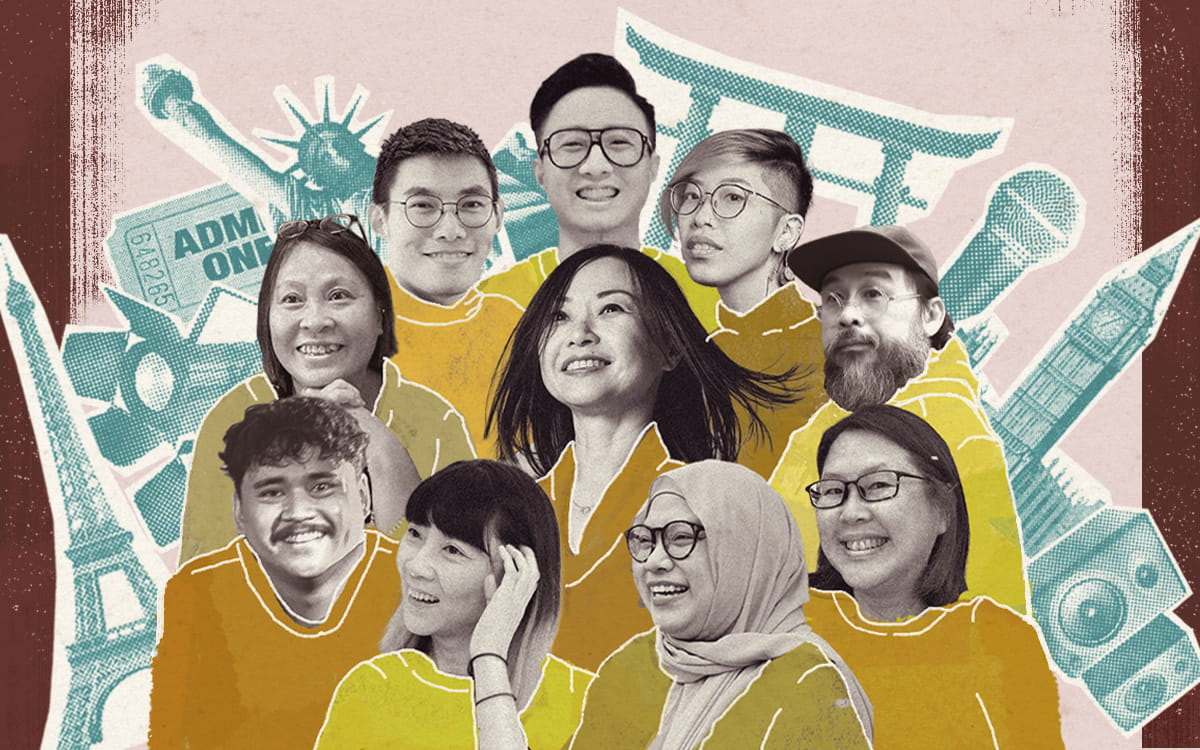
Following rigorous review and deliberations by the Selection Panel, we are pleased to announce five independent practitioners and one trio as Residents from April – June 2026 within the thematic focus of This Time. Get to know the residents of 2026 and their research, traversing disciplinary boundaries, challenging existing systems, and aiming to collectively expand artistic inquiry, experimentation and discourse for the future.
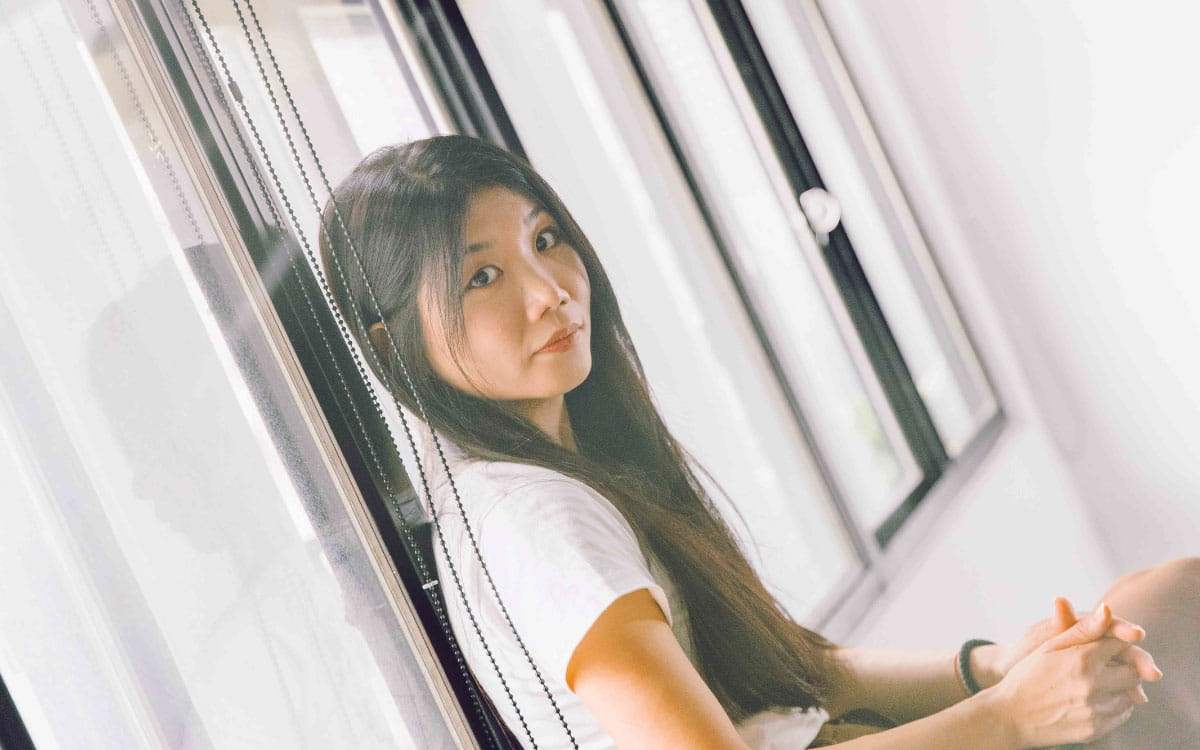
The Silent Crackers is a performance-led research project examining labour, diaspora, and performative silences amid the rise of global protectionism, with Singapore as a central observation point. The project focuses on migrant workers, gendered experiences, and cross-generational labour, investigating how resurgent conservatism and tightened borders reshape mobility, belonging, and cultural expression. It explores how multilingualism and silence carry social tensions, revealing both the limits and resilience of displaced communities in contemporary Asia. Through interviews, archival research, and intercultural dialogue, Chen translates these dynamics into textual and theatrical experiments. During the residency, she will develop stage compositions that transform linguistic gaps and muted gestures into voices and bodily montages, opening new pathways for performance to engage with localised experiences shaped by globalisation.
Jung Chen is a Taiwan-based writer-director whose practice spans theatre, dance, sound, and multimedia. She develops montage-like compositions that intertwine field research, personal narratives, and improvisation to evoke fluid atmospheres and global flows. Her work examines how capital and social structures shape everyday life and performance, tracing rhythms, silences, and gestures that convey meaning beyond words. Recent projects explore diaspora, labour, intergenerational dynamics, and collective memory, connecting individual experiences with broader societal currents.
Chen’s recent works expand across theatre productions, site-specific creations, and exhibitions, often integrating community co-creation, field research, and interdisciplinary exchange. Notable recent projects include The Blossom (2024), NTT Giants Meet Series: "R&J and others" (with Wu Tzu-Ching) (2022), New Taipei City Arts Festival: Disembodied Human (2023).
Photo credit: YJ Chen
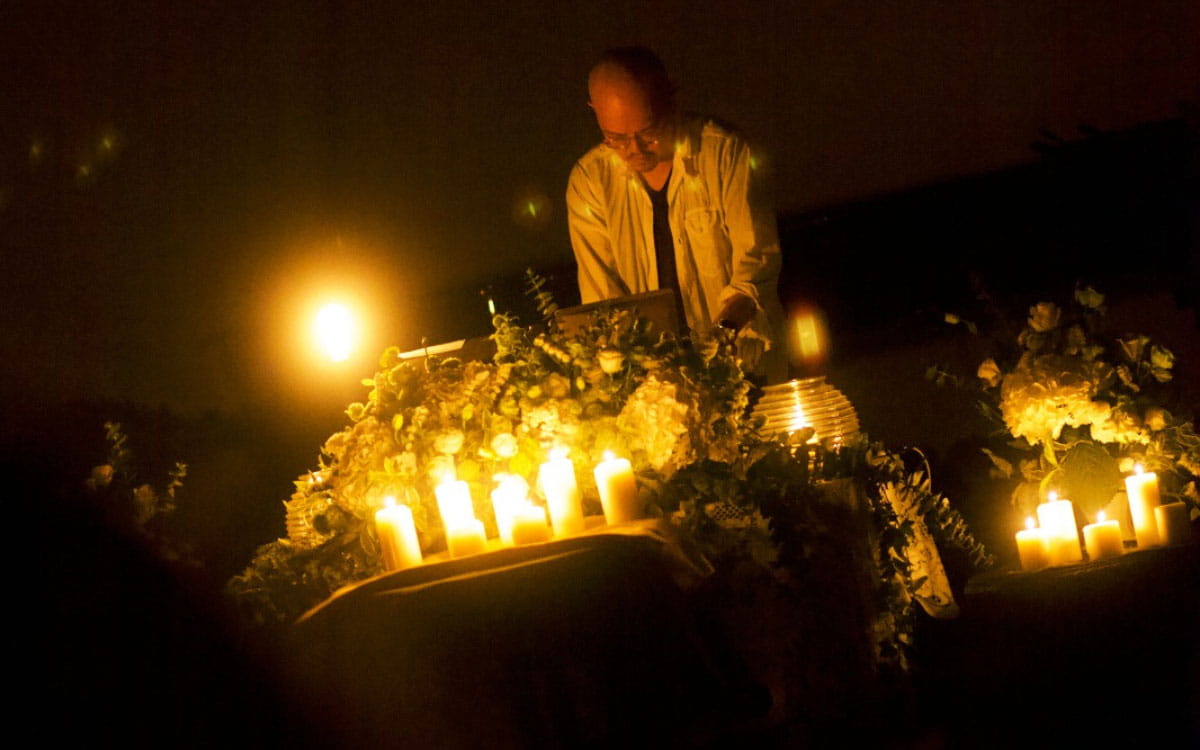
George Chua’s residency begins with a longing to develop a personal performance language that is difficult to categorise—like a slippery fish. It is partly a resistance towards the increasing categorisation of sound and music propagated by the algorithmic culture of music streaming platforms. His main interest lies in the indescribable and the unnameable. He intends to use this research process to investigate the destabilisation of categorisation in the context of his own work in live performance through the lens of noise/live electronics as an artistic medium, integrating his practice in performance art and movement/dance. By interrogating the “noise object” (sonic and corporeal disruptions that defy genre), he aims to develop a personal performance methodology that destabilises fixed definitions of sound, movement, and theatricality. The residency will culminate in a performance lecture for the public.
George Chua is an artist based in Singapore working with sound and body. His work is characterised by a resistance towards consistencies and categorisation, often blurring the lines between disciplines and genres. Everything can flow into everything else. His main interests: dance, sitting still, the performative act, animal noises, electronic crackles, the unnameable.
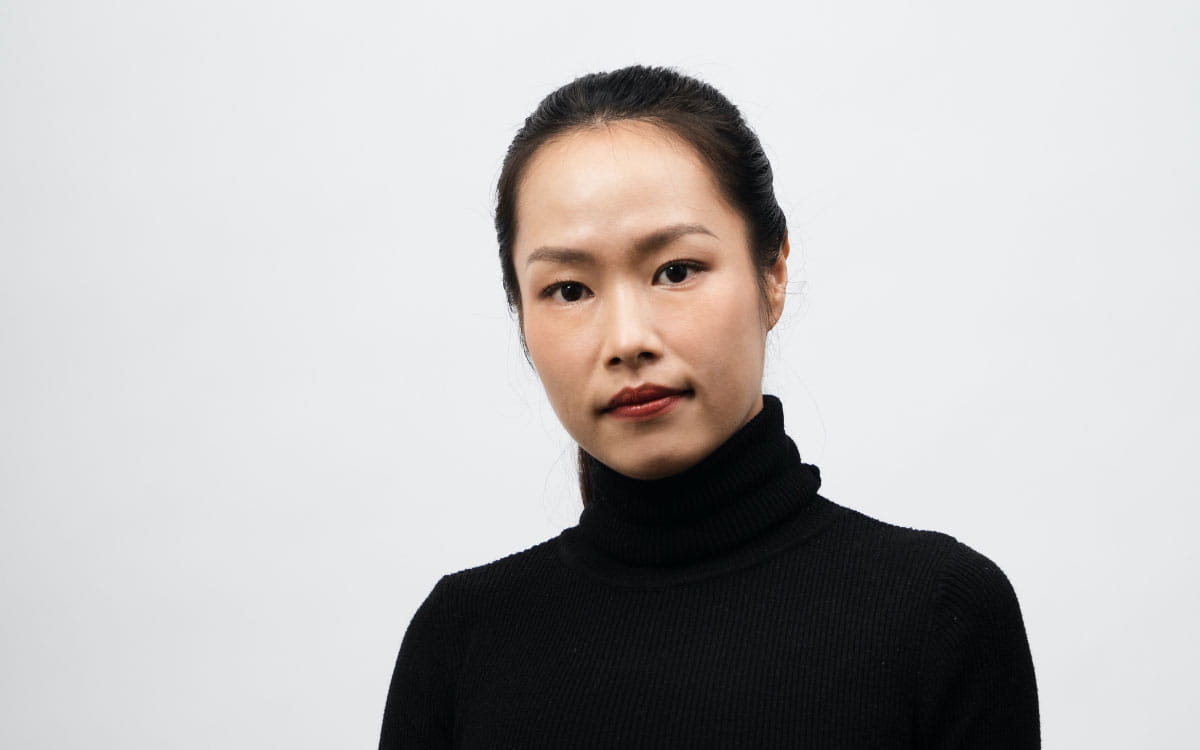
Trà Nguyễn’s theatre-making method, Verbatim Bodies, treats the performer’s physical presence as primary text. Her current research examines how “aunties”—intergenerational figures of care, labour and survival across Southeast Asia—encode resilience through posture, habit and repetition. Respected as informal safety nets, the aunties also enact a “paradox of strength”: those who shoulder communal burdens often refuse help. During the residency, Nguyễn will combine fieldwork, somatic experiments and participatory performance to build a somatic lexicon of care and refusal, exploring how bodies remember, misremember and re-choreograph survival. The project will produce a set of Verbatim Bodies toolkit alongside a performative score, Scaling Aunties, aimed for premiere in 2027.
Trà Nguyễn is a theatre-maker working across text, movement and space. Her practice bridges contemporary performance, experimental writing and embodied research into memory, language and diasporic kinship. A Fulbright scholar with an MFA in Dramatic Writing from Carnegie Mellon, Nguyễn founded The Run — A Theater Project, which builds experimental theatre infrastructure in Vietnam through production, training and critical discourse. She develops Verbatim Bodies, a methodology that frames theatre as a space for attention, translating gesture, breath and slow-time repetition into materials and modes of perception. Her recent work Mother Doesn’t Know Mnemosyne premiered at Forecast Festival, Berlin (Mar 2025) and at the Djakarta International Theater Platform (Aug 2025).
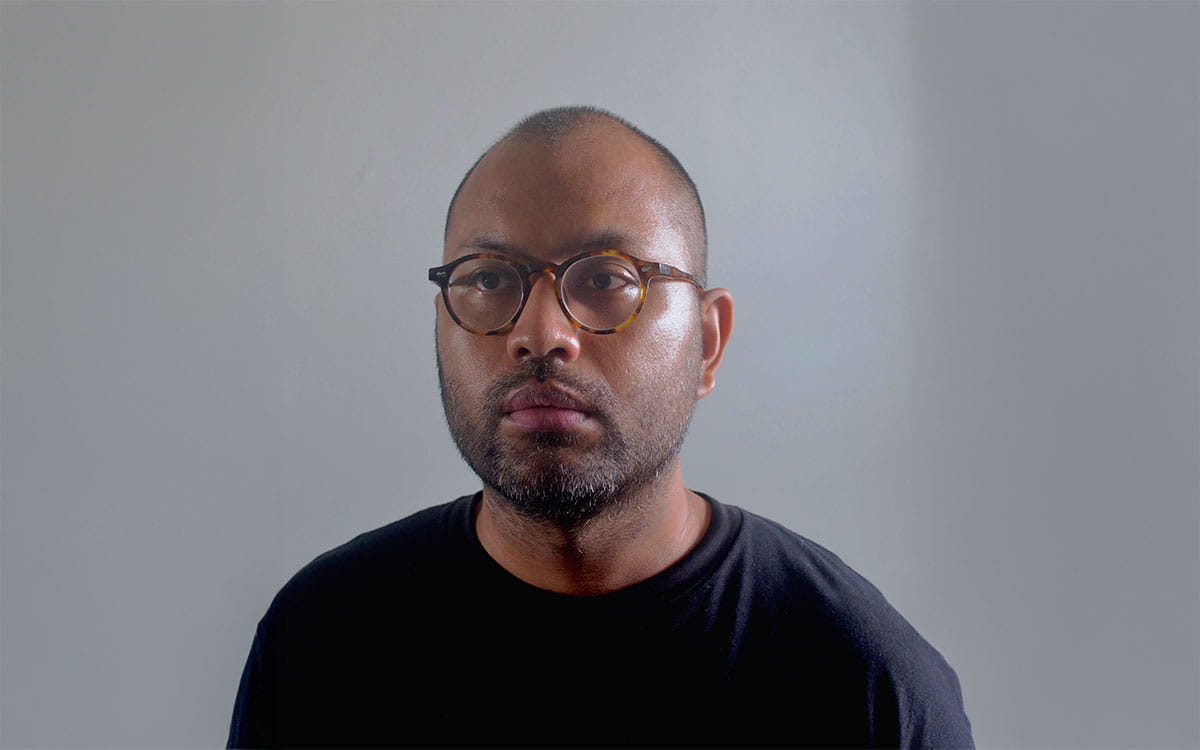
Titled Iridescent Objects Under the Shade, the research project investigates how beauty can perform not only presence but also concealment, protection, and coded resistance. During the residency, Rahim will explore how props and set pieces operate as performative extensions of persona, memory, and desire. The research also considers shade, both ecological and metaphorical, as a way to reframe visibility, attention, and care. Shade suggests a staging that resists exposure, invites pause, and gestures toward flora, camouflage, and kin beyond the human. How might objects be staged not merely as décor or function, but as protagonists of affect, memory, camouflage, and care? What does it mean to render something transparent or opaque, and how might the poetics of light, shadow, and inauthenticity offer strategies for survival, safety, and beauty; especially for marginalised bodies in hostile environments?
Khairullah Rahim is a contemporary artist and educator whose practice examines queerness, POZ resilience, working-class subjectivities, and nature. Central to his work is material experimentation, reimagining aesthetics as conceptual tools of camouflage, seduction, and survival. He holds an MFA from Rutgers University (2023) and teaches at LASALLE College of the Arts. Rahim has participated in residencies at IASPIS (Stockholm), Salzburger Kunstverein (Salzburg), Taipei Artist Village (Taipei), YOUKOBO (Tokyo), and the Goethe-Institut (Singapore). He received the IMPART Award for Visual Arts (2017), and his works are held in the collections of the Singapore Art Museum and the SUNPRIDE Foundation.
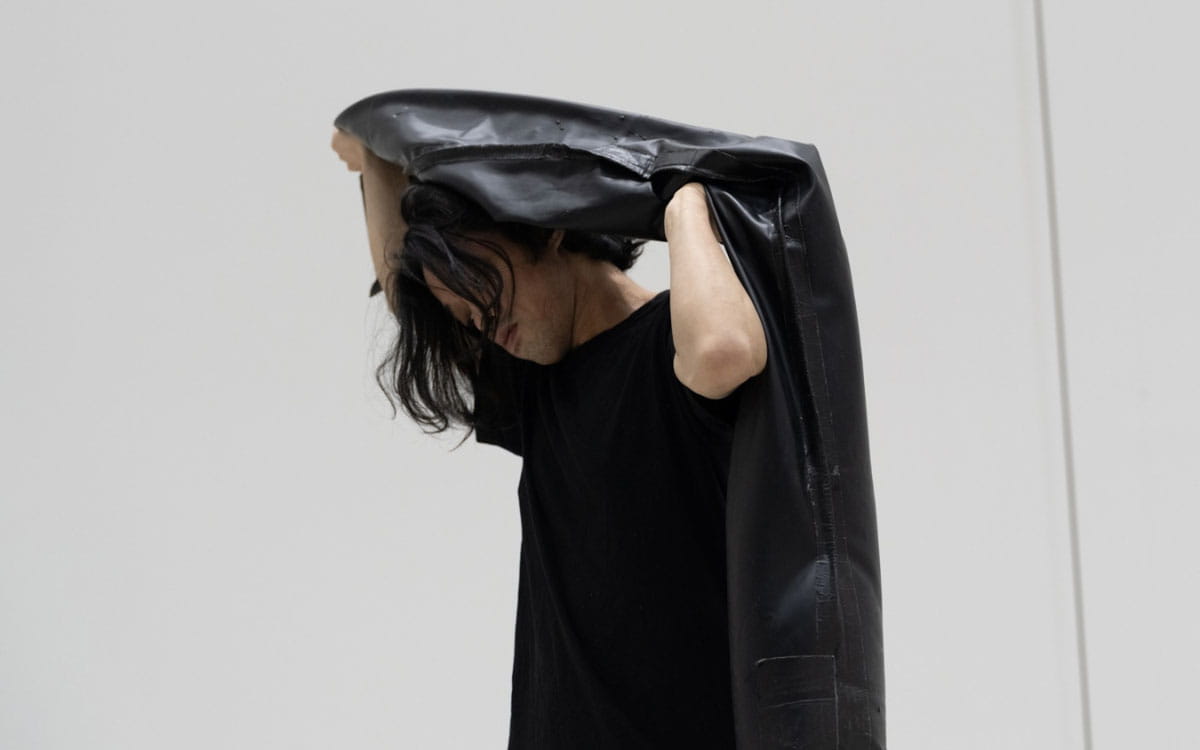
Yuske Taninaka’s project Time to Heal investigates how medical systems and cultural frameworks shape ideas of healing across time. His research unfolds through two distinct lenses—stem cell research and traditional East Asian medicine—that are not directly interconnected, but converge through the body as a space of inquiry.
For Taninaka, these frameworks reveal not only divergent scientific traditions within universalised medical systems but also contrasting ways of shaping memory, care, and our perception of time. During the residency, he will pursue this inquiry in Singapore, a unique context where regional herbal knowledge and healing traditions intersect within a plural yet regulated environment. He plans to visit medical halls, pharmacies, and clinics, and to engage practitioners in dialogue. These encounters will be mapped through visual diagrams and somatic performance scores, creating artistic forms that allow different healing systems to resonate with one another rather than resolve their contradictions.
Yuske Taninaka is an artist currently based in Berlin, working across sculpture and performance. His practice explores the agency of bodies shaped by vulnerability and care, drawing on both medical science and East Asian cosmology to investigate how body can be understood through its capacity for transformation and healing. His performances and installations emerge from a dialogue between movement and material, questioning how we sense, share, and survive within shifting conditions.
His stage performances include Gallop (HZT/Uferstudios, Berlin and Co-Festival, Ljubljana 2022) and 空気きまぐれ (English translation: Air Crip) (Kyoto Art Center 2023).
Yuske's residency is co-hosted in collaboration with Dance Nucleus.
Photo credit: Kuniya Oyamada
a place we could not name continually seeks a deeper understanding of placemaking as a process. Born out of the *SCAPE Experimentation Ground programme and further developed through the Dance Nucleus ARTEFACT Creation Residency, the work has deepened through site-responsive research in Singapore and Indonesia.
Drawing from these encounters, the project proposes co-constitution between the presence of human and place—how places are sensed into being. Through the phenomena of body movements, sound, and light, place emerges and dissolves like waves on a shoreline; every arrival mediates a departure.
The work contemplates: if place is defined not only by infrastructure but by the shifting conditions of bodily experience, then what are those conditions, and how might we attune to and shape them? The spirit that becomes the basis of the work tries to experiment with the idea of place beyond its constitution of walls, boundaries, or coordinates, but through sensation, presence, and absence.
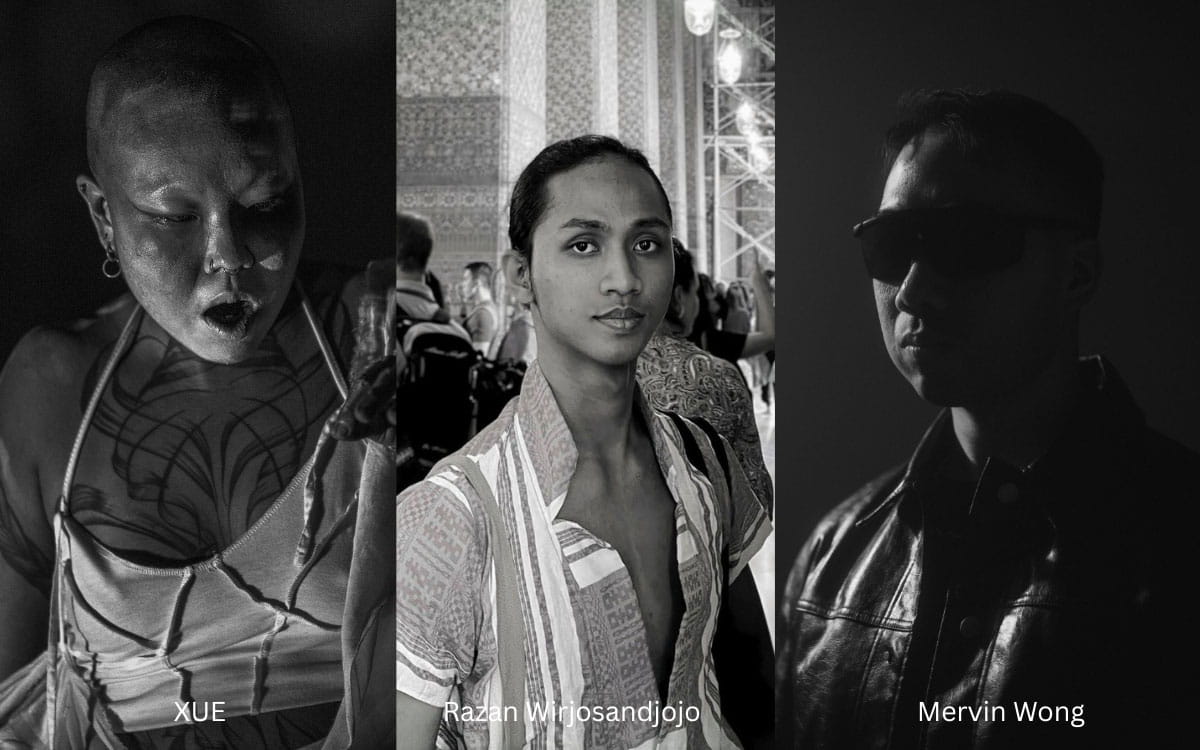
Singaporean Butoh artist XUE is honing a transdisciplinary performance practice across Southeast Asia. Their work designs experimental frameworks that unfold as live situations or spatial assemblages. Through a choreography of interwoven agencies, XUE cultivates ecologies of relation that favour indeterminate encounters, inviting participatory bodies to reflect on space, embodiment, and their place in the world. XUE is currently a Dance Nucleus associate artist and a graduate of its Certificate Programme for Critical Practice in Contemporary Performance. They founded the Singapore Butoh Collective, co-run the curatorial duo RAGA with Pallavi, and the experimental rave series Endless Return with Mervin Wong.
Razan Wirjosandjojo is an artist based in Solo, Indonesia. Starting with dance, his practice has expanded into performance art and film, exploring the human being as both idea and vessel. He explores the connections between humans and nature as a source to bring different reflections and perspectives on reality. He has presented his works in Undisclosed Territory in Solo (2020 & 2024), Manifesto Exhibition at the National Gallery of Indonesia (2021), Alcine Film Festival in Madrid (2023), Asiatopia in Bangkok (2024), Comma Festival in Singapore (2025), March Dance in Chennai (2025), and KABA Festival in Padang (2025).
Mervin Wong is a vessel of sonic presence, emerging from Southeast Asia’s shapeshifting aural vanguard. Rooted in classical strings and expanded electronics, his practice moves between deep subconscious ritual and spatial sound performance. He composes immersive listening fields where silence is sculpted and presence becomes pulse. Based in Singapore, he dissolves boundaries between performance, installation, and ritual. Recent works include Shakespeare in the Park – Macbeth (Singapore Repertory Theatre, 2025), a place without a name (2025), and spatial sound design for National Gallery Singapore’s No Flash podcast (Season 2: Third Eye). He received The Straits Times Life Theatre Award for Best Sound in 2024.
XUE, Razan and Mervin's residency is co-hosted in collaboration with Dance Nucleus.
Great arts experiences begin with Esplanade&Me. Join this membership to enjoy ticket specials on shows at Esplanade, early bird specials, promotions at Esplanade Mall, unlimited access to Offstage and more.


.ashx?rev=8ef317eb05ec48d58920423189249a60&hash=920D5AA339BDBC5A4E5A80B659A18D31)


