Time taken : ~10mins

Every story needs a place to happen. But who creates these magical spaces? Read on to find out!
In every theatre production, there is someone who wields the power… to create entire worlds. That person is the set designer!
Using their imagination and brilliant skills, they design sets that make productions come alive. A grand palace, spooky forest or dusty old library, a set designer can do it all.
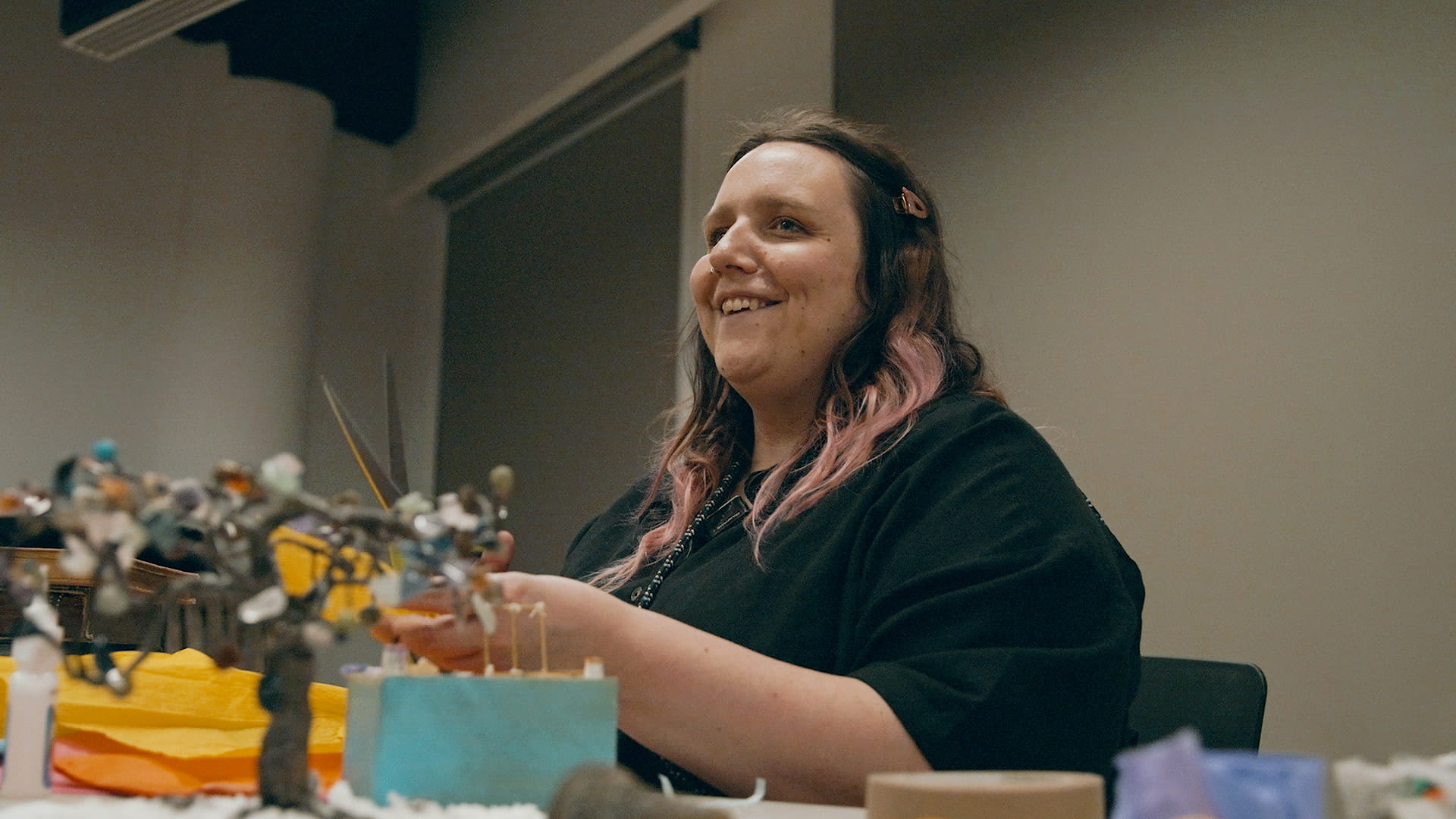
The playwright has a story. The director has a vision. And the set designer brings that vision to life.
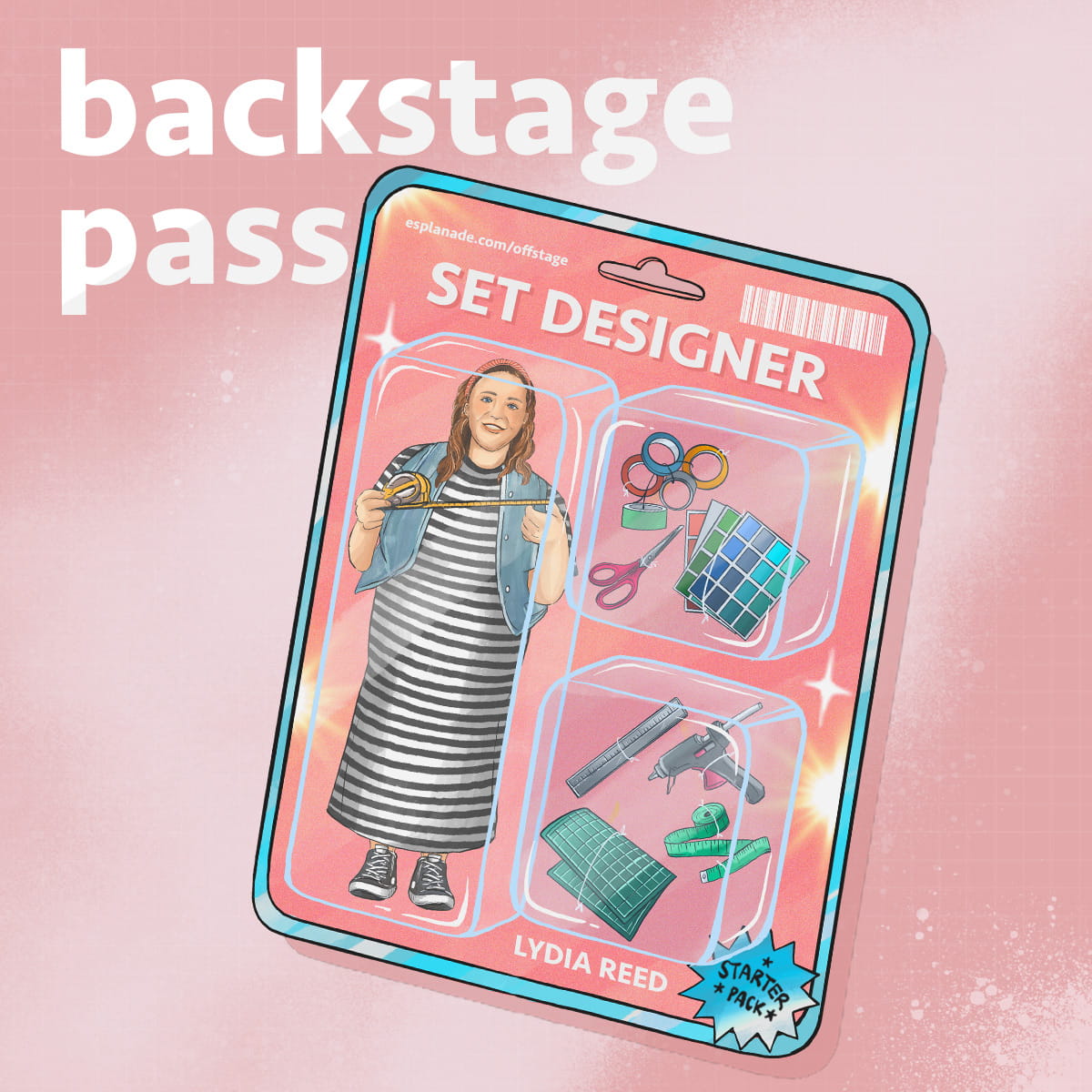
A set designer conceptualises, designs and creates the space in which a story unfolds, within the limits of a theatre stage or performance space. They begin with careful research to make sure everything feels real and believable. From there, they design each part of the set and decide how all the elements will look and fit together.
On larger productions, set designers often work with teams who help with different tasks. Some source for props, others build them and some help to dress the set (putting everything in its place on stage before the show begins). On smaller productions, the set designer might do it all. For The Lost Lending Library, Lydia wore many hats!
A set can reveal a great deal about a character: Are they neat or messy? What are their hobbies? Who are their friends? Sometimes, there’s no need to meet a character at all—you can learn everything simply by looking around their space.
Welcome to The Lost Lending Library, a spellbinding theatre production set in a dusty old library, overflowing with stories from all over the world. The shelves are stacked high with books, and the library almost seems alive. When story time begins, magical surprises spring up—singing books, glowing shelves and islands that pop out of the pages!
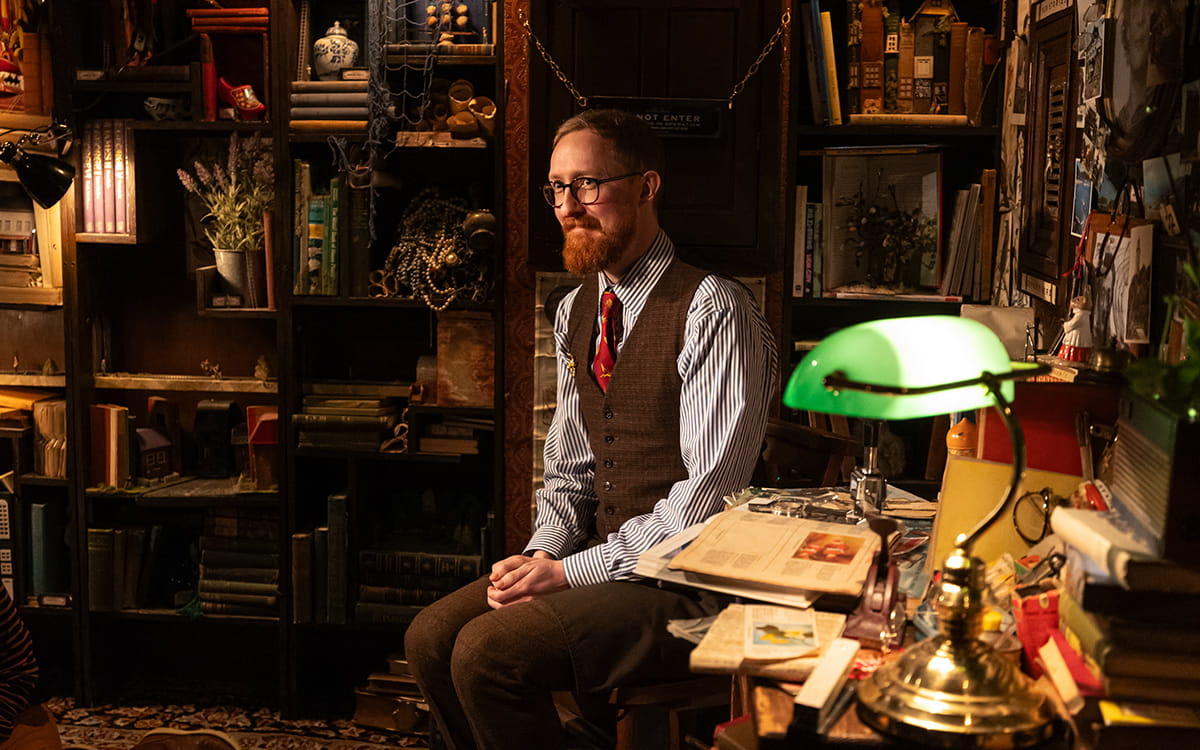
<em>The Lost Lending Library</em>, <em>March On 2025</em>. Photo credit: Alvin Ho
The stage world of The Lost Lending Library began with Kate Rigby, its original set designer. With the magic of set design, she created a library that felt like it was 314 floors high with 78 departments… all within a tiny performance space! Unlike other productions, the show wasn’t presented on a traditional theatre stage. Instead, Kate built a small, cosy room for a really immersive experience—designed to feel like a real old library with winding corridors, secret passageways and hidden doors.
Lydia started out as an assistant on the original set. When the production went on tour, she stepped in as Associate Designer and Design Lead to make sure the set worked in every city.
Each theatre is different, with its own size and shape. When Lydia gets to a new space, she sets everything up with the help of the crew and checks that the set looks good and everything is in the right place. But sometimes, she comes across curveballs—things don’t quite fit the way she expected! Lydia has to make careful adjustments to the set while ensuring it stays true to the original design.
The library isn’t just about what you see, it’s also about what you feel and smell.
When the show first started, the production was really small. As it toured, it grew bigger and bigger! To keep it feeling cosy, Lydia lowered the ceilings and added props overhead, making the space feel snug and enclosed. The lighting was also kept low to create a warm, mysterious atmosphere.
Different areas are even sprayed with scents like grass, dust and pipe tobacco to make the library feel alive. It’s an experience for all five senses!
The work of a set designer can be very different from one production to another. It all depends on where the story takes place, and the experience the director and set designer want the audience to have! For Lydia, this meant making sure that The Lost Lending Library stayed true to the director’s vision with each country they visited, while also adding special touches inspired by each city on the tour.
Lydia shares a few skills she thinks are especially useful for someone who may be interested in the job.
If you love tiny details—how things look, work and feel, you’re in the right place! Lydia enjoys adding little surprises and small details to each set. Not everyone may notice, but for those that do, it feels really special. That’s the way she likes to do set design.
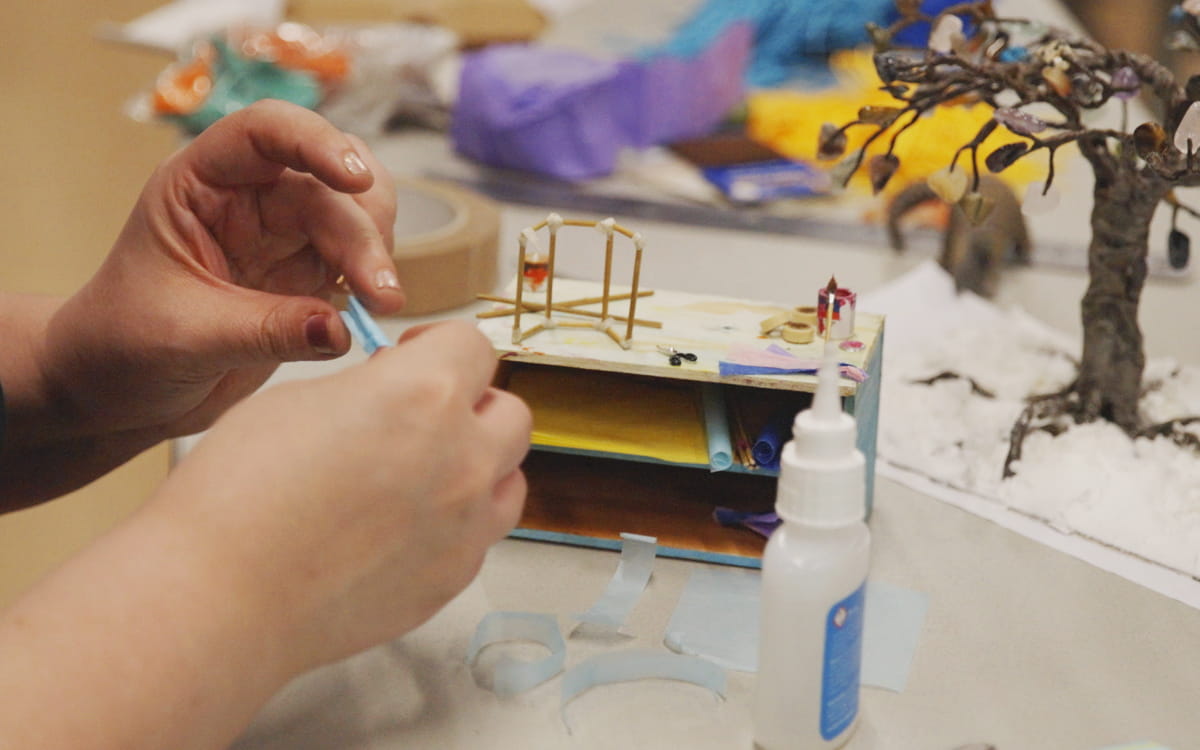
When The Lost Lending Library travelled to Singapore, a cultural consultant helped Lydia choose some famous Singaporean authors to go on a noticeboard in the library—a fun easter egg for those with keen eyes! She even made special small models to go on the shelves, including a Singaporean shophouse and a lantern maker’s desk.
Set designers often face unexpected challenges on the job, so resourcefulness is a very important skill. Things don’t always go to plan—props might break or something might not fit properly in a space. Set designers need to problem-solve, think on their feet and find quick solutions before the show begins.
Lydia has to be especially resourceful when working in a different country. Without her usual toolkit, she must use what’s available and think creatively to make it all work!
The Lost Lending Library book props are handled frequently by the actors, so they break often. Lydia maintains and repairs them to keep them looking good, using the tools she has brought with her and whatever else she can find around her.
Lydia loved making things as a child, and she still uses many of those same skills today! You’d be surprised—many of her miniatures are made of simple materials you probably already have at home, maybe even things you were about to throw away!
Her advice to aspiring set designers? Keep making. Collect bits of scrap, try new ideas and practise your craft! The more you make, the more you’ll learn. And of course, don’t forget to have fun while doing it.
Q: What’s in your toolbox? Share five tools you use most a set designer.
Lydia: Firstly, a tape measure. It’s great for measuring spaces to make sure everything fits. Second, a cutting mat, scalpel and metal ruler are important for making graphics. Straight lines are actually harder to cut than they look! Third, a Kimble gun (price tag gun). It’s a tool usually used in shops to attach tags to clothes, but it’s a lifesaver on set to hold fabric together quickly when there’s no time to sew. Fourth, fishing wire. It’s really good because you can’t really see it on stage and it’s strong, so it’s perfect for hanging things from the ceiling. And finally, a staple gun is another really useful tool for attaching things fast and securely.
Q: How did you become a set designer?
Lydia: I was working on other jobs that were unrelated to set design and not very creative. Then I went travelling and when I got back, I decided that I wanted to change what I was doing and pursue something creative instead. At first, I didn’t even know set design was a job you could do. But I spoke to a few people saying I wanted to do something creative, and several of them recommended it! I started researching and emailing some companies I wanted to work for. I didn’t hear back from many of them, but luckily, a few of them were willing to give me the chance. And that’s how I started off as a set designer.
Q: What’s your favourite part of the job?
Lydia: I always knew that I loved making things since I was very young. It’s definitely one of my favourite parts of the job—sitting in the workshop, making miniatures or really big props, it’s all really enjoyable. Although I really enjoy set dressing and the research aspects of this job, my passion is in the making.
Q: Are there any challenges you’ve encountered as a set designer?
Lydia: As a set designer, you’re working on lots of different sets. Sometimes, you may go into a job not knowing exactly what you’ll be doing for the day. They might need you to do something that you’ve never done before. Set designing is really broad, so there’s always something new to learn. You’re never going to know it all.
Do you have what it takes to be a set designer? Take this quiz to find out!
Special thanks to The Heritage Shop for granting permission to film at their venue, located at 93 Jln Sultan Singapore.