Time taken : <5mins

When children watch a play, something remarkable happens. They are not just sitting still or being entertained. They are learning. Every expression on stage, every shift in music, every moment of tension or surprise becomes a lesson in focus, empathy and imagination.
Live performances invite children into a world that unfolds right before their eyes. There are no screens, no pause buttons, no rewinds. Only presence, curiosity and wonder. This is what makes theatre for kids such a powerful learning experience. Long after the curtain falls, children carry these lessons with them into their play, their friendships and their understanding of the world.
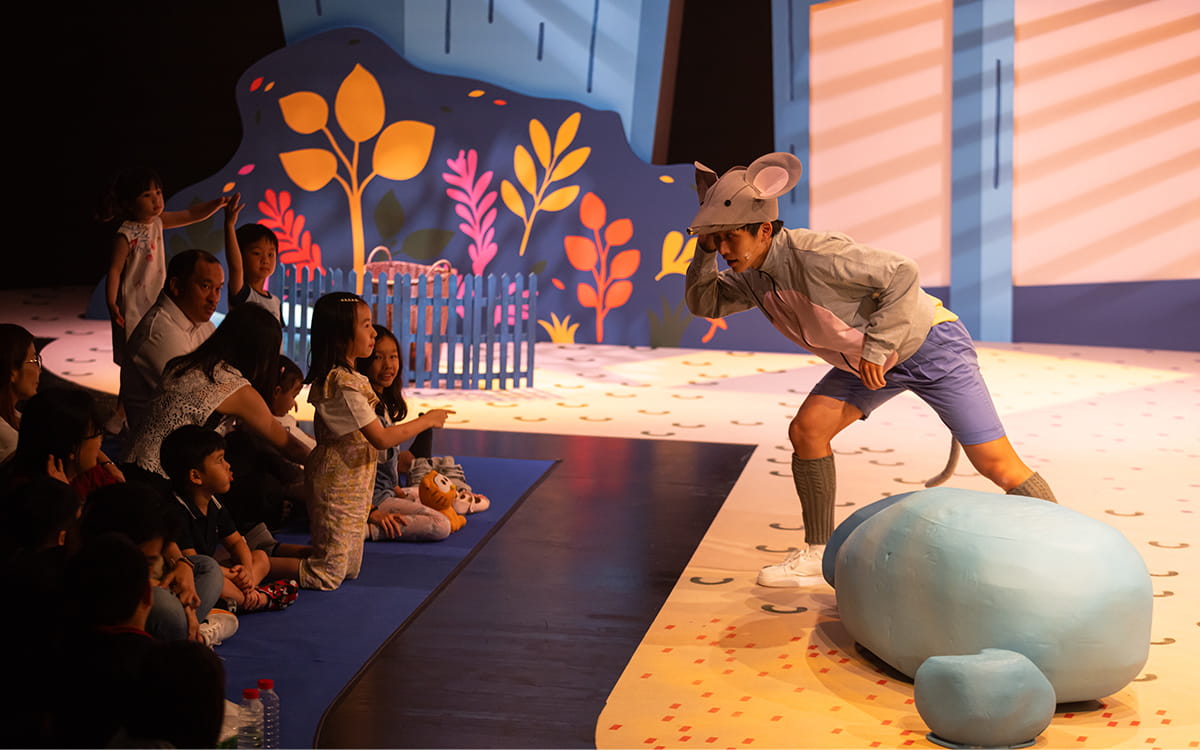
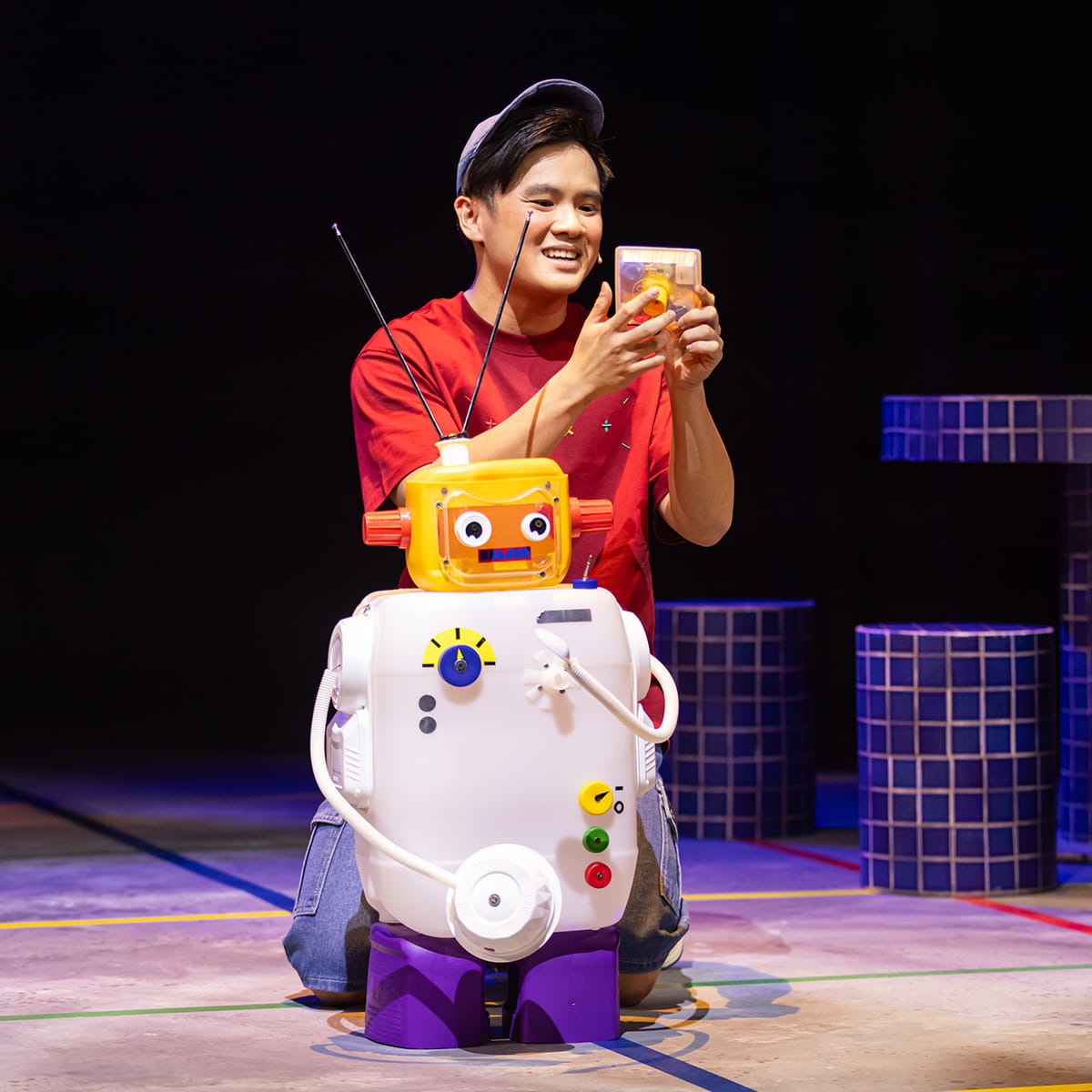
<em>The Bird Who Was Afraid of Heights</em>, <em>PLAYtime! 2025</em>
Theatre offers kids a rare chance to stay fully present. As the lights dim and the stage begins to move, young audiences naturally tune in. With no pause or rewind, they follow the story as it unfolds, noticing expressions, sounds and movements in real time.
Live performances strengthen key attention skills such as:
Younger children learn to observe simple actions and rhythms, while older ones begin to pick up story structure and emotional cues.
Esplanade’s PLAYtime! series supports this natural attention-building. With gentle pacing, familiar repetition and expressive music, each performance helps children aged three to six stay engaged and present.
Theatre gives kids a safe place to explore emotions. When a character feels afraid, excited or joyful, children feel it too. This emotional mirroring helps them recognise feelings in others and deepens their understanding of empathy.
For instance, a 2021 study found that watching live theatre can increase both empathy and pro-social behaviour. In other words, children become more attuned to others after experiencing a story unfold in real time.
Many PLAYtime! productions at Esplanade explore emotional growth. Stories about learning kindness, saying goodbye or facing fears helps the little ones understand that emotions are natural, manageable and shared. These moments on stage often spark meaningful conversations at home, giving parents gentle openings to talk about feelings.
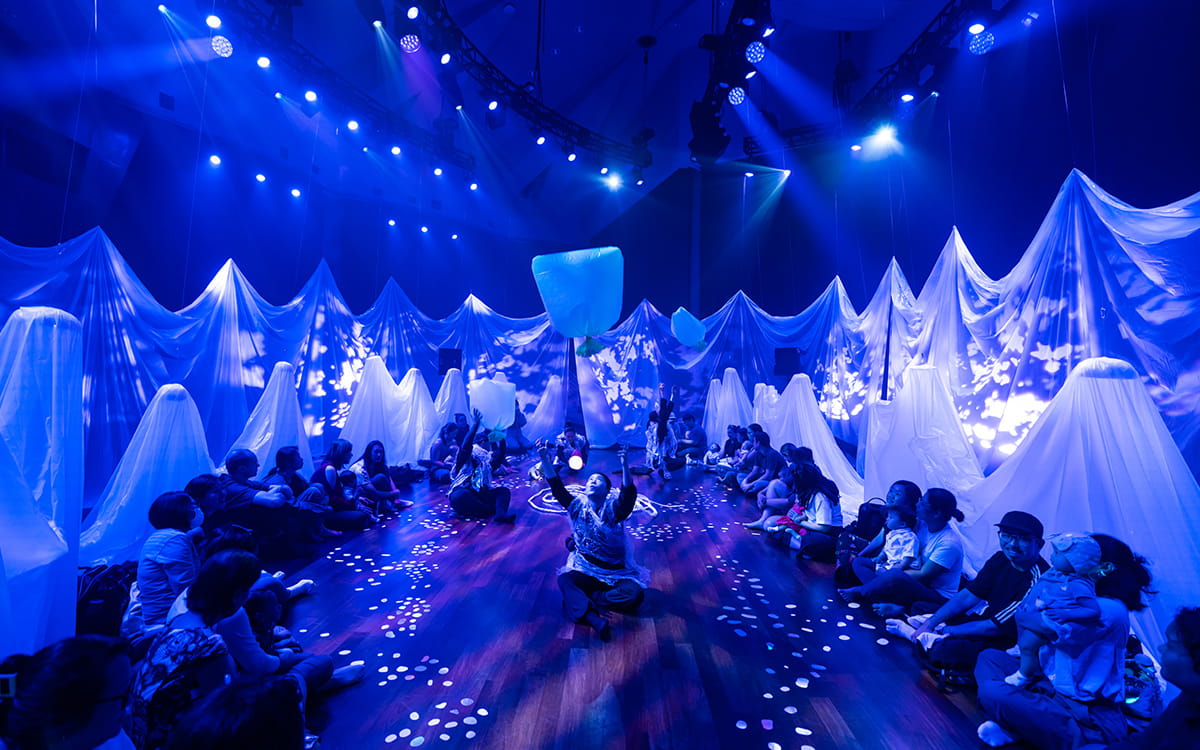
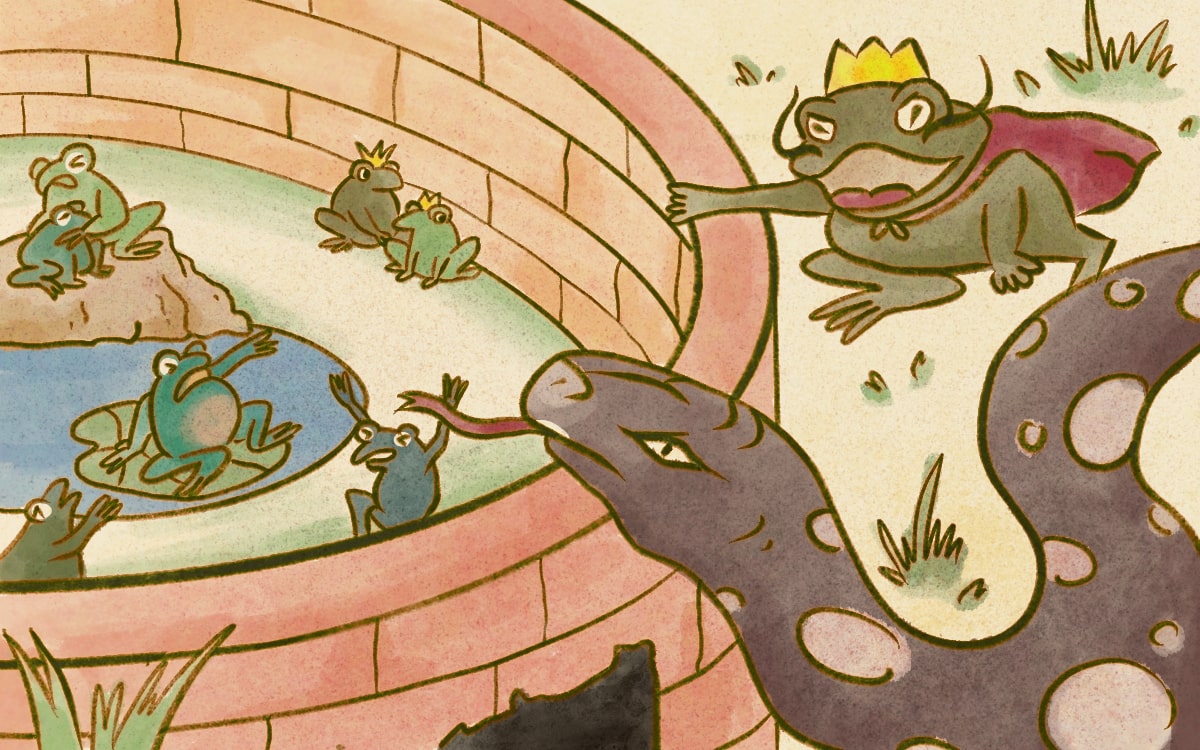
<em>A Drop in the Ocean</em>, <em>March On 2025</em>
Watching a play invites children into different worlds and viewpoints. They see characters who think and act differently, as well as want different things. This helps children understand that the world holds many perspectives beyond their own.
Interactive performances deepen this learning. When kids are invited to join a scene, make a choice or move with the performers, they practise cognitive flexibility. They imagine possibilities, adapt to new ideas and engage with the story as participants.
Plays are rich with expressive vocabulary, rhythm and dialogue. Even when children do not catch every word or tone, gesture and repetition help them understand what is happening.
Live theatre supports:
Many family-friendly productions at Esplanade weave music and rhythm into their storytelling. This blend of sound, movement and dialogue creates a multisensory experience that helps young minds make sense of language in a natural, enjoyable way.
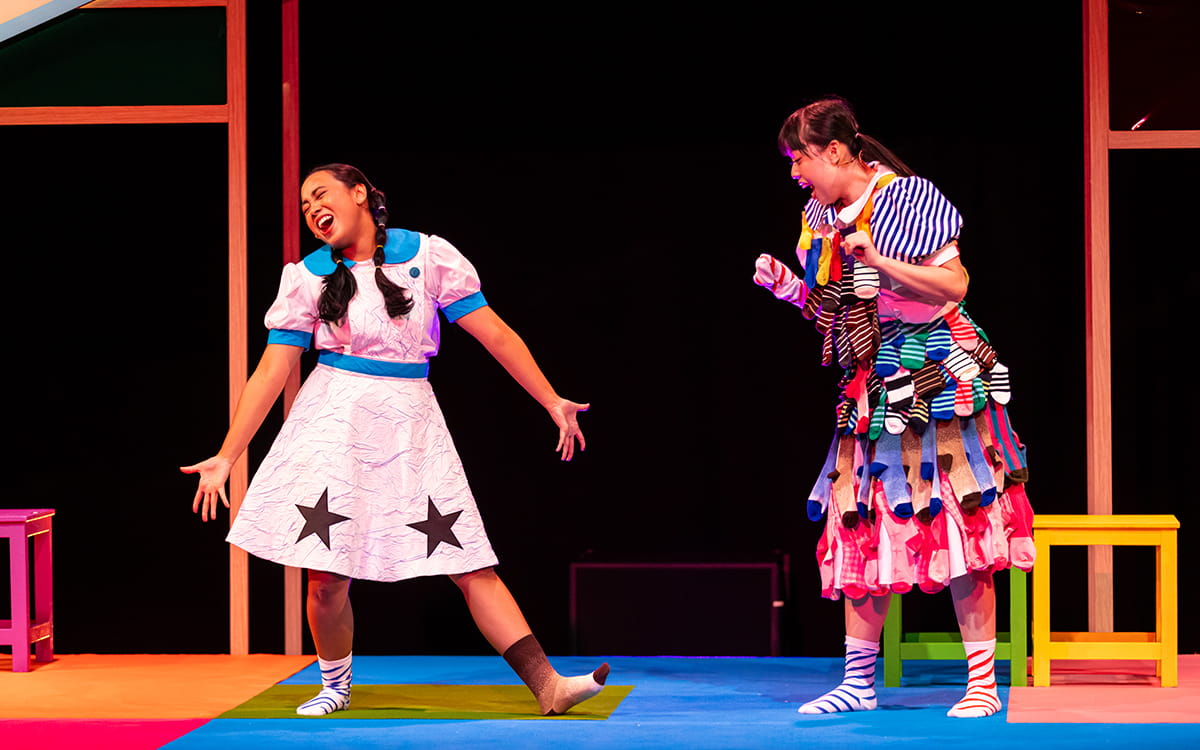
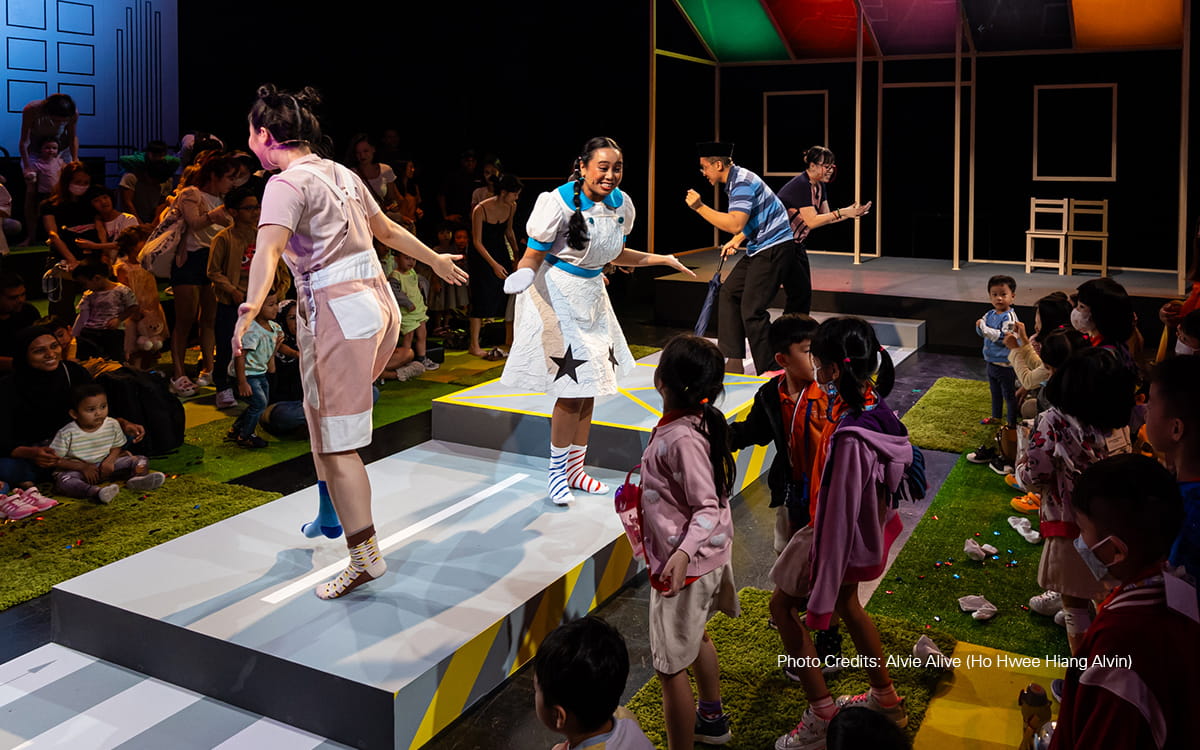
<em>Fatimah and Her Magic Socks</em>, <em>PLAYtime! 2024</em>. Photo credit: Alvie Alive (Ho Hwee Hiang Alvin)
Children learn by watching others. When they see performers express emotions bravely or solve challenges creatively, they absorb these models of resilience. Many may even carry these behaviours into their own pretend play afterwards.
Live theatre also offers gentle lessons in emotional regulation. Children practise managing excitement, curiosity and even moments of tension as the story unfolds. Parents can support this by talking through the story afterwards. Asking “What would you have done?” helps your kids connect emotions to choices in a positive, empowering way.
Watching a play often ignites creativity. After seeing a performance, many children naturally begin to draw scenes, retell stories or act out characters. This transition from audience to artist helps them internalise what they saw and express it in their own voice.
Esplanade’s PLAYtime! series and annual March On festival include opportunities for post-show art-making and storytelling. These activities help young kids transform inspiration into imagination, shaping their ideas through hands-on creation.
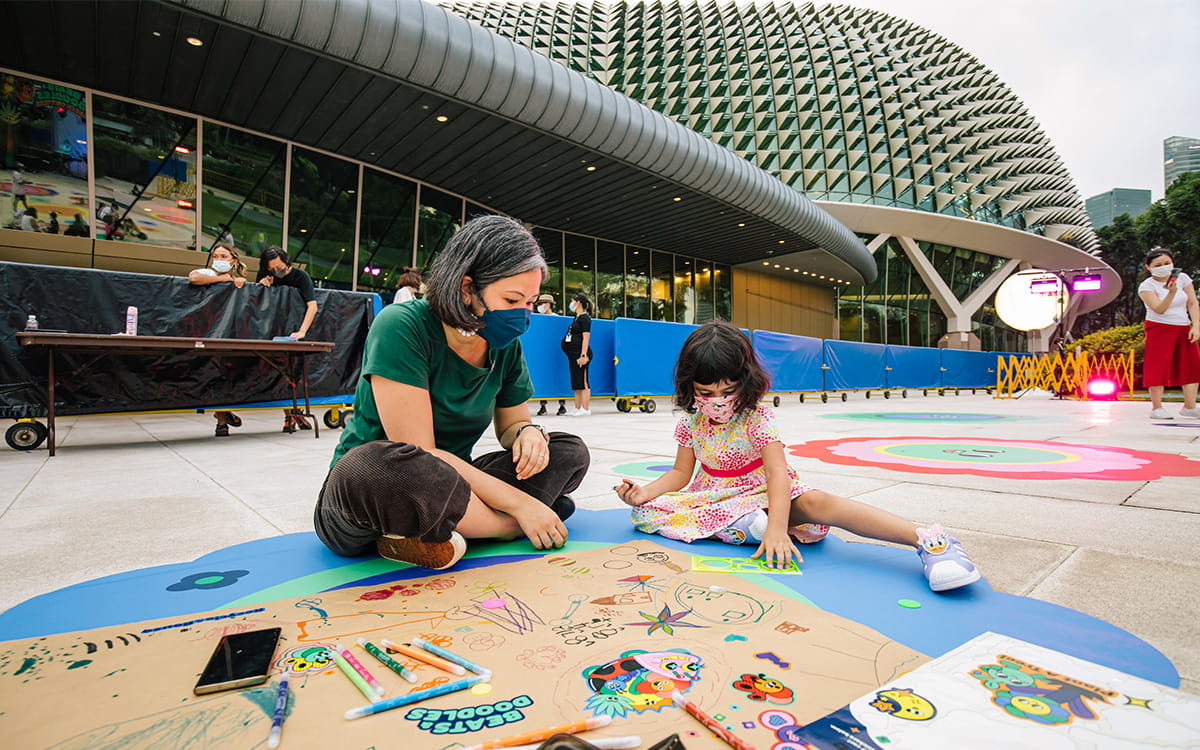
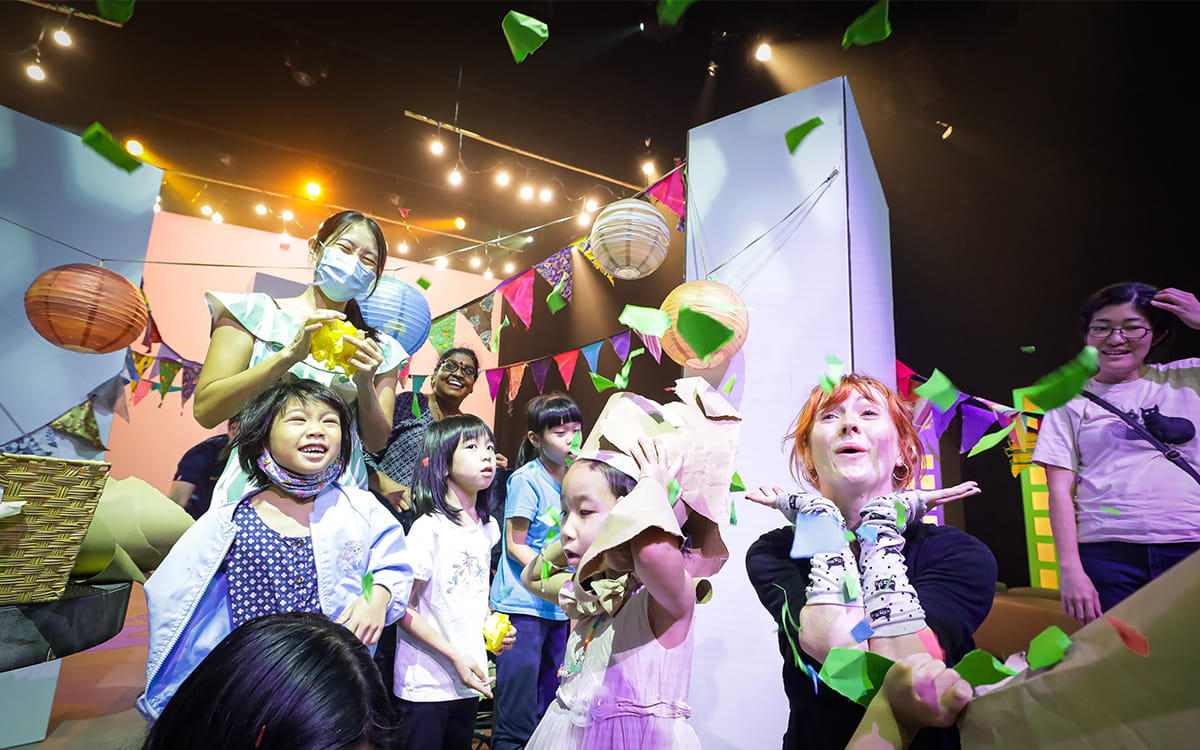
<em>March On 2022</em>
Parents can turn a theatre visit into a meaningful learning experience with a few simple habits.
Try these ideas:
Returning to Esplanade regularly gives your kids repeated exposure to storytelling, music and movement, allowing each visit to build on the last.
When children watch a play, they are practising empathy, patience, imagination, and emotional understanding, all within a single shared experience. Theatre helps them become more attentive, expressive and compassionate individuals.
Discover Esplanade’s family-friendly performances and let every show become a place of imagination, learning and wonder.