Time taken : <5mins


Storytelling is often regarded as a ritual in every home. It’s that quiet, winding-down moment where imagination takes flight. But what if your nightly read-aloud could become something more? What if you could transform that time into a fun, interactive mini-theatre production?
At Esplanade, we believe the performing arts are for everyone, including the smallest stage of all: your home.
Turning your children’s bedtime story into a theatrical experience is a simple way to spark their creativity, deepen their connection to the narrative and strengthen your family bond. It goes beyond reading the words on the page; it encourages children to step into a new world, practise empathy and experience a story with their whole body and voice.
Here are simple, practical tips for bringing the stage home and introducing your kids to the world of theatre.
Not every story is destined for the stage, and that’s perfectly fine! When you’re choosing a book to act out, look for ones that naturally lend themselves to drama. For instance, stories with clear personalities, strong emotions or engaging dialogue make for easy role-play. Make sure to look for a book where the characters talk a lot.
Alternatively, classic fairy tales, animal fables or even simple picture books with repeated phrases are gold. The repetition gives your child an easy line to remember and act out, helping them build their confidence.
Remember, this is bedtime! Start the ritual a little earlier, and keep the story short so you can focus on the fun without exhausting your little star.
Bonus tip: Let them choose! The easiest way to guarantee engagement is to let your child be the director. When they choose the story, they’re already invested in bringing it to life. This simple step turns storytime into an interactive storytelling experience.
You don’t need a costume shop or elaborate sets to create a kids’ theatre. The best props are often found in your own home. For example, you can build a fortress using pillows or use a wooden spoon as a wizard’s wand.
Meanwhile, a simple torch or flashlight can create dramatic spotlight effects when focused on your main 'actor,' or it can be used to make fun shadow puppets on the wall. This simple trick adds a real theatrical feel to your storytelling.
You can also encourage your child to improvise their own props. Start by asking, "What does the little bear need to carry his honey?" and watch them choose a small basket. This teaches them to think creatively about the world around them.

<em>Koko The Great</em>, <em>PLAYtime! 2025</em>
Costumes instantly signal that it's time for play and theatre. Again, keep it simple! Scarves, hats and gloves from the back of the wardrobe are instant, versatile costume pieces. A colourful scarf tied around the waist can become a superhero’s sash or a king’s robe.
For quick, disposable props, encourage your kids to cut a paper plate with eyeholes to make a quick mask that they can even colour in! A simple towel clipped around the neck can also become a cape, and cardboard cut-outs can be turned into crowns or swords.
Make sure to encourage role-swapping. If they were the hero today, they might be the funny sidekick tomorrow. This practice of stepping into different roles is a powerful exercise in empathy and imagination.
The bedroom (or any room, really) is your venue. A few minor changes can transform the space from a sleeping area into a stage for your interactive storytelling. For example, you can drape a bedsheet or a large blanket over a chair or the footboard of the bed. This creates a quick curtain backdrop that marks the 'stage.'
That aside, you can use existing items to set the scene. A small plant can be a forest, a desk lamp can represent the sun and if you have glow-in-the-dark stickers, they make a wonderful starry night sky.
Remind yourself and your kids that the magic of theatre is in the imagination, not the budget. A simple set leaves more space for your kids to mentally fill in the details.

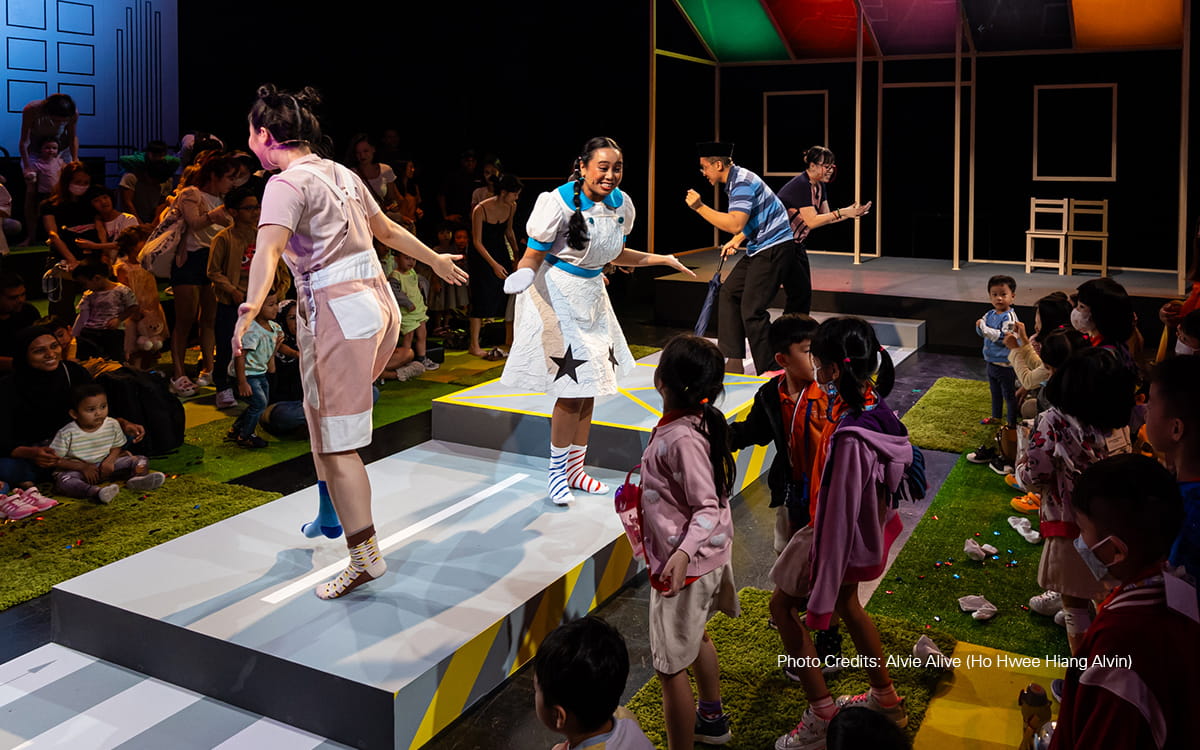
<em>BURP</em>, <em>PLAYtime! 2024</em>. Photo credit: AlvieAlive
This is the heart of turning storytime into theatre—it’s about active involvement, not passive listening. So, invite your kids to act out the characters' sounds, movements and voices. How does a grumpy giant walk? What sound does a little mouse make?
Make sure to pause at an exciting moment and ask, "What do you think will happen next?" or "What would you say if you were that character?" Letting them add their own lines turns the story into a truly collaborative, interactive storytelling experience.
Remember to applaud and celebrate their creativity after the 'show.' Building their confidence in this playful setting is one of the most important takeaways from this kind of performance.
The most important rule is to keep the experience joyful. Don't aim for a perfect performance. The goal is laughter, connection and fostering a love for creative expression. A flubbed line or a falling costume is often the funniest part of the whole storytelling!
On some nights, a simple reading is all you need. Other nights, you might have the energy for a full ‘production.’ Allow your family routine to be flexible based on your child’s mood and energy. This is a creative invitation, not an assignment.
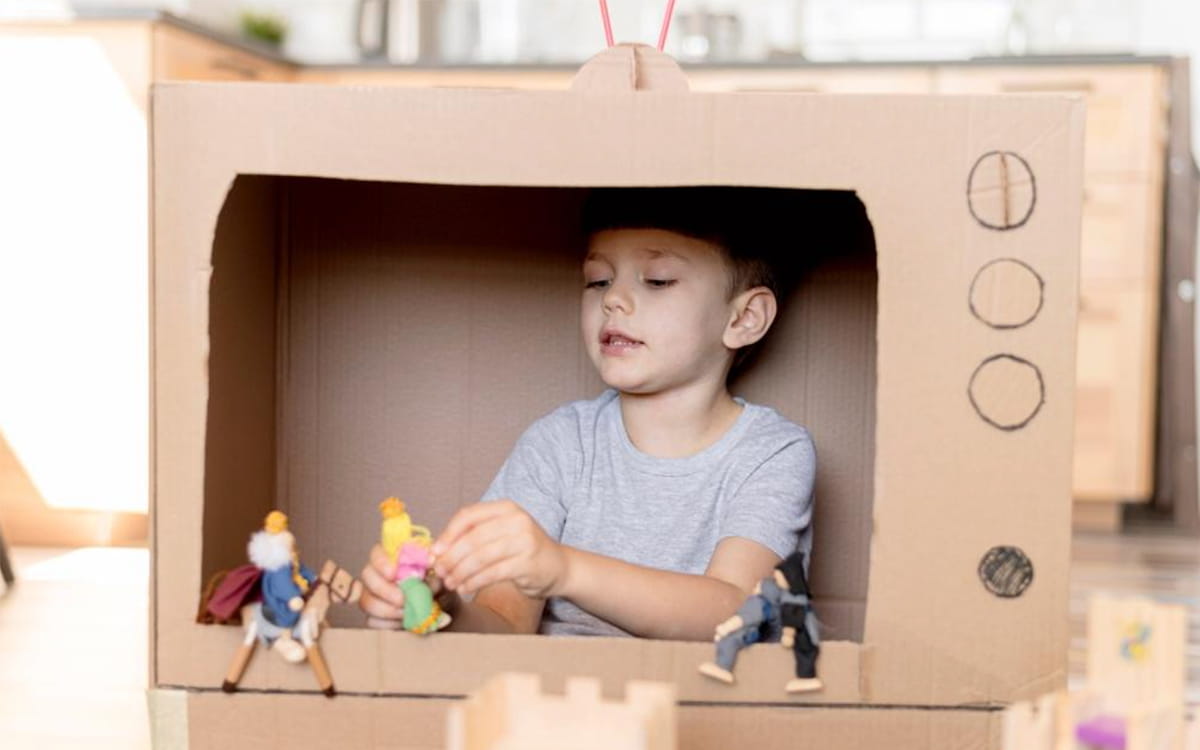
The benefits of acting out stories can go beyond a good night’s sleep. This simple family activity is also a powerful tool for your child’s development. For instance, acting out a narrative helps children understand the story’s sequence and meaning on a deeper level.
At the same time, by stepping into the shoes of a character—whether a clever fox or a sad princess—children get to practise empathy and perspective-taking.
Role-play can also help improve communication, public speaking and teamwork skills in a fun, non-judgmental environment. Studies have consistently shown that role-play and dramatisation activities deepen a child's understanding of emotions and narratives, which are vital life skills.
Turning storytime into a theatrical experience is a simple, beautiful way to weave creativity, connection and joy into your family's routine. It demonstrates that the arts aren't a high-brow mystery; they’re a natural, vibrant part of daily life.
Looking for more ways to nurture your child’s imagination? Plan your next family day at Esplanade, where the pages truly leap onto the stage.
Explore our PLAYtime! productions, a beloved series designed specifically for young audiences, and visit family-friendly arts spaces like PIP’s PLAYbox for stories and creative play that inspire connection and compassion.