Time taken : <5mins

At Esplanade, we believe that every child has a creative spark waiting to shine. The performing arts, whether it’s theatre, dance or music, are more than just forms of entertainment. They are lessons in courage, imagination and self-expression. Performers think differently: they take risks, embrace mistakes and express emotions in ways that words alone cannot. These are the very qualities that help children grow into confident, creative thinkers.
By drawing inspiration from artists, parents can nurture curiosity and confidence at home and promote creative thinking in their children. Here’s how the stage can offer lessons that last a lifetime for any parent hoping to raise a creative child.

Singer-songwriter Ridz Razali, performing at DBS Foundation Outdoor Theatre.
On stage, mistakes aren’t failures—they’re opportunities. A missed cue or a forgotten line can lead to unexpected discoveries. Dancers improvise when a step goes awry; actors turn a stumble into laughter. This flexibility fuels creativity.
Children can learn from this. Encourage them to see slip-ups or “wrong notes” as part of learning. Try simple improvisation games at home, such as “Yes, and…” storytelling, where each person adds to a story without rejecting an idea. The goal isn’t perfection, it’s exploration.
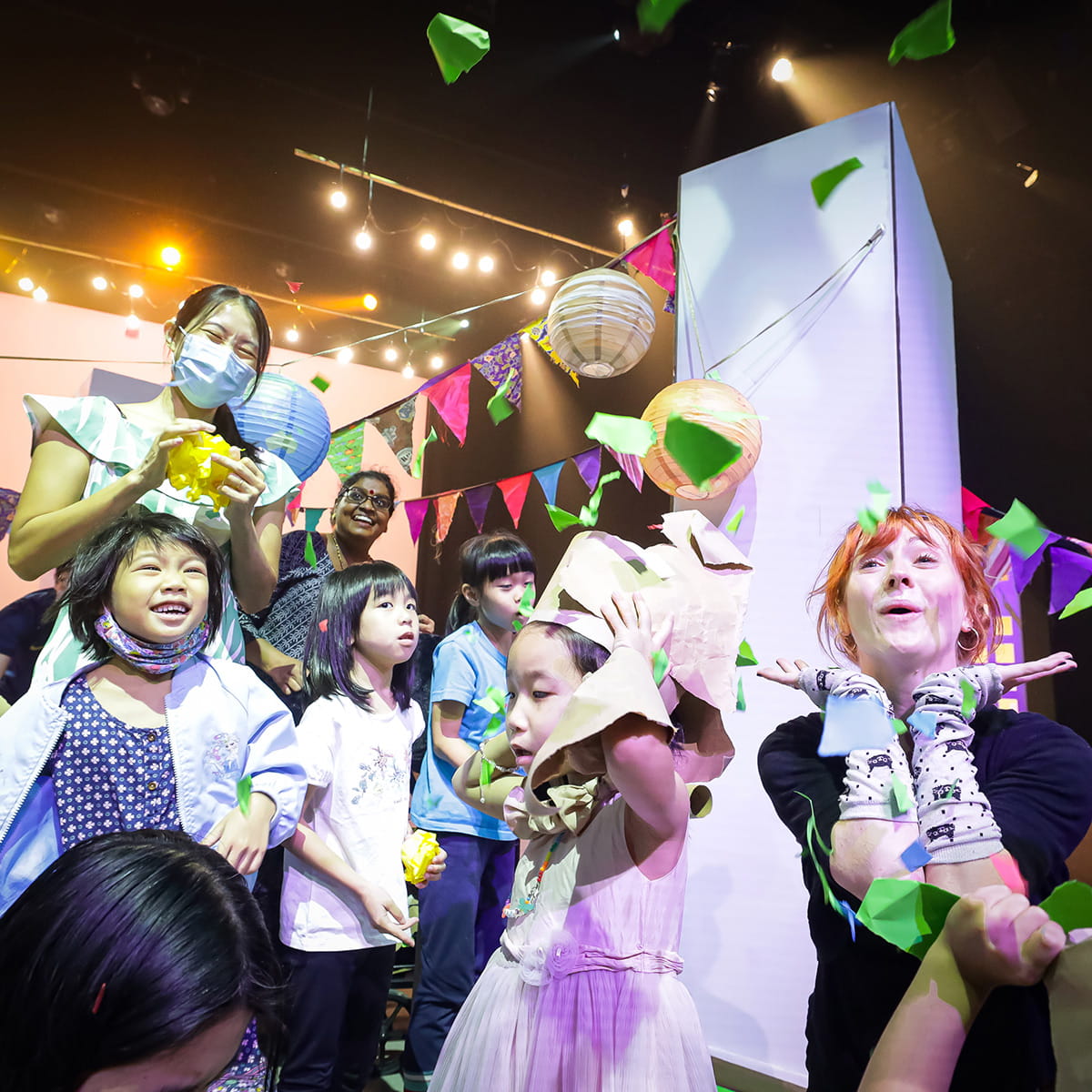
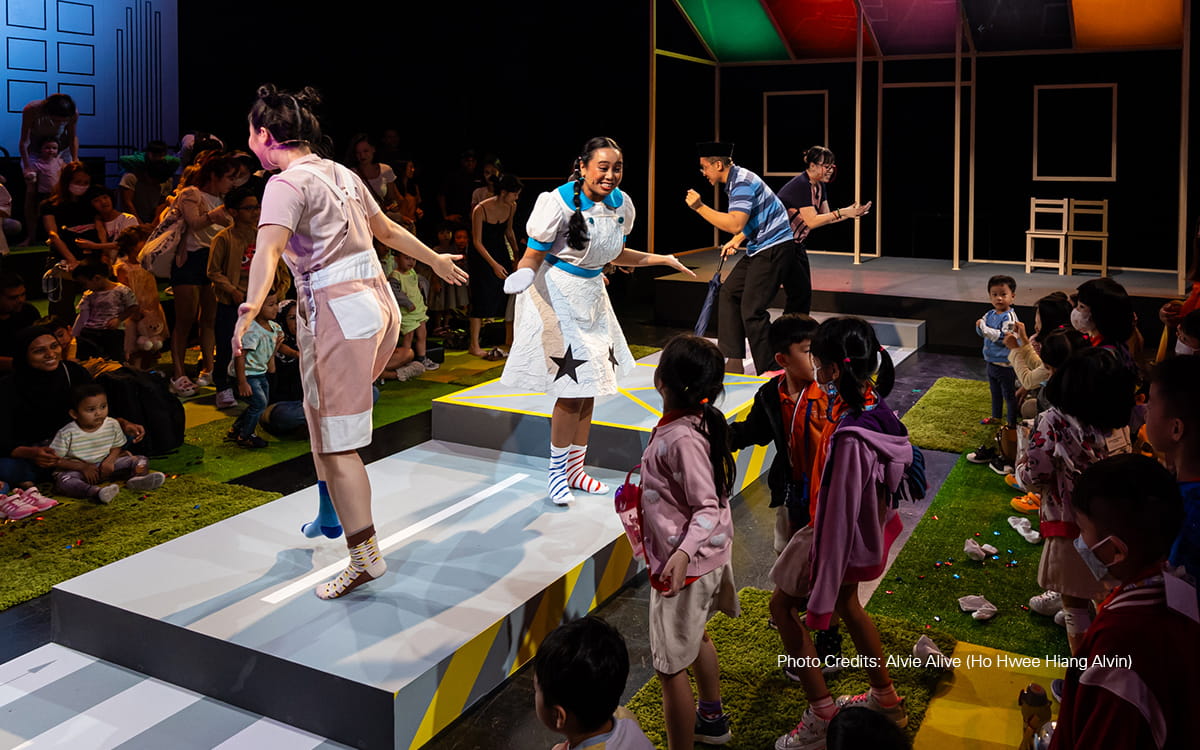
At Esplanade, our PLAYtime! series for young audiences often invites children to react and respond in real time. When something surprising happens, they get to decide how to join in. This spontaneity teaches that creativity thrives on openness, not control.
Performers spend years learning to express emotions through voice, movement and rhythm. Their confidence grows not from being flawless, but from sharing their feelings openly. Children, too, can build self-assurance by expressing themselves in different ways, such as through dance, gestures or pretend play, especially when words are hard to find.
At home, create space for small “performances”: puppet shows, dance sessions or skits using favourite toys. Applaud effort, not polish. These playful moments strengthen communication and emotional awareness.
At Esplanade, PLAYtime! and our annual March On children’s festival offer similar opportunities. They give young audiences safe, encouraging spaces to move, respond and express what they feel—no stage fright required.
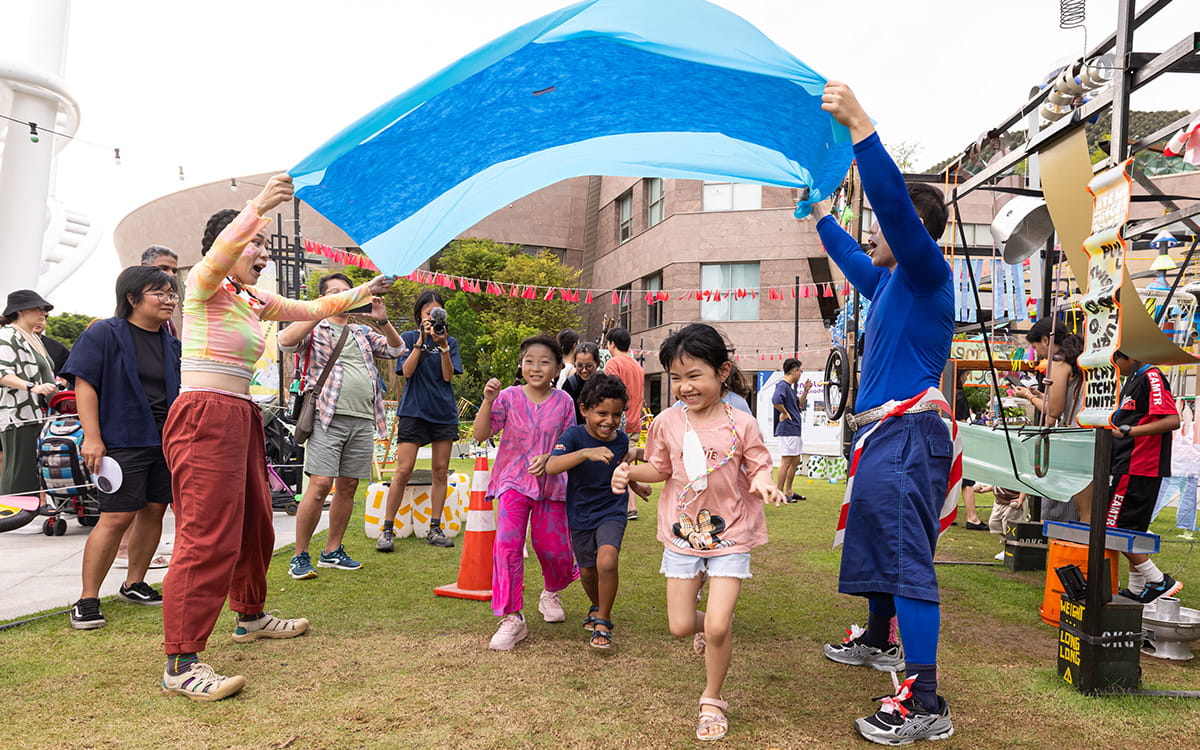
<em>Itchy Fingers 1, 2,3!</em> by Some Club, <em>March On 2025</em>.
Every performance depends on teamwork. Musicians listen carefully to one another. Dancers move in harmony. Actors support their castmates to bring a story to life. This collaboration teaches empathy, patience and respect, all skills that are just as valuable in everyday life.
Parents can model this through group activities. Try call-and-response songs, rhythm games or mini family plays where everyone has a part. Encourage children to take turns leading and following.
Our family-friendly workshops and outdoor performances at Esplanade often show this spirit in action. When artists and audiences create together, children learn that listening is as important as expressing.
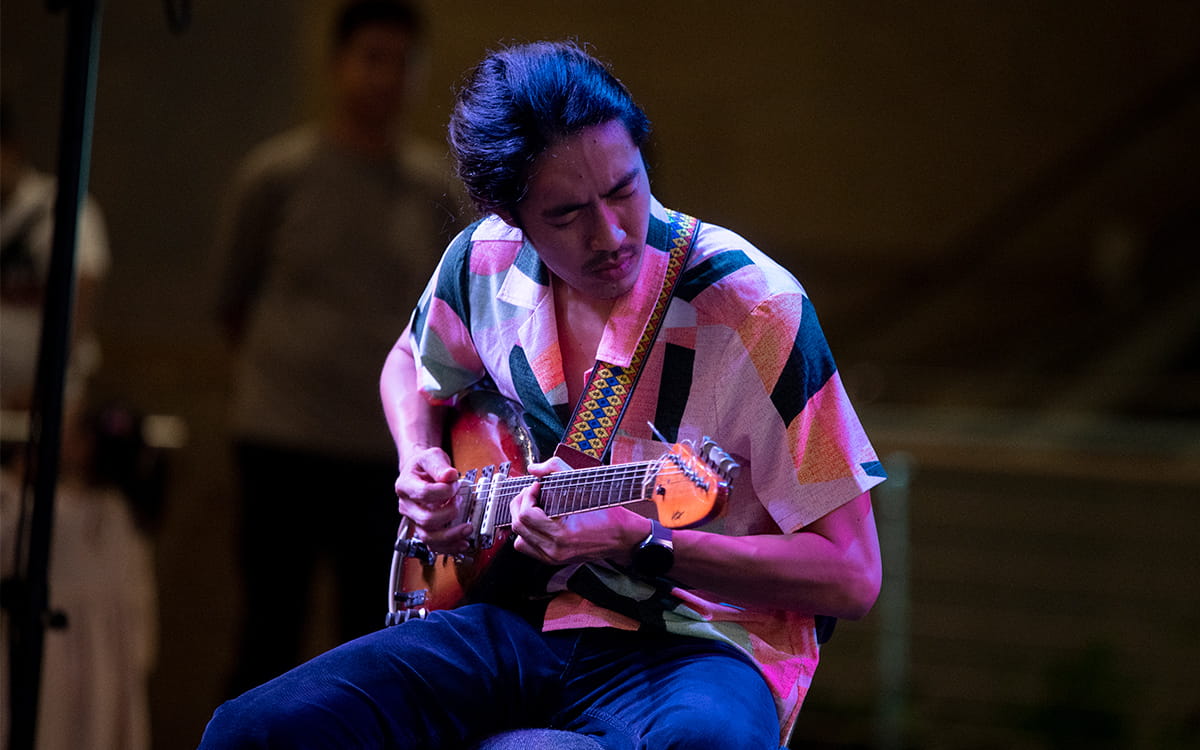
Khana Bierbood, performing at Esplanade Concourse.
Behind every graceful dance and polished song lies hours of rehearsal. Performers practise not to be perfect, but to grow. They know that every repetition builds confidence and mastery.
Parents can nurture this same mindset by praising persistence rather than talent. Try saying, “You kept trying until it worked!” instead of “You’re so good at that.” It reminds children that improvement comes from effort.
At Esplanade, we see this dedication in every artist we work with. Their resilience shows children that creative success comes from patience, not instant results.
Artists notice what others overlook. A street musician might hear a melody in passing traffic; a dancer might be inspired by the sway of trees. Encouraging children to observe and imagine builds the foundation of creativity.
Go for a walk and ask: “What story does that cloud tell?” or “What rhythm can you hear in the rain?” When children start to see the world through an artist’s eyes, everyday life becomes a canvas.
Our outdoor performances and PIP’s Trail at Esplanade are designed to spark this kind of curiosity. As families explore public art and architecture, children learn to observe, interpret and tell their own stories.
You don’t need a theatre to bring performance into your child’s life. Turn your living room into a mini stage. Use flashlights as spotlights, scarves as costumes and music to set the mood. Let children direct their own short “shows”, whether it’s a dance, song or story.
Performing builds confidence and leadership. When children take charge of their stories, they learn to trust their instincts and share their ideas proudly.
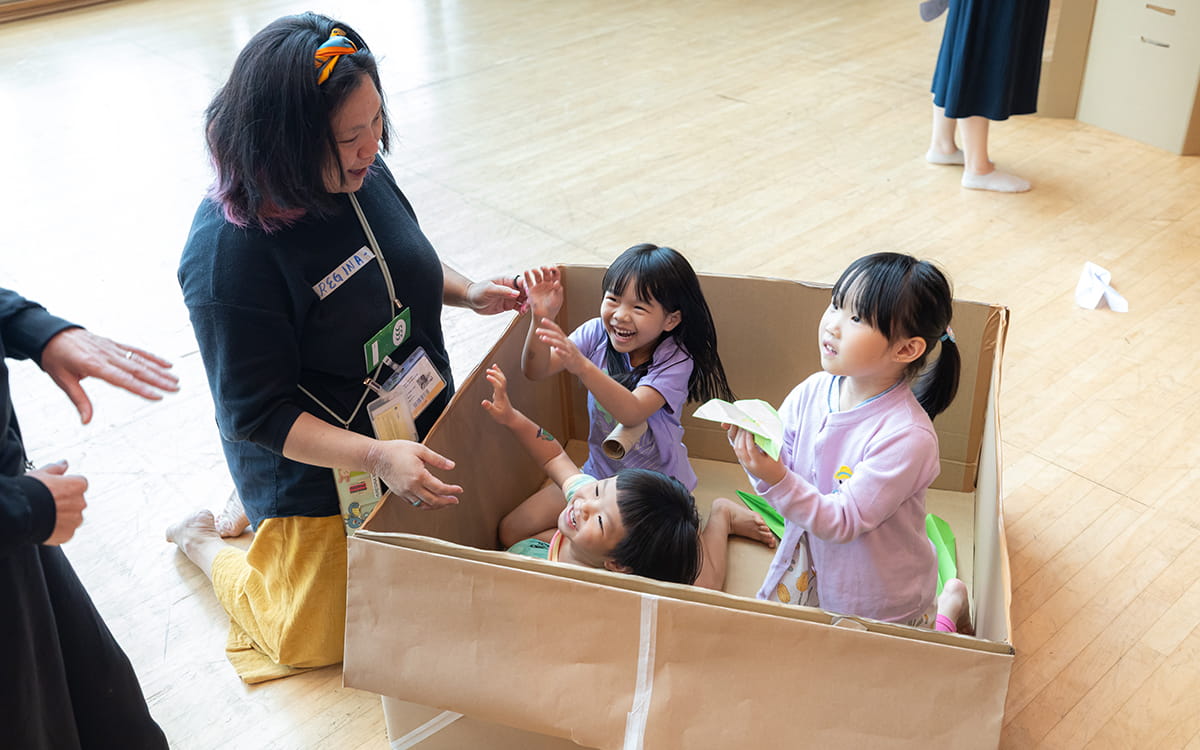
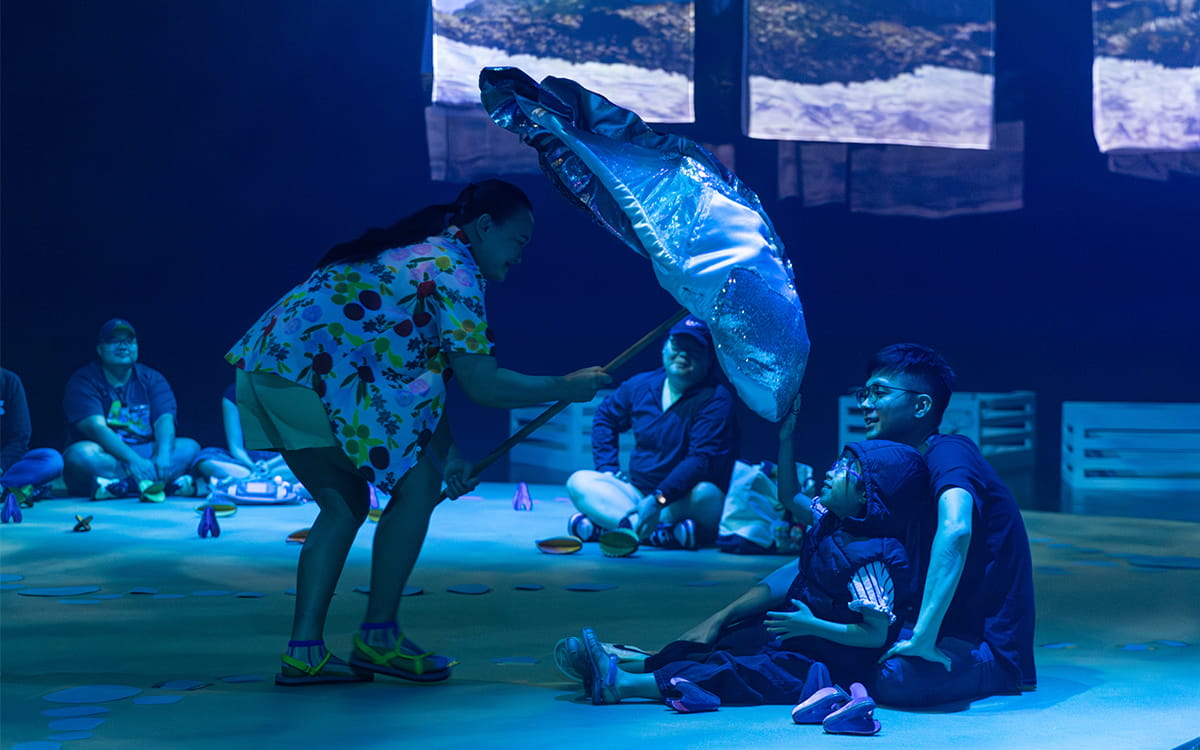
<em>Pass It On</em> by Polyglot Theatre and The Artground, <em>March On 2025</em>.
Families can experience the magic of performance first-hand at Esplanade. Attend a PLAYtime! production where children can sing, move and respond as part of the show. Or explore behind-the-scenes stories on Offstage, our digital platform filled with interviews, craft activities and educational videos.
After a performance, talk about what stood out. Ask, “What did that performer do that surprised you?” or “How did the music make you feel?” These reflections help children connect artistic choices with emotions and imagination.
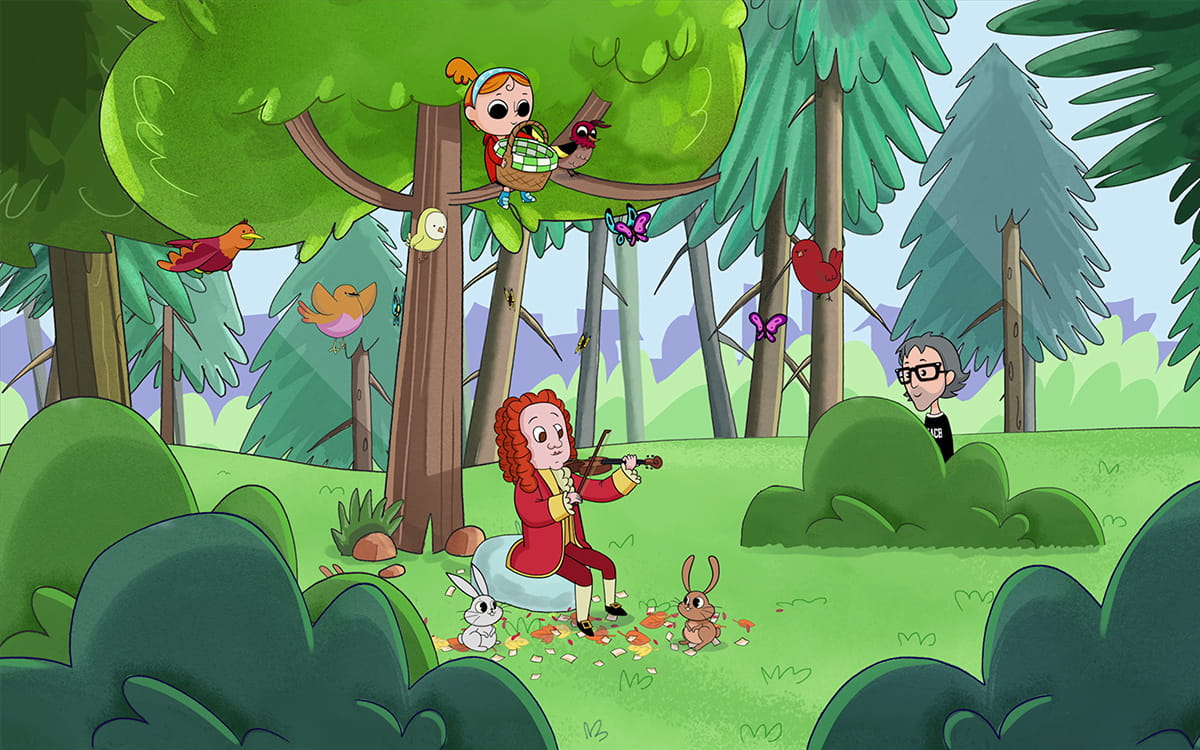
<em>Jimmy & The Magic Key</em>, an award-winning animated series on <em>Offstage</em> that follows Jimmy and his niece Lola on a magical, time-travelling adventure through the world of classical music.
Performers remind us that creativity isn’t confined to the stage—it’s a mindset. Whether it’s solving a problem, trying something new or making someone laugh, children use imagination every day.
At Esplanade, we believe that performance and play are powerful tools for learning. Through our family shows, workshops and interactive programmes, we hope to inspire children to think boldly, express freely and collaborate joyfully.
Let your child discover the performer within. Explore Esplanade’s family experiences where imagination takes centre stage.