Time taken : ~10mins
Have you ever wondered what a lighting technician does? Read on and watch the video to learn more!
The house lights dim. The curtain rises. The audience leans forward in anticipation. Then… the stage fills with light, and the band begins to play!
Lights may not always be the first thing people notice, but they are a huge part of creating the mood of a performance. So, who makes all this magic happen? Let’s go behind the scenes to find out!
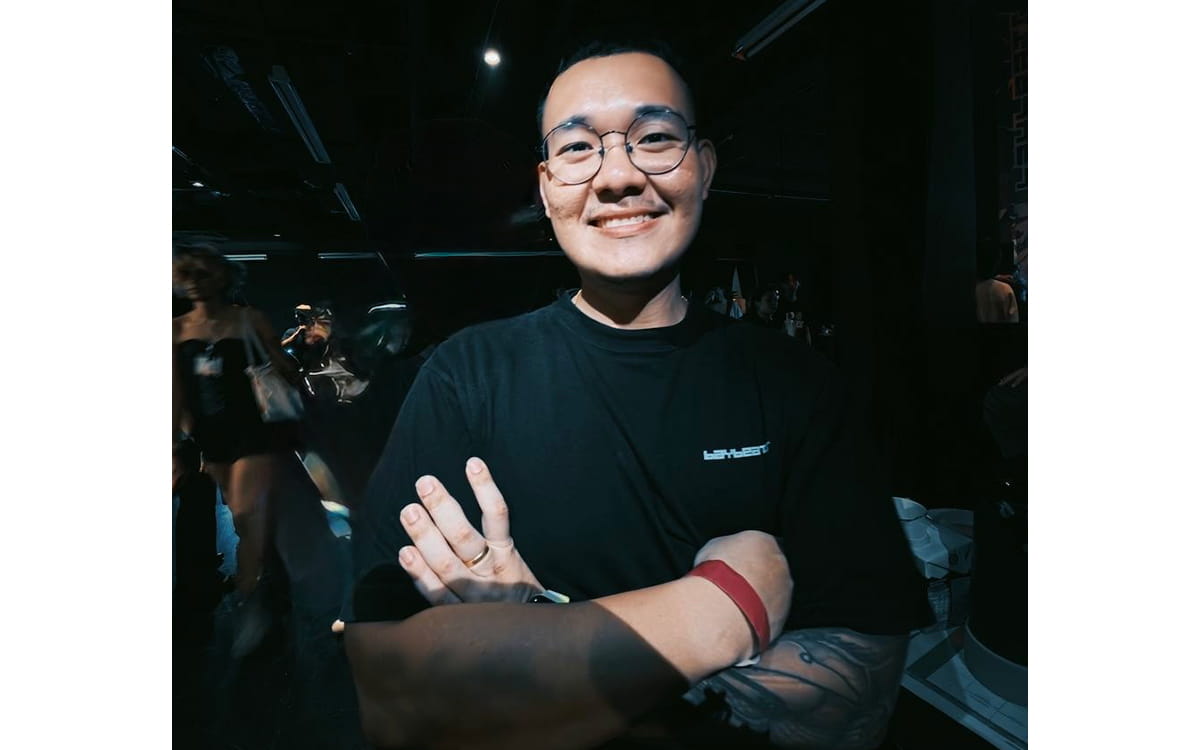
Janson Seah, senior lighting technician at Esplanade.
Janson helps bring Esplanade performances to life with his paintbrush—light! On show day, he operates the lights, but his work begins long before the audience arrives.
There’s a lot of homework that Janson needs to do before he’s ready to light up a show.
Janson meets with lighting designers from different shows to understand what kind of atmosphere they want to create. Is the show soft and dreamy, loud and energetic, or dark and mysterious?
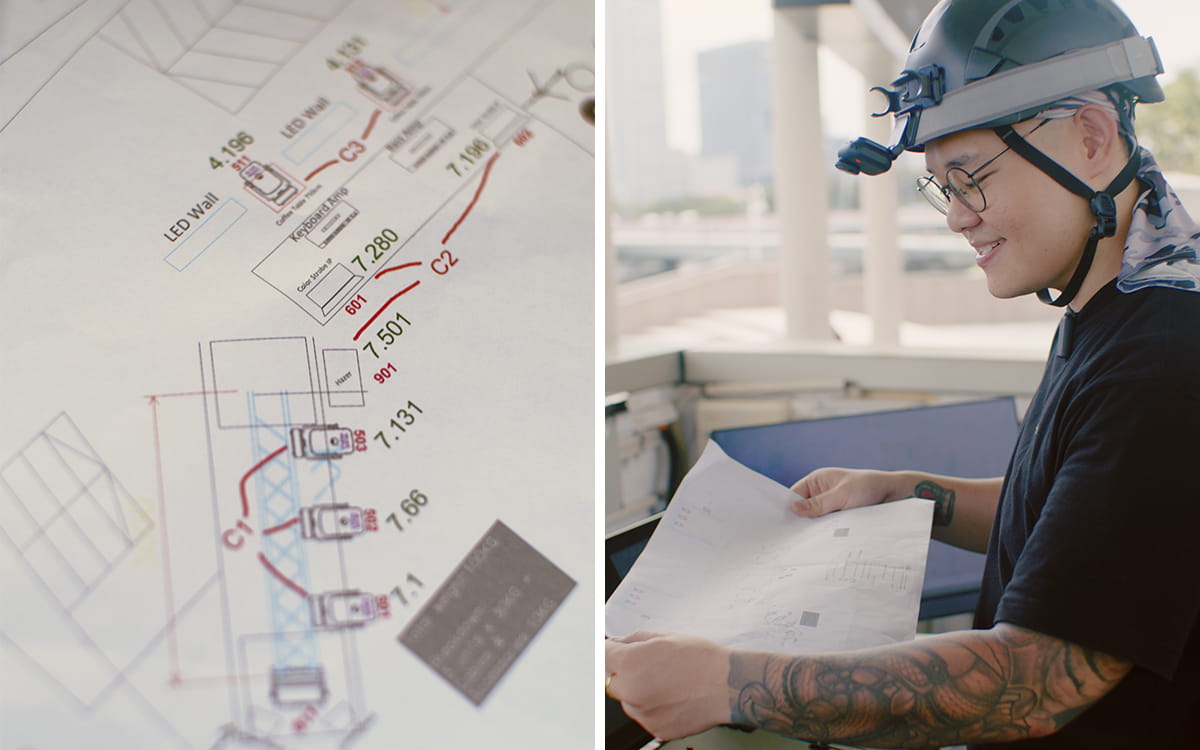
From these discussions, Janson then creates a lighting plan—a special diagram that details which lights he wants to use and where each one should be placed on stage.
Lighting plan for the DBS Foundation Outdoor Theatre, <em>Baybeats 2025</em>.
The lighting department is just one part of Esplanade’s technical production team. There are also the sound, staging, production management, and visual media teams!
Janson works closely with all these departments to ensure that all the plans fit together smoothly. Good communication is key so that each show runs safely and as planned!
Janson (far right) with his teammates from the technical production team, taken at <em>Baybeats 2024</em>.
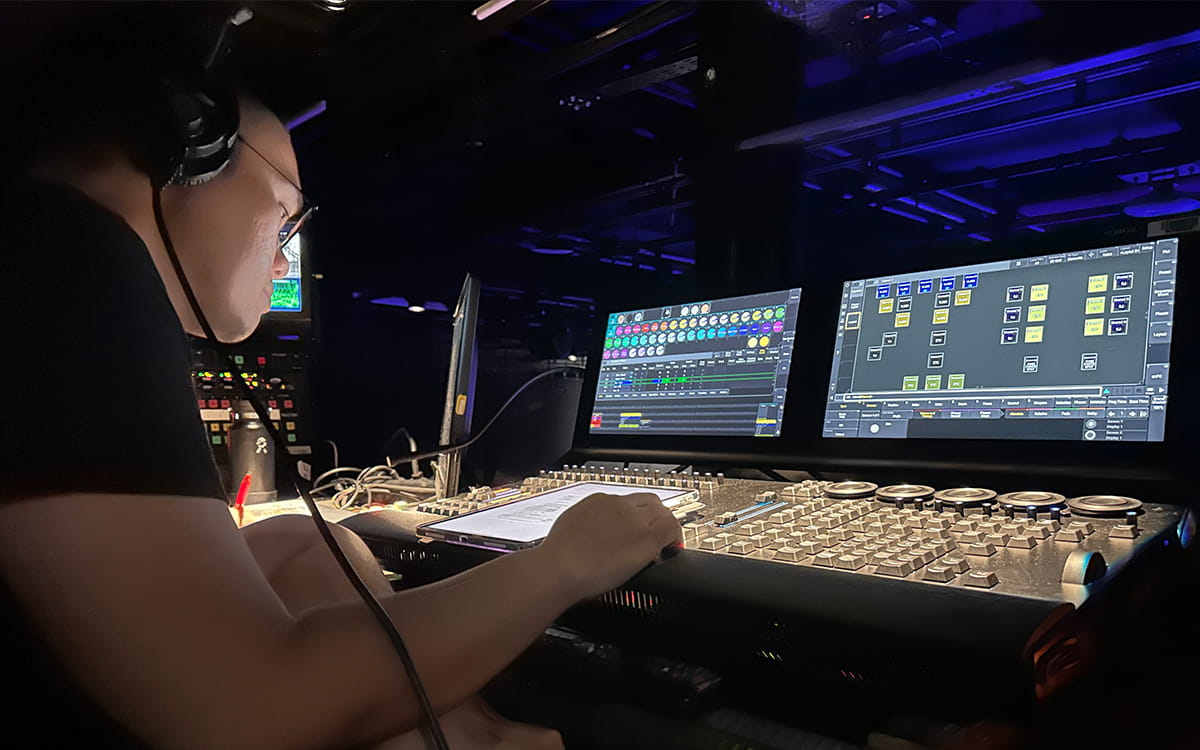
Once the lighting plan is ready, Janson transfers it into a special program on the lighting board. This program helps Janson operate the lights on show day!
The lighting board and software Janson uses to operate lights during a show.
He and his team then work together to rig the lights (hang them up), programme them and operate them on show day. Rigging lights takes a lot of skill and care because the lights are heavy, and sometimes they need to be hung high above the stage.
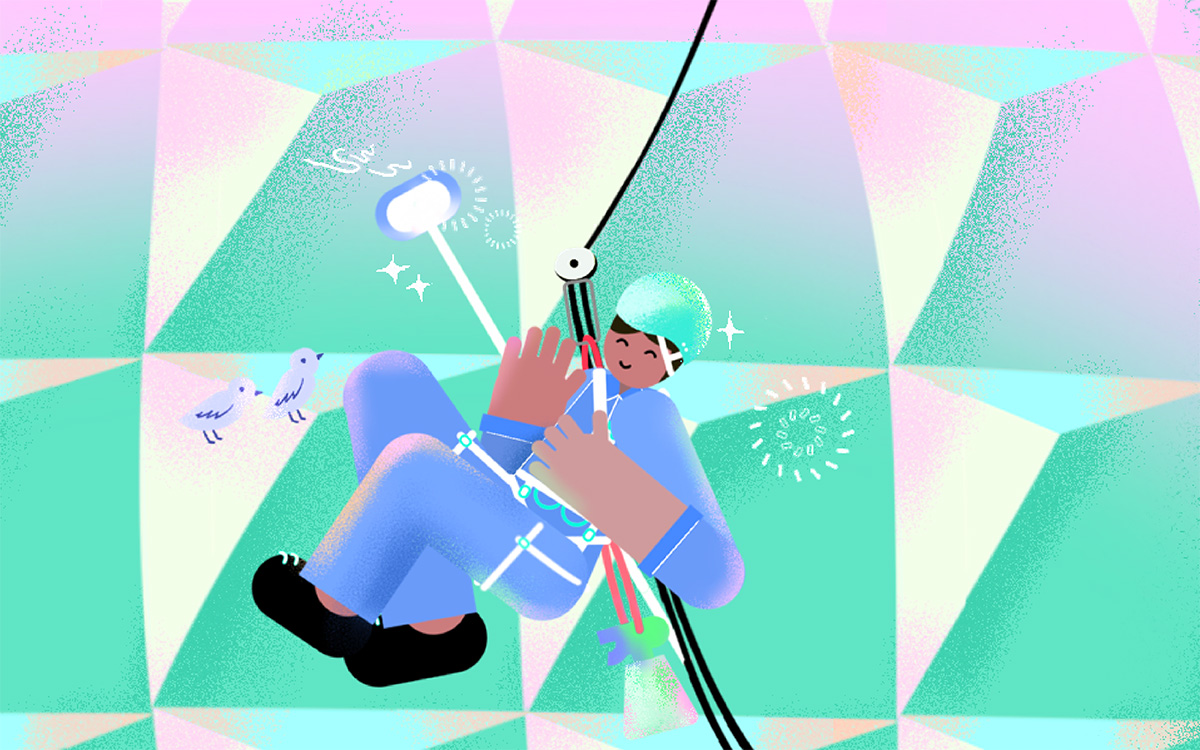
Janson wears safety equipment like a helmet, gloves, safety shoes and a harness to keep himself safe and protected, especially when he’s working from height!
Janson’s team is really close-knit and supportive! They learn from each other and exchange lots of ideas about how to light a stage.
When Janson first started as a lighting technician, he knew almost nothing about lighting—he was even told off for being too slow! Instead of giving up, he took that as a challenge to learn more. He kept researching, practising and learning from the people around him. Over time, he became faster and gained more confidence and knowledge. He now shares the knowledge with his teammates, especially trainees under his wing.
There are many types of stage lights, each with a different job. For example, strobe lights flash quickly to create an exciting effect. Wash lights cover the whole stage with an even layer of colour. Intelligent lights move, twist and change colours automatically!
Janson also uses special tools that make the lights look even more exciting.
Gobos are tiny metal discs that have patterns on them. Shine a light through one and the stage can fill with polka dots, hearts or even the moon!
A gobo helps cast light patterns on stage. Jumat Gombrong, <em>Baybeats 2025</em>. Photo credit: Axel Serik
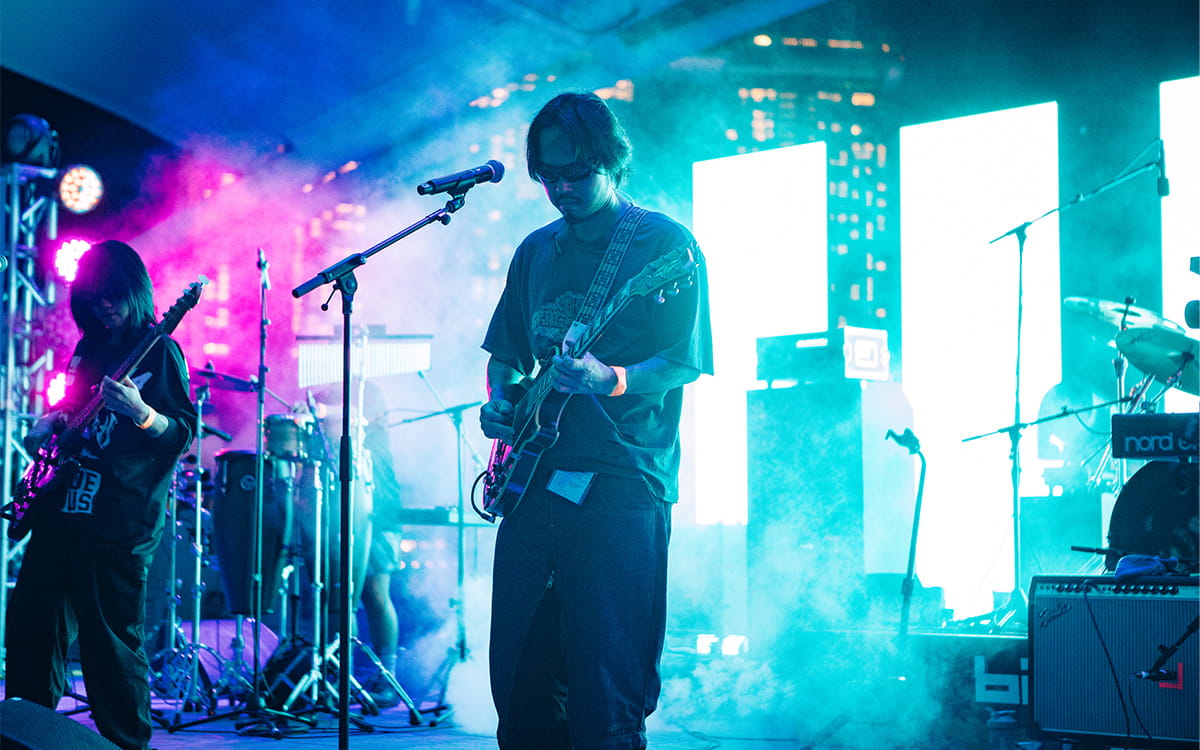
Sometimes, he uses a haze machine. The haze makes the light beams visible and turns the stage into something even more magical and otherworldly.
Haze machine used to create an ethereal setting. CHS, <em>Baybeats 2024</em>. Photo Credit: Danial Halim
Sometimes Janson doesn’t just operate lights—he designs them! He has designed for Esplanade events like Mosaic Music Series, Baybeats and many more.
One of his recent favourites was for a band called Death From Above 1979 that played at Annexe studio. It was a dance-punk and rock ‘n’ roll concert, with lots of crazy lighting!
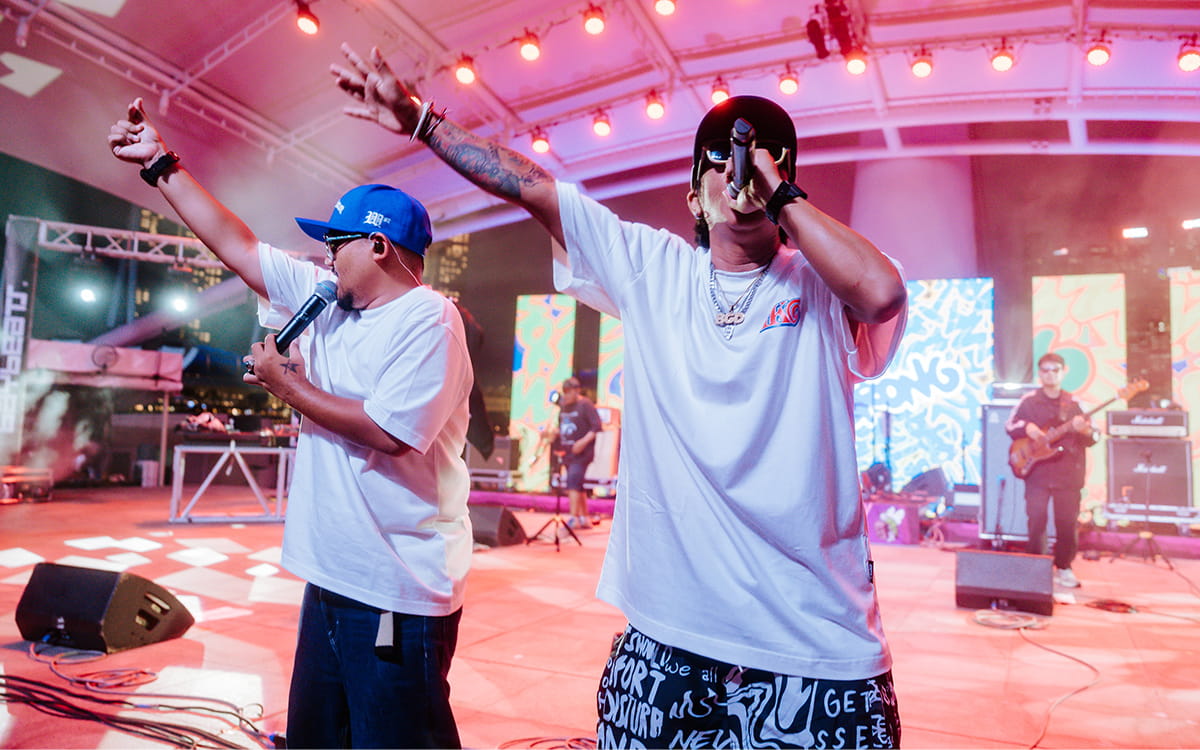
He was also the lead lighting designer for Baybeats in 2024 and 2025! Find out how Janson lit up Baybeats 2025 in this video.
For Janson, the best part of his job is seeing a crowd dancing, cheering and enjoying the music under the lights he helped create.
In those glowing moments, everything feels worth it.
“
”
Q: How long have you been a lighting technician?
Janson: I joined Esplanade as a technical production intern in 2021, and continued as a part-time lighting technician in 2022. I became a full-time lighting technician in 2024.
Q: Why did you want to become a lighting technician?
Janson: I wanted a job that wasn’t desk‑bound and involved more physical labour and hands‑on work. I’ve always enjoyed watching live performances and becoming a lighting technician allowed me to venture into the creative aspect of theatre and the behind-the-scenes work that brings theatre to life.
Q: What kind of skills does a lighting technician need to have?
Janson: Firstly, technical knowledge of how to use different lighting fixtures and consoles and how to fix and maintain faulty lights and troubleshoot problems during a show. Secondly, creativity, which helps when planning and programming lighting to fit a show’s genre or mood, whether it’s a live band performance or a theatrical production. Lastly, teamwork. Lighting technicians work closely within their own department and also have to collaborate with other departments to ensure work is carried out efficiently and everything runs smoothly and stays on schedule.
Q: What training do you usually need to become a lighting technician?
Janson: I studied Arts and Theatre Management at Republic Polytechnic, where I learned how different technical production departments work together. That’s how I got interested in lighting, as it wasn’t just fun but a challenge as well! Some mandatory training is also required for this role, such as Working at Height (WAH) courses and Operating Elevated Work Platform (MEWP/EWP) courses. This allowed me to work on a mobile scaffolding or a Genie lift, which we use to set up or maintain lighting fixtures across the different venues at Esplanade.

Q: What is the most important thing you’ve learned from being a lighting technician these past few years?
Janson: I’ve learned that lighting is a silent storyteller. Lighting tells stories on stage through different types of lights, colours and shadows. All these elements can evoke emotions and craft a story to contribute to the narrative of the performance. It’s also important to never stop learning.
Q: Any advice for someone who would like to become a lighting technician or join the industry?
Janson: Join the industry with an open mind. Every day is a new day to learn from others and pick up new skills on the job. Mastering the basics is important. This way you can understand how the lights work and work cohesively in a team!
Do you have what it takes to be a lighting technician? Take this quiz to find out!