Time taken : >15mins

Lighting. Sound. Staging. Set. Video. So many teams shape a theatre show…but who pulls all the technical elements together? Read on to find out!
A theatre production is made of many moving pieces, with different creative departments working side by side. Directors shape the story, lighting designers set the mood, sound designers build the atmosphere, and set designers transform the stage.
Everyone is overflowing with ideas on how to bring the show to life. But when all these plans come together… who makes sure they actually work?
That’s where the technical manager comes in.
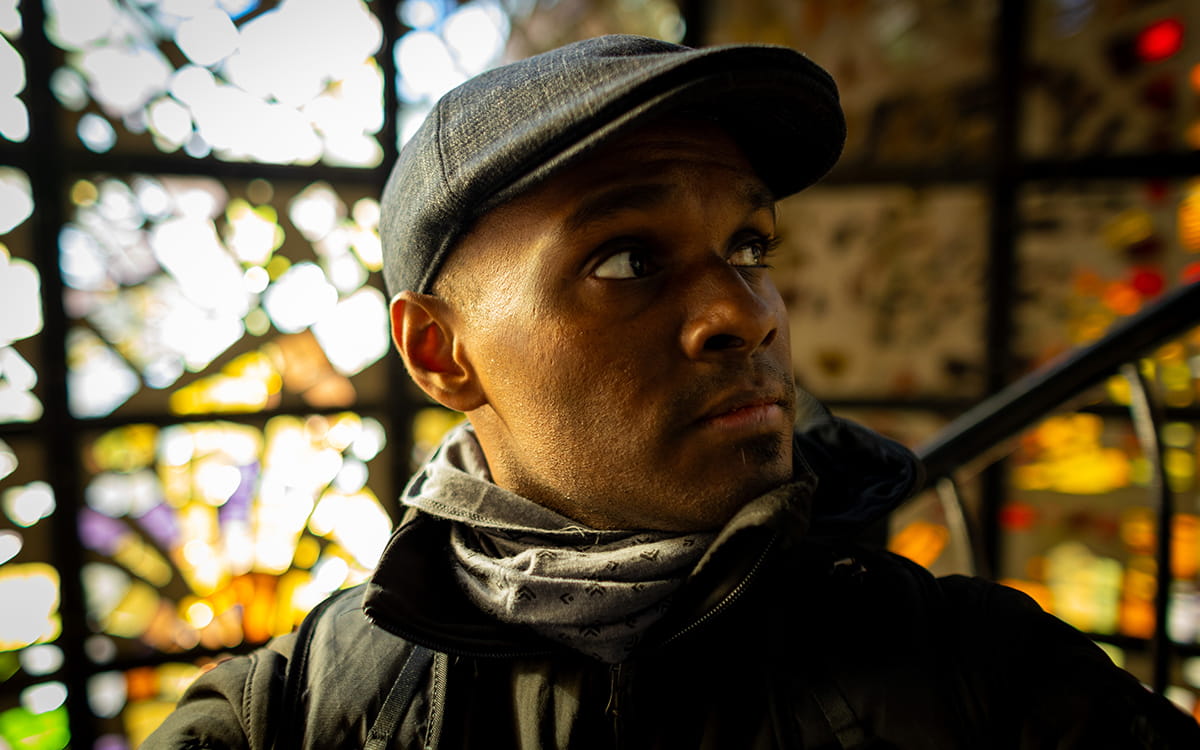
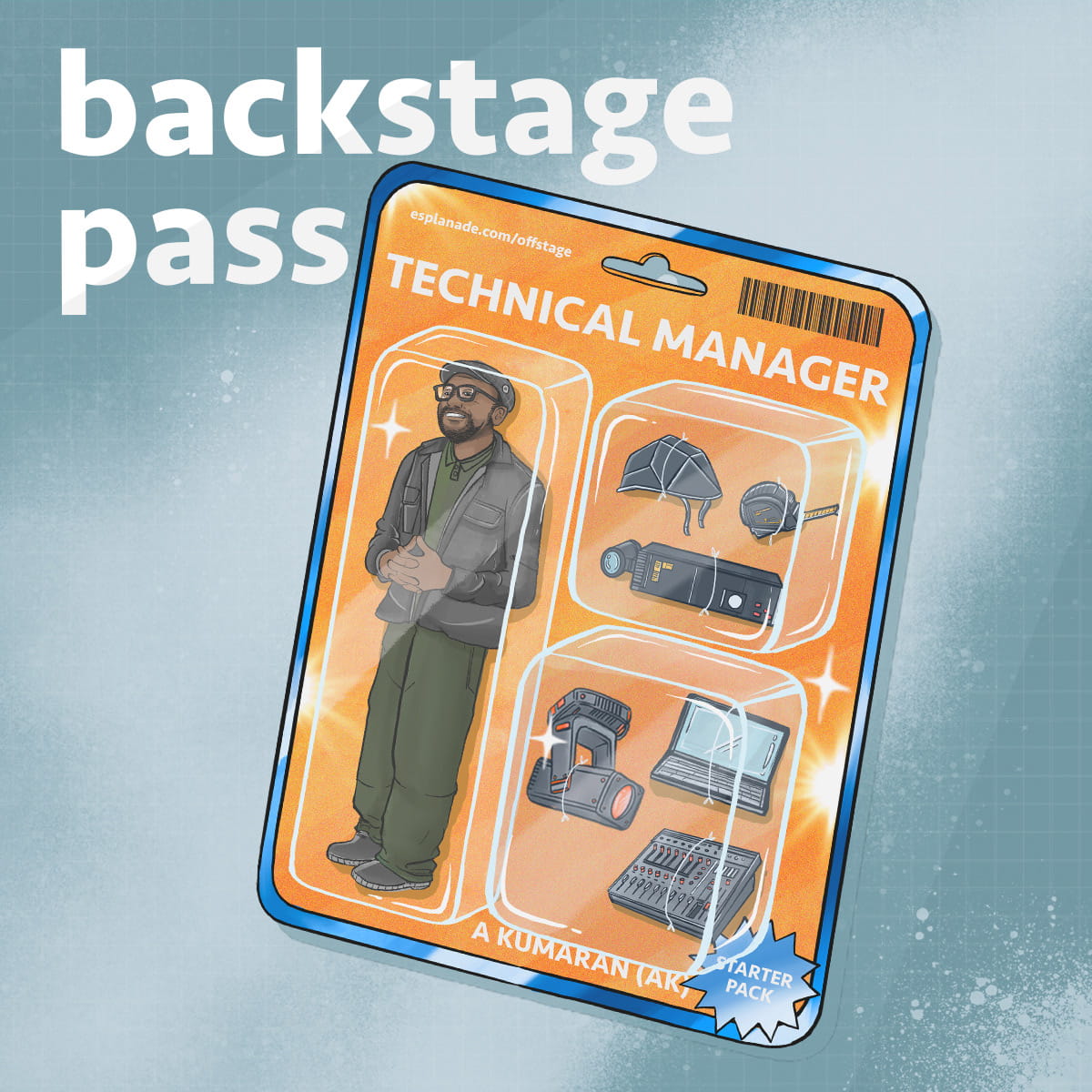
So, what does a technical manager do? A technical manager oversees all the technical and safety aspects of a theatre production.
Creative teams dream big with their grand, wild ideas. The technical manager figures out how (and whether) those ideas can actually happen. AK works closely with the stage manager (runs the show during rehearsals and performances) and production manager (plans the entire production, including budgeting, scheduling and logistics) to create drafts and prototypes of the space and technical elements, to see how everything might come together.
Every theatre space is different, and each show has its own needs. AK’s job is to find ways to make the creative team’s ideas work within the limits of the venue. This means coordinating across many creative and technical teams, including lighting, sound, set, video, and staging.
Then comes the tricky part. He tries to fit everything together—just like solving a giant jigsaw puzzle! If something doesn’t work, it is up to the technical manager to figure out why, how to solve it, or what can be done instead.
AK has worked on many shows at Esplanade, including exciting productions like Bawang Putih Bawang Merah (2024) and Yusof: Portrait of a President (2025) by Teater Ekamatra.
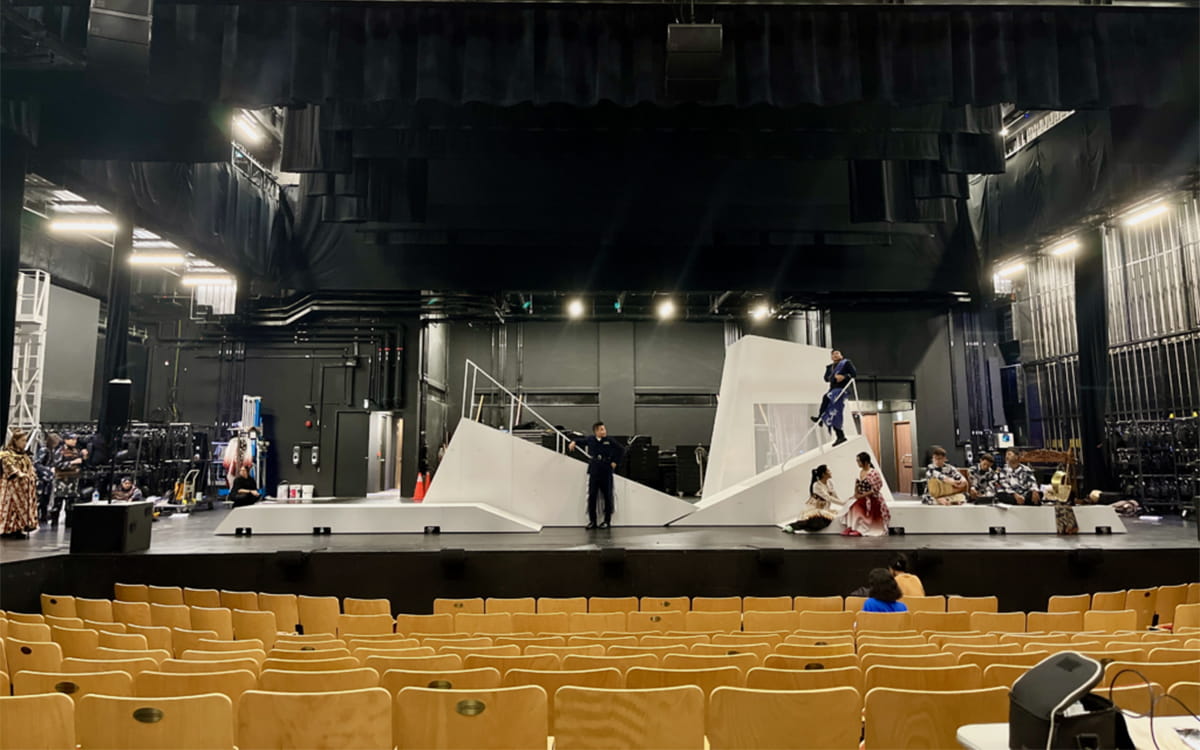
Behind the scenes of <em>Bawang Putih Bawang Merah</em> by Teater Ekamatra, <em>Pesta Raya 2024</em>. AK was technical manager for this production.
One of the most important parts of AK’s job is keeping everyone safe. He looks after the cast and crew by ensuring there is nothing on set that could potentially cause harm.
For example, if a set structure is very high and an actor needs to stand on it, railings must be installed. The structure has to be strong enough to support a person, with a safe way to climb up and get back down. AK makes sure that all these precautions are in place. Safety is non-negotiable!
These details might not be obvious to the audience, but they make a huge difference behind the scenes.
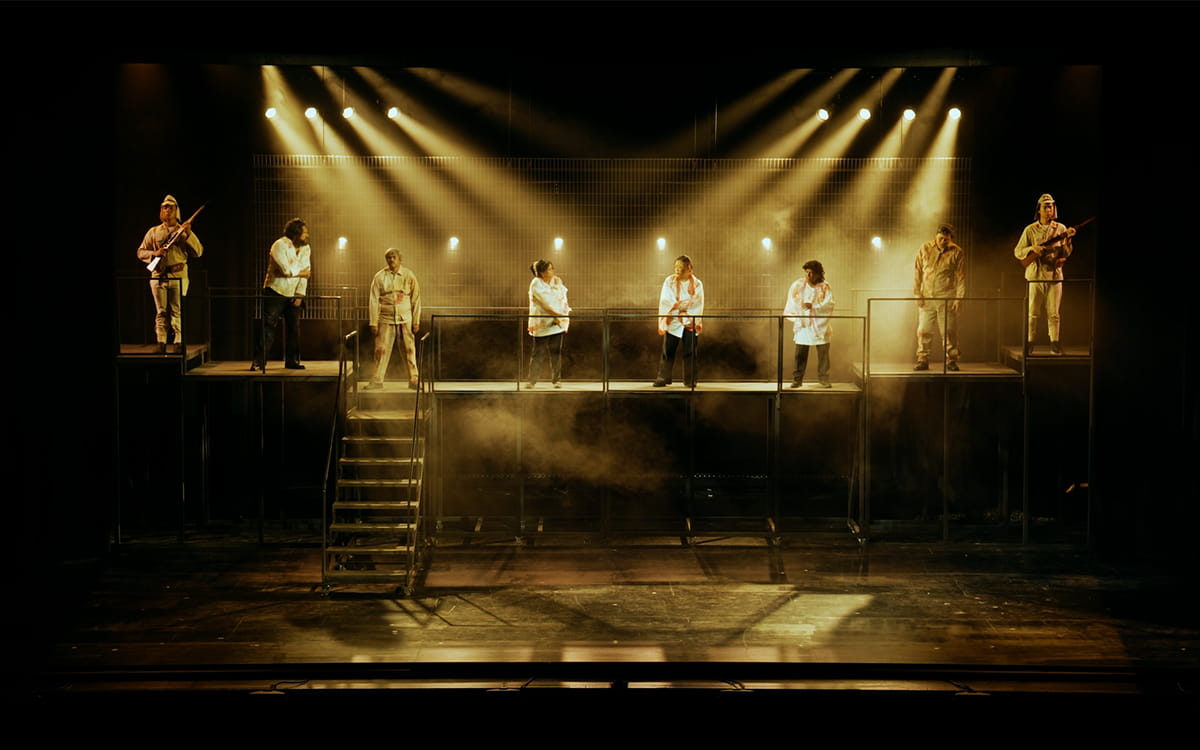
<em>Mission Malligapoo</em> by AGAM Theatre, <em>Kaala Utsavam 2025</em>.
When an idea isn’t safe or physically possible, AK has to step in and sometimes, play the ‘bad guy’. But he rarely uses the word “no” to deliver the news. Instead, he does his research, looks for alternatives and proposes different solutions.
But there’s almost always a trade-off. For example, one solution might mean actors may have to walk further, while another could require renting extra equipment, which costs more money. AK lays out the options, explains the pros and cons, and lets the creative team decide which compromise works best.
Watch how AK solved a problem with a projector during the set-up of Mission Malligapoo!
Being a technical manager involves a lot of math! There’s a lot of drafting, prototyping, measuring, counting, and planning that goes into technical management.
Technical elements like lighting, sound and the set often only come together during bump-in, when the production moves into the theatre. This means that AK has to imagine how everything will work before seeing it in real life—for instance, ensuring the speakers don’t collide with the lights or that the set isn’t too big for the stage.
With limited time and so much to do, AK tries to anticipate and solve problems before they even happen. Careful planning—and plenty of math—help make this possible.
Not all technical managers do this, but AK has a unique skill that makes his job easier. He uses 3D models to plan his work!
By creating 3D models of the stage and set, AK helps the creative team visualise the space more clearly, long before anything is built. This makes it easier to spot potential problems early and saves valuable time during bump-in.
Find out more about his niche hobby and how it helps his work in this video!
AK started out as a theatre-loving kid who wanted to act. He joined a children’s drama group by Ravindran Drama Group for the chance to perform on stage.
But during his first show, it was not acting that grabbed his attention; it was the chaos backstage. He unexpectedly found himself fascinated by the backstage crew—the production coordinator and technicians who made the show possible. It was then that he decided he wanted to work behind-the-scenes.
This led him to study lighting and sound, opening doors to new opportunities in technical theatre. He later worked as a lighting technician for local productions and developed a strong interest in how lights worked. As he learned more, he began to see how sound, video and staging could connect too—the makings of his role as a technical manager!
A technical manager doesn’t need to know everything, but they do need to be curious and willing to learn. The job is all about seeing how the different technical pieces fit together. Sometimes, there may not be a clear solution. But that is where research and a hunger for knowledge make all the difference.
Listening is just as important. A good technical manager hears ideas first before saying no. This helps the creative team achieve their vision and the show reach its fullest potential!
Attention to detail matters too—not creative detail, but technical detail. Instead of asking, “Does the set look good?”, the questions become, “How close is the set to the wall?” and “Is it safe?” Even the tiniest details are crucial in the grand puzzle of technical theatre.
Behind every smooth, magical theatre performance is someone quietly making sure everything fits, works and stays safe. That’s the work of a technical manager—and it’s just as important as what happens on stage.
“
”
Q: How long have you been a technical manager for?
AK: My first project officially as a technical manager was in 2022. RATA: new grounds, new sounds at Singtel Waterfront Theatre. So effectively about three years?
Q: What training do you usually need to become a technical manager?
AK: A good sense of fundamentals in the various technical aspects of production, staging, set, lighting, sound, and video is a must. You do not need to be an expert in every domain, but being more than familiar with one or two is a good start. A grasp of safety on stage and the ability to plan and propose suitable solutions is also key. Being able to read people and communicate effectively helps. And importantly, you must want to keep learning and be keen to solve problems on the stage.
Q: What is the most important thing you’ve learnt from being a technical manager all these years?
AK: Perfect is the enemy of good. Sometimes we strive for perfection and that usually means deadlines get delayed. When the list of deadlines gets too long, we need to be able to make peace with reaching a point in some tasks where the state of things is good enough to move forward rather than fixating over getting it perfectly right. The exception to this learning point, is of course, safety.
Q: What are some challenges you face on the job?
AK: Creatives sometimes have difficulty expressing their vision into words or into a shareable picture. In these situations, we develop a standstill where the technical and creative aspect of a particular thing cannot find a middle ground to meet. Trying to share the technical limitations of achieving a certain creative vision is one of the things that I find most challenging.
Q: What’s your most memorable moment at work?
AK: As someone who does a lot of schematic drawings for productions, I think my most memorable moment is one which repeats at least once per show. It's when the scenic designer can finally see their vision re-created on a computer screen, instead of just the paper-and-pencil drawing they gave me. Being able to share the digital version of their vision back with them—these days with the help of augmented reality too—always gets a gasp of pleasant surprise. That's something I work towards achieving in each show.
Q: Any advice for someone who would like to become a technical manager or join the industry?
AK: This is an industry where you need to do the groundwork and pick up the fundamentals over the years. I was a lighting technician for a good 10 years before anybody would trust me enough to offer me a management position for a project. I'd say my biggest piece of advice for anyone wanting to explore and become a part of this industry, is to take on the jobs that come to you with an open mind and learn anything and everything that you can from the smaller jobs, because you never know when you could re-use a trick or technique for another show, be it small, medium or large!
Do you have what it takes to be a technical manager? Take this quiz to find out!