Time taken : ~10mins

Jimmy & the Magic Key was generously contributed to Esplanade – Theatres on the Bay by Roger Parellada Ferre.
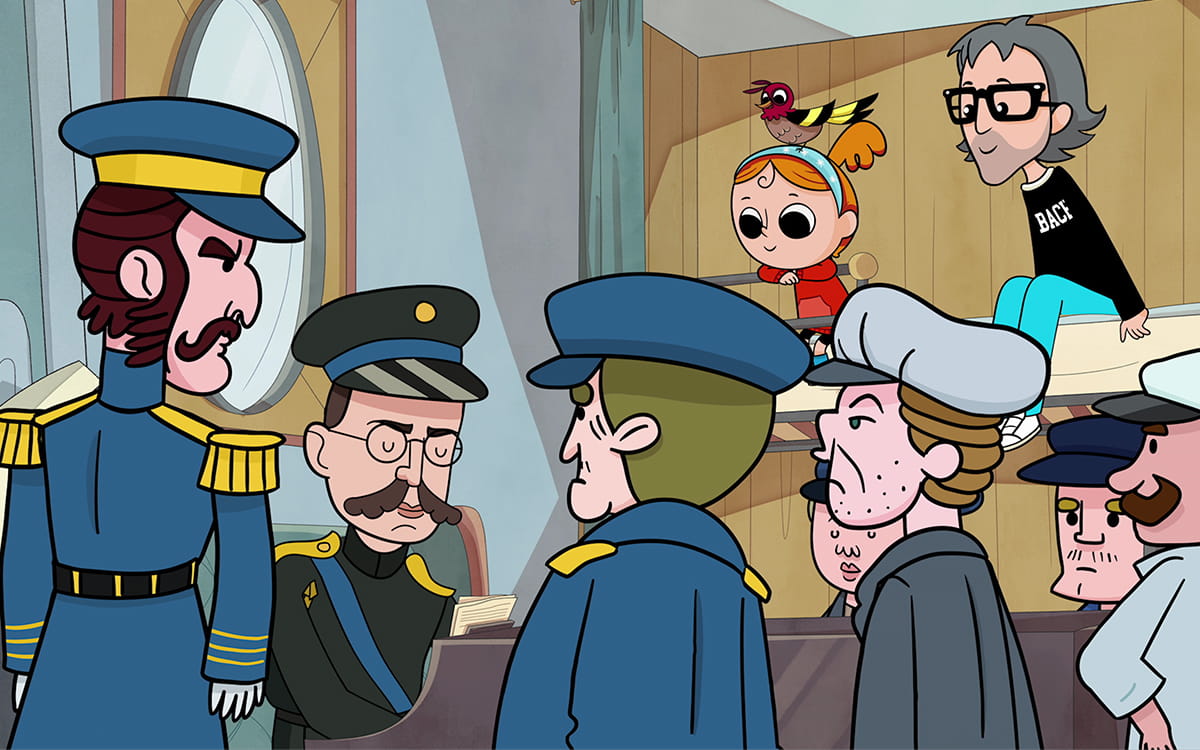
Jimmy & the Magic Key follows Jimmy and his niece Lola on a magical, time-travelling adventure through the world of classical music. With the help of Jimmy's piano, which also doubles as a time machine, they journey into the past to meet some of the greatest composers in history—and lend a helping hand when they need it most!
When the clock strikes twelve on New Year’s Day, the dancing begins!
In 19th-century Vienna, Johann Strauss Sr. wants to bring the spinning waltz to the dance floor, but everyone is only into boring group dances! Jimmy and Lola travel back in time to make it happen, with the help of some of the most fashionable influencers of the era.
Say it like a maestro: (Yo-hahn Shtrows Seen-yor)
In music history, there were two famous men named Johann Strauss—a father and a son. This is the story of Johann Strauss Sr., and how he helped create the joyful dance known as the Viennese waltz. Although Strauss Sr. did not invent the waltz, he helped shape it into the exciting style we know today!
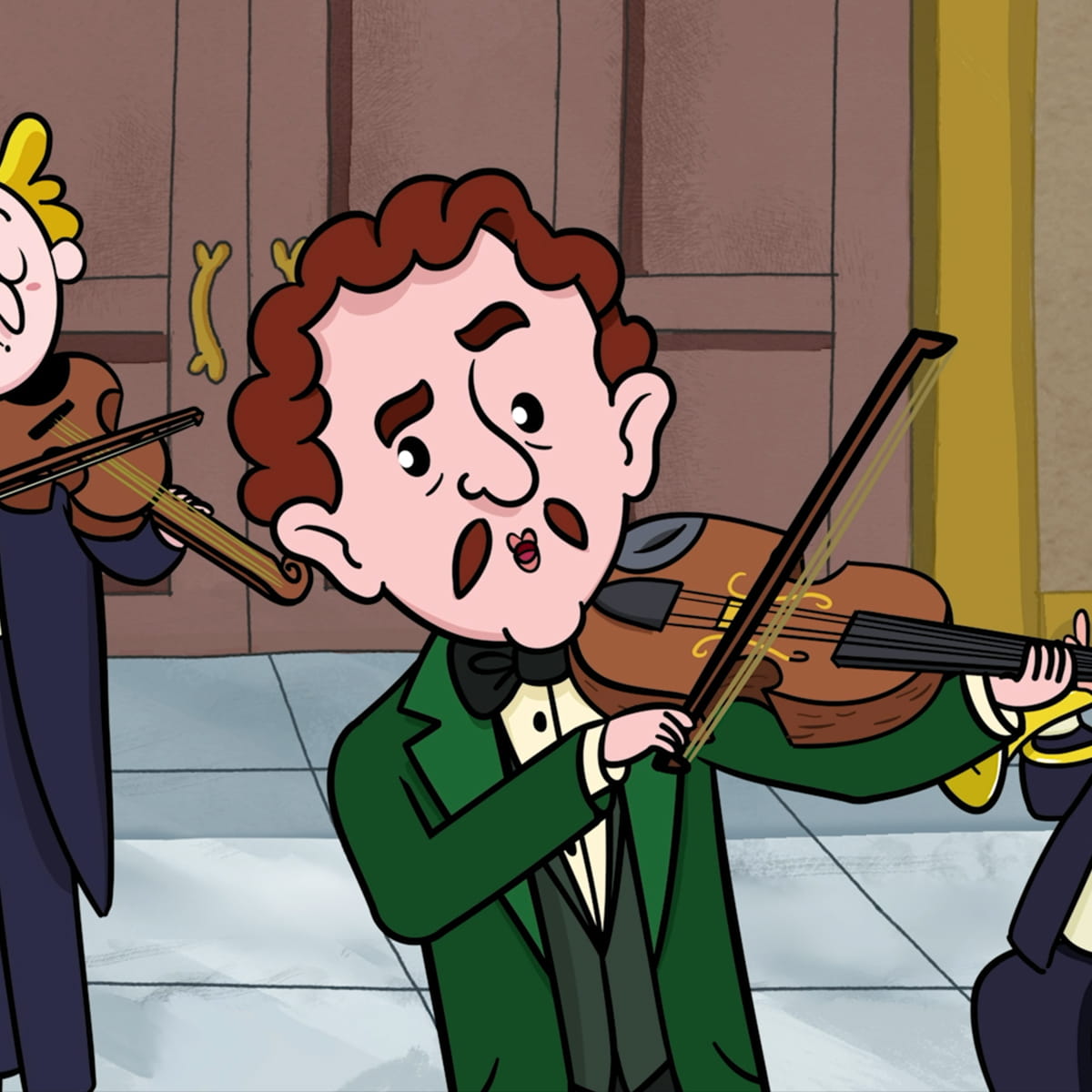
Johann Strauss Sr. was born in Vienna, Austria. As a young boy, he worked as an apprentice to a bookbinder, but he also loved music. He learned to play the violin and viola and joined a string quartet. They performed waltzes and other popular dance music, and began playing regularly at Vienna’s carnival celebrations (known as Fasching)!
When he was 21 years old, Strauss Sr. decided to start his own band, and began composing his own waltzes. He became one of the most celebrated dance composers in Vienna and travelled all around Europe, performing for excited audiences.
The Viennese waltz was a sensational dance full of energy. Unlike other dances at the time, which had elaborate and pre-determined steps, the waltz was lively and flowing. Dancers stood close together, gliding and whirling across the dance floor. It was truly a dance of fun and freedom!
Today, we often see the waltz in grand palaces and fancy balls, but it actually began as the people’s dance, enjoyed by farmers and villagers. Strauss Sr. changed the tempo of the music, making it faster and more energetic. This new style of waltz became hugely fashionable—even among the rich. Soon, Strauss Sr. became the director of many court balls.
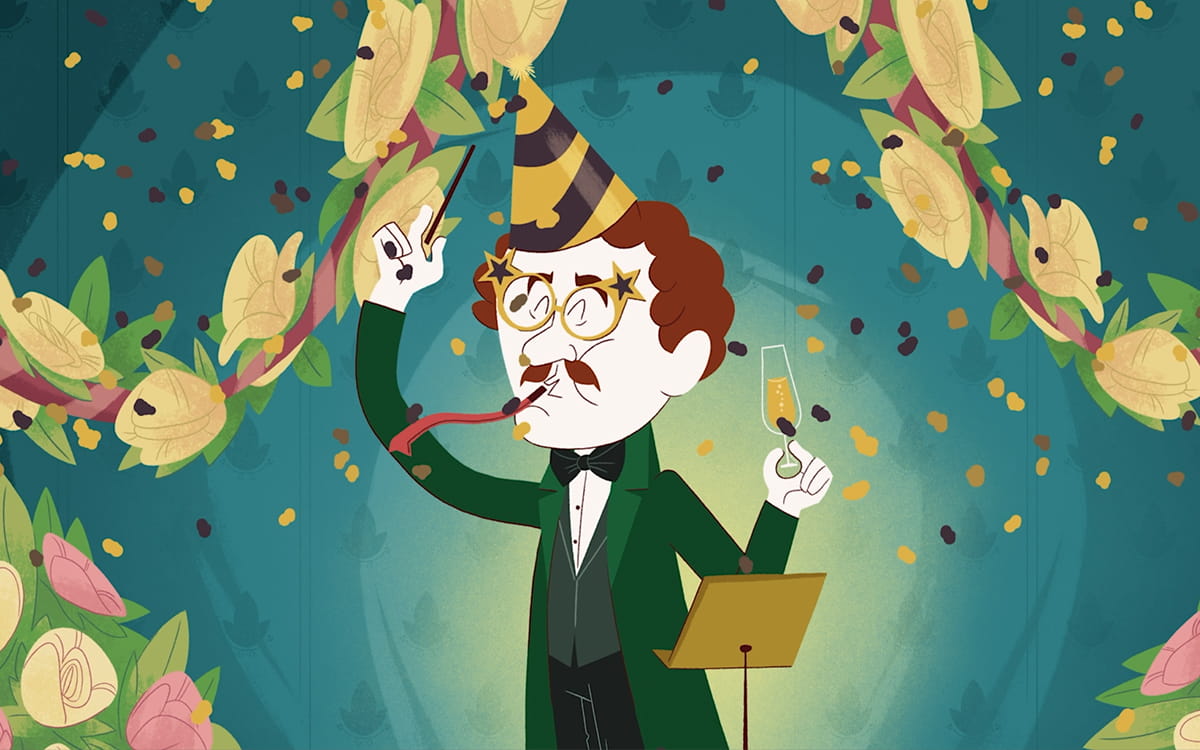
Every year on New Year’s Day, the Vienna New Year Concert is held by the Vienna Philharmonic Orchestra. This tradition began in 1939 and continues even today!
The concert always features music by the Strauss family and ends with three special encores, the final being Johann Strauss Sr.’s Radetzky March—a jubilant finale during which the audience claps along with the conductor to usher in the New Year.
Strauss Sr. wrote the Radetzky March to celebrate an Austrian victory in battle. It is said he heard soldiers singing a folk tune as they returned home, and he turned that into the famous march we hear today!
Johann Strauss Sr. brought joy, energy and the spinning waltz to the world. Today, dancers everywhere still twirl to his music, honouring him as the “Father of the Viennese Waltz”.