Time taken : ~10mins

Jimmy & the Magic Key was generously contributed to Esplanade – Theatres on the Bay by Roger Parellada Ferre.
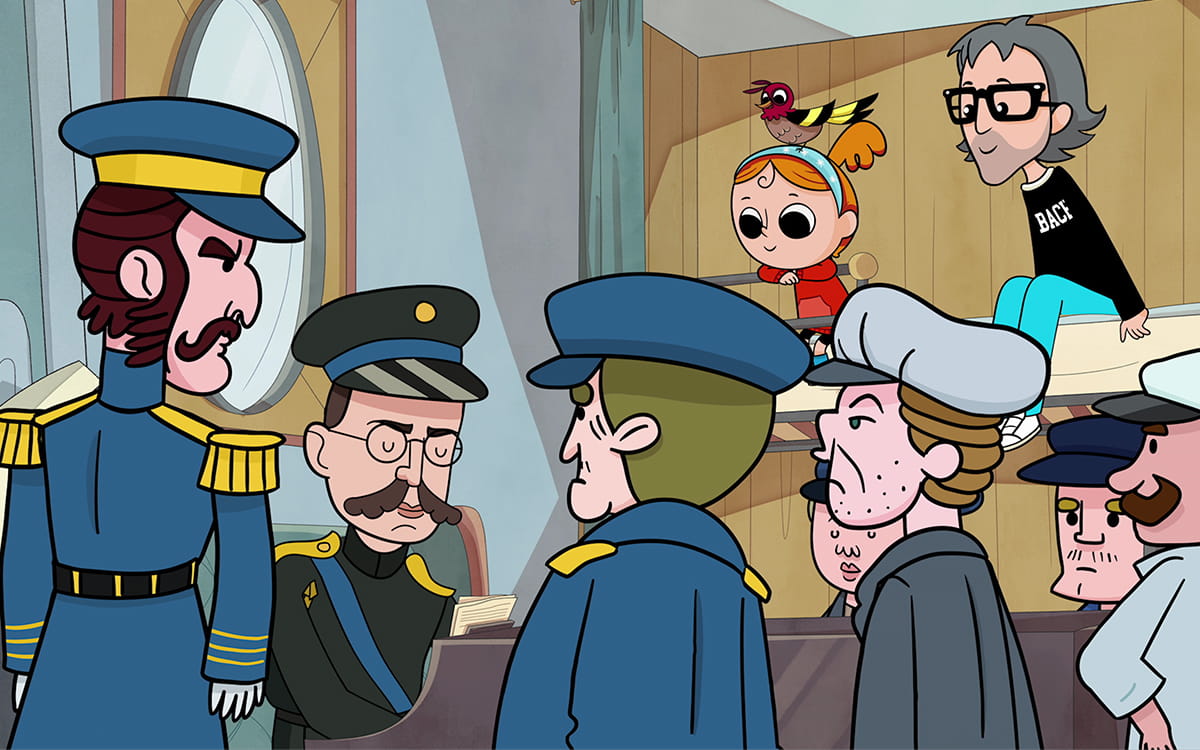
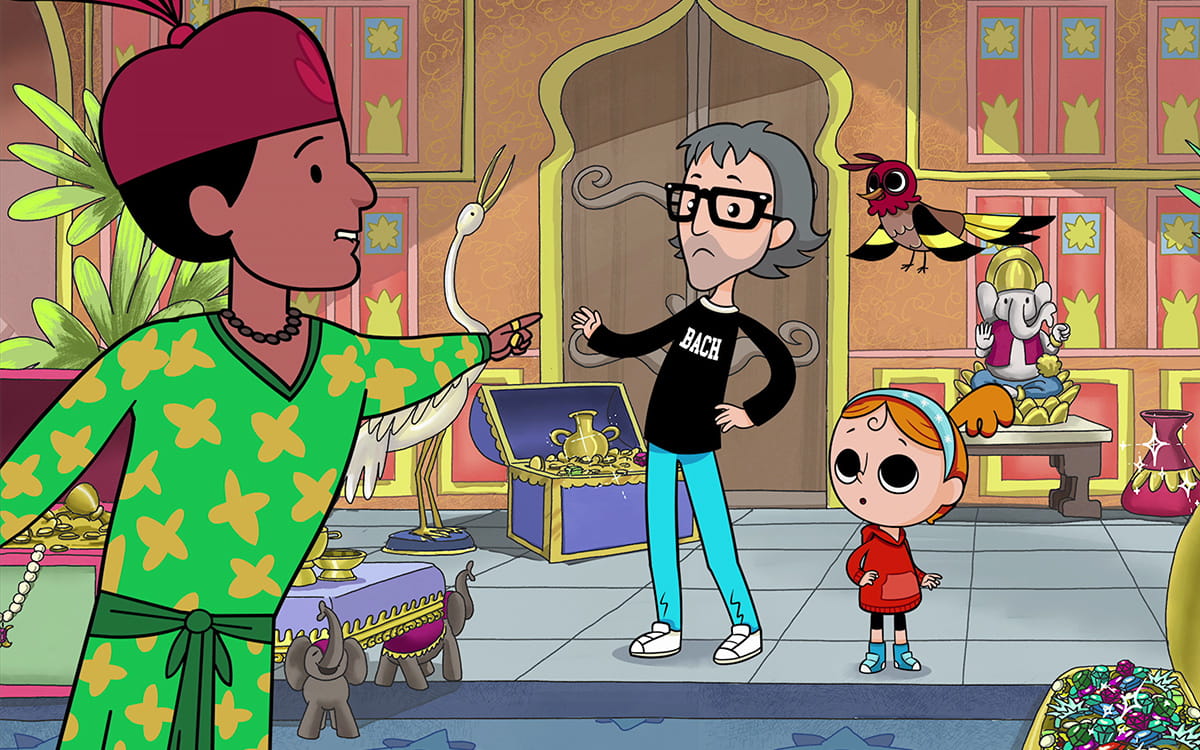
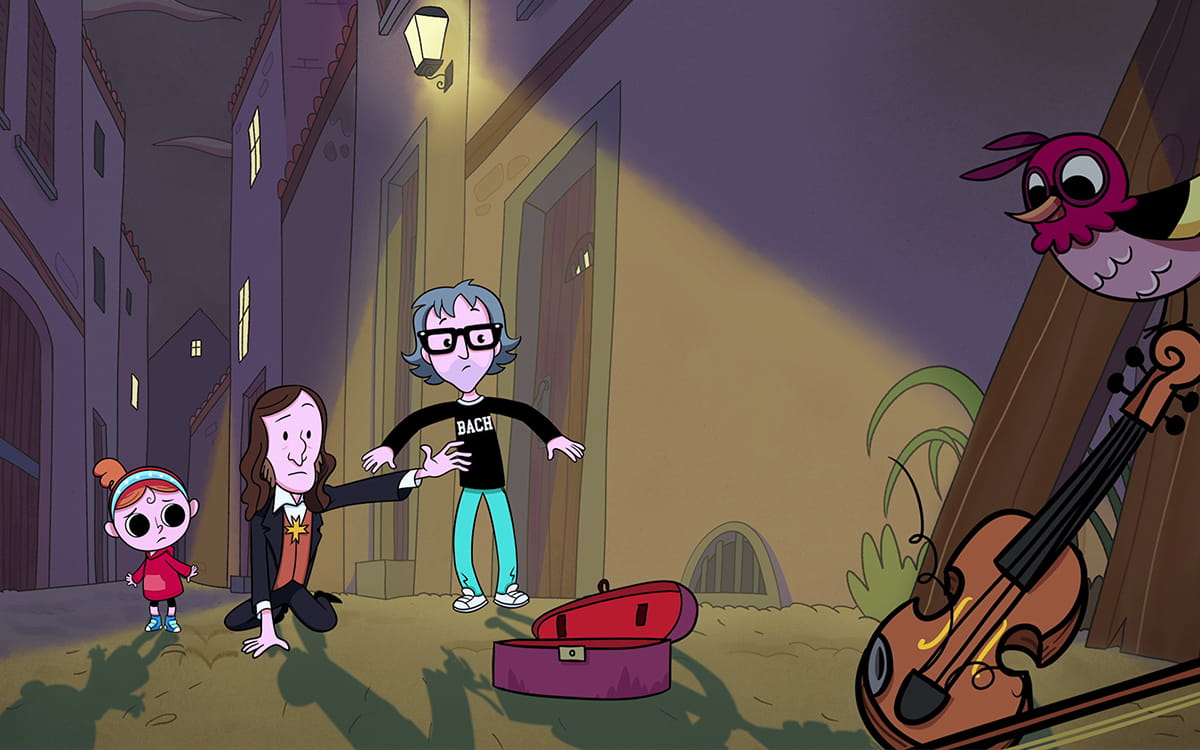
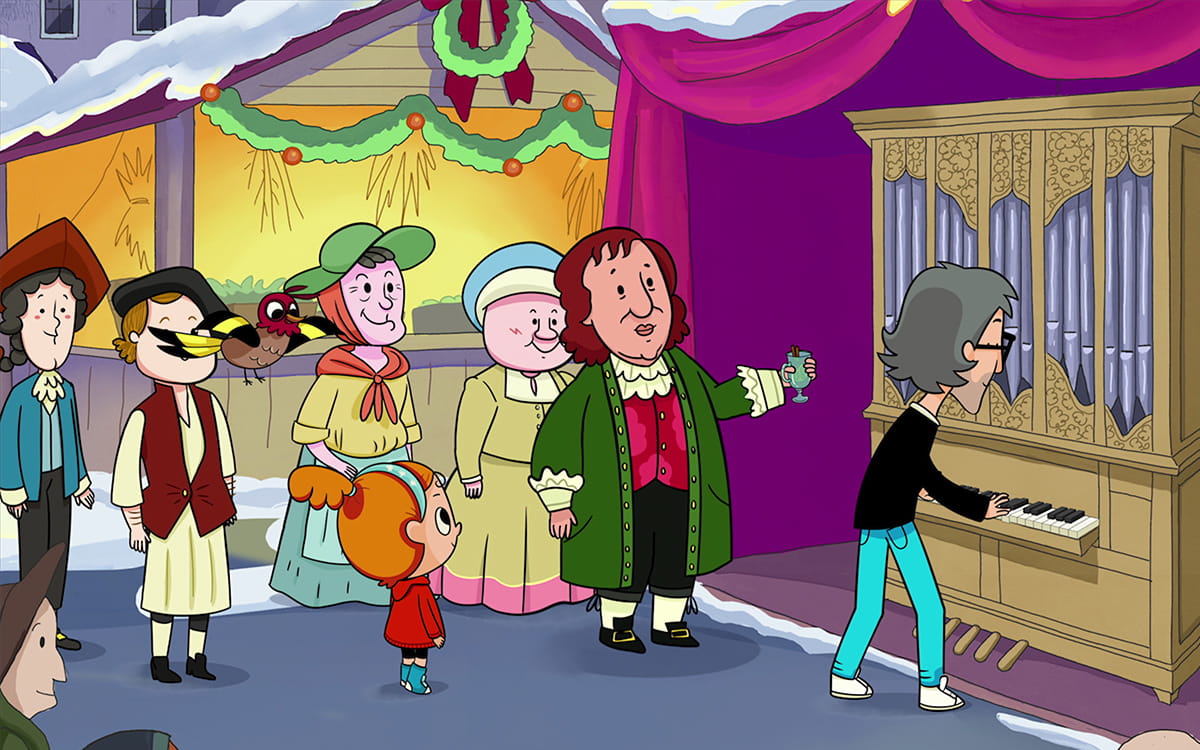
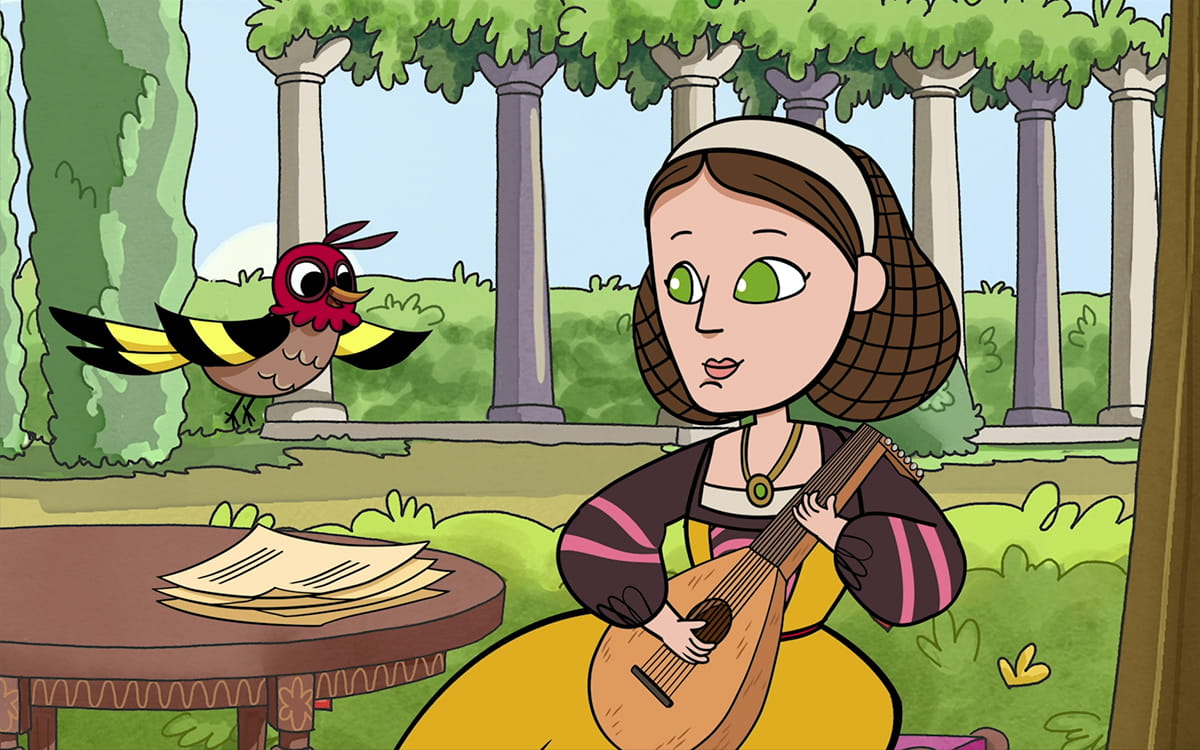
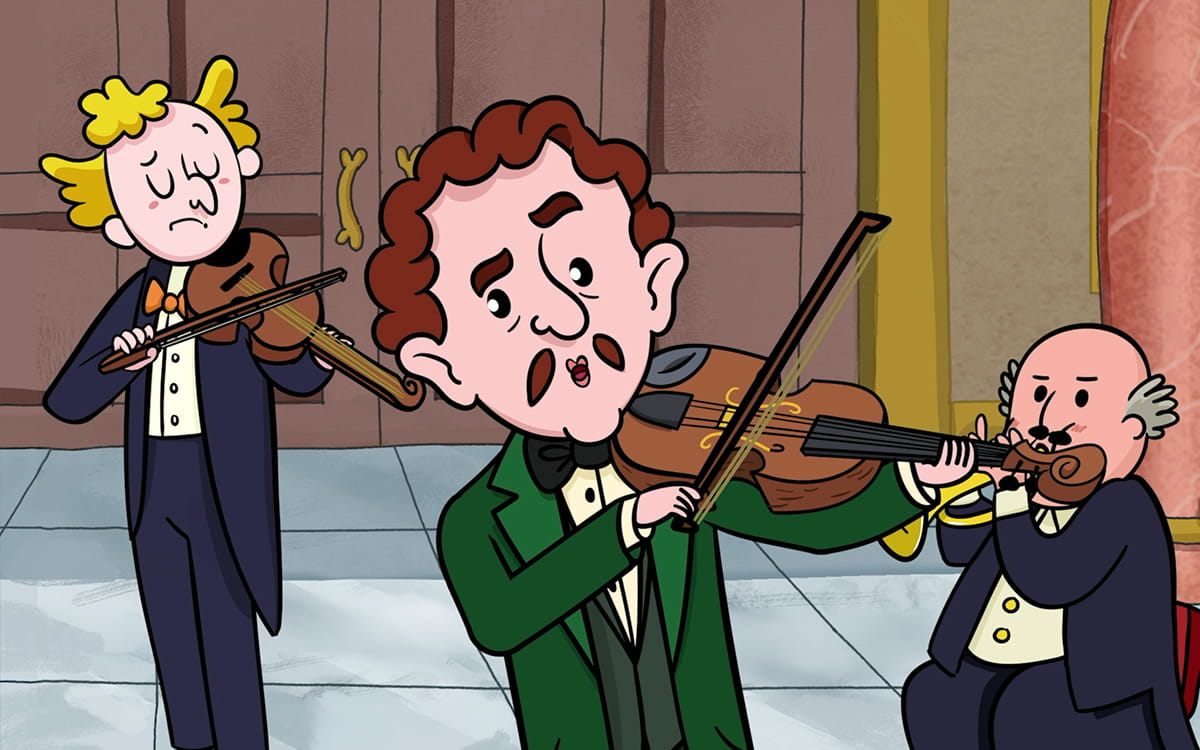
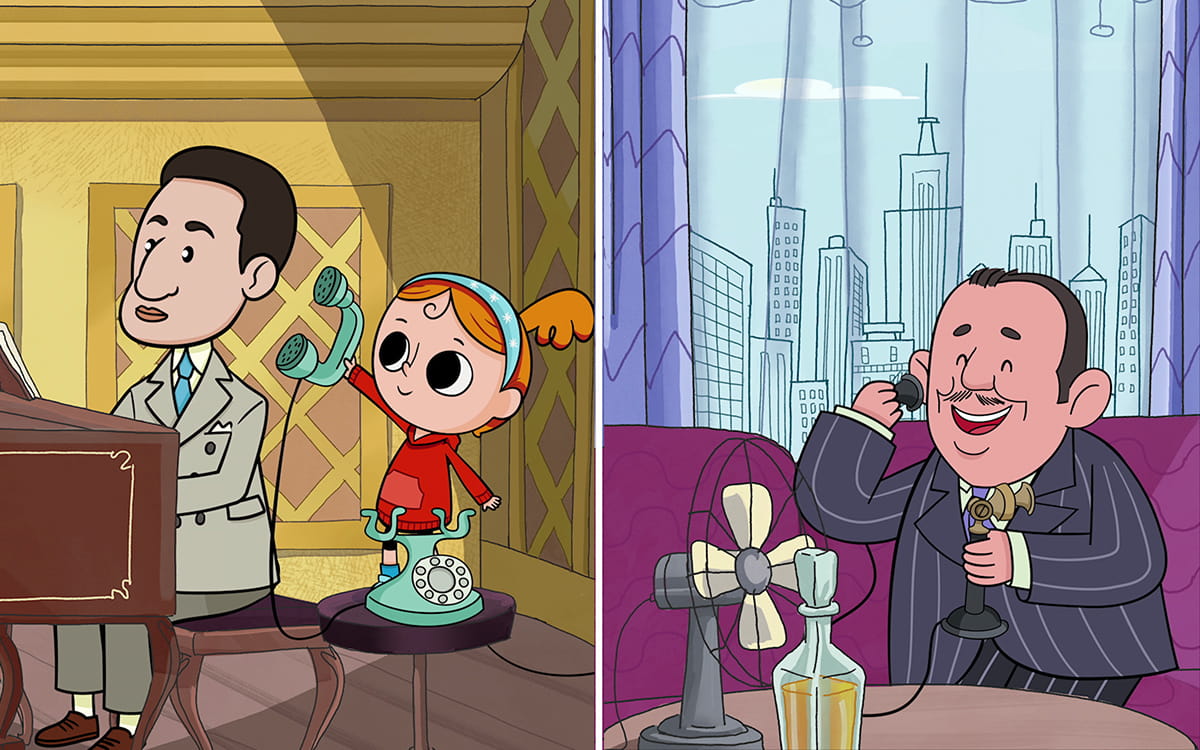
Jimmy & the Magic Key follows Jimmy and his niece Lola on a magical, time-travelling adventure through the world of classical music. With the help of Jimmy's piano, which also doubles as a time machine, they journey into the past to meet some of the greatest composers in history—and lend a helping hand when they need it most!
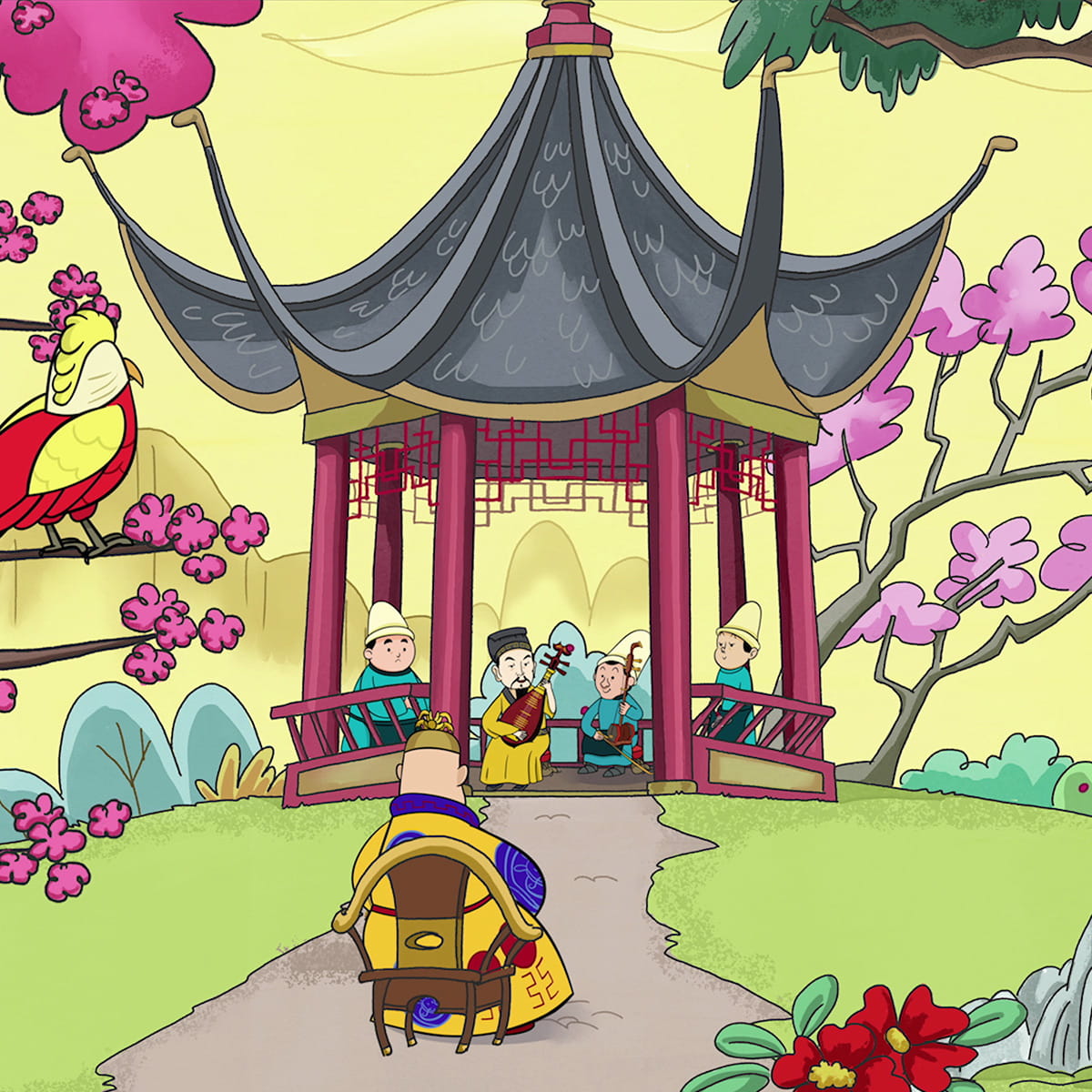
Jimmy and Lola travel back to China, where Ming dynasty music scholar Zhu Zaiyu is in serious trouble. The Emperor is furious that the orchestra keeps stopping to tune their instruments between songs. Zhu must find a solution before the next performance, or it’s off with their heads!
Say it like a maestro: (Joo Zye-ewe)
Are math and music opposites? According to Zhu Zaiyu (朱載堉), they’re actually two sides of the same coin!
Zhu Zaiyu was a prince in China’s Ming dynasty. He was an extremely talented scholar, mathematician and music theorist, and he used math to make music even better! Born in Qinyang, a city in the Henan province of China, Zhu studied music, music history and even dance. He is best known for his work on equal temperament.
Back then in imperial China, musicians played instruments like the pipa and erhu. But they didn’t use musical notes such as C, D and E. Instead, they had special names like gong, shang, jue, zhi and yu.
Each song started on a home note—the note where the music begins. For one song, gong might be the home note. For another, shang might be the home note. The tricky part was, when the home note changed, some notes didn’t sound right, so musicians had to stop and tune between pieces!
Zhu had a clever idea called equal temperament. He figured out a way to divide the octave into 12 equal steps, so that instruments could play many different songs without any tuning in between. No matter which note a song started on, musicians could move up and down between them smoothly.
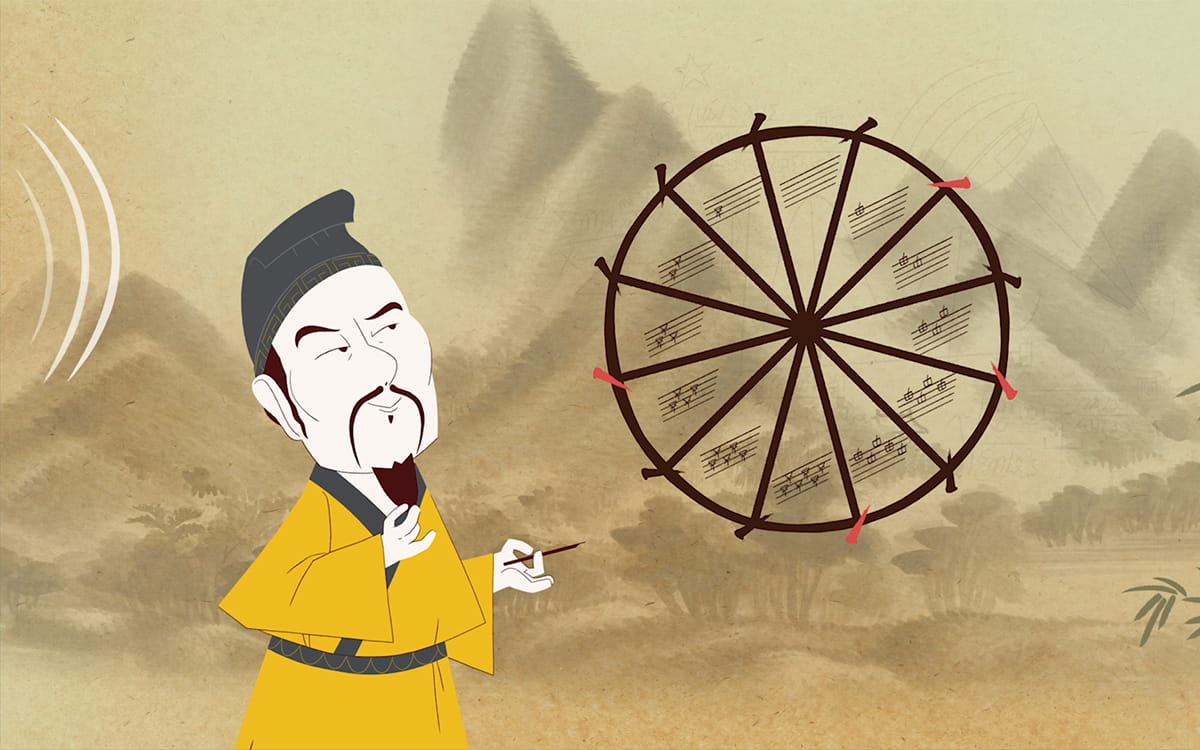
This idea laid the foundation for modern music. Funnily enough, a French mathematician discovered the same system a hundred years later—but Zhu did it first!
Zhu even built a set of 36 bamboo pitch pipes to test the system and prove that it worked. His work was so enlightening it was called “the crowning achievement of two millennia of acoustical experiment and research,” and he is remembered as one of the most important historians of Chinese music.
And he didn’t stop there. Zhu also explored other areas of knowledge such as astronomy, physics and calendars, and even corrected the Ming calendar by observing the stars!
Zhu Zaiyu showed that knowledge and philosophy of the world—math, art, music and science—are deeply interconnected. Understanding them together helps us appreciate the beauty of the world around us. Hand in hand, they shape the many things that make the world so fascinating. What a wonderful world we live in!
Can you spot musical or mathematical discoveries around you today?
Want to hear more amazing Chinese music and see exciting theatre? Check out Huayi – Chinese Festival of Arts 2026, happening from 27 Feb – 8 Mar 2026.
Rediscover the story of the Chinese zodiac in Run, Horse, Run!, or meet the legendary Sun Wukong in Wukong’s 72 Transformations—a delightful mix of puppetry, storytelling and Chinese orchestral music!