Choreographer: Md Al-Hafiz Hosni

#2 | Technical Manager for Sets & Props: Allister Towndrow

#1 | Technical Manager for Sets & Props: Allister Towndrow

Backstage Pass: Puppet Designer and Fabricator

Backstage Pass: Artistic Director

Backstage Pass: Set Designer

Backstage Pass
Backstage Pass: Puppet Designer and Fabricator
The magic of puppet making
Making puppets sounds fun, and in Singapore, some people actually do it for a living! Read on to find out more!
Pinocchio. Elmo. Kermit the Frog.
These legendary puppets may look alive—but who designs and builds them? That’s the job of a puppet designer and a puppet fabricator!
Meet Daniel Sim, a puppet designer and puppet fabricator.

They’re two different jobs, but Daniel does them both.
A puppet designer is someone who decides how a puppet looks and moves. A puppet fabricator then uses their technical skills to build the puppets and bring them to life!
Movement is life… Designing something that can come alive is quite an exciting thing.
Aren’t puppets just props?
Props are objects used by an actor on stage. They can be anything—from a book, to a sword, to a cowboy hat. But puppets are different. They are objects that move and come alive!
That’s what makes a puppet designer and fabricator’s job so exciting—bringing imaginary characters to life in magical worlds.
How it all started
Daniel first discovered puppet making in junior college while studying theatre. He chose puppetry as a skill—and that simple decision sparked a career of puppet designing and fabricating.
Later, he joined contemporary puppetry theatre company, The Finger Players. At first, he helped with simple tasks like sticking stamps and mailing advertisements. Then one day, he was asked to help build a puppet!

His first project was to help create the shadow puppets for The Book of Living and Dying. The team built spinning globes with cut-out shapes—leaves, dinosaurs and even a map of the world. With a light in the centre, the spinning globes cast moving shadows across the performance space, transforming the room.
Back then, there was no laser-cutting technology. Everything was cut by hand, and it took hours. But Daniel loved it. Seeing something built from scratch come to life was exciting.
His first project was to help create the shadow puppets for The Book of Living and Dying. The team built spinning globes with cut-out shapes—leaves, dinosaurs and even a map of the world. With a light in the centre, the spinning globes cast moving shadows across the performance space, transforming the room.
Back then, there was no laser-cutting technology. Everything was cut by hand, and it took hours. But Daniel loved it. Seeing something built from scratch come to life was exciting.

There are many kinds of puppets!
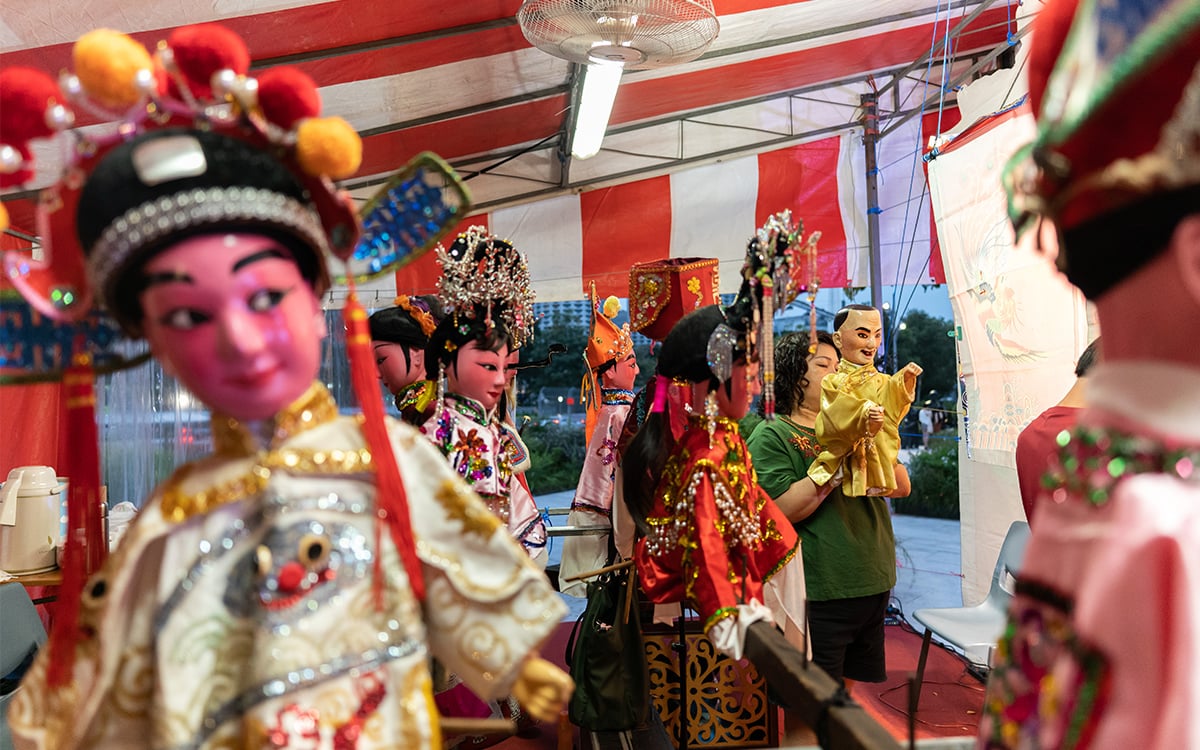
The art of puppetry has existed for centuries across many different cultures around the world. They come in many different forms.
Some examples include marionette puppets, where a puppet is controlled from above using strings or wires. There are also hand puppets, operated by a hand inside the body or head of a puppet. Another type is rod puppets, which are moved using rods or sticks.
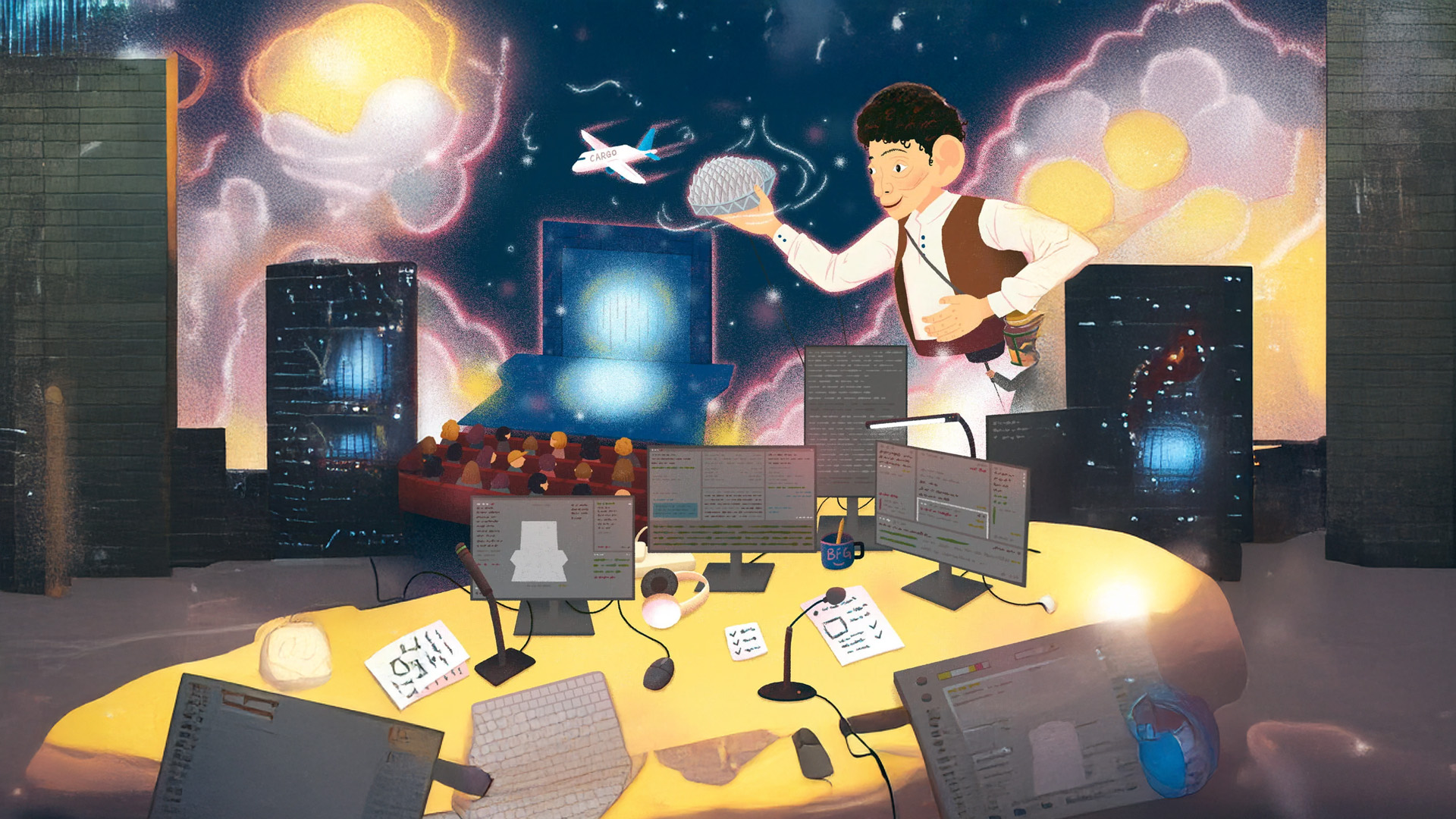
An example of rod puppets can be seen in the theatre production of Roald Dahl’s The BFG, which features wonderfully giant puppets operated with rods. Daniel has worked on rod puppets too, including human-sized ones like the Mother and King puppet for Tall Tales: Bananas and Ang Ku Kuehs, presented at Esplanade for Huayi – Chinese Festival of Arts 2026.

Puppets made of light and shadow
Shadow puppets are another type of puppet. These are special puppets which use light and shadow to create shapes on a screen, and is one of the oldest forms of puppetry in the world!
For Tall Tales, Daniel worked on several shadow puppets, including a giant snake!
Watch how Daniel brings the giant snake to life using the magic of science!
Lights, puppets, magic
Like Daniel shared in the video, a puppet designer and fabricator must consider three really important things to make shadow puppets work—the light source, the puppet and the screen. The position, size and materials used all matter.
The set for Tall Tales used three screens, with the side screens slanted at an angle. The giant snake puppet had to move across all three. At first, Daniel tried using two lights, one on each side of the set. But this created a double shadow where the lights overlapped.
So he had to innovate and switch gears. He changed his approach and used a handheld torchlight to follow the puppet instead. Problem solved!

Traditional skills, new technology
The world has changed—even for puppet designers and fabricators! Today, technology like 3D printing and laser cutting help speed up the fabrication process.
But Daniel believes that traditional art skills are still just as important—sculpting, drawing, sketching, carpentry and dressmaking remain vital to the art form.
Embracing both traditional and modern techniques helps Daniel push creative boundaries in puppet making!

The courage to try
Puppet design and fabrication isn’t always a smooth road—some ideas don’t work out, and that’s just part of the process. It’s important to be brave to try, fail and let go.
Daniel reflects on creativity and courage in the video below!
From paper and sticks to lights and shadows, puppets may start as objects—but in the right hands, they can tell stories, move audiences and come alive.
Take the quiz!
Do you have what it takes to be a puppet designer and fabricator? Take this quiz to find out!