Time taken : >15mins

A stage full of dancers, lights and music may look effortless, but who orchestrates it all? Read on to find out!
Have you ever wondered how a dance performance is created? It takes much more than the dancers on stage. Behind every show is a whole team of artists working together to bring a vivid world to life on stage.
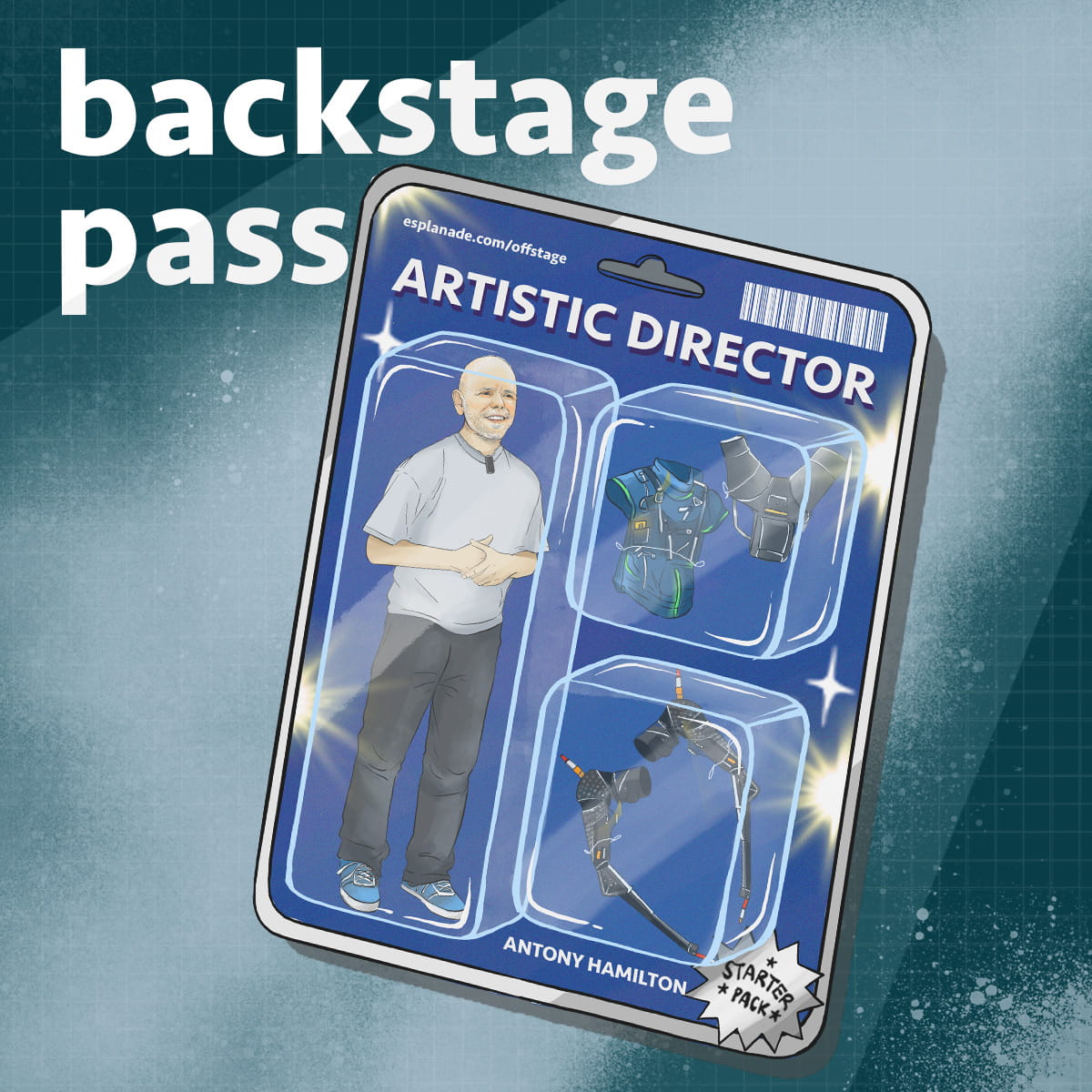
Leading this process is someone called an artistic director!
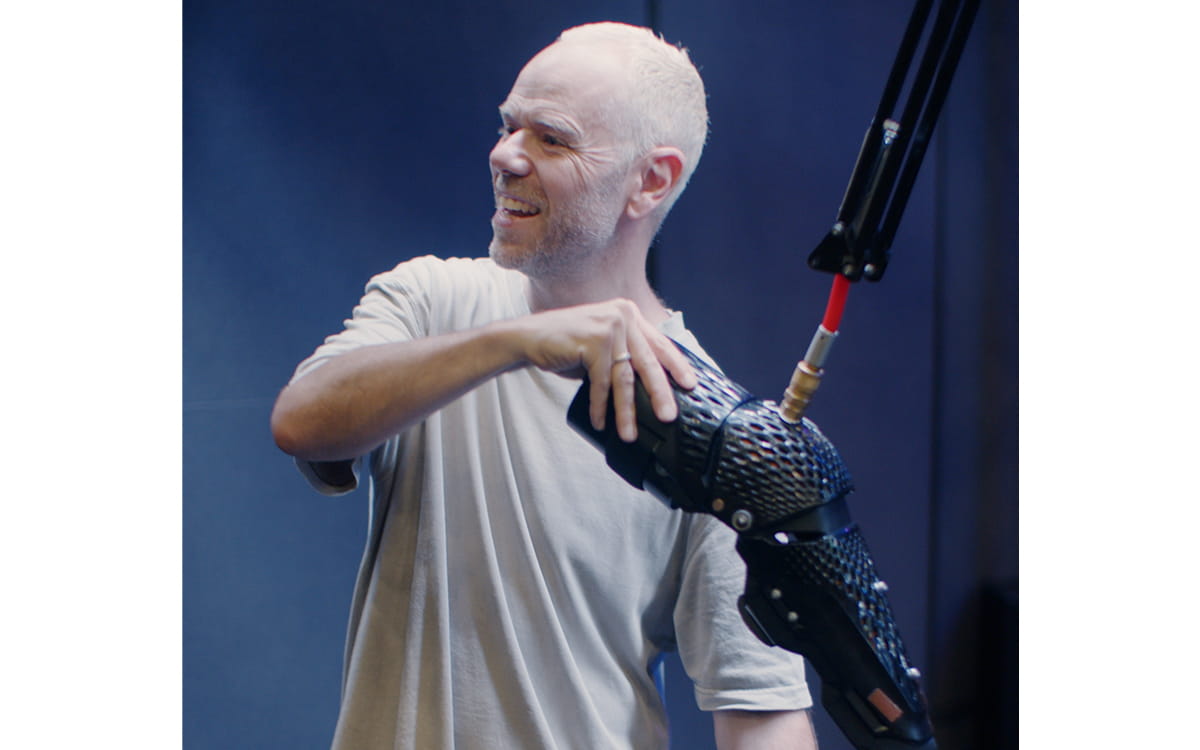
As an artistic director, Antony’s job is to bring all the elements of a performance together—the choreography, stage design, lighting, sound, costumes and more—so they come together to form one cohesive show.
His role is a bit like a conductor of an orchestra. Each person plays a different part, and Antony makes sure that everything blends harmoniously.
He also spends a lot of time thinking about the meaning behind the work—what he wants to say and how he wants to say it. How does he make sure the audience will understand the message and feel connected to the work? As an artistic director, Antony keeps an eye on the big picture to make sure every element supports the story.
Every show begins with a tiny spark—the idea!
Antony is really fascinated by how humans interact with things they’ve built—their tools, machines and buildings. He believes that everything we make is meaningful and even sacred in some way—a form of art in itself! Objects are not just “things”. They say something about who are we and our purpose in the world.
This idea became the starting point for the innovative dance piece U>N>I>T>E>D. Presented in 2025 at the Singtel Waterfront Theatre as part of da:ns focus, Antony explored the relationship between humans and the material world in the show, encouraging audiences to reflect on what they saw and form their own interpretations.
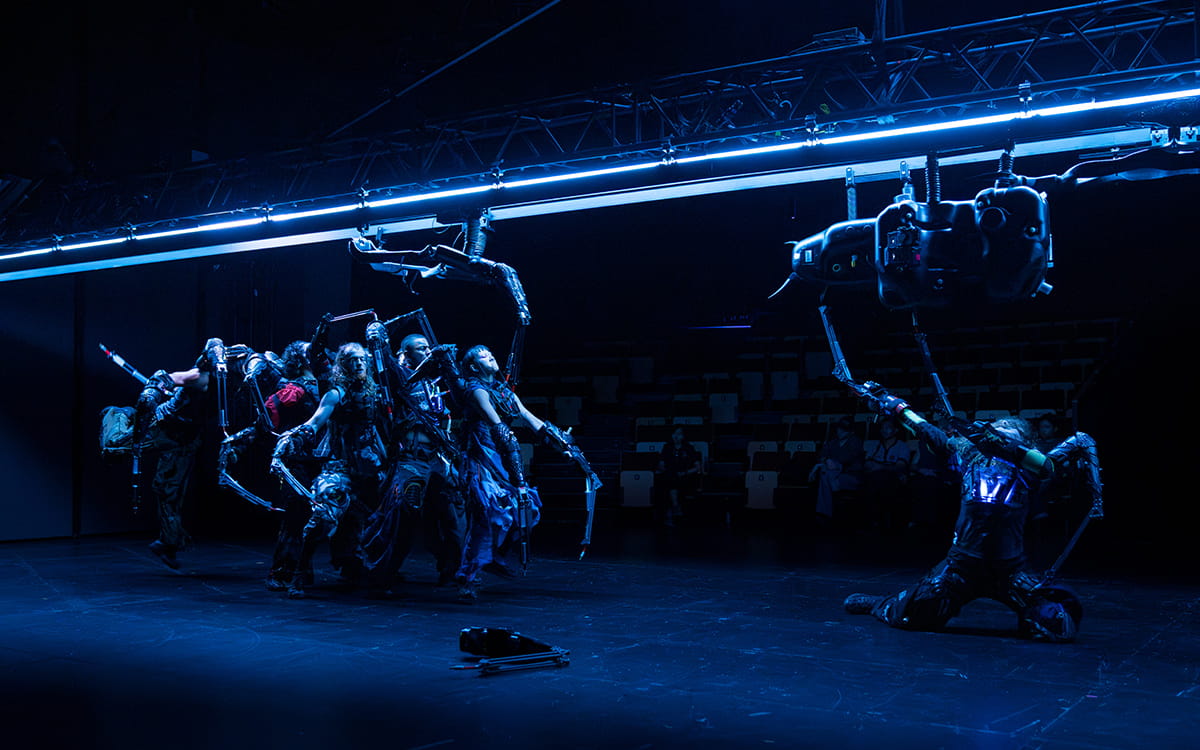
<em>U>N>I>T>E>D</em>, <em>da:ns focus – Connect Asia Now (CAN) 2025</em>. Photo credit: Jootz
Antony grew up in the “golden era” of science fiction cinema, way back in the 1980s and ’90s. When VHS tapes and camcorders became popular, anyone could make films, even without a huge budget. Kids and amateur filmmakers used whatever they could find around them—lights, smoke and everyday household items to create imaginative new sci-fi worlds!
The atmosphere and creativity of these old sci-fi films inspired Antony when creating U>N>I>T>E>D—from the set and costumes to the lighting and sound design.
Once the idea is in place, Antony begins shaping the world that the dancers will perform in. But he doesn’t work alone. As an artistic director, Antony figures out who he wants to work with and then shares his creative vision with them. He tries to express himself as clearly as possible, while also leaving lots of room for everyone to discuss and come up with new ideas.
For U>N>I>T>E>D, Antony worked with many different artists around the world. Peter Gregory from the United States created the concept art for the piece. Indonesian music duo Gabber Modus Operandi composed original music. And the costumes were the brainchild of Future Loundry from Indonesia and Creature Technology Co. from Australia. Antony helped bring everyone’s ideas together into one shared vision.
One of the most exciting ideas for U>N>I>T>E>D was a long, spine-like structure that ran through the performance space. In an ideal world, Antony would have loved to make the spine even larger and higher so the dancers’ bodies would appear dwarfed by it. However, the size of the room and available budget meant there were limits.
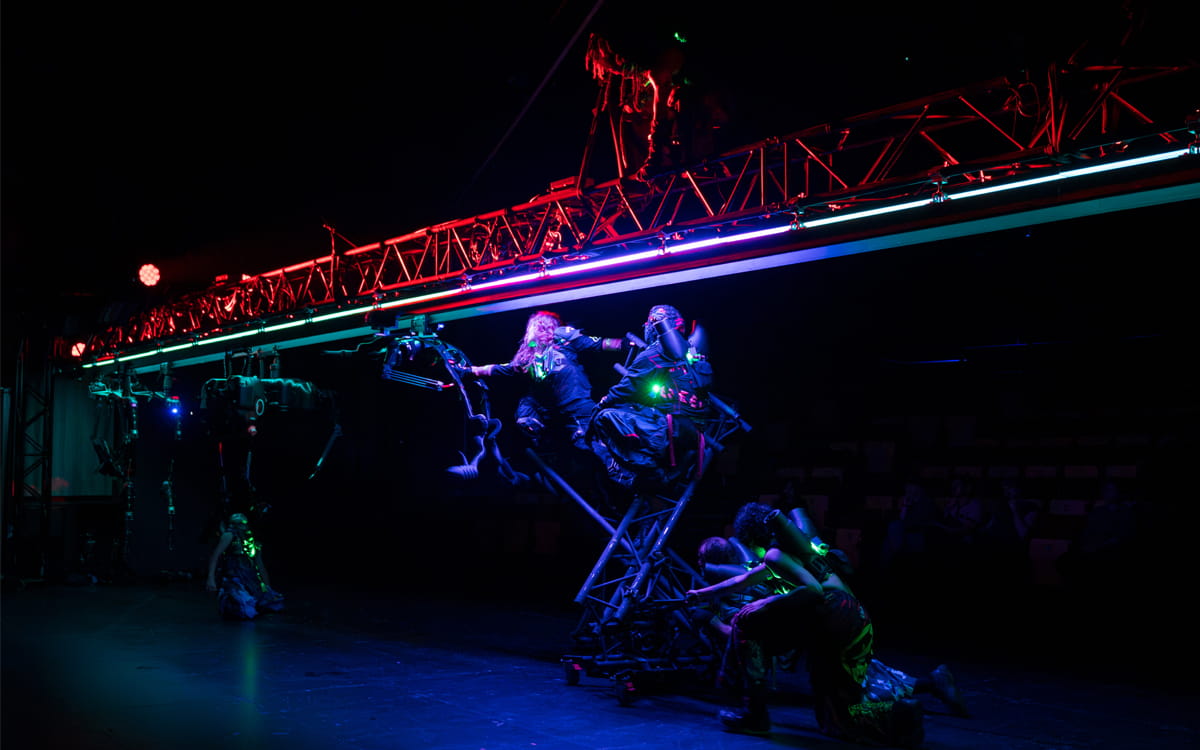
<em>U>N>I>T>E>D</em>, <em>da:ns focus – Connect Asia Now (CAN) 2025</em>. Photo credit: Jootz
Part of being an artistic director is mastering the art of compromise. A good artistic director knows how to work within constraints. Sometimes these limits even spark new and unexpected creative solutions—better than imagined!
Not all artistic directors choreograph their own work—but Antony does.
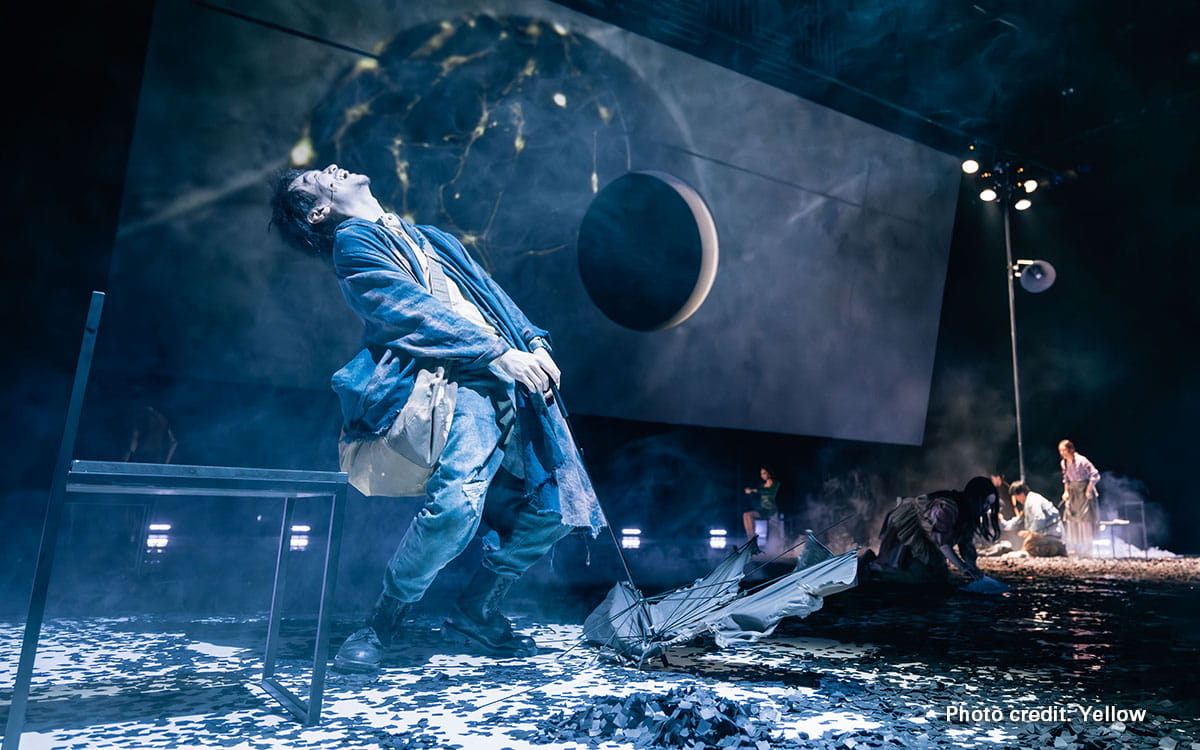
In U>N>I>T>E>D, the costumes included extra mechanical arms called exo-arms. They were really heavy and restrictive, and some dancers felt like they had to relearn how to move!
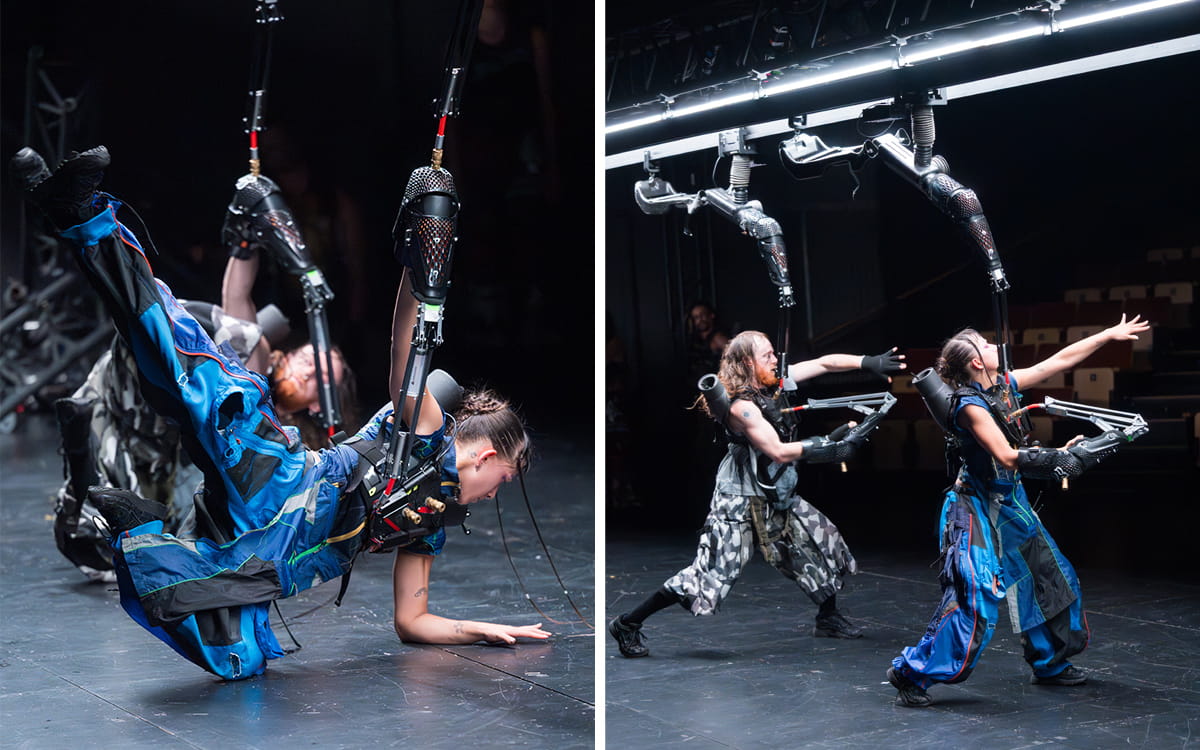
<em>U>N>I>T>E>D</em>, <em>da:ns focus – Connect Asia Now (CAN) 2025</em>. Photo credit: Jootz
This made developing the choreography really challenging. But instead of shying away, Antony leaned in and used the restricted movements as part of the choreography. The unusual, sharp and jagged movements became a unique feature of the piece.
Every performance starts as a tiny idea. Antony shows how an artistic director uses their vision, creativity and collaboration to transform that spark into a powerful performance for all to enjoy!
Q: Other than science fiction, what else inspired the costumes in U>N>I>T>E>D?
Antony: There are a whole lot of things that contributed to the universe created in U>N>I>T>E>D. Some of it is from cinematic influences, some from science fiction influences, but actually, a lot of it is really about our contemporary experience—looking at emerging subcultures of fashion, street culture, street art and even the contemporary practice of upcycling and sustainability.
All of these things also contribute to the vision of the work. And that's because the collaborators I have worked with also bring a certain ethos and sentiment about sustainability, upcycling and reimagining different cultural spaces and contexts. It's just such a pleasure to work with them to bring their vision into this as well.
Q: What are the sets and costume made of?
Antony: The set pieces are mainly made from upcycled materials. For example, we used an air conditioner duct and petrol tanks. Originally, when we first made the show, we used recycled petrol tanks. But you can't airfreight those materials because they have come into contact with petrol, which is flammable. So the one’s we’re using are totally brand new and plain.
The costumes are sort of something between a costume and a set element. The exploration of developing these costumes was really fascinating and exciting because we’re working with a lot of domestically available materials like motorcycle armour, a domestic lamp from IKEA that has been deconstructed and reassembled, a hose clamp for watering your garden and even a syringe!
Do you have what it takes to be an artistic director? Take this quiz to find out!