Time taken : <5mins

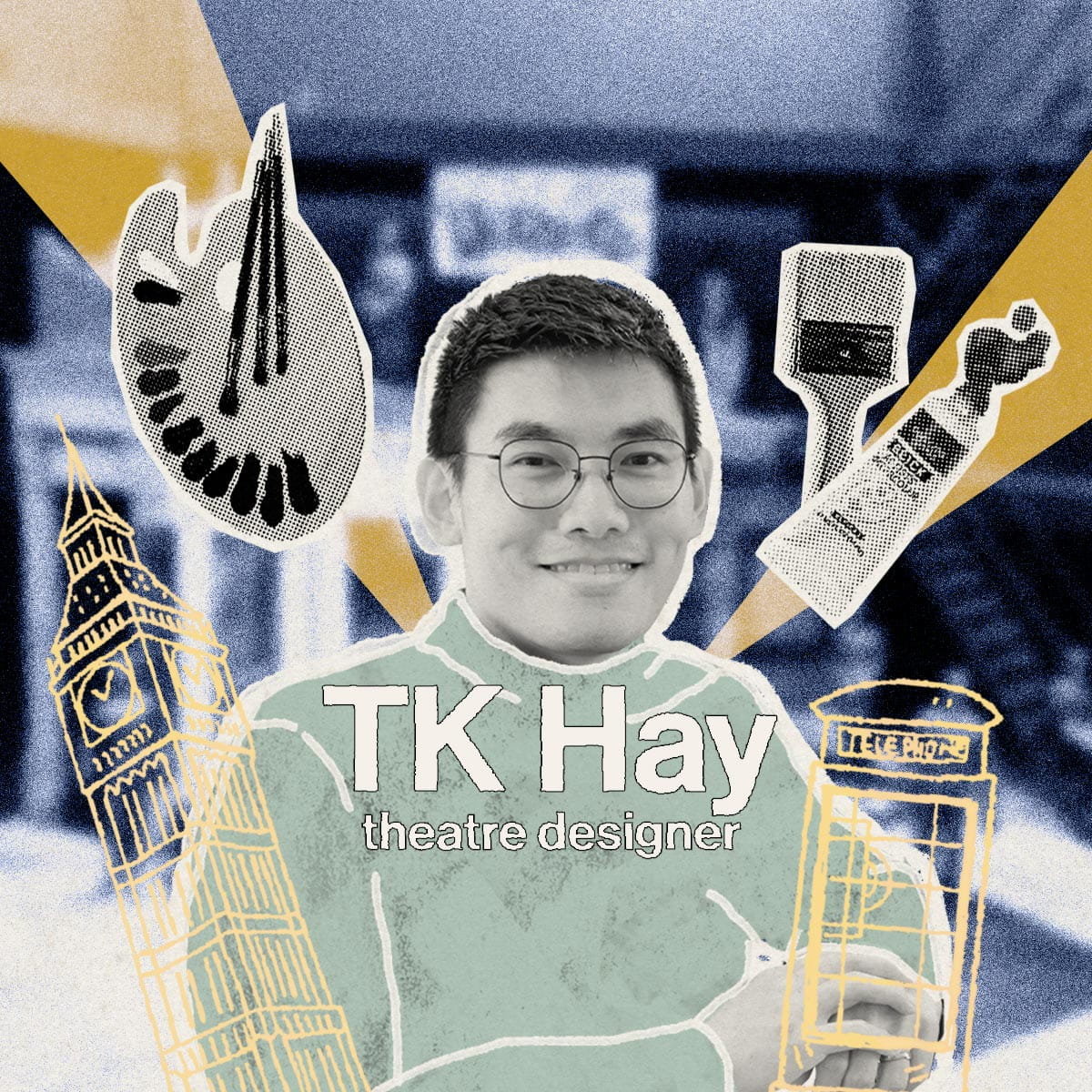
TK Hay is a theatre designer based in London, UK. The sets he has created have won him many accolades, and he has designed for established venues like the Royal Court Theatre.
TK’s path has been shaped by instinct, from the moment he dropped out of an architecture course to work in theatre full-time. For two years, he worked in various capacities—from casual lighting crew to drafting assistant for set designers. And in 2016, he received a National Arts Council Scholarship to attend the Royal Welsh College of Music and Drama, where he pursued a BA in Design for Performance (Set and Costume Design).
Upon graduating in 2019, he won the prestigious Linbury Prize for Stage Design, following in the footsteps of past winners Es Devlin and Miriam Buether. Since then, the accolades have continued. He was awarded Best Designer at The Stage Debut Awards in 2022, and most recently the UK’s Arts Foundation Futures Award Fellowship for Theatre.
He returns to Singapore regularly to work on local productions like Wild Rice’s G*d is a Woman, which won the Straits Times Life Theatre Awards’ Production of the Year in 2024.
TK dives into the craft of stage design and shares how winning the Linbury Prize catapulted his career.
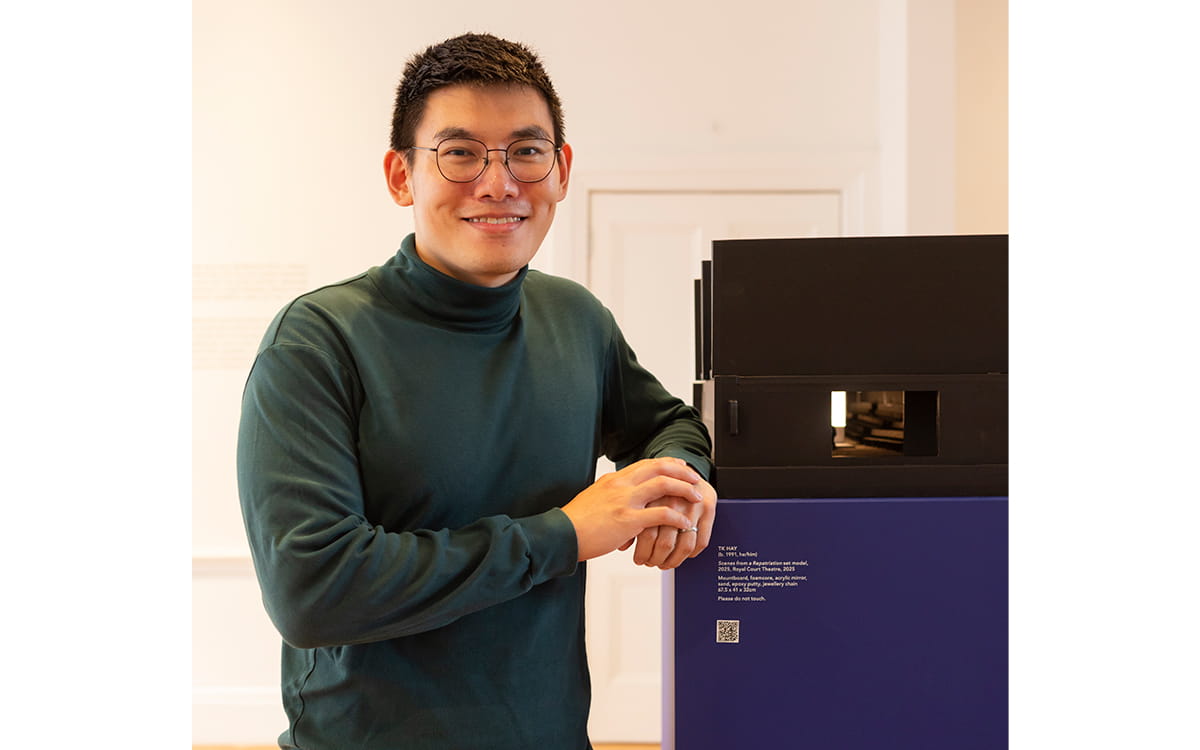
TK Hay, photographed by Kemka Ajoku.
The Linbury Prize for stage design is the only national competition in the UK for graduates to win a commission to have their stage design fully realised by a team. I worked with the Octagon Theatre Bolton in Greater Manchester. They were very kind, supportive and encouraging, and advocated for me in the scene, which helped me secure a few jobs in the region.
The prize serves as a catalyst for theatre designers. However, while the recognition is valuable—prizes don’t automatically translate into work. Ultimately, it comes down to connections and networking.
The Linbury Prize was a strong reason for me to stay on after my graduation. I hone my technical craft in the UK to work on Singaporean stories, because Singaporean theatre is what has brought me here.
I had three years in a safe college environment to get used to how people work and communicate, and to learn the nuances of British communication. Different societies have different hierarchies and biases that you learn to navigate. Those have been the biggest obstacles to integrate and build my career in the UK.
I notice an immediate difference in how we treat the craftspeople who create our sets—the builders, painters, scenic artists, and prop makers. In the UK, it’s a joy to work with these professionals because they take genuine ownership over what they’re creating. It feels like a collective form of art-making rather than a transactional, corporate endeavour.
In Singapore, we rely on contractors with migrant labourers who leave after many years and take all their knowledge and experience with them. We don’t acquire or retain that expertise locally, and the work is still perceived as menial labour despite the immense thought, care and effort required. If we could shift our mentality towards truly appreciating this craft, we could start nurturing talent and building the generational knowledge that doesn’t exist here yet.
I got to work on this regional tour of Little Shop of Horrors. It started in Ipswich, then to the Lake District, Bolton, Hull, and finally to Windsor. I had to design a set that could adapt to five different stage configurations. That was really technically challenging but also very satisfying. I visited all the venues to get acquainted with the space, and I had to reassure different people and the theatres that the set would work, would fit, would look good and that the sightlines would be fine. That was a really interesting and unique challenge which I wouldn’t have had the opportunity to do in Singapore.
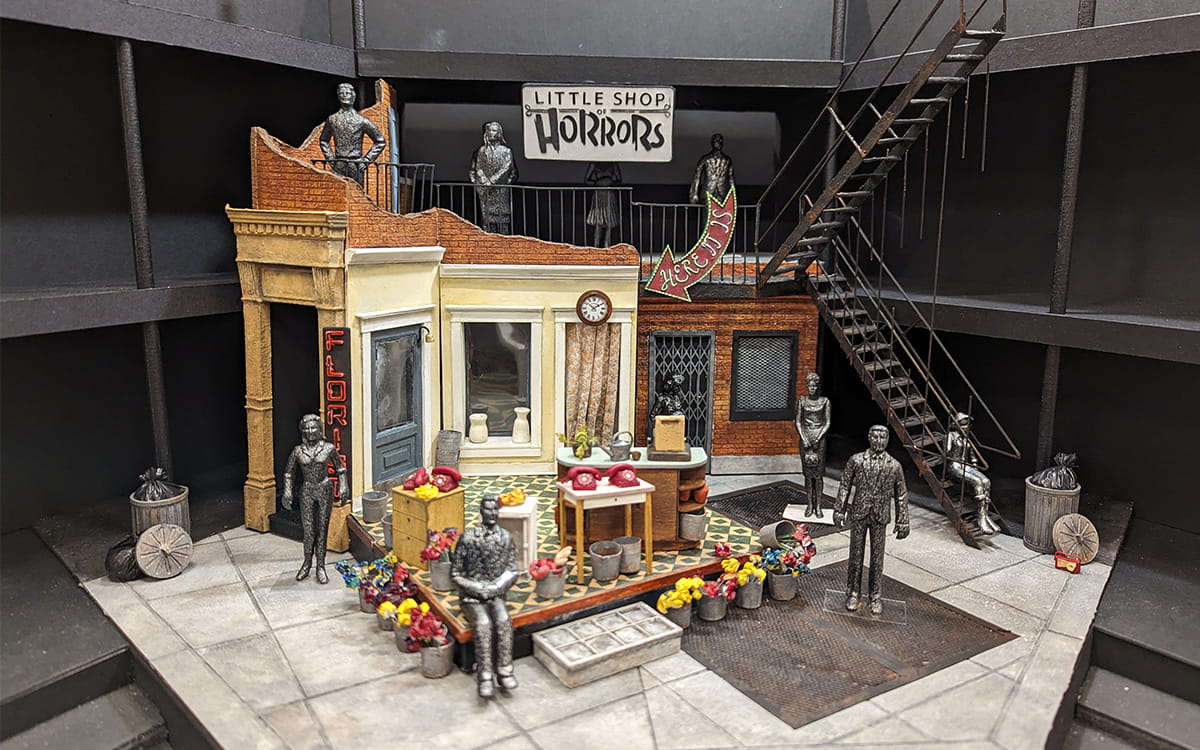
Set model for <em>Little Shop of Horrors</em>.
Given the current geopolitical situation—the social instability and far-right movements gaining ground globally—it’s hard not to feel pessimistic about the prospects. Despite this, I still think it’s absolutely worth training and working abroad to see how different countries and sectors operate. That exposure is invaluable. Many of us who have trained abroad have brought back such valuable practices for the local scene. But given the current situation, it’s important to do your due diligence and be aware of the realities. The environment might not be as open or inviting as it was decades ago.
Contributed by:
Rydwan Anwar spent two decades programming theatre and festivals in Singapore. He is now based in Newcastle upon Tyne.