Time taken : <5mins

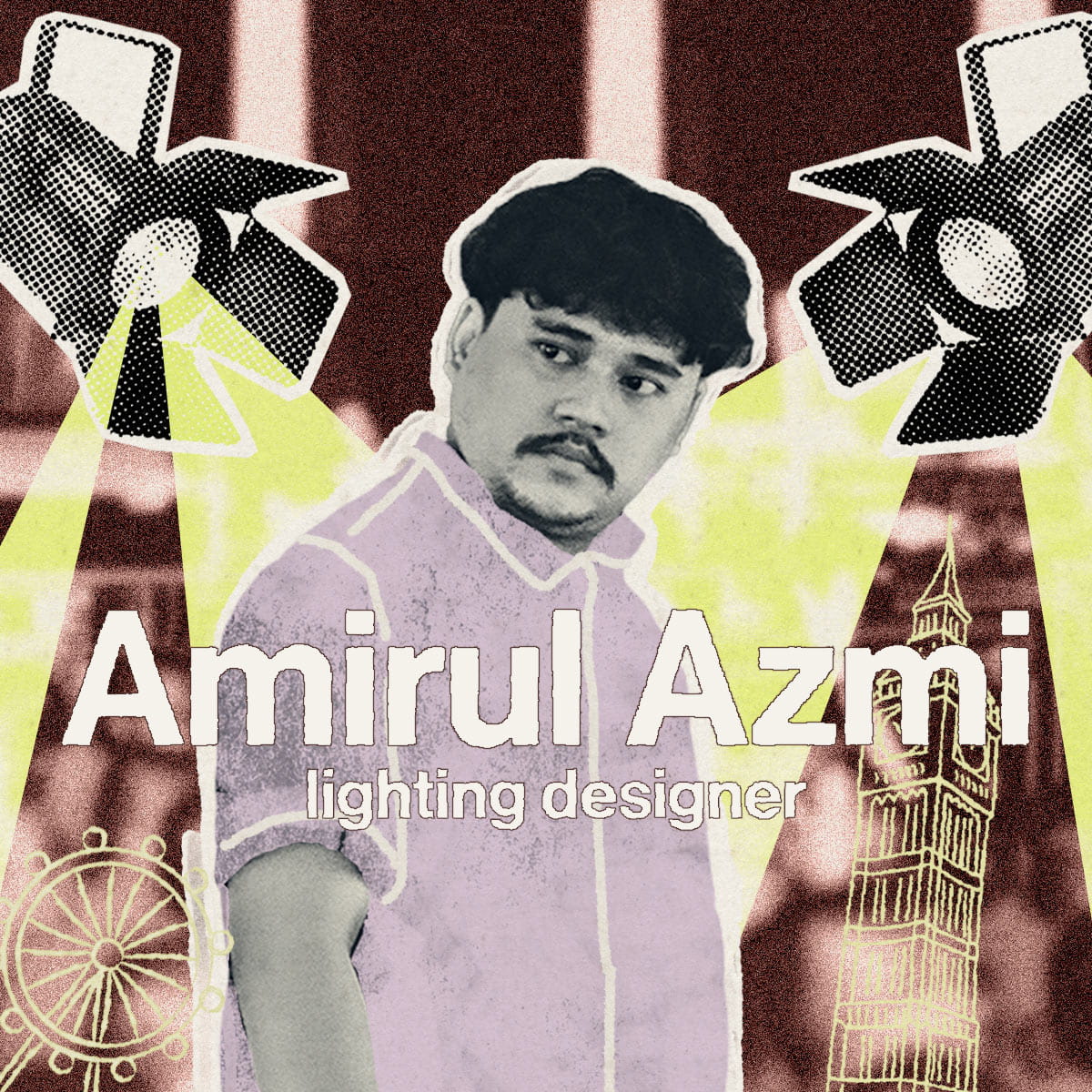
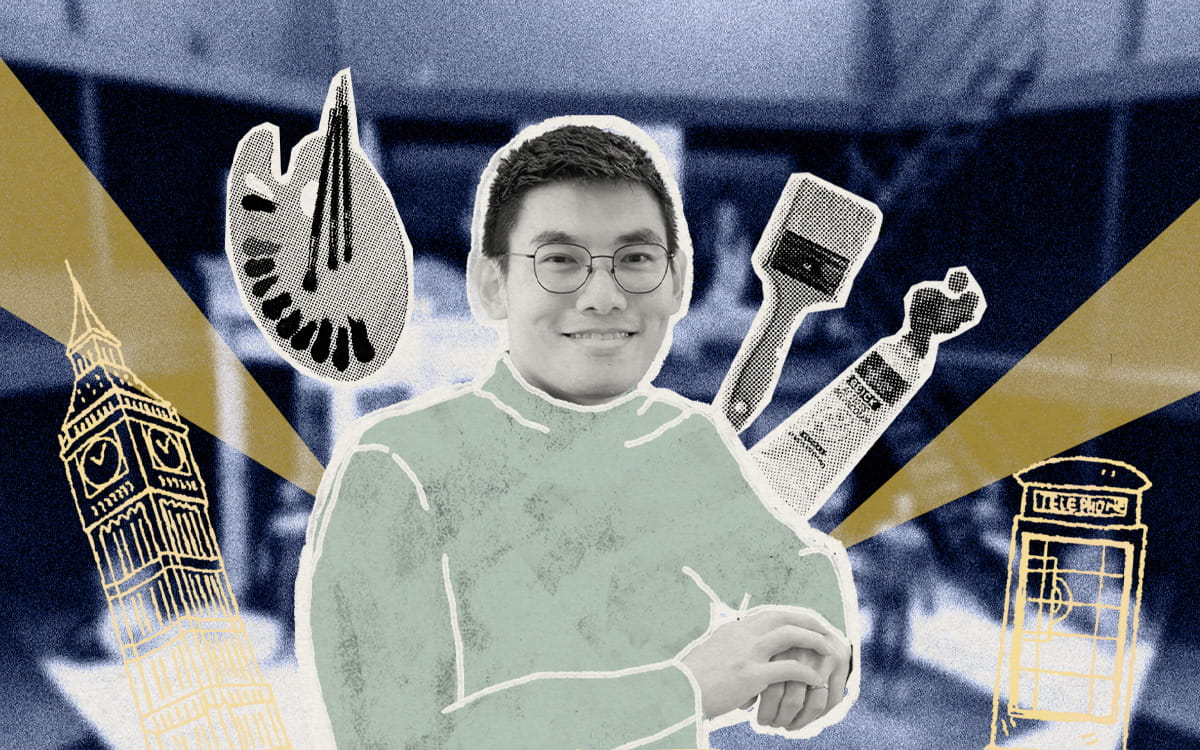
Amirul Azmi is a freelance lighting designer and theatre technician based in London. Working in one of the world’s finest and highly diverse theatre scenes, his natural curiosity and hustler spirit is what gives him his edge and drives him to make the best sets come alive on stage.
His foray into technical theatre began way back in ITE, where he learnt the fundamentals of sound and lighting operations through attachments with Republic Cultural Centre and The Production People.
He continued feeding his curiosity throughout his national service, where he worked as a technician with the Singapore Armed Forces Music & Drama Company. They toured a show called Colours of Singapore to Rockhampton in Queensland Australia, where Amirul observed how the lighting designer creatively juggled technical and artistic challenges to produce a great show.
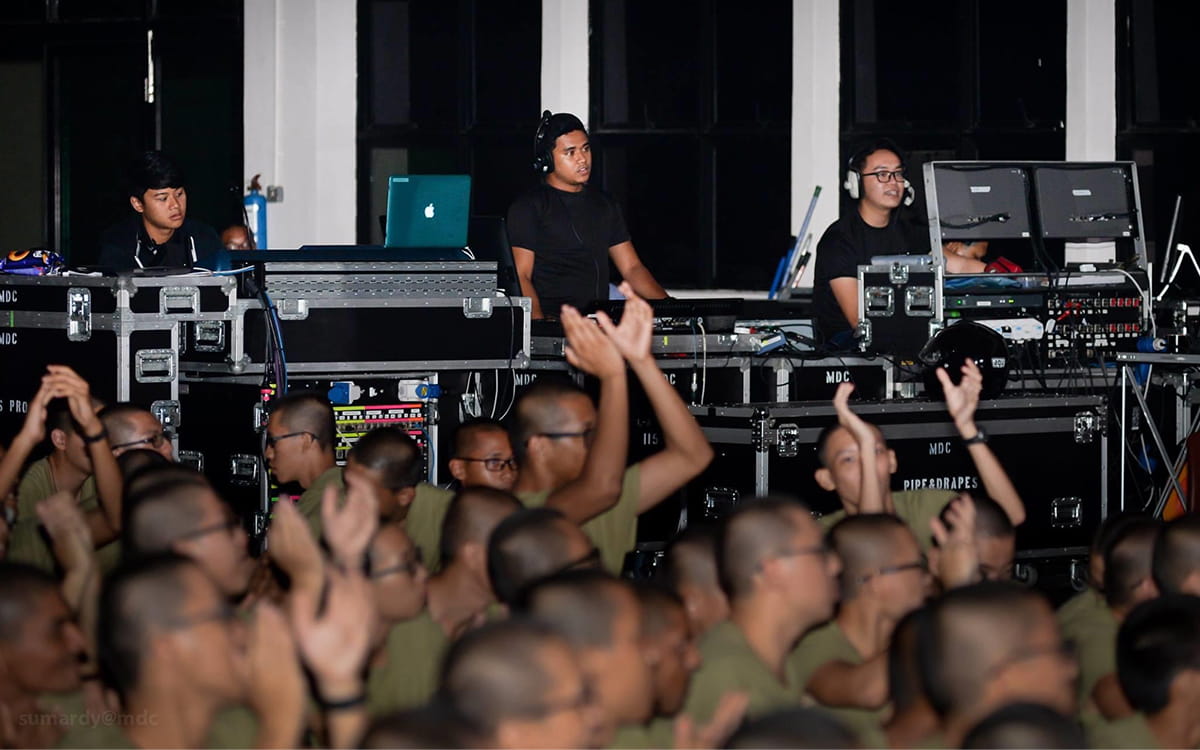
Amirul (centre), part of the technical team for <em>Recruits Night</em>, with the SAF Music & Drama Company.
This experience sparked his interest to learn more about lighting design theory, which led him to study at LASALLE College of the Arts, where he had the chance to assist established lighting designers like James Tan.
Driven by the same quest for knowledge, he moved to London to pursue an MA in Collaborative Theatre to study production and specialise in lighting design.
Since then, he’s never looked back, and his continuous fire to learn and give his all brings him opportunities in both London and Singapore.
He talks to us about the hustle and what it really takes to follow one’s ambition.
Adapting to the unfamiliar. I had to work with new people in venues I’d never set foot in, travel to unfamiliar cities and adjust to a different pace of work. Each project meant learning to adapt quickly.
Definitely. Communication styles, professional practices, artistic approaches, and audience expectations are all different. People in the UK can be very direct but also constructive in their criticism.
The funding structures are quite different from Singapore’s system, which can be confusing for international artists at first. Creatively, the UK has a wide spectrum of stylistic preferences, with a strong emphasis on detail and polish. This precision ensures productions are both artistically strong and commercially viable, giving audiences value for their money.
I had to start completely from scratch. As an immigrant, I felt the need to offer something unique beyond what local practitioners could provide. The competition is intense; if 10 people are fighting for one opportunity back home, it feels like 100 here. I believe that everything has its own time and place, but I think I have to be running at 200% every day. Whatever the locals can offer, I have to offer twice that. That’s how competitive it is. It’s a lot of work to get there.
Singaporean practitioners can learn the value of dedicating time and resources to creative development. We can also afford to be more open to risk-taking in artistic work, especially when dealing with heavy topics. Maybe allow ourselves to indulge that “crazy” idea instead of eliminating it immediately due to budget constraints and manpower limitations.
We have many skills to offer too. Overseas practitioners can learn from our efficiency, resourcefulness and the ability to create high-quality work with limited resources.
I toured on two productions with Oily Cart this year. They are an established company that advocates for accessibility and inclusion. They have been creating accessible shows that connect with babies, children and young people, and their families. When the World Turns is for disabled young people and Great Big Tiny World is a multi-sensory show for babies. There are not many shows that are catered to these audiences so it has been very rewarding to see them in the theatre. And seeing the reactions of the babies to Great Big Tiny World has been so heart-warming.
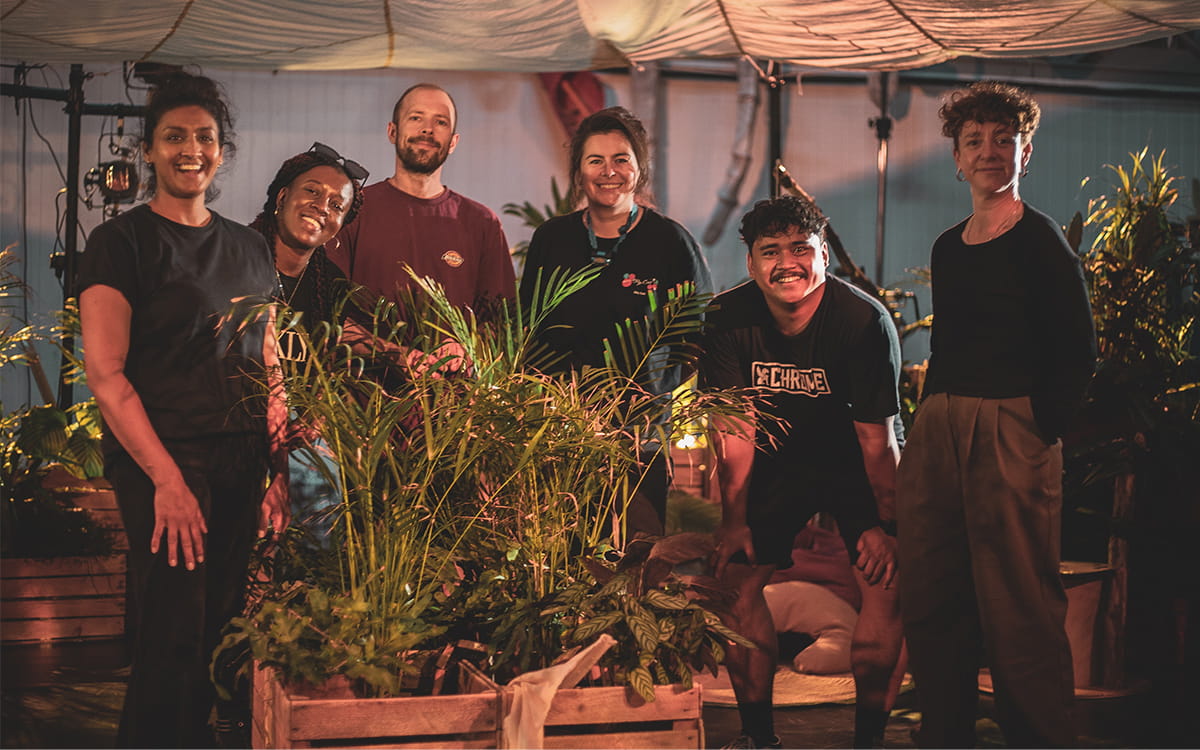
Amirul (second from right) alongside crew members from <em>When the World Turns</em>.
Yes, especially during festive seasons, and important family moments and milestones. I cope by staying in close contact with loved ones, cooking Singaporean food and surrounding myself with fellow Singaporeans in London—like my flatmates Brent Tan and Caleb Lee who also work in theatre. Being part of a community abroad makes a big difference.
It is going to be a bold move, but that’s one risk you have to be willing to take. It can be financially taxing, physically demanding and mentally draining at times, and you have to be prepared to start from zero. Don’t be afraid of rejection. Build your networks, stay adaptable and understand that things may take longer than expected. Most importantly, remember why you chose to do what you do.
Contributed by:
Rydwan Anwar spent two decades programming theatre and festivals in Singapore. He is now based in Newcastle upon Tyne.