Time taken : <5mins

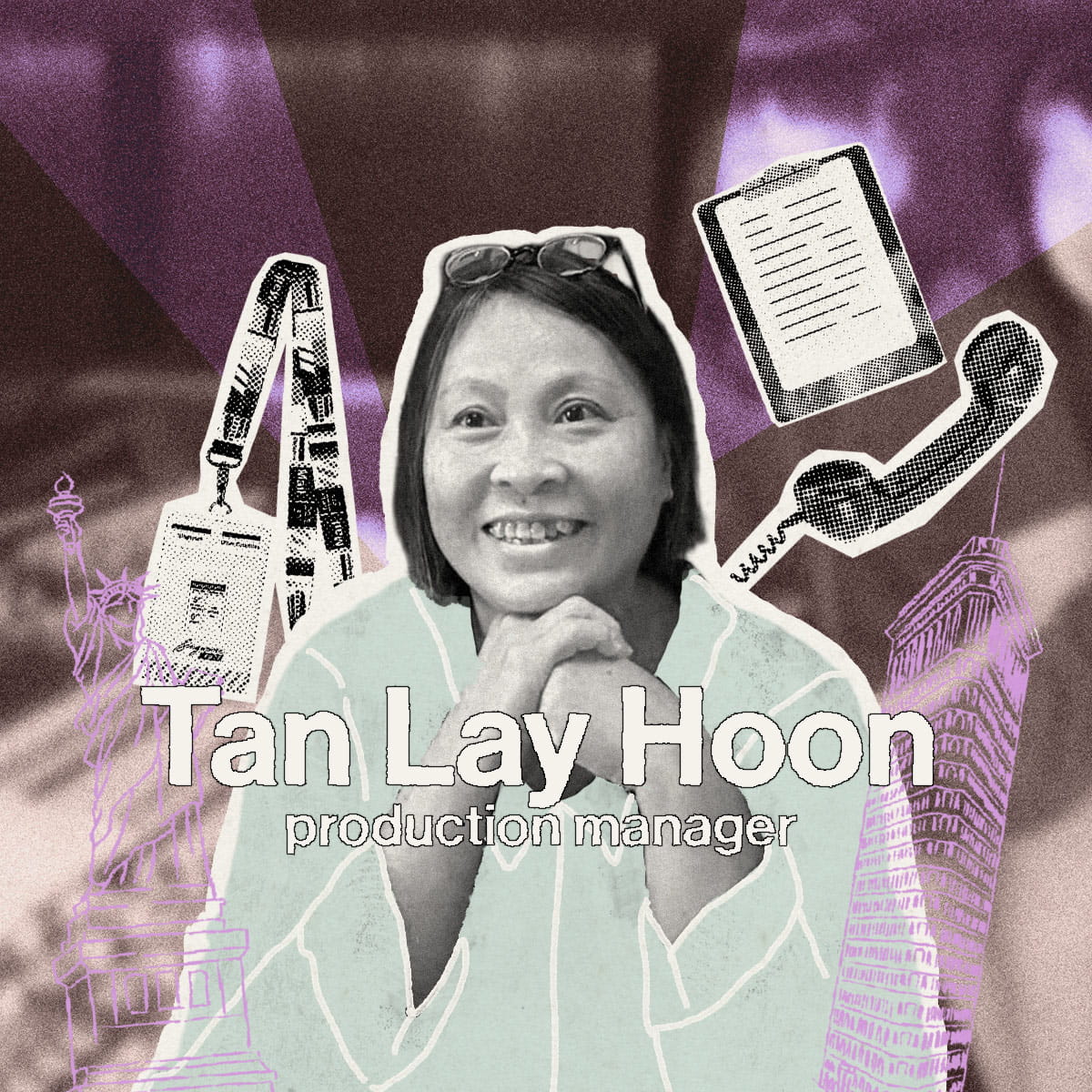
Tan Lay Hoon is a production manager based in New York. On top of providing creative solutions to technical problems, she has worked in famous theatres like the Eugene O’Neill Theater Center—where famous playwrights like Lin-Manual Miranda once walked its halls—and has even brought Shakespeare into prisons and detention centres.
“I like this job a lot. I’m afraid this might be what I’ll do for the rest of my life,” Lay Hoon said to her boss after her first year as a production manager with T:>Works. And sure enough, she has been doing this work for 30 years and running.
Since then, her career has taken her from Singapore to the US, where she has managed major productions including the tour of Chang & Eng by Action Theatre and, later, Tony Award-winning shows with Signature Theatre and St Ann’s Warehouse.
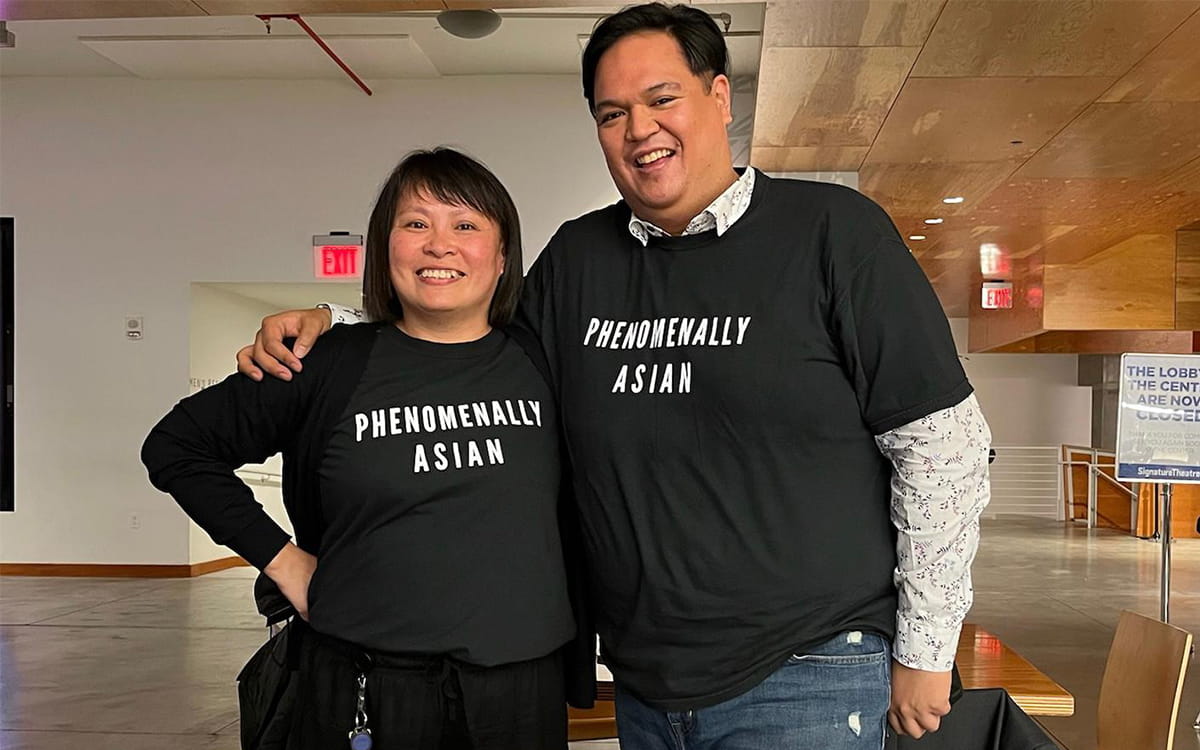
Lay Hoon with Kenneth Naanep, General Manager of Signature Theatre.
She is one of the few people in the world who has worked on the opening of two major performing arts centres: Singapore’s Esplanade – Theatres on the Bay in 2003 and New York’s Pershing Square Signature Center in 2014.
Like most Singaporean theatre practitioners who started in the early '90s, Lay Hoon did not have formal theatre training. Determined to deepen her knowledge, she secured a scholarship to pursue an MFA in Production Management at Boston University in 2007.
During summer breaks, she completed internships with Lincoln Center Festival and the Eugene O’Neill Theater Center—experiences that opened doors to many opportunities.
Lay Hoon shares her lifelong learning journey and what surprised her while navigating the theatre scene in the US.
I was at a crossroads. I thought, what’s the next thing I can do? I wasn’t ready to teach. So I decided to further my studies and get a qualification. Production and stage management courses at post-graduate level weren’t available in Singapore, so some of us had to go overseas if we wanted to pursue formal training. (Other Singaporeans who went to the US to pursue grad studies at that time include experienced practitioners like Valerie Oliveiro and Audrey Hoo.)
Missing home. It was really hard. I arrived in autumn and Boston is one of the coldest cities. Being in a new place, alone, freezing, with shorter daylight hours, was quite depressing. I had bought a one-way ticket because I was cheap and I didn’t think I was going to go back until I finished three years later. I remember crying on the phone to my dad, who told me to just buy a ticket and come back. So I came back after three months during the winter term break.
Also, having to learn imperial measurements because the set drawings were no longer in metric!
In the US, even if you go to acting school, you have to learn technical arts. There’s a big skilled pool of technical theatre workers who are also actors, and some of them are very good at what they do.
Another surprise was how being female and Asian factored into my interactions, which was never on my mind in Singapore. In meetings, some things I say are ignored, but when a male boss says the same thing word for word, people will agree with him. People would also just assume that you’re unqualified or question your ability. But I’ve learnt that humility doesn’t always suit us. I’ve learnt to advocate better for myself.
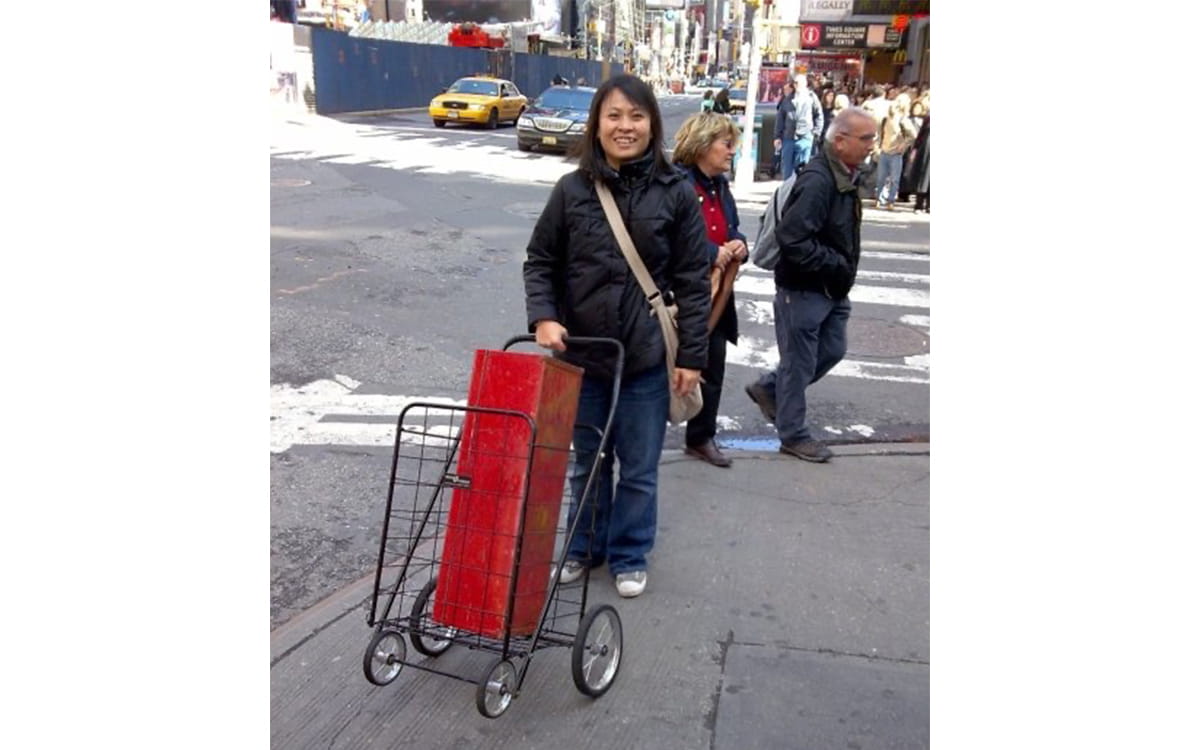
Lay Hoon collecting props across Broadway.
One of the highlights was my first summer at Eugene O’Neill Theater Center. I was going through the same doors, hallways and rooms where all the famous American playwrights have been, like August Wilson, Lin-Manuel Miranda and David Henry Hwang. I felt very privileged to be in the same space they had been before.
Most recently I worked on a five-week tour for The Public Theater where we brought Shakespeare to the community across the five boroughs, even into prisons and detention centres. I’ve always wanted to do theatre for the community, and the Public Theater is for the people, by the people. So that was very meaningful for me.
When the production provides meals… sometimes there’s chicken rice.
Networking is key to getting work. You must always say “yes, of course” to opportunities and then decide later, rather than “see how later”. If you hesitate, the job will go to someone else. I strongly encourage taking overseas opportunities if they present themselves. Don’t project Singaporean ways onto your new environment, but also don’t completely abandon what you know. Be curious; ask questions. The experience will benefit both you as a person and Singapore as a country.
Contributed by:
Rydwan Anwar spent two decades programming theatre and festivals in Singapore. He is now based in Newcastle upon Tyne.