Young SG Directors: Terrance Tan

Young SG Directors: Myra Loke

Young SG Directors: Krish Natarajan

Young SG Directors: Hazwan Norly

Young SG Directors: Chong Gua Khee

Young SG Directors: Chng Yi Kai

Young SG Directors: Cherilyn Woo

Young SG Directors: Sim Yan Ying "YY"

Young SG Directors: Renee Yeong

10 Young Singapore Theatre Directors to Look Out For

Young SG Directors: Adeeb Fazah

Young SG Directors
Young SG Directors: Chong Gua Khee
The 'chef de cuisine' director
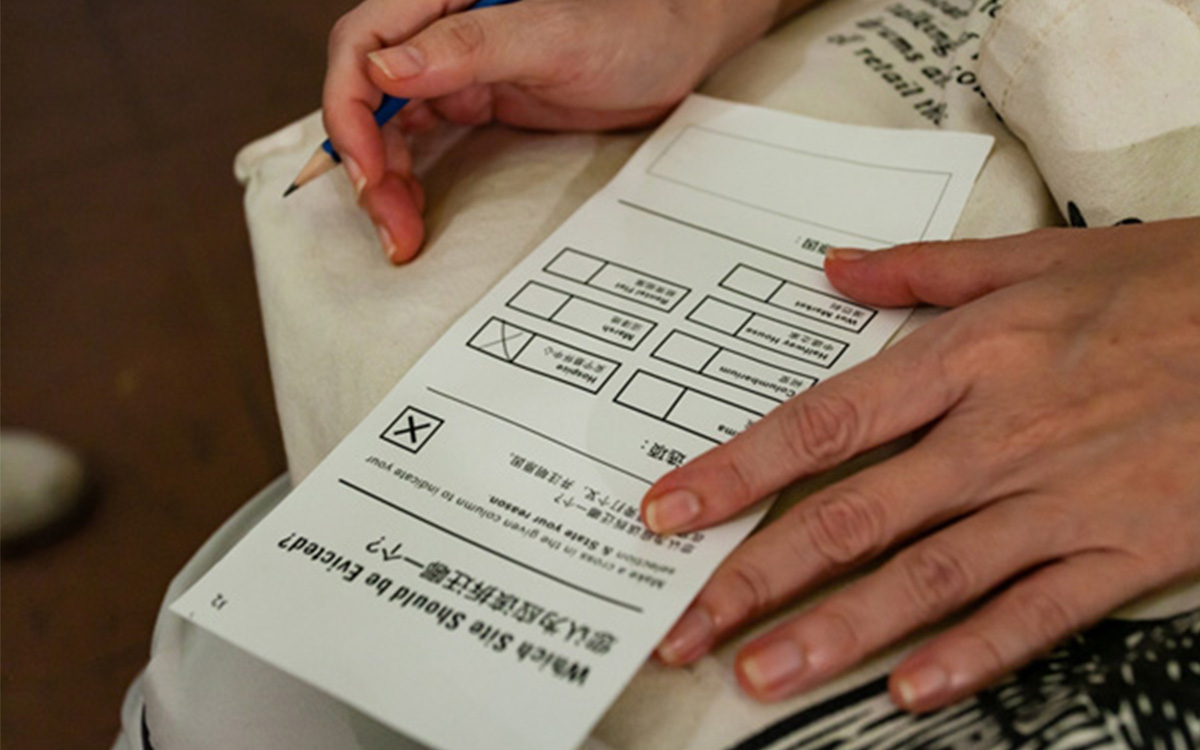
Gua Khee’s artistic practice is based on creating participatory programmes and performances which allow audiences to connect in intimate, playful spaces. She has created and directed several ongoing series of interactive works, including HOT POT TALK (2017, 2021, 2023), and Tactility Studies with Bernice Lee (2019, 2020, 2021, 2022). She most recently co-directed Recipes for Living: The Flavours for Life (2023), which helps seniors explore ways to live life well.
What sort of director are you
I see myself as a ‘head chef’! I first conceptualise a ‘dish’ or a ‘menu’ that feels exciting but also feasible given the parameters of the ‘kitchen’ and ‘equipment’ (e.g., timeline, resources, venue etc.), and then invite other people to join me as fellow ‘chefs’. Together, we create a dish that is unique to the team’s expertise and backgrounds as artists and/or community members, and that is nourishing and satisfying for both us and the audience.

What got you into directing for theatre?
One of my initial fascinations with theatre was the worldbuilding that happens in each production, so diving deeper into theatre also naturally led to playing with conceptualising and directing work as a practitioner.
What's one favourite/memorable show you have directed and why?
The restaging of Songs for Tomorrow in 2019, as part of the Both Sides, Now carnival by Drama Box and Artswok! I was Assistant Director for Songs in 2013 when I first returned from doing my bachelor’s degree in Canada, so it felt like coming full circle to be asked to direct the restaging. I also love experimenting with form, so it was a pleasure to rework Songs (with a very talented team!) from verbatim theatre into a piece of music theatre.

Do you do anything else in theatre besides directing?
The ability to expand time and space! This is helpful when tensions rise during crunch time in a production, but also when developing new work—if it’s a first staging of a new script for instance, a good director should be able to navigate conversations with the producer(s) to frame the staging and set realistic (but still rigorous!) expectations for the team and the audience, so that the production is a good experience for everyone.
What superpower do you think a good director needs?
The ability to expand time and space! This is helpful when tensions rise during crunch time in a production, but also when developing new work—if it’s a first staging of a new script for instance, a good director should be able to navigate conversations with the producer(s) to frame the staging and set realistic (but still rigorous!) expectations for the team and the audience, so that the production is a good experience for everyone.
What is the strangest misconception you’ve heard about directing in theatre?
“So you order people around?” I’ve heard the director described as a puppet master or someone who has a perfectly clear vision of how and where they want everyone and everything to be. This might be true for some directors, but I think there are as many different styles of directing as there are directors.
What would you like to see more of in Singapore theatre?
“I’d love to see more attention being paid to the entire life cycle of a work and the trajectory of an artist’s/company’s practice, rather than productions being framed as the key outcome.”
What this could tangibly look like: more resources being put into developmental workshops and incubation labs, ticketing works-in-progress and having thoughtful facilitation (so that gaining insights into the artistic process and being able to contribute to the development of the work is part of the draw of these experiences), and public events where practitioners and stakeholders meet for an open ‘stock take’ of the state of Singapore theatre…
YOU MAY ALSO LIKE