Chek Kerong: The Encouraging Educator

Syed Ahmad: The Energetic Educator

Sreedevy Sivarajasingam: The Inventive Educator

Michele Lim: The Deliberate Educator

Lim Moi Kim: The Nurturing Teacher

Leslie Tan: The Inspiring Educator

11 Educators Shaping Singapore's Arts Landscape

Julian Wong: The Conductor of Character

Jeffrey Tan: The Visionary Dance Mentor

Jean Ng: The Empowering Educator

Gin Lam: The Collaborative Choreographer

Elnie S. Mashari: The Accidental Mentor

To 'Cher with Love
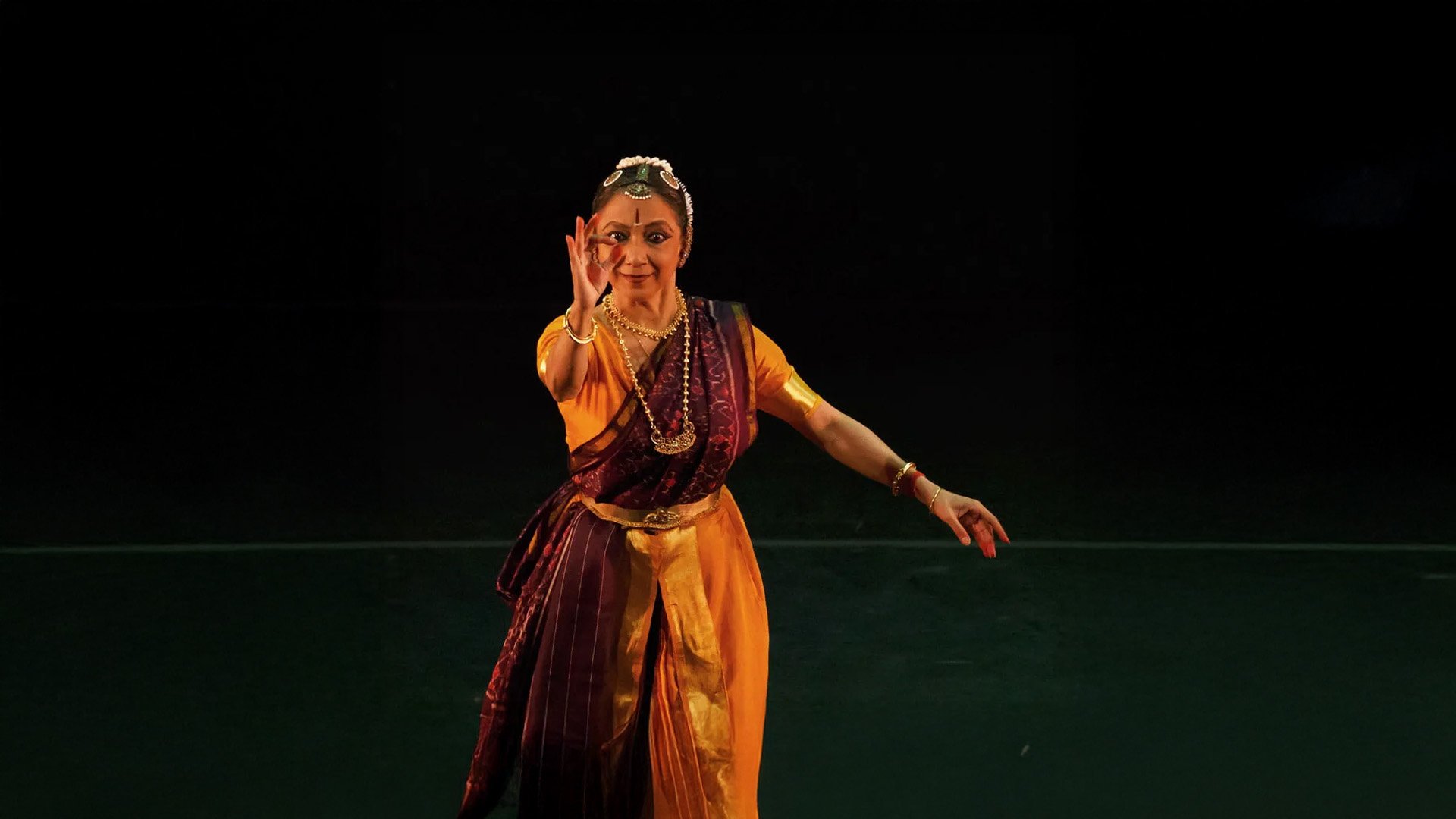
Sreedevy Sivarajasingam: The Inventive Educator
Contemporising a dance for new generations
A pioneer in her own right, Sreedevy co-founded Omkar Arts in 1987 at the young age of 15. The group made waves by infusing modern influences into classical Indian dance forms, becoming popular on television and in community venues. Over the past 30 years, Sreedevy has taught a range of dance styles, from bharatanatyam and Indian folk dances to Bollywood, in various school co-curricular activity (CCA) groups and at her studio in Little India.
How did you get into teaching?
I was already choreographing at 7 years old. At age 15, my friends and I started Omkar Arts, which became very popular on TV. We would come up with new styles using contemporary music and classical movements, which evolved into contemporary versions of traditional movements. I started teaching as young as 19 years old as a CCA instructor while still studying at university, plunging headfirst without any formal training. When I properly went into teaching, it was an extension of what I was already doing. I started choreographing for the Singapore Youth Festival and school events when my alma maters called me back to do so, and I have since taken on more work from various schools and community venues.
My teaching journey continues with regular training. I go back to India every year to brush up on my dance technique. Recently, I completed a certification course at the Tamil Nadu Dr J. Jayalalithaa Music and Fine Arts University. I believe we must constantly keep learning to stay relevant. I have also taken advantage of the National Arts Council’s Capability Development Grant to undertake specialised training in abhinaya (facial expressions) and nattuvangam (rhythm training) in India.
Have there been challenges in your teaching journey?
While I was trained in the classical dance form, what I was known for was the contemporary fusion style of dance. But when it came to holding classes in my studio, I had to go back to basics and figure out how to bring this ancient art form to young groups of people, some of whom may not necessarily be exposed to it. Ninety-five percent of my students are locals who know me from my contemporary fusion dances on television, so introducing them to classical dance was a challenge because they expected something more modern.
Another challenge is discipline. In the classroom we are teaching them not just about the dance, but also the culture, the language and the history. Importantly, we are instilling in them a sense of discipline. Because what we teach is a traditional art form, we have to stretch them physically and mentally. This became particularly challenging during the pandemic, when students were limited to their homes and became less flexible. As dance practice is also about consistency, we emphasise regular attendance at classes to instil perseverance and discipline.

What do you find most rewarding about your work?
It is always nice to see young students who start with no knowledge learning the artform and slowly growing into performers with a sense of aesthetics and appreciation for the arts. It is when they are able to apply these principles and find nuance in their lives that I know I have done my job.
My students also become audiences of dance and performance, and it is nice to see them find new appreciation for the arts, performances and aesthetics. I also observe that they grow into more confident individuals who are more conscious in the way they carry themselves, how they speak and how they walk. To me that is an extension of the knowledge they have gained from my teaching.
Dance has also helped them become more intelligent and capable. As I always say: there is no such thing as a stupid dancer because dancers must always use their brains. Dancers must always engage their mind when dancing.
What are your hopes for every batch of students you encounter?
Every child is different. It can be challenging for me to expect everyone to develop at the same pace. I need to let them grow at their own pace, especially when the classes are bigger.
"I have to accept that every individual is
different, and I must adjust my expectations
and hopes for my students in this way."
At the very least, they should learn the basics and work as a team. Then, they can grow into solo performers and develop their confidence. I hope my students become more poised on stage and evolve into solo dancers who can perform with confidence and aesthetic appeal.
You May Also Like