
You shall not pass the Kumpo

Rituals and Routes
You shall not pass the Kumpo
“When the Kumpo comes out, no one stays at home.”
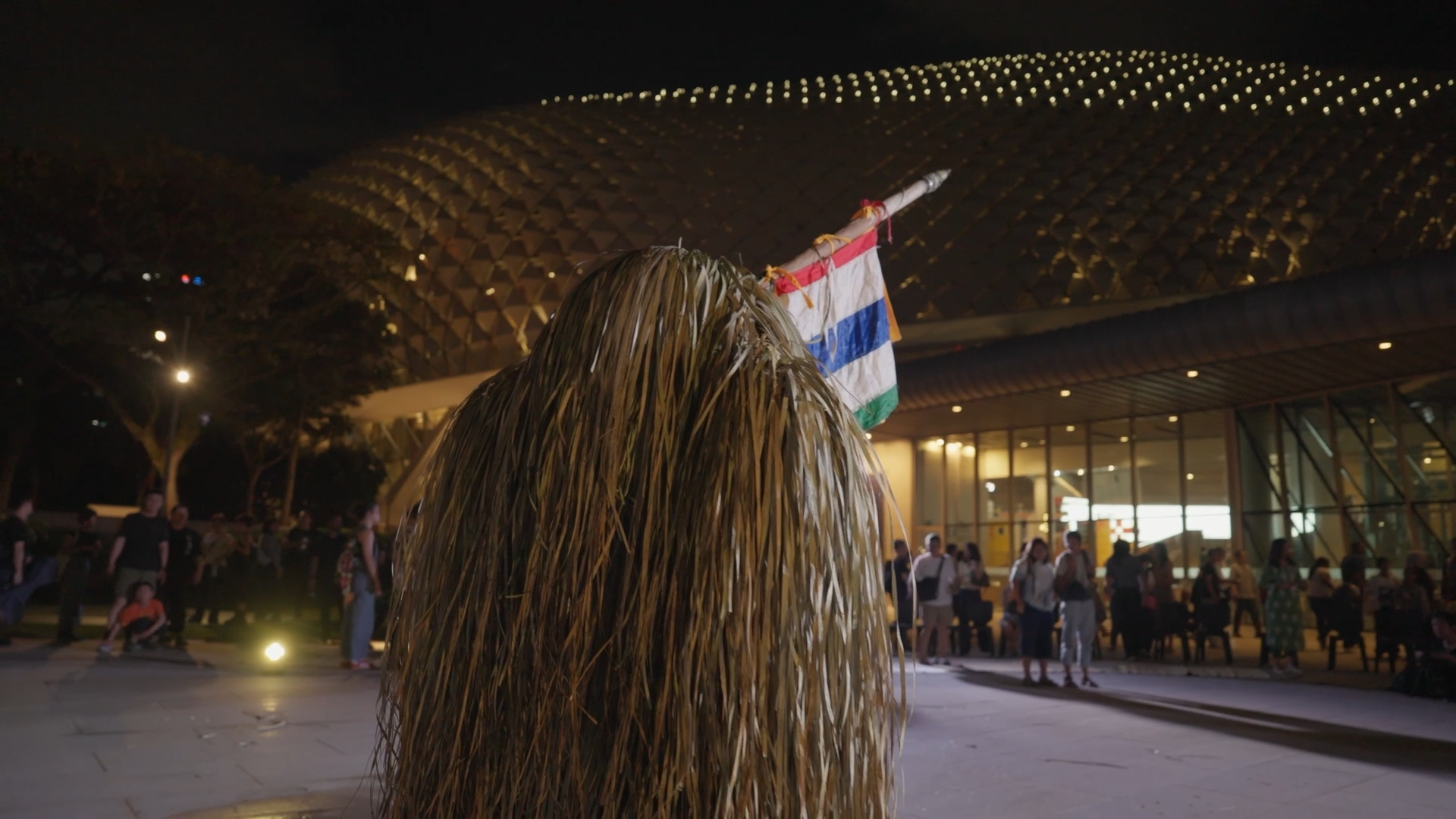
You may have seen it online—a mysterious figure covered in dried palm leaves, whirling and spinning, in a hypnotic blur. To the uninitiated, the Kumpo is otherworldly.
For the Jola people of The Gambia, the Kumpo is more than a mysterious masquerade. Traditionally associated with the spiritual world, it is a protective presence and an important part of village community life. When the Kumpo comes out, everyone comes out. The music changes, the singing begins and the dancing ground is cleared. “Nobody dares to stop a Kumpo,” says Ansumana Badjie, one of the performers who travelled from The Gambia to Singapore with the ensemble, for A Tapestry of Sacred Music 2026 at Esplanade.
The Kumpo is summoned when a village needs to be cleaned (symbolically or physically), when the community is facing some form of hardship like a bad harvest, even when an elder is disrespected. In extreme cases, the Kumpo is a harsh disciplinarian; he or his “first son”—a shaggy, black, overshadowing, lupine figure wielding two canes—herds the perpetrators to see their wrongs and change their ways, in a very public display of punishment and shaming.
But the Kumpo is not just a presence that is feared. It brings intense joy to the community—through dancing, music, and camaraderie that makes them feel good and encourages them to do better. On the flag of the Kumpo, in one of the performances here, the dancers wrote “Yay Sama Oxygen. Yay Tak Mai Noy”. What those words mean, and why they chose to write them, offers a glimpse into what the Kumpo means to them. Simply put, the Kumpo makes them happy.
Watch the video to meet the performers behind the Kumpo and discover what lies behind this mystical Gambian masquerade.
You May Also Like