da:ns Lab 2020: Prognosis, Treatment & Rehabilitation

da:ns lab 2020: co-immunity (how to dance when we are all ill)

da:ns lab
da:ns lab 2020: co-immunity (how to dance when we are all ill)
In circumstances where we are unable to gather, to move, and even touch, dancers grapple with how to dance in this age of illness
da:ns Lab is an annual artist meeting, organised as a collaboration between Dance Nucleus and da:ns Festival of Esplanade – Theatres by the Bay in Singapore. It is a programme to interrogate choreographic practice that began in 2015. da:ns Lab 2020 is the programme’s 6th edition.
Objectives
- To engage dance practitioners in Singapore and the Asian region in artistic discourse, research, reflection and exchange; thereby enriching critical thinking for dance practices in the region
- To tackle tangibly an issue that concerns many artists in the current climate
- To introduce progressive international practices to Singapore
- To build a trans-local network of independent artists with aligned interests
da:ns Lab is an annual workshop-seminar for artists and arts practitioners to critically reflect on key issues surrounding their creative practice. This year's theme is Co-immunity: How to Dance When We Are All Ill, inviting participants to reflect on all that has been disordered amidst global crises and health emergencies. In this paradigm of illness, we challenge the preconceptions often assumed of the dancing body—as one that is able-bodied, productive and live.
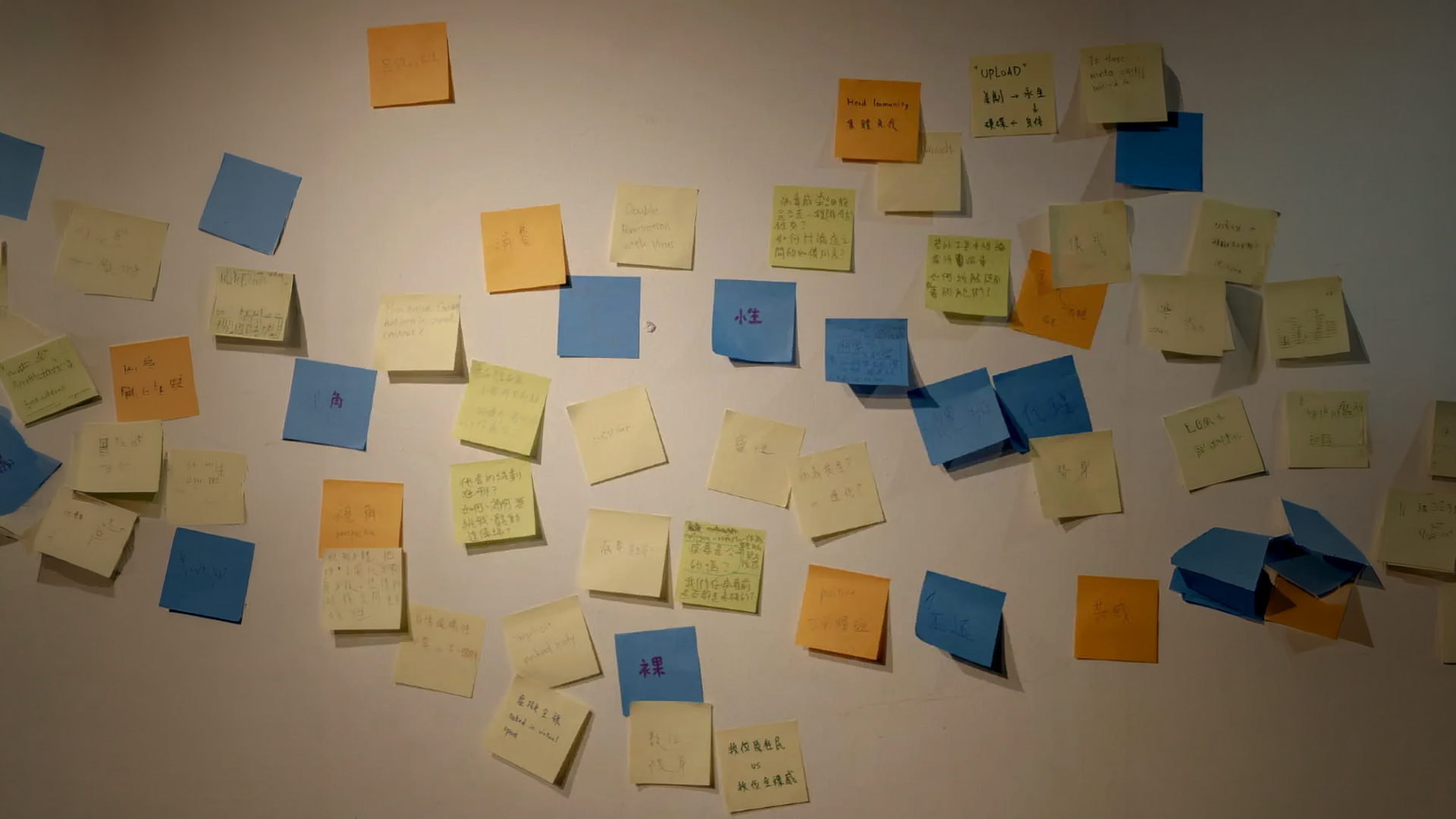
da:ns Lab 2020 is a remote meeting taking place online with 60 participants from six regional clusters across Hong Kong, Manila, New Delhi, Singapore, Sydney and Taipei. Participants explored how dance can operate within the paradoxical framework of co-immunity, developing infrastructures of support and relations of care, while building resistance and resilience across the different arts ecologies in the region.
Curatorial Statement by Shawn Chua
“ Now might be a good time to rethink what a revolution can look like. Perhaps it doesn’t look like a march of angry, abled bodies in the streets. Perhaps it looks something more like the world standing still because all the bodies in it are exhausted—because care has to be prioritised before it’s too late. ”
– Johanna Hedva
The world is standing still amidst transnational choreographies of movement control orders, curfews and lockdowns. Governments implement stricter measures to enforce social distancing, as an immunological response to curb the spread of the global pandemic. As events, performances and festivals are cancelled or deferred to an uncertain future, many arts and cultural workers are left suspended in its wake. In these extraordinary circumstances where we are unable to gather, to move, and even to touch, dancers are faced with an impossible set of conditions—how to dance when we are all ill?
While Covid-19 is a global health emergency, it also manifested the symptoms of much longer socio-economic, political and ecological crises, exposing complex systems that have already been chronically ill. It painfully revealed the debilitating conditions and vulnerabilities of being a dancer within a precarious arts ecology. In the region, the Hong Kong protests are roiled by deep sociopolitical unrest while the Australian bushfires warn of larger climate catastrophe. 2020 is a state of emergency. But these crises have demonstrated that recovery in this context should not be a nostalgic return to the normal, because the existing conditions of the ‘normal’ was what precipitated the crisis.
To dance in such times, we must recuperate the paradigm of illness, reorienting some of the precepts that are often assumed of the dancing body, as one that is able-bodied, productive and live.
What choreographies become accessible with the ill-bodied dancer, and can this embodiment offer different strategies for navigating the crisis? What remains live when our bodies are screened, and augmented by the prosthetics of new media technologies? Amidst a contagion—a term that etymologically denotes “together touching”—can we reimagine the parameters of dancing together across social distancing, where other forms of assembly are realised?
The restless ensemble of exhausted bodies is a symptom of the precarious labour conditions that plague many arts and cultural workers. It is time for us to take a break from the frenetic rhythms of production, to slow down, and to de-programme. By relinquishing our obsession with the relentless metrics of productive output, we can rehabilitate our working processes by recalibrating the conditions, protocols and procedures to more sustainable modes that prioritise our creative practices and wellbeing.
Inhabiting illness calls for a praxis of care that extends beyond immunology. Immunological systems are predicated on the exclusion of a threatening other—a foreign body. Instead of reinscribing the xenophobic logic of immunitary nationalism, we aim to foster interdependent networks of solidarity across borders. To reconcile this immunological metaphor with the contaminations of community, we will explore how dance can operate within the paradoxical framework of co-immunity, to develop infrastructures of support and thicker relations of care, building resistance and resilience across the different arts ecologies in the region. Through a different kind of embodiment, we might feel the possibilities of a movement even as we remain still.
Programme Pathology
Even before the restrictions of the Covid-19 pandemic set in, the 2020 edition of da:ns Lab had been designed to differ markedly from previous editions. The content and participant interactions were to be distinctly structured in three ways: the multi-location “satellite” format, the use of multiple concurrent online platforms in Zoom rooms and Google Docs, as well as the thematic framing of each of the four days of the event according to stages of treatment of illness. Where previous editions had included up to x participants, this edition hosted a record of 64.
The imposition of strict lockdowns and movement restrictions in nearly all of the participating countries during the event period made it impossible for most groups to meet in person as originally intended. Instead, the event proceeded with mixed formats. The Taiwan/Taipei satellite met on location (but often participating through personal devices) throughout the four days, and the Hong Kong satellite met in person on the first day – while all other participants attended from their homes.