
Sikh Kirtans
Synopsis
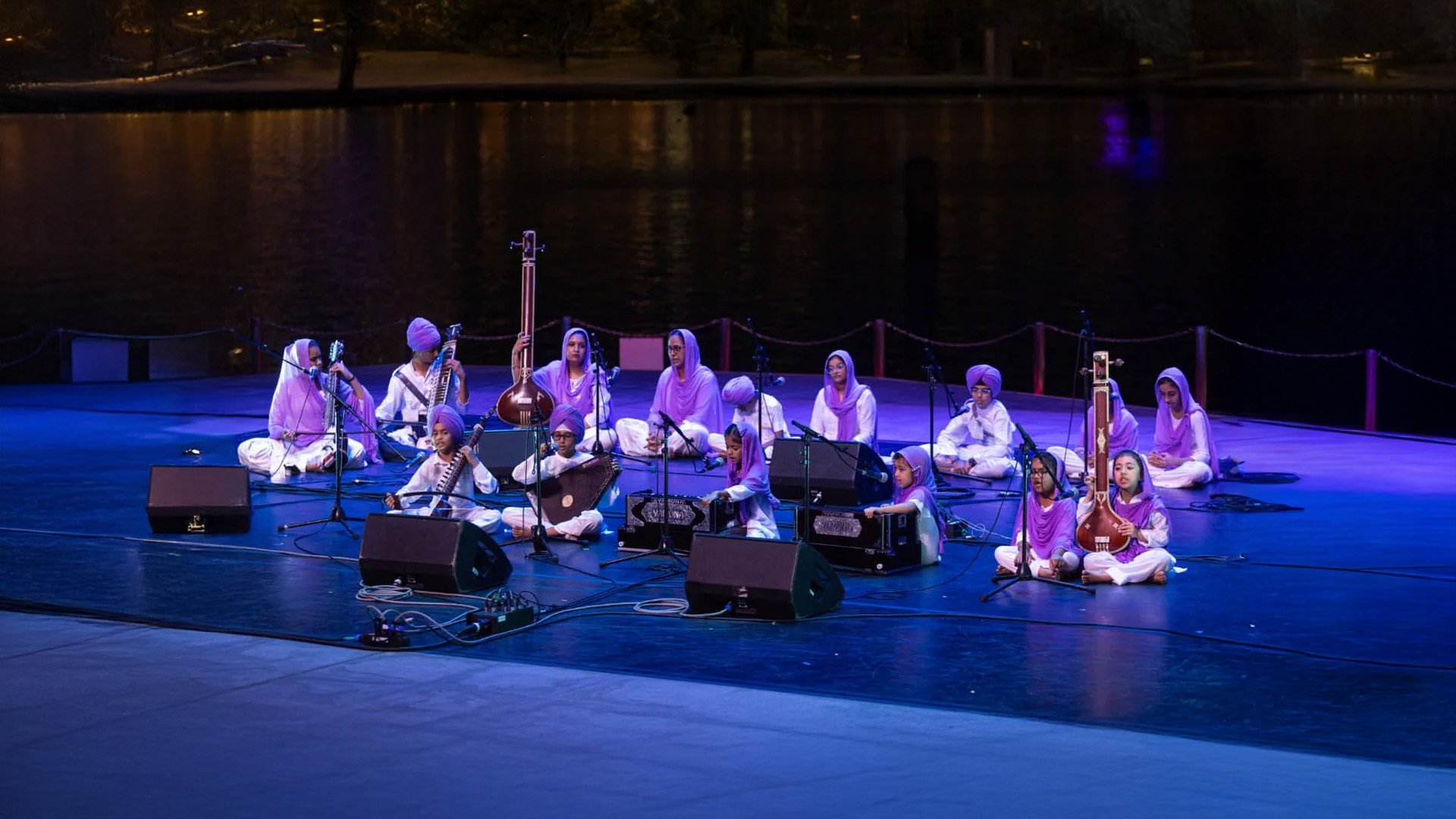
Allow the sacred verses of Sikh saints to bathe you in divine love, as their ancient words rise in devotion and draw you inward through kirtan—the singing of hymns in praise of God. Gurmat Sangeet Academy presents two stirring performances rooted in this timeless tradition.
Hymns of Humanity, 7.45pm
Young voices from the Gurmat Sangeet Academy share a message of universal equality through the sacred hymns of diverse saints like Bhagat Kabir Ji and Bhagat Ravidas Ji.
Musical Landscape of Gurbani, 9.15pm
This performance explores the vast musical landscape of Gurbani, journeying from the discipline of Classical Raags and Tarana to the spirited storytelling of Folk and Dhadi Vaar styles.
Kirtan, the voice of the soul
“Whosoever listens to kirtan or sings kirtan of Hari shall be free of all ills.”
– Guru Granth Shahib
In Sikh tradition, no ceremony, occasion or event is complete without the singing of kirtan—a devotional hymn in praise of God. A cherished form of congregational prayer, it has, according to scripture, the ability to cleanse the mind of impurities, both physical and sensual; liberate one from the burdens of time and death; dispel disease, sorrow and suffering; and usher in peace and bliss.
Understanding the Sikh religion
In Punjabi, the word “sikh” means “disciple”, and central to the faith is the relationship between the Sikh and his master, who guides him through the teachings and writings of the 10 Gurus. Sikhism is rooted in the principles of oneness and love, encouraging a life of servitude and spirituality. It is believed that to lead a good life, one must work diligently, live honestly, treat everyone equally, serve others, be generous to the less fortunate, and keep God close to the heart and mind at all times.
Hymns of Praise
Music is a central part of worship, with the religion’s 16th century founders being skilled poets, composers and musicians. Foremost among them was Guru Nanak, who expressed his teachings and revelations through poetry, which he sang alongside his companion Bhai Mardana, a bard who played the rabab—a plucked string instrument.
Over time, Guru Nanak's hymns, along with those of his nine successors, were compiled into what is now known as the Guru Granth Sahib, the sacred scripture of the Sikhs. Within this revered text, the hymns of the Gurus are organised under 31 raags or ragas—modes characterised by a specific series of notes and path melodies. Each raga has a name, an associated time of day or year when it is best performed, and evokes specific emotions.
In the hands of his spiritual successors and devout Sikhs, this musical tradition has flourished as a powerful means of spiritual elevation. New ragas, styles and musical instruments have emerged, perpetuating the legacy of creativity and devotion. Today, the singing and contemplation of these hymns resonate day and night at Sikh temples all over the world.
Date & Time
 Explore Offstage
More to Explore



More to Explore
Frequently Asked Questions
 View All
Frequently Asked Questions
When a show is cancelled, ticket buyers will be duly notified by the event organiser primarily via email. You may also be notified through the event organiser's authorised ticketing agent, media or any other applicable communication channels. Information will be provided on where and when you can get your refund. For postponed performances for which the date of the new performance is known, refunds are optional.
For free programmes, any cancellations or postponements will be updated on the event website and/or relevant official communication channels. As no tickets are issued, refunds do not apply.