Tansen and the Melody of Fire and Rain

The Sea Princess of Dika

The Legend of the Morin Khuur

Momotaro’s Journey to Ogre Island

Wang Zhaojun Departs from the Frontier

Asian Myths, Legends and Folktales
Tansen and the Melody of Fire and Rain
Read about an Indian legend whose music was powerful enough to summon fire and rain
As a boy growing up near Gwalior, a city in central India, Tansen loved to wander through the forest and copy the calls of the birds and animals he heard there. One afternoon, he spotted a group of travelling musicians resting in the shade. He mischievously crept behind a tree and let out his loudest tiger roar.
“A tiger!” one of the musicians shouted, and they scattered in fright.
Only their leader, Swami Haridas, stayed calm. When he peeked behind the tree, he found a small boy trying very hard not to laugh.
Swami Haridas chuckled. “That was no tiger at all! You must be a good listener to imitate a sound so well. Would you like to learn music with me?”
Tansen’s eyes lit up and he nodded. He went on to study with Swami Haridas for the next 11 years.

In time, Tansen became a renowned singer and was invited to perform at the court of Akbar, the Mughal emperor who ruled much of India more than 400 years ago. The emperor admired his music so much that Tansen soon became one of his favourites.
But several courtiers, members of the emperor’s royal court, were jealous of the attention he received.
“The emperor listens to no one but Tansen these days,” one of them grumbled.
Determined to bring him down, they devised a plan that would turn his greatest talent against him.

The courtiers knew of Raga Deepak. In Indian classical music, a raga is a set of notes that musicians use to create a melody. Ragas are traditionally associated to a particular mood, season or time of day.
Raga Deepak gets its name from the word “lamp” and is linked to fire and light. According to legend, when sung perfectly, it could make the air so hot that lamps would light themselves. The heat could become so intense that even the singer would be in danger.
The courtiers approached Akbar, careful not to mention the danger. “Your Majesty, if Tansen is truly the greatest singer in the land, surely he can sing Raga Deepak,” one of them said.
Akbar smiled confidently. “Of course he can! Tansen can sing anything.”
Tansen was troubled by the emperor’s request. He knew how to perform Raga Deepak but was aware of its dangers. Refusing an emperor’s command was no simple matter, so he asked for time to prepare.
Back home, Tansen was deep in thought. How could he perform the raga without putting himself in danger?
Then, he remembered a different raga called Raga Megh. Its name means “cloud”, and the melody is linked to clouds and rain. If Raga Deepak could summon fire, perhaps Raga Megh could bring rain to cool its heat.
Tansen shared his plan with his daughter Saraswati and her friend Rupvati, who were both skilled singers. “We will help you, Father,” Saraswati said at once.
For the next two weeks, Tansen taught them the raga and practised singing with them. The girls would wait for the palace lamps to catch fire, and the moment they did, they would begin.

On the day of the performance, people gathered at the palace to hear Tansen sing.
As he began singing Raga Deepak, the air slowly grew warmer. Soon, the audience was fanning themselves and wiping sweat from their brows. The leaves outside the windows began to dry, curl and fall.
Then, to everyone’s astonishment, little flames flickered to life and the palace lamps lit themselves, one after another. “Look at the lamps!” someone gasped.
The heat grew so unbearable that Tansen struggled to keep singing. Across the room, the courtiers exchanged knowing glances. This was exactly what they had hoped for.

Saraswati and Rupvati, seated among the audience, had been waiting for this moment. As soon as they saw the lamps burning, Rupvati whispered, “Now!”
The two singers began singing Raga Megh, their voices rising clear and steady through the heat. Slowly, clouds gathered above the palace and a cool breeze swept through the courtyard. Soon, raindrops began to fall, turning into a downpour that put out the flames.
The flames were gone, but the heat had left Tansen so exhausted and unwell that he could not sing for a long time.

When Akbar learnt that the courtiers had deliberately placed Tansen in danger, he deeply regretted ordering the performance and sent the jealous courtiers away.

Tansen slowly recovered. When he was finally well again, the whole city celebrated his recovery.
His extraordinary singing had nearly cost him his life, but it was Saraswati and Rupvati’s music that had saved him.
“Thank you for saving my life,” Tansen told them with a smile.
Ragas: More than just a melody
Imagine choosing music to match the time of day: a gentle melody for the early morning or one that captures the feeling of a rainy afternoon.
In Indian classical music, ragas have long been associated with different moods, seasons and times of day. Some are peaceful, while others express joy, sadness or longing. There are hundreds of ragas, each with its own musical character.
But a raga isn't a fixed song that everyone performs in the same way. Musicians learn its notes and patterns, then use them to create their own melodies. They can even make up parts of the music as they perform! This is called improvisation, and it means that two musicians singing the same raga might sound quite different.
Rhythm plays an important role too. A tala is a repeating cycle of beats that helps musicians keep time. Imagine clapping a pattern of beats, then repeating it over and over.
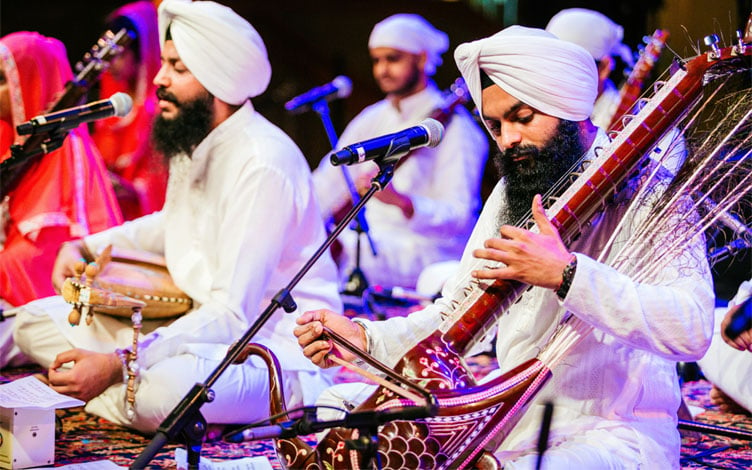
Ragas and talas are central to India's two main classical music traditions: Hindustani music from North India, which Tansen practised, and Carnatic music from South India.
Acknowledgement:
Fables by Homa
Think you know your ragas? Test your knowledge!