
Sat, 5 Apr 2025: 7:45 pm
Qasidah: Islamic Devotional Poetry
Synopsis
Not much is known about the origins of qasidah, yet it is believed to be one of the oldest and most esteemed forms of poetry in the Islamic world. With roots in pre-Islamic tribal and court poetry, the term qasidah, derived from the verb qasada, means “to intend” or “to aim at”. These poems can extend to over 100 verses, meticulously arranged with a single rhythmic metre and rhyme scheme. Originating in Arabia, qasidah spread through religion, trade and conquests to Persia, North and East Africa, as well as Central and Southeast Asia.
Historically, qasidah was intended to be delivered in song. The oldest examples were crafted to reflect the poets’ circumstances, praise their tribe or patron, and carry a moral message. Over the centuries, qasidah evolved to express social ideals, political commentary and sometimes satire. Poems of religious praise also gained prominence, with the most renowned being the Qasidah Al-Burdah (Qasidah of the Mantle), written in the 11th century by Egyptian poet Imam Al-Busri.
The story of Imam Al-Busri
The story goes that Imam Al-Busri was struck by semi-paralysis after a stroke. In his despair, he composed the Qasidah Al-Burdah in honour of the Prophet Muhammad. While reciting the poem in sincerity and concentration, he fell asleep and dreamt of the Prophet, who gently covered him with his mantle. Upon waking, Imam Al-Busri found himself completely cured of his affliction. Since then, the poem has been venerated by many Sunni Muslims, recited in devotion, as well as used to decorate the walls of public buildings and mosques. Some believe that reciting the poem confers blessings in life—removing difficulties, curing ailments, and aiding success in various endeavours.
From Arabia to Southeast Asia
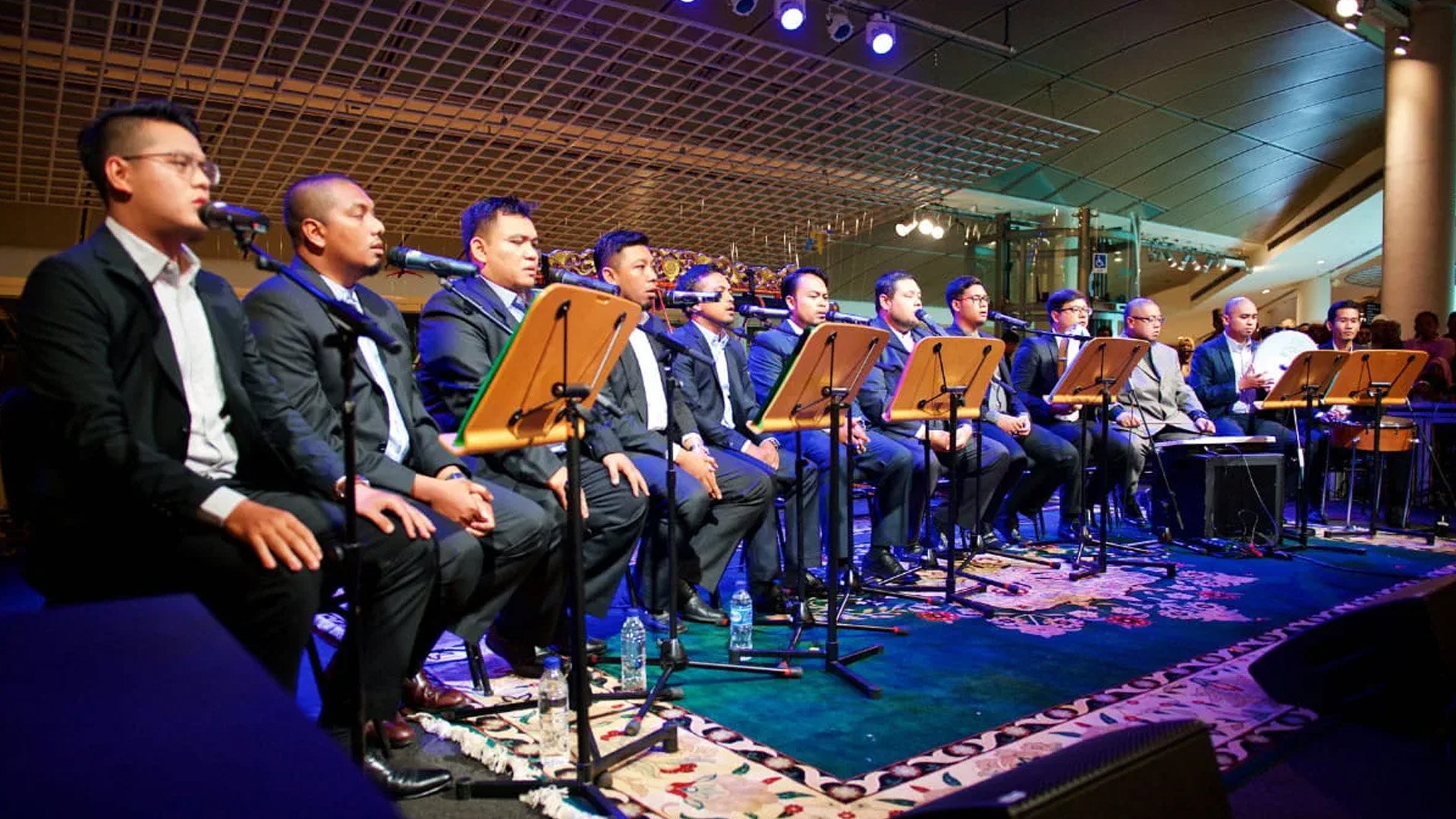
In 1200CE, Islam and qasidah spread across Southeast Asia with the arrival of Arab traders. The poems were sung in Arabic, with more popular ones, such as the Qasidah Al-Burdah, translated into Malay even before the 1600s. Texts were sung in commemoration of Prophet Muhammad’s birthday, during rites of passage as well as at weekly religious congregations. Shorter renditions, featuring verses taken from the original long-form qasidahs, also became popular. This sung poetry is usually accompanied by frame drums such as the Malay rebana (equivalent of the Arabic daff) and the pear-shape lute, gambus.
Date & Time
Our Sponsors

 Explore Offstage
More to Explore




More to Explore
Frequently Asked Questions
 View All
Frequently Asked Questions
When a show is cancelled, ticket buyers will be duly notified by the event organiser primarily via email. You may also be notified through the event organiser's authorised ticketing agent, media or any other applicable communication channels. Information will be provided on where and when you can get your refund. For postponed performances for which the date of the new performance is known, refunds are optional.
For free programmes, any cancellations or postponements will be updated on the event website and/or relevant official communication channels. As no tickets are issued, refunds do not apply.