
Chanting in the Language of Christ
Synopsis
Aramaic has a rich history that dates back to the 12th century BCE, when it was first spoken by the Arameans—an ancient people who lived in what is now modern-day Syria. Though they were conquered by the Assyrian Empire in the 8th century BCE, something unexpected happened: the conquerors adopted Aramaic as their own language. This was no coincidence. Aramaic's simple, phonetic alphabet and its grammatical clarity made it incredibly practical for everyday use, which helped it become the common language of the empire. Even after the Assyrians fell to the Babylonians, Aramaic continued to thrive, serving as a lingua franca in the Babylonian Empire.
As the Assyrian and Babylonian empires spread across the Kingdoms of Israel and Judah, Aramaic began to replace Hebrew as the language spoken by the Jewish people. By the 6th century BCE, while Hebrew remained important for religious texts, Aramaic became the common tongue. This shift is reflected in the Bible—both the books of Daniel and Ezra were written largely in Aramaic, illustrating the language's prominence at the time. Even as the Greek and Roman empires took over, with Greek and Latin becoming the dominant languages of law and administration, Aramaic endured, especially in rural areas and local communities. It was in this context that Jesus of Nazareth and his Apostles would have spoken Aramaic.
But how did this ancient language make its way to Georgia, in Eastern Europe, and why are there still speakers of Aramaic in the region today?
The Assyrians were among the first people to embrace Christianity, and as missionaries traveled eastward, they carried the faith as far as India and China. By the 6th century CE, the Thirteen Assyrian Fathers—monks who were instrumental in spreading Christianity—arrived in Georgia, establishing some of the first monasteries there. However, the journey of the Assyrian people to Georgia wasn't always voluntary. Sadly, many were forced to flee persecution and genocide in the Middle East, particularly during the mass killings carried out by the Ottoman Empire during World War I, as well as in the wars in Iraq and Syria.
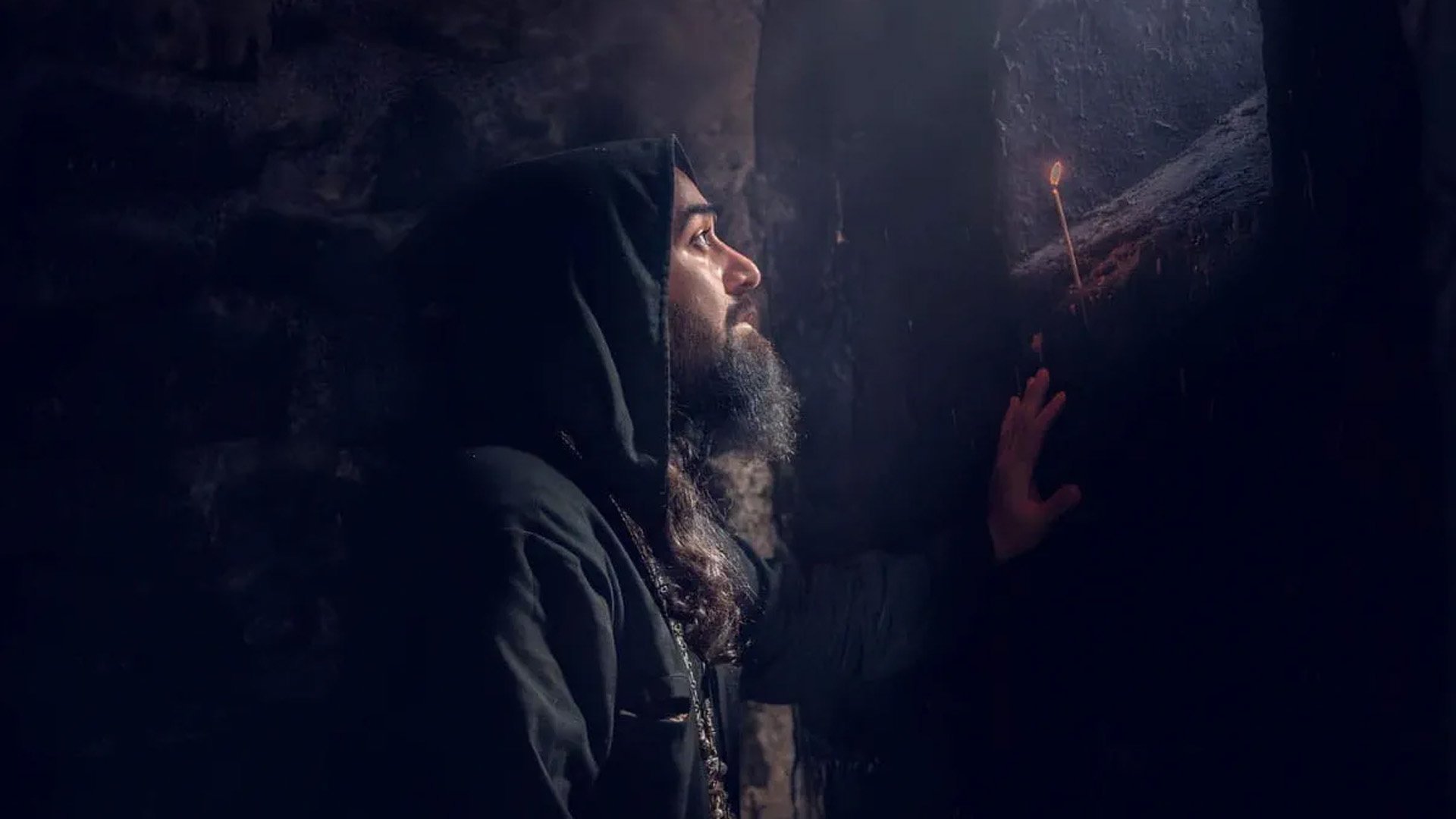
Today, more than 3,000 Assyrians call Georgia home, and with them, the Aramaic language still thrives. Many are part of the Georgian Orthodox Church, where liturgical chants are typically sung in Georgian. However, in 2008, a significant change occurred. The Patriarch of the Georgian Church, Ilia II, appointed an Assyrian-Georgian priest, Archimandrite Seraphim Bit-Kharibi, to minister to the Assyrian community in their native language. This decision sparked the creation of the Monastery of the 13 Holy Assyrian Fathers Choir, and Father Serafim—himself a talented vocalist—became one of only two priests in the world to celebrate the Divine Liturgy in Aramaic, the very language of Jesus Christ.
Date & Time
Our Sponsors

 Explore Offstage
More to Explore




More to Explore
Frequently Asked Questions
 View All
Frequently Asked Questions
When a show is cancelled, ticket buyers will be duly notified by the event organiser primarily via email. You may also be notified through the event organiser's authorised ticketing agent, media or any other applicable communication channels. Information will be provided on where and when you can get your refund. For postponed performances for which the date of the new performance is known, refunds are optional.
For free programmes, any cancellations or postponements will be updated on the event website and/or relevant official communication channels. As no tickets are issued, refunds do not apply.