Lee Hock Moh

Jaafar Latiff

Iskandar Jalil

Ho Ho Ying

Han Sai Por

Anthony Poon

Goh Beng Kwan

Ang Ah Tee

Georgette Chen Liying

Foo Tee Jun

Amanda Heng

Khor Ean Ghee

Foo Chee San

David Tay

Chua Mia Tee

Chua Ek Kay

Choy Weng Yang

Constance Sheares

Chong Fah Cheong

T. K. Sabapathy

Sim Tong Khern

Chng Seok Tin

Lim Hak Tai

Laurence Koh Boon Piang

Chia Wai Hon

Joseph McNally

Sun Yu-li

Sarkasi Said

Pan Shou

Ong Kim Seng

Cheong Soo Pieng

Ng Eng Teng

Milenko Prvacki

Chen Wen Hsi

Loh Khee Yew

Liu Kang

Lim Yew Kuan

Lim Tze Peng

Chen Chong Swee

Lee Sow Lim

Yip Cheong Fun

Yeo Hoe Koon

Wu Peng Seng

Wee Beng Chong

Wang Sui Pick

Thomas Yeo

Teo Eng Seng

Tay Chee Toh

Tay Boon Pin

Tan Swie Hian

Tan Siah Kwee

Tan Lip Seng

Tan Kian Por

Tan Khim Ser

Della Butcher

Earl Lu

TributeSG
Chen Chong Swee
One of Singapore's pioneering first-generation artists - an educator, writer and painter
“Art is a part of life and cannot exist independently from real life [...] Art must be objective. If it fails to be accepted by another person, it loses its essence of universality and can no longer exist as art. If a work of art fails to embody truth, goodness and beauty, it cannot be regarded as a true work of art.”
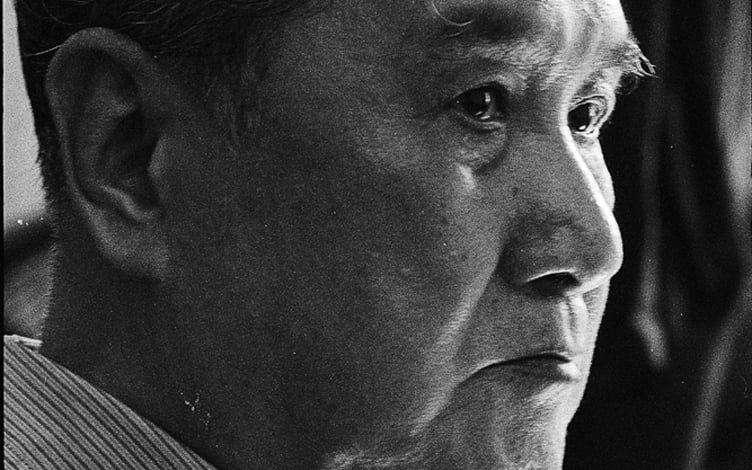
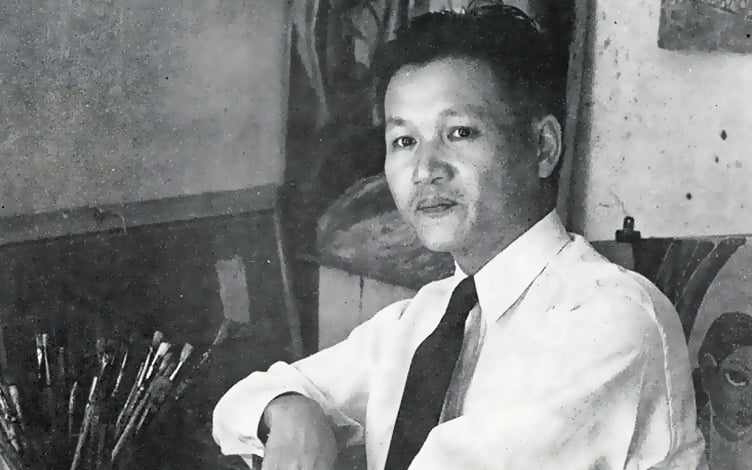
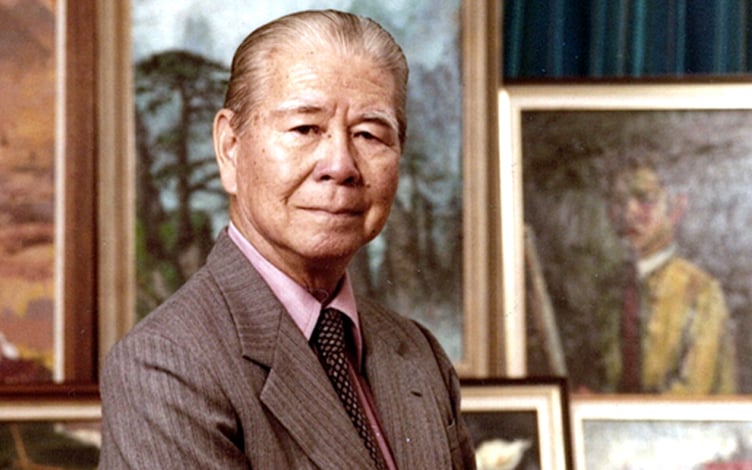
Chen Chong Swee was one of Singapore’s pioneering first-generation artists, and an influential art educator, writer and painter. Born in China in 1910, Chen migrated first to Malaysia then to Singapore in the early 1930s and became a key figure in the development of the Nanyang style. A passionate art scholar and activist, he taught art at various schools, nurturing not only talent but also a sense of place. An analytical and prolific writer, he wrote many essays that contained keen observations and discourses on all aspects of visual arts. A realist painter, he was the first to depict Singapore subject matter in traditional Chinese ink as well as a pioneer in integrating Western and Chinese aesthetic traditions, painting the story of Singapore and its people with sensitivity and a sense of revelation.
Chen Chong Swee—a.k.a. Chen Zongrui and a.k.a. Chen Kai—was born in 1910 in Guangdong, China, and studied art at the Xinhua Academy of Fine Arts in Shanghai. In the early 1930s, he migrated first to Malaysia then to Singapore where he taught art at various secondary schools founded by overseas Chinese merchants, including Tao Nan School, Tuan Mong High School, Chinese High School and Chung Cheng High School, as well as the Teachers' Training College Singapore (now the National Institute of Education). He would also teach as a Chinese ink painting lecturer at the newly established Nanyang Academy of Fine Arts. Around that time, he also co-founded the Salon Art Society (now the Singapore Society of Chinese Artists) and won an award at the King George V Silver Jubilee Art Exhibition.
Chen was a realist painter. He believed that art should accurately represent its subject matter and be relevant to and easily understood by its audience, that it should communicate ideas and emotions, evoke empathy, and, at its most ideal, “embody truth, goodness and beauty”.
In the diverse coastal and urban environments of tropical Malaya, Chen found a wealth of subjects to depict in his art. The vibrancy of the emerging Straits Settlements with its indigenous and migrant communities fired his artistic vision and he spent much time exploring locations and painting outdoors, capturing a multitude of sights and moods. His early landscape paintings from the ’40s and ’50s depict such varied subject matter as kampong life, riverscapes, quayside godowns, fishing jetties, churches, ice kachang vendors and tropical storms.
In 1952, Chen, together with fellow Xinhua graduates and peers Chen Wen Hsi, Cheong Soo Pieng and Liu Kang, went on their historic five-month-long field trip to Bali, Indonesia, in search of a unique Southeast Asian artistic expression. The trip greatly inspired the artists, and on their return, Chen produced some of his most well-known pieces including the boldly coloured oil painting Balinese Women (1952), revealing a more clarified sense of the Nanyang aesthetic and its East-West stylistic integration.
Trained in both Western and traditional Chinese art, Chen combined the aesthetic and cultural traditions of both styles, and painted in watercolours, oils and Chinese inks. He made oil paintings—such as 1972’s Returning from the Sea—that were unusually light in texture and feel due to his application of Chinese ink painting techniques, and became one of the first artists to render Southeast Asian landscapes and other subject matter in the Chinese ink and brush landscape format. Chen inscribed on his paintings as a traditional Chinese ink painter would—the accompanying brief, sometimes poetic, inscriptions revealing the realist’s deep appreciation of and sense of revelation and wonderment in his new environment.
Chen’s 1968 Chinese ink painting Kampong (Village) contains an inscription that reads:
“The hills are covered with coconut trees and various other trees.
An abundance of rain is stored amid the green summits.
A sinuous ravine encircles the village and makes it easily accessible by boat.
Although the ridges are lofty, they do not hinder the white clouds passing by.”
Besides being an illustrious painter and teacher who exhibited widely to acclaim, Chen was also a prolific writer. He wrote many essays for art journals on all aspects of visual arts, providing the Singapore arts scene with many interesting, critical discourses on topics including the purpose of art; comparisons between Western and Chinese art; the need for more female artists; the need for a national art gallery; and Singapore art in the ’20s.
In 1969, he co-founded the Singapore Watercolour Society with fellow artists like Lim Cheng Hoe, and Loy Chye Chuan, and served as the society’s treasurer for many years. From the ’60s to the ’80s, he served on various advisory and management committees of art societies in Singapore including the Selection Committee of Annual Singapore National Day Art Exhibition, Nanyang Academy of Fine Arts, Life Art Society, San Yi Finger Painting Society, Singapore Teachers Art & Crafts Association, Singapore Society of Chinese Artists and Singapore Art Society.
In 1985, Chen passed away in Singapore. Since then, his artistic legacy has been honoured in retrospective publications and exhibitions such as Chen Chong Swee, His Thoughts, His Art, presented by the National Museum in 1993, and Passages, selected works of Chen Chong Swee, presented by the National Heritage Board in 1998. In 1995, the National Arts Council established the Chen Chong Swee Art Scholarship Fund for research programmes and overseas postgraduate studies in visual arts.
Timeline
6 Nov 1910
Born in Chenghai County, Guangdong Province, China.
1929
Graduated from Union High School, Shantou, China.
1931
Graduated from Xinhua Arts Academy, Shanghai, China.
1932
Moved to Penang, Malaysia.
1932 to 1934
Art teacher, Jit Sin Chinese Public School, Penang, and Chung Hwa School, Malacca, Malaysia.
1934
Moved to Singapore.
1935
Co-founder, Salon Art Society (now known as the Singapore Society of Chinese Artists).
Received cash award, King George V Silver Jubilee Art Exhibition.
1935 to 1975
Art lecturer in the following schools:
Tao Nan School, Singapore
Tuan Mong High School, Singapore
Chinese High School, Singapore
Chung Cheng High School, Singapore
Teachers’ Training College, Singapore (now known as National Institute of Education)
1951 to 1975
Lecturer, Chinese Ink Painting Department, Nanyang Academy of Fine Arts, Singapore.
1952
Went on an artistic field trip to Bali, Indonesia with fellow visual arts pioneers Liu Kang, Cheong Soo Pieng and Chen Wen Hsi, resulting in the birth of the Nanyang style.
Created oil painting Balinese Women.
Created watercolour painting Deep Thoughts.
1953
Participated in group exhibition Bali: Liu Kang, Chen Wen His, Chen Chong Swee, Cheong Soo Pieng, British Council, Singapore.
1960 to 1980
Member, Selection Committee, Annual Singapore National Day Art Exhibition.
Advisor:
- Nanyang Academy of Fine Arts, Singapore
- Life Art Society, Singapore
- San Yi Finger Painting Society, Singapore
- Singapore Teachers Art & Craft Association
President/Vice-President:
- Singapore Society of Chinese Artists
- Singapore Watercolour Society
Treasurer, Singapore Watercolour Society.
1963
Vice-president, Singapore Art Society.
1965
Received Bintang Bakti Masyarakat (Public Service Star).
1969
Co-founder, Singapore Watercolour Society.
Set up Outram Park Arts Centre.
1971
Created Chinese ink painting Pounding Rice.
1972
Created watercolour painting Returning from the Sea.
1983
The Paintings of Chen Chong Swee published by Nan Fong Art Company.
1984
Chen Chong Swee Retrospective exhibition presented jointly by the Ministry of Culture and the National Museum, Singapore.
Chen Chong Swee Retrospective 1984 published by the National Museum, Singapore.
1985
Passed away in Singapore.
1993
Chen Chong Swee: His Thoughts, His Art exhibition presented by the National Museum, Singapore.
Chen Chong Swee: His Thoughts, His Art published by the National Museum, Singapore.
1994
Exhibition at the Chen Chong Swee Charity Auction, Sotheby’s Singapore.
Chen Chong Swee Charity Auction book published by Sotheby's Singapore.
Group exhibition Reminiscence of Singapore’s Pioneer Art Masters presented by Singapore Mint.
1995
Chen Chong Swee Art Scholarship Fund established by National Art Council, Singapore.
1998
Passages: Selected Works of Chen Chong Swee exhibition presented by National Heritage Board and Singapore Art Museum.
2000
Group exhibition Xin Jia Po Chao Ren Si Da Jia Shu Hua Zhan presented by Singapore Teochew Poit Ip Huay Kuan.
2010
Chen Chong Swee: A Legacy in Truth, Goodness and Beauty exhibition presented by Nanyang Academy of Fine Arts.
Image Gallery


TributeSG celebrates the arts community’s most senior members, and those who have made a lifetime of contribution to the arts. These artists, administrators, educators, patrons, and champions include many Singapore arts pioneers who laid the foundations of the vibrant arts and cultural scene we enjoy today. The many profiles in TributeSG let us into the minds and worlds of these pioneers, and help us understand our shared arts heritage. When we revisit their works and rediscover their journeys, we learn where we came from and how we came to be. Collectively, their stories tell the tale of the making of a nation’s artistic identity.
In putting together this collection, the TributeSG team consulted an external advisory panel, consisting of Arun Mahiznan, Choo Thiam Siew, J. P. Nathan, K. K. Seet, Kwok Kian Chow, and Iskandar Ismail. Those selected to be profiled in TributeSG met one of the following criteria: they were at least 60 years of age as of 12 Oct 2016, or deceased, or had received national recognition in the form of the Cultural Medallion. This journey of arts archival officially came to a close on 12 Oct 2016, after four years of extensive research, interviews and collation of information graciously provided by the TributeSG pioneers, their families and peers. TributeSG also benefited from enthusiastic help from like-minded friends and organisations who supported Esplanade’s cause—to remember, honour and celebrate Singapore’s arts pioneers.