


How nanyin music continues to thrive

The Bauls: poets and rebels

Tuvan throat singing: the call of the herdsman

Kirtan: Singing to the Divine

Joget: the popular, ever-evolving music of dance

Routes of Asian Music
Joget: the popular, ever-evolving music of dance
From European roots to a staple at Malay weddings
A Malay wedding event seems incomplete without musicians entertaining the guests with a rousing number that gets feet tapping to the gong and limbs gesturing, most times accompanying the excitable melody of familiar tunes, namely Joget Berhibur made popular by Malaysian superstar, Dato’ Siti Nurhaliza. The chorus ensues and people sing along in rapturous joy to the lyrics:
“Bertepuk-tepuk tangan,
Bertepuk jangan segan,
Mengikut rentak gendang
Berjoget dengan riang
Bertepuk tepuk tangan,
Bertepuk jangan segan,
Berjoget dengan girang,
Hidup menjadi senang“
“Clap your hands,
clap don’t be coy,
follow the rhythm of the drum,
dance with joy
Clap your hands,
clap don’t be coy,
dance with happiness,
so as to make life easy“
Clearly through this simple chorus of a popular Malay song of the joget genre, we know that rhythm is a key characteristic of joget music. Fast paced, with duple and triple beat divisions, its rhythmic style can be likened to that of the music of European dance forms such as tarantello and fandango which usually are in 6/8 time1.

A festive climax
Enthusiasts of the musical form may notice that another name is used interchangeably when talking about and exploring joget. The term ronggeng today is an alternate name for joget music/dance but in actuality was a term to denote “a type of social dance involving sung pantun (traditional Malay four-line verses) in repartee with the accompaniment of the violin, accordion, rebana and gong”2. The ronggeng does not only consist of dance/music of the joget genre but typically includes two other tunes from the asli and inang music/dance genres. As the joget is the fastest amongst these genres, it is usually performed last in the repertory as a festive climax.
The size of an ensemble ranges from as few as five musicians to a maximum of 12. Other than a percussive instrument namely a rebana (a frame drum) that functions as its rhythmic accompaniment, some of the key instruments in an ensemble would consist of a large knobbed gong as colotomic (punctuating) markers, and a melodic instrument such as a flute, violin or accordion. It is also common today that synthesisers and electric guitars are part of the ensemble.
Joget can be performed instrumentally with and without singing. As joget pieces are in strophic form, pieces begin with a short introduction, followed by successive stanzas that are sung with basically the same melody: here a singer is given the liberty to improvise on the melody. The climax of the song is usually the ending part of the music where there is long instrumental coda to accompany the dance.
Ethnomusicologists have acknowledged that many of these ensembles play tunes which are syncretic or acculturated music that has mixed indigenous musical elements with foreign elements such as Chinese, Indian, Western and Arabic music3.
In addition, if we consider the origins of its musical instruments, it is no wonder that the joget rhythm is reminiscent of European ones. For example, it is believed that the violin and rebana were first introduced by the Portuguese in the 16th century (Historical note: The Portuguese colonised the Malay Sultanate of Malacca from 1511 to 1641).

Joget as dance form
Joget music is intrinsically linked to a dance of the same name.
It is believed the joget was derived from a Portuguese dance known as the branyo which is practised today by the Eurasian communities in Malaysia and Singapore, usually sung and danced to the tunes of the popular folk tune, Jinkli Nona4.
The joget dance in Singapore today has been standardised for performances on proscenium stages. The form consists of a rhythmic coordination of both hands which are usually clasped with girls often holding a handkerchief, and intricate shuffling of feet that gives an impression of youthful enthusiasm.
As mentioned, the long instrumental coda provides a climactic conclusion to a joget music piece and this is usually accompanied by a tandak moment which involves a dancer skipping heel-toe from one leg to other in reaction to the quickened beat.
This is the segment which gets the most laughter and excitement when all present would join the joget lambak (joget en masse), intoxicated by the fast-rhythmic beats and a sense of merry camaraderie.
From entertainment parks to films
Both as a music and dance form, joget was popular entertainment in early Singapore. Featured in bangsawan (cosmopolitan commercial theatre) as just spectacle to be viewed on stage, the incorporation of bangsawan dance and music repertoire into entertainment parks, developed in the 1930s across colonial Malaya, advocated the spread of folk music and dance traditions as mediums for social past time.
The joget has always been an entertainment form that encourages interaction between male and female performers and a means of expressing flirtatious intent and even courtship. At the same time, it functions as a way of demonstrating the musician’s skills, especially in their own improvisation of melodic tunes.
This is particularly true in the case of dance halls in entertainment parks.
Joget in dance halls become popular features of entertainment parks especially with male patrons because they were able to purchase tickets or coupons to dance with female taxi dancers (paid dance partners in partner dances). Such patron-dancer interaction had strict regulations which meant there should be no contact between patron and dancer, but they were allowed to dance as close to one another as they could.
It was through such phenomena and the challenges of a competitive industry to sustain strong patronage that new variations of joget dance and music came about.
As dance choreographies became more complex, musicians found new ways to compose and innovate exciting tunes which involved incorporating other music/dance genres such as rumba, mambo and the cha-cha.
Such practices could also be seen at the same time in Malay films which were slowly gaining momentum alongside these entertainment parks which hired the same musicians, dancers and choreographers.
Joget influences in pop yeh yeh and pop
From the 1960s onwards, the emergence of an Anglo-American-derived pop music known as pop yeh yeh, became prominent. Joget and asli tunes were incorporated but due to heavy synthesising traditional flavours were lost altogether. But it can be said that traces of joget could be seen in the lyrics of this modern genre that usually talked about love or invited people to dance.
This transnationalism of music was quite focused on the popularisation of western pop music until the late ’80s and ’90s when the curiosity and exposure to world beats influenced the resurgence of traditional music.
Through hybridising indigenous elements in mainstream pop music, a new genre known as Irama Malaysia (Malaysia Beat) emerged and catapulted to fame names such as the composer Suhaimi Md. Zain (better known as Pak Ngah) and singers, Noraniza Idris and Siti Nurhaliza. Popular contemporary joget tunes from these personalities continue to be performed by music ensembles and much appreciated in the Malay Archipelago.
Traditional Malay musicians in Singapore motivated by this heightened appreciation for Malay music and dance, encouraged the formation of Malay music ensembles. The first state Malay orchestra, Orkestra Melayu Singapura (OMS) was formed in 1991. Over the last two decades, the demand for wedding music entertainment, live music accompaniment in dance theatrical performances and commissioned music works for Singapore Youth Festival presentations saw the sprouting of smaller music ensembles such as Gurindam Sayang, Sri Mahligai, Sinar Fusika, Orkes Mutiara, Sri Gemilang, AltoAura, Nobat Kota Singa and Orkestra Sri Temasek, to name a few.
Contemporary Malay music ensembles function as entertainment service providers for social and cultural events, offer a glimpse into its historical function as popular entertainment in early Singapore.

Lively tunes of the ronggeng repertoire can be heard today during events at Malay weddings and the extent of its liveliness goes beyond just the commonplace setting of void decks but also various event spaces such as community centres and hotels. These music ensembles extend their services not only to entertainment for Raja Permaisuri Sehari (King & Queen of the Day) but also to corporate gigs and musical accompaniment for theatre and dance performances in theatrical venues.
Joget continues to be a popular genre for avid enthusiasts of traditional music and dance. For musicians, the genre’s historical evidence of syncretisation and acculturation provides a platform for them to experiment and innovate. Young musos who are eager to challenge the boundaries of the “traditional”, have also incorporated world beats such as African drums and Southeast Asian flutes into their exploration of joget music.
Certainly there is much room for exploration through this genre. It will be exciting to witness how joget music will evolve in the next few years and the impact it will have on the cultural scene, its practitioners and aficionados.
1 Interesting facts about many different genres of Malay folk dance and music be found in ethnomusicologist’s Mohd Anis Mohd Nor’s seminal book, Zapin Folk Dance of the Malay World (1993)
2 The Music of Malaysia: The Classical, Folk and Syncretic Traditions (Second Edition) (2017) by Patricia Matusky and Tan Sooi Beng
3 Ibid.
4 Read Margaret Sarkissian’s D’Albuquerque’s Children: Performing Tradition in Malaysia’s Portuguese Settlement (2000)
YOU MAY ALSO LIKE

Discover the rich heritage of Malay traditional and contemporary dance
Muara Festival 2024
Presented by Era Dance Theatre in collaboration with Esplanade – Theatres on the Bay as part of Esplanade's Pentas series
 1 – 3 Nov 2024
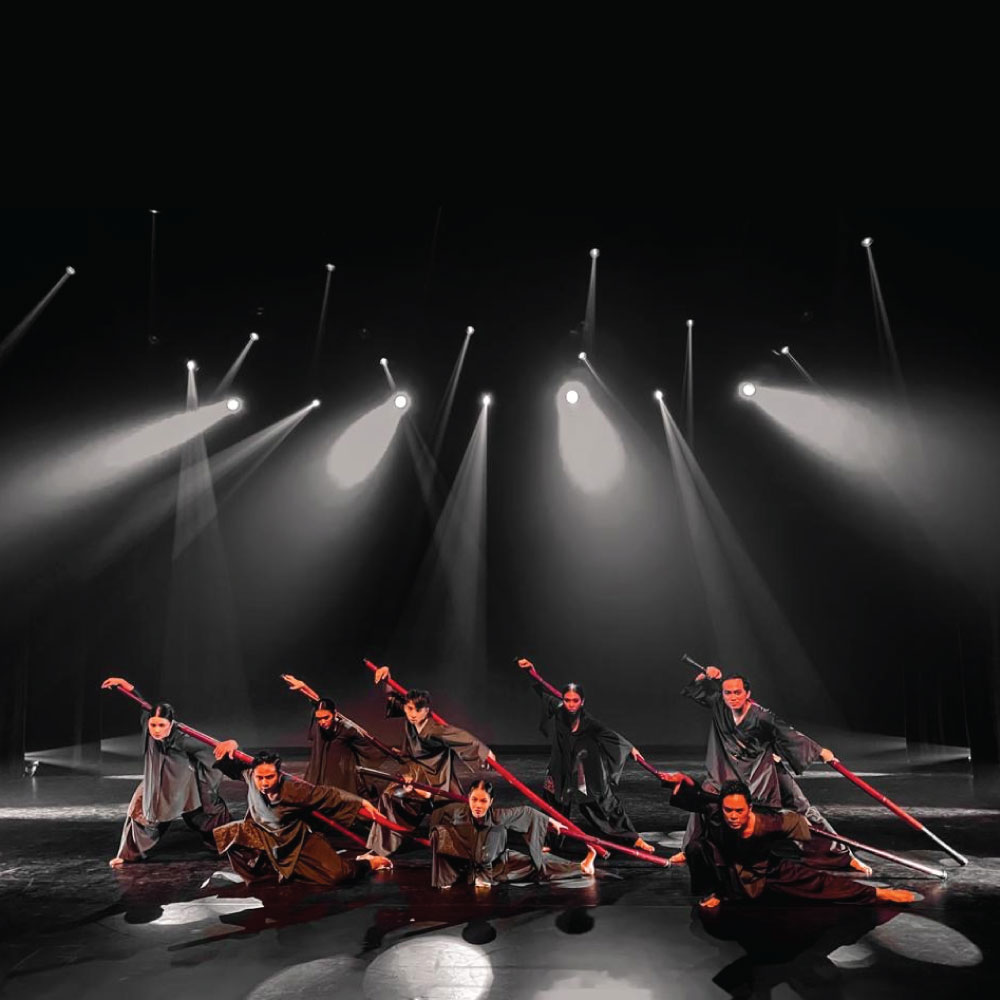
Muara Festival 2024
Presented by Era Dance Theatre in collaboration with Esplanade – Theatres on the Bay as part of Esplanade's Pentas series
1 – 3 Nov 2024