
Rosnah by The Necessary Stage (2016)

Descendants of the Eunuch Admiral (2015)

Emily of Emerald Hill (2015)

Rewinding the Classics

Replay: SG Theatre Classics
Rosnah by The Necessary Stage (2016)
Written by Haresh Sharma & Directed by Alvin Tan
In a world where the phrase ‘hidden gem’ is overused, Rosnah, first presented by The Necessary Stage (TNS) in 1995, is truly a gem buried in the annals of Singapore theatre history. It is probably the most obscure among the three productions in this series.
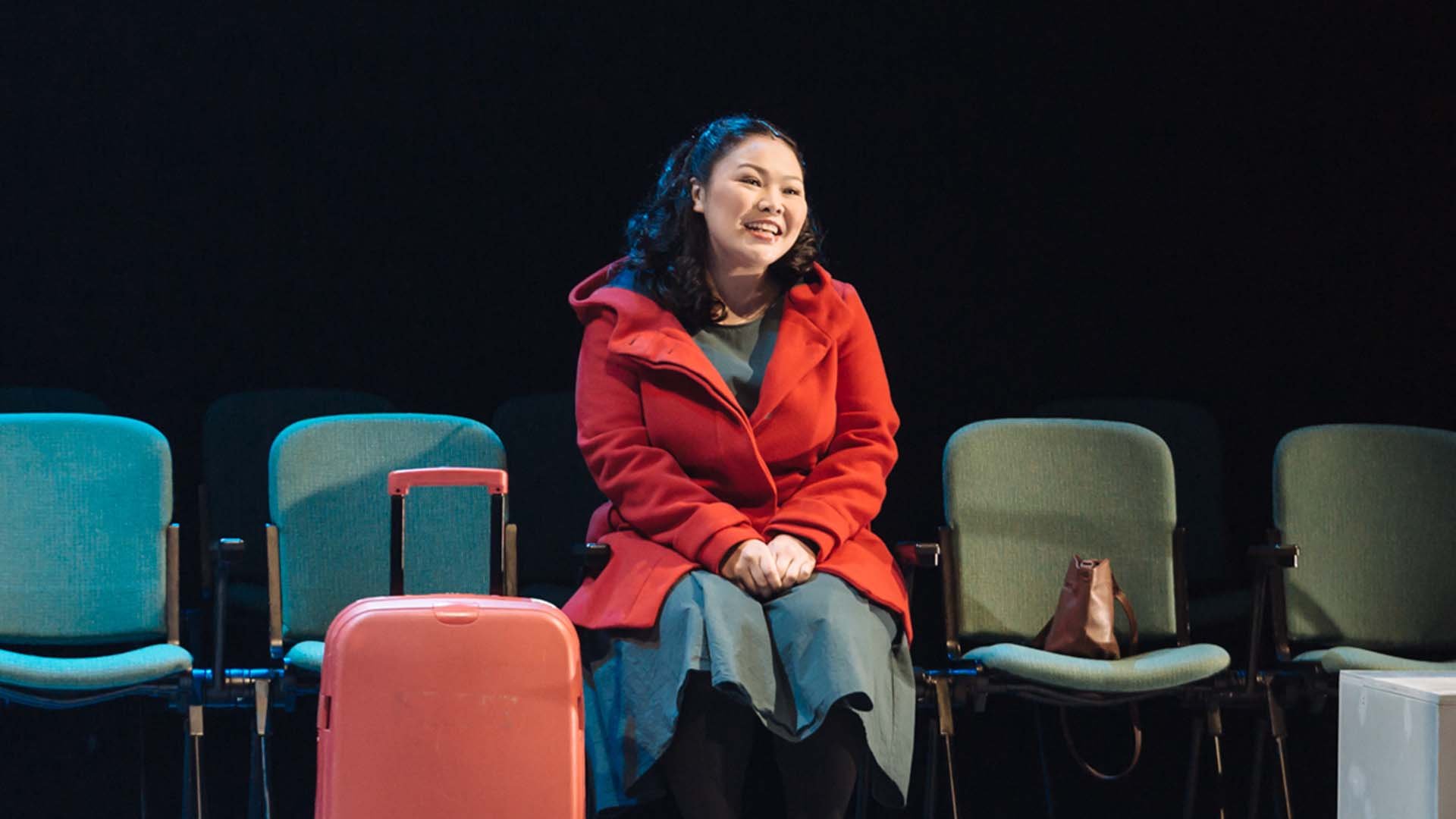
Rosnah is about a young Malay-Muslim woman who leaves home to study abroad, following her journey as she navigates her new environment and attempts to balance tradition and liberal ideas without losing her identity. It was a monodrama that came about as a result of an international collaboration that fell through. Using her notes from that experience as a starting point, it materialised as a one-woman performance, devised by performer Aidli ‘Alin’ Mosbit, director Alvin Tan and writer Haresh Sharma. TNS’ devised plays are created in a collaborative process that is based on research and improvisation before scripting. What was then a form of experimentation in creating original work has in the present day become a signature methodology. Rosnah was first staged in a foyer space at Tampines Community Centre before being reworked for The Substation in 1996. The production experimented with an immersive set, and with a narrative structure that blurred the lines between performer and character. But most groundbreaking was that it was the first time an entire Singapore English-language play portrayed the experiences of an ethnic minority character.
In the ‘80s and ‘90s, theatre companies and performers were divided along language lines. Actors would be perceived as representing “English theatre”, “Chinese theatre” or “Malay theatre” etc. There were crossovers, but they were rare. But barriers and labels were also starting to break down with companies like TheatreWorks (T:>Works) producing Kuo Pao Kun’s translated works like Lao Jiu, and The Theatre Practice producing his seminal, multilingual Mama Looking for Her Cat. Malay theatre companies like Teater Ekamatra were producing translations of western classics alongside original work tackling social issues in the Malay community.
Rosnah, with its social commentary, would not have looked amiss in Teater Ekamatra's line-up at that time except that it was written and performed in English. Alin herself started out with Teater Kami before literally “crossing over” (Teater Kami’s office was opposite the TNS office at Cairnhill Arts Centre) to work with TNS. It was years later that the crossover between audiences happened. When Esplanade opened in 2002, it pushed for plays in vernacular languages to have English surtitles where possible to reach a wider audience. There was pushback in the beginning because of the additional costs and expertise required. But with advances in technology, and as audiences become accustomed to them, surtitles became normal and even expected. This encouraged a “crossover” of audiences too, who were able to watch a play in a language they didn’t speak or understand.
This archival recording of Rosnah is from Pesta Raya – Festival of Malay Arts 2016. The programming team was undergoing a transition at that time, and new programmers sought minority stories close to home that would resonate with a millennial Malay audience. One of them had sat on the floor of the Tampines CC in 1995, and wondered if Rosnah’s story would still be relatable 20 years on. And what if it was performed in Malay instead of English? Many Malay-speaking audiences had not encountered this work. While the younger demographic was effectively bilingual, a translation meant they could bring their elders who were more comfortable with Malay, and spark intergenerational discussion. And who better to translate it than Alin? She had also directed a version for M1-SIngapore Fringe Festival with a fresh-faced Siti Khalijah Zainal as Rosnah in 2006.
Siti was recast and references were updated—popular indie music from the 2010s was used and a polaroid selfie was substituted with an Instagram selfie. But there were bigger changes too. In his director’s message, Alvin shared that Haresh made “structural adjustments of having Rosnah, who grew up and studied overseas in the ‘90s, tell her story to Siti, an actor. So the storytelling is by Siti (in 2016) about Rosnah, a woman growing up in the ‘90s… Materials have not changed much but a multi-layered perspective is now to be expected from this staging.” Another difference was that Siti wasn’t the only one on stage. Sound artist Bani Haykal was a constant presence in the periphery, providing a live soundtrack to the performance. In the post-show discussions, the programmers got what they had hoped for—intergenerational exchange. In 2026, it would be interesting to see what Gen-Z would make of this. Do they even know Michael Bolton?
In a Flying Inkpot review of the 2006 staging, critic Ng Yi-Sheng opined, “It's vital that classics of Singapore theatre like these should be given new treatments, not only to build up a sense of dramatic heritage, but also to rejuvenate them, freeing them from forgotten pages and once again giving them voice.”
Production credits
Playwright: Haresh Sharma
Director: Alvin Tan
Translation: Aidli ‘Alin’ Mosbit
Performer: Siti Khalijah Zainal
Sound Artist: Bani Haykal
Lighting Designer: Lim Woan Wen
Set Designer: Wong Chee Wai
Production Stage Manager: Lee Xin Ci Keira
Assistant Stage Manager: Azyyati Binte Alias
Surtitlist: Nawwarah Hanis Binte Mohamad Ghazali
You May Also Like