
Rosnah by The Necessary Stage (2016)

Descendants of the Eunuch Admiral (2015)

Emily of Emerald Hill (2015)

Rewinding the Classics

Replay: SG Theatre Classics
Emily of Emerald Hill (2015)
Written by Stella Kon & Directed by Aidli ‘Alin’ Mosbit
Emily of Emerald Hill is today one of the seminal plays in Singapore theatre, but it didn’t take off immediately. Even though it won first prize in the National Playwriting Competition 1983, no one thought of staging it in Singapore. It was only after it premiered in Malaysia in 1984 that the Ministry of Culture was prompted to offer funding for its Singapore staging. It finally premiered at the 1985 Singapore Drama Festival, directed by Max Le Blond, with Margaret Chan in the role that was to become so iconic.
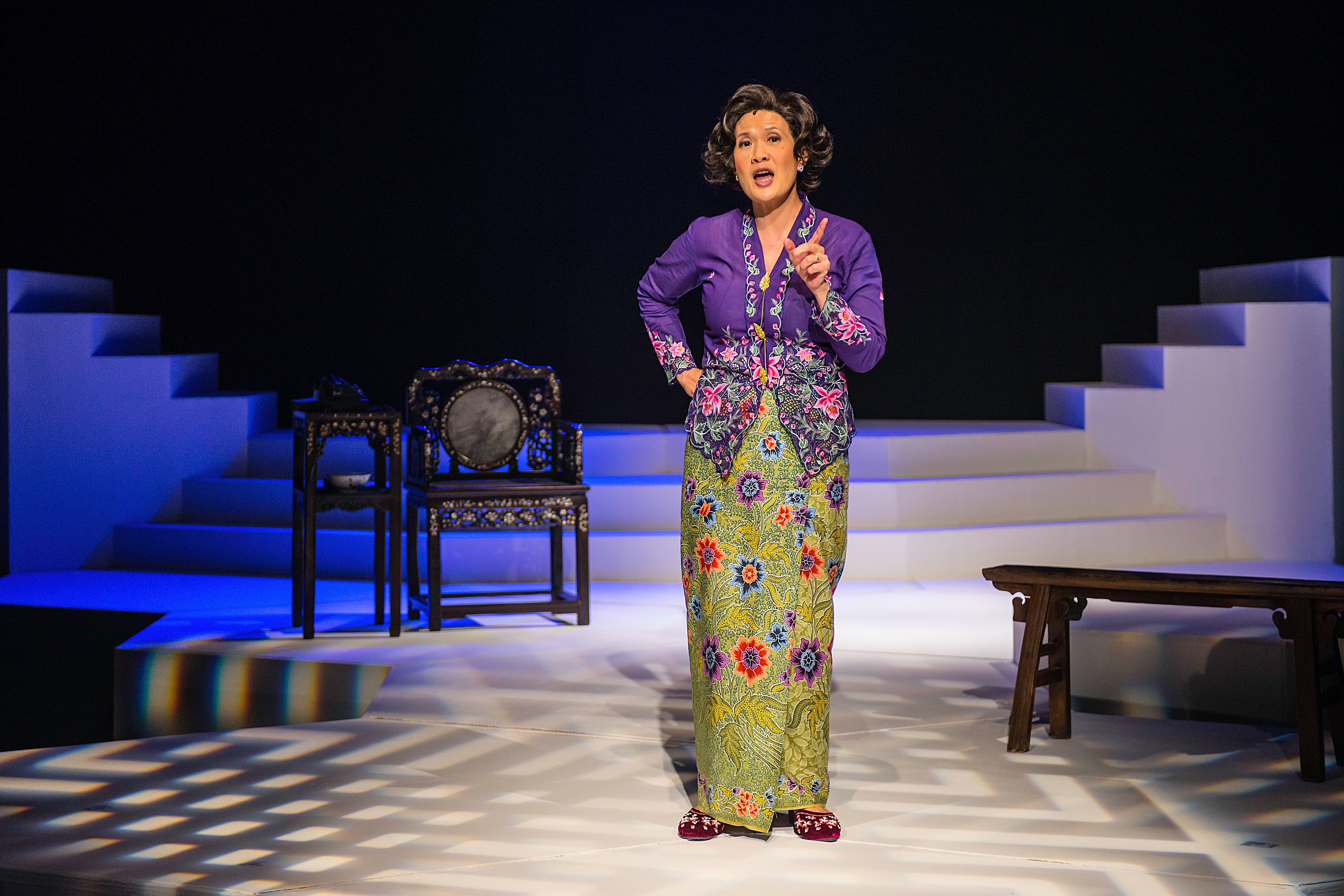
The rest is herstory. In the years since, Emily has been restaged multiple times around the world, with Margaret Chan’s and later Ivan Heng’s interpretations being arguably the most memorable portrayals of the character. The publicity key visual of the 2015 Esplanade production features the performer Karen Tan as Emily, against a projected backdrop of archival images of Margaret in the role.

This archival recording is from the 2015 production which was part of The Studios, Esplanade’s annual season of contemporary theatre. Held in the SG50 year, the season was themed ‘Fifty’ and featured 50 Singapore English-language plays. The five-week season was curated by the arts centre’s theatre programming team together with director and playwright Chong Tze Chien, with research input from theatre studies academic Dr Robin Loon. Each week featured one full-length production staged at the Esplanade Theatre Studio and nine plays grouped into thematic strands and presented as dramatised readings. Directors invited to be part of the season were given a list of the plays and groupings to choose from. Interestingly, no two directors chose the same play.
Aidli ‘Alin” Mosbit jumped on the opportunity. She had been working with Stella Kon on workshops of the musical version of Emily the year before, and had gotten to know the play and its characters very well. She was excited to bring another reading of the play to life. Alin is no stranger to the one-woman plays. She is familiar with creating solo performances, having herself performed as the titular Rosnah in The Necessary Stage’s play of the same name in 1995. There were only 10 years between the first Emily and the first Rosnah productions. In that time, Singapore theatre had developed by leaps and bounds, and gone further with experimentation in form, writing and multilingualism. In the ’80s, Emily had been revolutionary in putting a Singaporean character, local accents and narratives on stage. A scene where Emily makes phone calls to different characters is quite possibly one of the first on stage representations of Singaporeans’ mastery of code-switching, changing registers and accents to suit different contexts. By the ’90s, it had become par for the course.
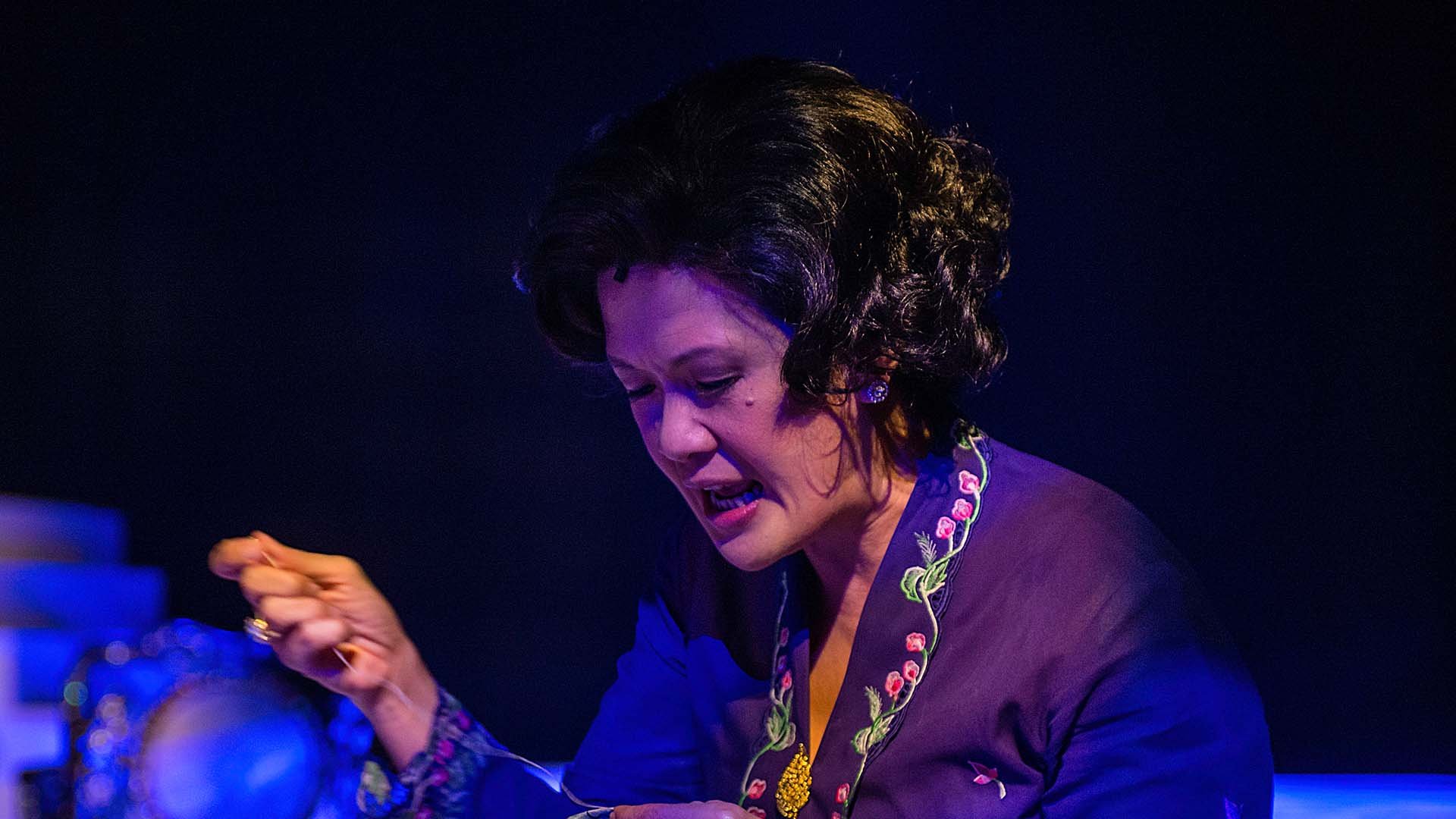
With every new staging of a play comes a different interpretation. While the earlier productions of Emily were performed on proscenium stages in theatres with 350 to 900 seats, the 2015 version was performed in a small black box studio with only 160 seats. Alin’s decision to have the audience on three sides of the thrust stage created an intimacy that brought the audience into Emily’s world whilst cleverly creating an enigmatic distance in moments when she turns her back. Karen Tan’s portrayal of Emily also brought fresh nuances to the role. Her Emily is the familiar Chinese Peranakan matriarch we have come to recognise, but her garrulous accelerating speech is a mask that hides a sensitive soul. In the quiet moments when she is alone, Karen plumbs the depths of her emotions to subtly reveal Emily’s hurt. She skilfully mines the pathos without veering into cloying sentimentality.
In an enthusiastic Business Times review, Helmi Yusof made observations which still ring true to this day. “As Emily of Emerald Hill, Tan's performance, directed by Alin Mosbit, is shrewd, measured and shorn of melodrama… The interpretation is fresh and canny not just because Alin and Tan have brought Emily down to earth. They've also excelled in conveying the play's social milieu, so that you can see how Emily is a product of her time and circumstance.”
Production credits
Director: Aidli ‘Alin’ Mosbit
Performer: Karen Tan
Set Designer: Wong Chee Wai
Lighting Designer: Helmi Fita
Sound Designer: James Lye
Costume Designer: Hayden Ng
Dramaturg: Ahmad Musta’ain bin Khamis
Producer / Production Manager: Elnie S Mashari
Stage Manager: Afifah Buang
Assistant Stage Manager: Rashid Shiddiq and Sharmirul Aizan
Make-up Artist: Haslina Ismail
Hair: Ashley Lim (Ashley Salon)
Wardrobe Mistress: Molizah Mohd
Dresser: Nur Fazlin Abdul Malek