Making a Scene: Adaptations in Theatre

Making a Scene: Pathways for Chinese Language Theatre in Singapore

Making a Scene
Making a Scene: Adaptations in Theatre
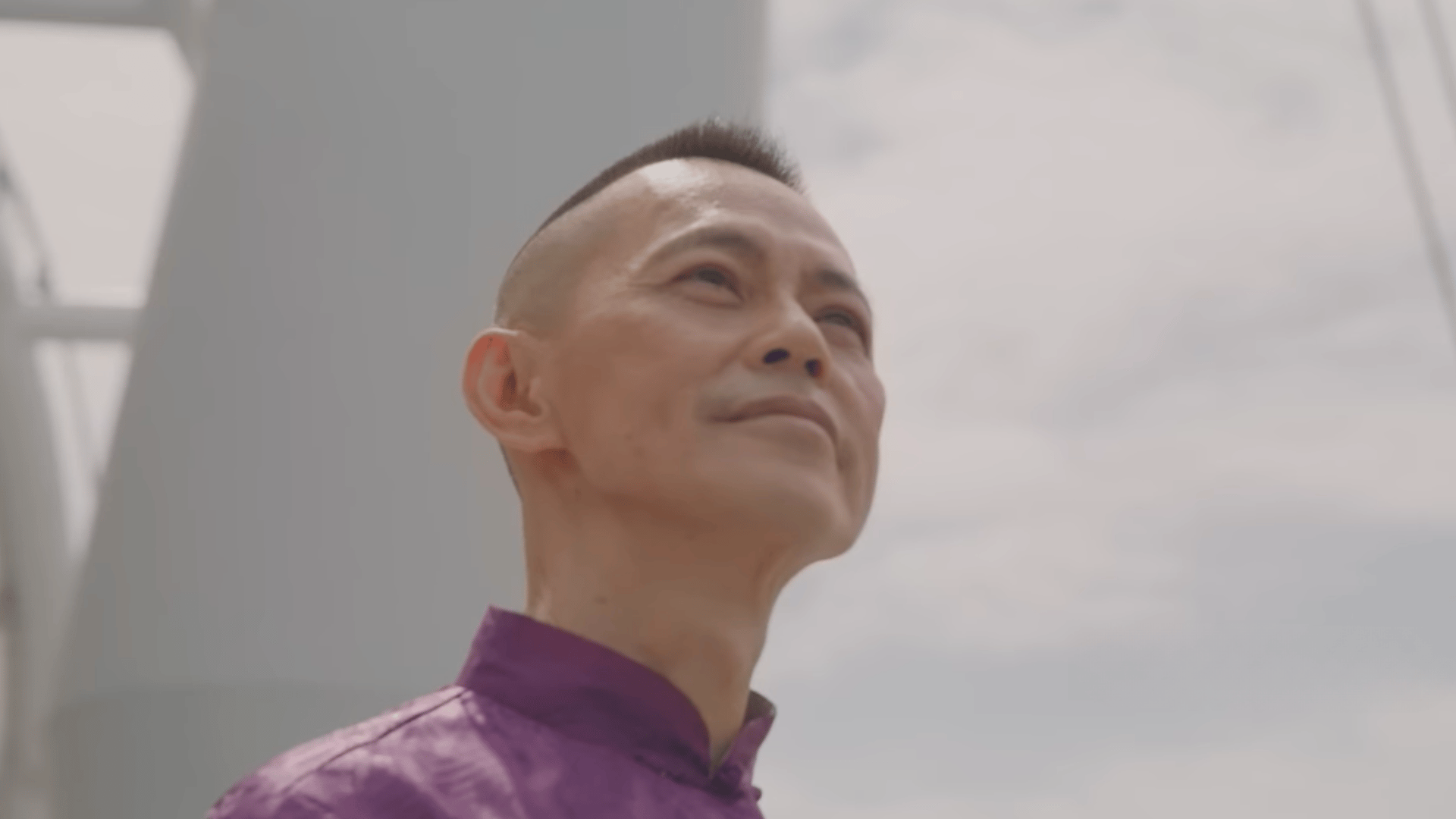
Hong Kong director Mathias Woo on bringing texts to life
“ ...if you want to respect the work, you need to create the context for the work, so that you can create a new connection between the work and the audience. ”
Adaptations in Theatre
Adaptations in Theatre
What is the meaning or value of adapting an existing work rather than creating a new work? With so many great texts in the world, how does one decide which piece to revisit, and what are some considerations one should have in mind while doing so?
In this episode of Making A Scene, the executive director and co-artistic director of Zuni Icosahedron, Hong Kong’s best known experimental theatre company, shares Zuni’s philosophy and approach to adaptations. Mathias Woo talks about 13.67, Zuni’s 2022 adaptation of Hong Kong writer Chan Ho-Kei’s novel of the same name (although English readers might know Chan’s novel better as The Borrowed) that will be restaged for Singaporean audiences at the upcoming 2024 Huayi – Chinese Festival of the Arts. Alongside this unpacking of Zuni’s/his process with 13.67, Mathias also weaves in larger questions and reflections in relation to Zuni’s broader artistic explorations and adaptations as a company around theatre and technology, as well as around theatre, audiences and the social context/social movements.
To give a brief overview of 13.67, it is useful to refer to Chan’s afterword to the novel, “The idea was to create a book in which every part felt like a classic detective story, but looking at the big picture, you’d see [13.67] was actually a social realist novel.” On the surface, 13.67 can be read just as a portrait of the decades-long career of a Sherlock Holmes-esque detective, as depicted through six short stories of prominent cases he solved over the course of his career. On a deeper level though, by situating each case at key points in Hong Kong’s history, and by structuring the stories to unfold in a reverse-chronological order—that is, the novel begins with the detective’s final case, as a bedbound patient in a hospital in 2013, and ends with his very first case as a young police officer in 1967—13.67 actually paints a vivid portrait of the historical shifts and developments of Hong Kong as a city.
And it is precisely this portrait of Hong Kong (and technology) across time that piqued Mathias’ interest in 13.67—he noted that in choosing which piece to adapt, “it’s always related to the context”, be it the context of our society and culture, or the context of our times. With the seismic developments in Hong Kong over the past five years, 13.67 was therefore a timely piece to adapt to invite audiences to consider Hong Kong’s history. At the same time, in choosing to adapt and stage 13.67 during the period of the COVID-19 pandemic, it became very clear that ‘adaptation’ took on a second layer of meaning - the staging choices for the work had to adapt and be contextualised for pandemic constraints of mask-wearing for performers and audiences alike, and hence the adoption of a cutting-edge immersive sound system in the presentation of 13.67.
Further in the conversation, Mathias highlights both the immense popularity of 13.67 with schools and also complaints from fans of the novel that the stage adaptation over-simplifies the original work. From this, he points out a third layer to consider with regards to adaptations and context: What are the context and limitations of theatre as a form (in comparison to TV dramas for instance), and also what are the context and current orientation that people have towards theatre and the arts? In the face of such huge questions around adaptations, Mathias luckily also offers a principle to hold on to, “To adapt a work, you need to respect the work.” And “if you want to respect the work, you need to create the context for the work, so that you can create a new connection between the work and the audience”.
In other words, even as practitioners might begin adapting a work by first thinking about how to contextualise it for modern audiences, how might our thinking around adaptations expand to consider the vast range of ‘contexts’ – personal, historical, cultural, societal and so on – in which it is being adapted and which will affect how it is received? In closing, Mathias points to how adaptations can also be new creations of context and meaning when he shares his hopes for how artists might respond and adapt to the current contexts of society and technology by creating more relevant contexts for art in four ways: rethinking the design and infrastructure of physical theatrical spaces; re-interrogating the conceptual definition of art; refreshing the fundamentals of education for artists; and re-imagining how all governmental policies might “have art elements” rather than having a single container of ‘arts policy’, so that the arts is ultimately present and meaningful to people across all sectors of society.
This episode is commissioned by Esplanade – Theatres on the Bay in conjunction with Huayi – Chinese Festival of Arts, and hosted by director and dramaturg Chong Gua Khee. Available on Esplanade Offstage, Spotify, and Apple Podcasts.
Artists' bios
You May Also Like