Rahimah Rahim, The Queen of Entertainment

Aya Sekine, The Jamming Jazz Belle

Generation M: The Music Guru, Multi-Hyphenate

Suhaimi Subandie, The Hardcore (Super)man

Mel Ferdinands, The Versatile Country Rocker

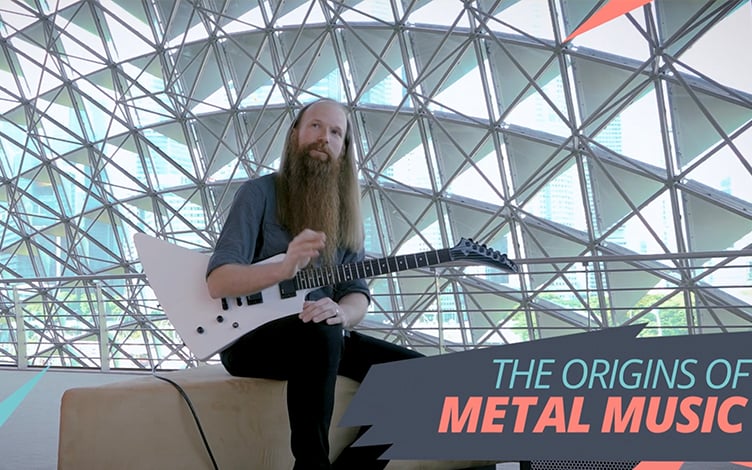
Kathir, The Existential Metalhead

Generation M: The Music Made Us
Kathir, The Existential Metalhead
Kathir on twinning philosophy and heavy metal
Death, destruction, despair; these are some words that often appear in heavy metal songs.
For so long, the genre has been derided by critics, associated with the occult, even banned in some countries due to its sacrilegious and anti-establishment themes. However, as Kathirasan KJbetter known as Kathir, the bassist of Vedic metal band Rudra notes, some of these negative perceptions changed after Metallica won their first Grammy award in 1989, propelling the genre into the music establishment.
In his teens, it was the dark lyrics that drew him to the genre. At the time, they aligned with his view of the world and provided him with an emotional outlet that steered him away from unwholesome activities.
“There’s a calm even when I’m screaming.”
Years after his first encounter, he and his bandmates would reinvent the genre by replacing the death, destruction and despair with ancient Indian philosophy, lyrics focused on non-dualism and self-knowledge. There’s almost a spiritual dimension to the songs, although Kathir is quick to add that the band does not set out to impose their beliefs on anyone. It is, after all, just an artistic expression.
The guitarist grew up in a music-filled home. His late father was a musician and singer for the then Singapore Broadcasting Corporation, who plied him with a staple diet of Tamil and Hindi tunes and rock music. At one point, his father owned a little over a hundred vinyls, a format that figures in his own collection of his ultra-rare Michael Jackson and Indian music recordings, which he cherishes.
His first brush with metal was in secondary school when a friend passed him a recording of Def Leppard’s Hysteria, but it wasn’t until he entered Ngee Ann Polytechnic that he would meet kindred spirits with whom he would discuss heavy metal and exchange tapes and CDs. It was also there where he met his band members Bala and Shiva. The trio would dream of hitting it big as touring rock stars while spending their free time jamming in Bala’s bedroom.

They had called themselves Epitaph in the beginning, but changed their minds when they realised the name had already been taken. Named after a storm god (who is also the aggressive persona of Shiva), Rudra (or Rudhra in the beginning—they later dropped the ‘h’) felt closer to home as the three are of Indian descent.
During his national service, Kathir developed an interest in world philosophy—in particular, ancient Indian philosophy. To further his interest, he underwent formal studies in Sanskrit to better understand Vedic texts. This would set the course for the new genre Rudra were about to create.
Their early musical output had been heavily influenced by Slayer, Sepultura and Obituary, but this melding of Vedic literature and metal became a different beast. To better unify their newfound ideas with musical structures of the genre, the band invented drone styles on the guitar, fashioned after Indian instruments such as the sitar and tanpura to introduce Indian classical music modalities. Some of the texts they’ve tackled include Smrti (Sanskrit word for remembrance), the Upanishads and the Brahma Sutra.
From the bedroom amateurs that they were to the internationally renowned metalheads they have become, their decision to carve out a new brand of music has brought them unexpected recognition in the last three decades. To date, they have released 10 albums, with fans all across India, Canada and the United States turning up at their concerts overseas with full knowledge of their lyrics.
Back home, there have been research papers written about them. Some have taken their lyrics, guitar riffs and drone styles apart for close study, while others have examined the social impact of their music. Their work is also part of modules taught at some schools.
Their upcoming album looks at the unsung heroines in Vedic literature.
Kathir was featured in Generation M: The Music Made Us, an exhibition at library@esplanade from 15 Apr-6 Jun 2021.
Advisory: Featured songs in the playlist below may contain violent imagery and other mature content.