The women in Singapore’s male-dominated punk scene

For the love of ska

Notes on the Campus

Music journalism in the age of digital streaming and social media

The Dancers Mixing Their Own Tracks

Baybeats Budding Writers
The women in Singapore’s male-dominated punk scene
They may be the minority, but these Riot Grrrls are roaring
Colette is a Baybeats Budding Writer who was mentored by Eddino Abdul Hadi, music correspondent for The Straits Times and Hidzir Junaini, freelance journalist at NME Asia, Rice Media and FEMALE Magazine.
Did you know that Singapore has a flourishing punk and hardcore scene that has thrived on the fringes of society since the mid-1980s—the antithesis to the clean, proper image that most people think of when it comes to our city? It is the DIY ('do it yourself') ethos of the scene that has allowed it to endure despite the constant pushback. Fast tempos, short songs and strong vocals are characteristic of the genre’s sound. The physical aspect of it is crucial, too. Moshing—a violent form of dancing that involves deliberately colliding with other gig goers, stage diving and some staple dance moves such as two-stepping, windmilling or stomping around with punched fists—is customary at any show.

What is Riot Grrl? – The scene in the ’90s
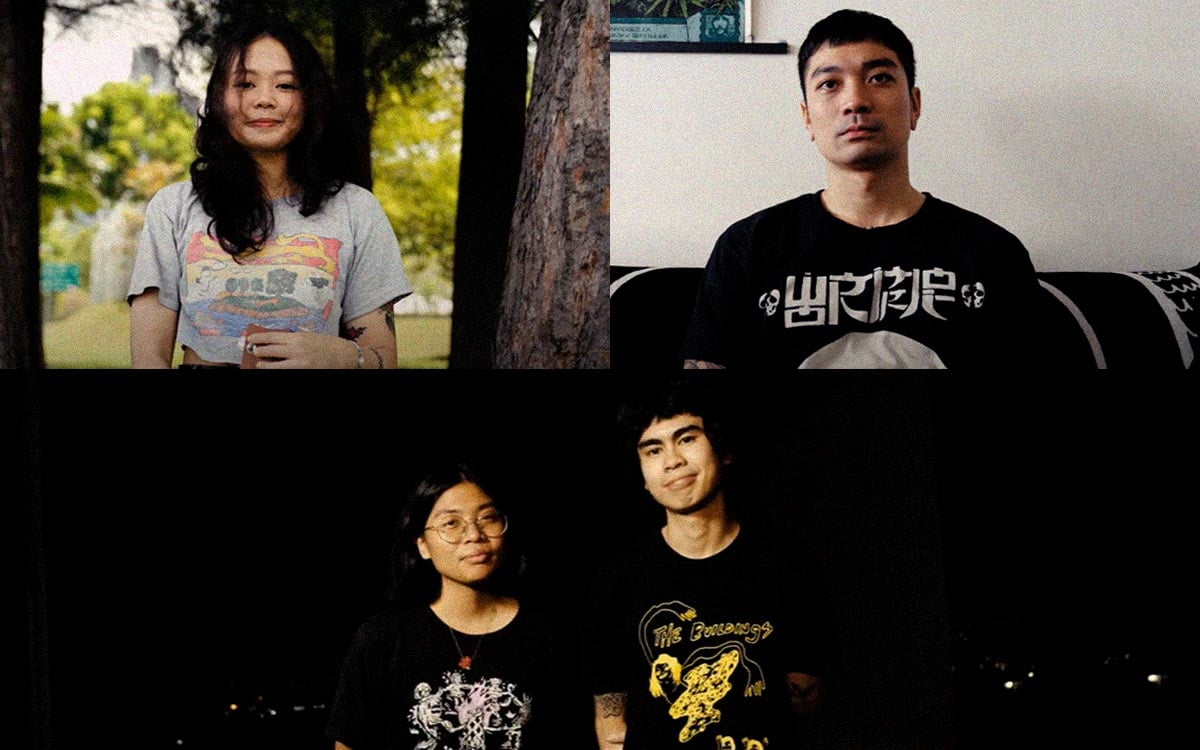
I spoke to Ginette Chittick, who formed the first all-female punk band in the local scene in 1992, Psycho Sonique, marking the start of our local Riot Grrrl chapter.
In the early 1990s, the Riot Grrrl movement was born out of Olympia, Washington’s punk scene. It was created to tackle sexism and sexual violence, normalise women’s anger and celebrate sexuality. The most iconic Riot Grrrl song ever, Rebel Girl by Bikini Kill, is a feminist anthem with lyrics such as “Rebel girl you are the queen of my world” and “When she talks I hear the revolution / In her hips there's revolution”. Thanks to the popularity of prominent bands not limited to Bratmobile, Bikini Kill and 7 Year Bitch, the Riot Grrrl ethos reached Singapore as well.
Ginette learnt about Riot Grrrl through her friend, Lina Adam, a music journalist who lent her a Bikini Kill CD. “I was hooked. It spoke to me on many levels and resonated with my lived experiences.”
She was just 15 years old when she started Psycho Sonique. They made songs like I Don’t Give a Damn in which she shouts: “I don’t give a damn what you say / I don’t give a damn what you think.” Around the same time, Ginette also began to establish her Riot Grrrl and feminist zine, CherryBomb Press, alongside her distro, She-Thang Distributive.
There were other Riot Grrrl zines too. “My friend Peishan had a zine called RedLetter Day. I know Puink and Specific Heat as well, and I loved those too.”

Misogyny in the scene
“When [Psycho Sonique] started out, we were the first all-female band in the underground scene and our first shows were madness. What we received from the audience was always a mix of excitement and derision, a weird super tense energy.”

She recalled the band’s first show in Kuala Lumpur, a gig called Psycho-a-go-go, at which she was groped as she made her exit from the venue. “It was chaos as there were many people following us and we had to be escorted out of the hall when it happened. I didn't get a good look on who did that and I turned around immediately and just grabbed whichever unfortunate soul was behind me and screamed at him.” Back home, the members received treatment that was unheard of for any male band. They were catcalled and booed. Sometimes, members of the crowd would get up on stage and invade the band members’ personal space.
Shaiful Risan, punk scene veteran and the man behind the local hardcore label Prohibited Projects, concurs, “The world was different in the 90s. There was definitely chauvinism and a whole lot of sexism. Women were not seen as equal back then as well.”
Finding a voice – Music and zines
Radigals, an all-female hardcore band that has been active since 2013, recalls how things have changed nearly 20 years down the road. Esty Azmi, the bassist, tells me: “Ginette’s time is way before us. At that point of time, [the issues weren't] really vocalised. During our years in the scene, it’s sad that it's still happening, but it's less than during Ginette’s time.”

Still, each of them has also experienced these issues in the mosh pit. Esty continues: “For me, I stand in front of the mosh pit and people will just say ‘Eh, if you don’t want to kena [get] touched then don’t stand here lah. Stand behind.’ Like why?” Drummer Cheryl Yew, adds: “If not, they’ll stop us from moshing because, like, ‘Oh it’s too rough, you’re a girl, you shouldn’t be doing this’.”

As such, women’s issues are definitely a big part of the band. “The lyrics portray our life, our struggles—being in a male dominated scene, in outside life, and the things that we face growing up,” Esty explains. “This was important because it was the only platform for us to let our voice out at that point of time.”

The guitarist Nurfazlin Zailani, who goes by Alin, feels that the message is powerful through music, especially with the hardcore sound. However, besides music, she has also dabbled in zine-making as a form of expression. She wanted a platform for girls who could draw or write, but also to air their grievances, including those of sexual harassment. “I used to write the zine anonymously, but now I think it’s important not to be anonymous so people can come forward to approach you and you can share your experiences together.”
Other than that, Radigals started a practice of offering company to people who feel unsafe or scared to go to shows alone. “Be it male or female, you can just find any of us.”
Representation matters
Syafe feels that female representation in the punk scene is critical. “It is important for people from different backgrounds to feel equally respected when they put themselves out there.”
The members of Radigals were directly inspired to start a band after they saw the female-fronted band All For Nothing live in Singapore. On the other hand, Syafe shared how back when there weren't a lot of females going to shows and even fewer playing in bands, it took a while for her to stop feeling intimidated. It got better slowly and especially after Fuse. Syafe continues, “The people they represent will not be afraid to be a part of the community, because they can see that someone similar to them is doing it too.”
Shaiful feels like this is a moot question, saying that the ethos of punk rock is organically inclusive. “Basically, it shouldn't matter.”
With regards to sexual harassment, Ginette says: “I don’t think much of the crazy stuff that happened to my bandmates and I while in Psycho Sonique will happen now. Getting booed and catcalled just because of your gender will definitely not fly.”
Radigal’s Cheryl agrees. “Because of cancel culture, people are more afraid to do these things so openly. I’m pretty sure it’s still happening, just that it's kept very, very quiet. But it’s definitely exposed more now lah. ‘Cause people are like: Oh we see it, and we’re gonna say it.’”
“Personally, I have never experienced such incidents before but I'm happy to keep pushing this agenda forward,” Syafiqah Rashid, guitarist of Fuse shares. “I believe it's important to have a strong support system in the community—people you can rely on to protect and fight for you when such events happen.”
Dahl also shares how the number of women in the scene has grown over the years. “With word of mouth, friends bringing friends, the DIY aspect of the scene as well, it all came together and allowed the females to also have a platform. The effect of more females coming to shows resulted in having more females in general around in the scene.”
Moving forward
Although much progress has been made on that front—with explicit violence, harassment and bigotry no longer tolerated, what lies behind closed doors remains to be addressed.
“Subcultures like punk and hardcore which
have tenets that purportedly reject
mainstream expression of culture, economies
and politics—the spaces which these
subcultures occupy are still very male-driven
spaces. Riot Grrrl and feminism are still very
relevant as necessary counterpoints to
challenge the hegemony and the veracity of
these spaces.”
Ginette Chittick, founder of the first local all-female punk band, Psycho Sonique
Esty agrees: “Whether you’re in the hardcore scene or wherever you go, [girls] are the minorities. So only we understand each other, better than men.
Ginette concludes: “I see a lot of young women starting to come into the fold of Riot Grrrls and perhaps that is their gateway to feminism. I couldn’t be more excited! I’m always excited when it’s young people getting political. I know our future is going to be so amazing!”