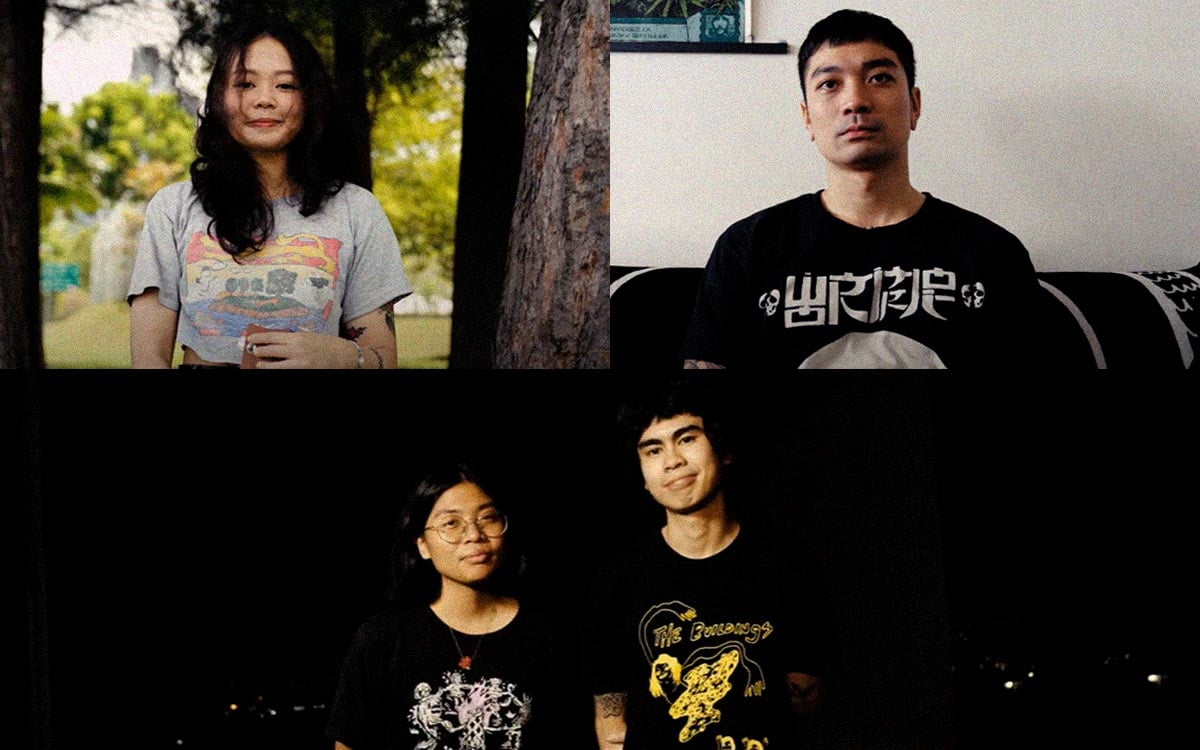
The women in Singapore’s male-dominated punk scene

For the love of ska

Notes on the Campus

Music journalism in the age of digital streaming and social media

The Dancers Mixing Their Own Tracks

Baybeats Budding Writers
Music journalism in the age of digital streaming and social media
Why write about the local music scene?
Wayne is a Baybeats Budding Writer who was mentored by Eddino Abdul Hadi, music correspondent for The Straits Times and Hidzir Junaini, freelance journalist at NME Asia, Rice Media and FEMALE Magazine.
“In the end, only three things matter:
How much you loved,
How gently you lived, and
How gracefully you let go of things not meant for you.
”
Buddha
Once home to decades of local music coverage, BigO’s website now only hosts the above quote and a note of thanks to all contributors and readers. While the local publication—founded in 1985 by brothers Michael and Philip Cheah and their friend Stephen Tan—officially shut down this August, its last physical issue was released in 2002.
BigO’s closure seems to cement the death of print music journalism in Singapore, with free monthly music magazine JUICE Singapore also having moved online in 2017 after 19 years of print, before eventually shutting down.
At present, a few online publications live on to document the local scene, including Bandwagon and its National Arts Council-partnered project Hear65, as well as Life in Arpeggio and Big Duck Music. Butthe digital age has necessitated a shift in the role of music journalism. BigO lived in an era of analogue music, when reading music reviews and record-shopping were common. Today's webzines exist in a time of digital streaming, where choices of what to listen to are often fuelled by social media virality.
Why, then, should we still write about local music today?
Looking out for the little guy

For Kevin Ho, founder and editor of Life in Arpeggio, it’s all about giving the scene a voice.
“I think it's very important to be an advocate of anything that you're passionate about,” says Ho. “If there aren't (publications) like Arpeggio and Big Duck and Bandwagon, who's going to talk about the underground music scene? Who's going to talk about the different subcultures and the music communities?
“It's the same for any subculture, you need to have a voice for it, no matter how small, whether that is existing in a bubble, or whether it's growing.”
Having run the online publication alone since 2019, Ho takes pride in using music journalism as a tool to boost local musicians’ reach. Particularly, he notes that some artists have thanked him for giving them their first interviews and features, which helped them get booked for shows and grow as artists.
“You need to always look out for the little guy... You need to always have that lifeline to help these people who won’t get their stories heard.”
Kevin Ho, founder and editor, Life in Arpeggio
Building a space for wider representation
The sentiment certainly resonates with the team behind gig promoter Big Duck Music, which started their online publication in the midst of the COVID-19 pandemic.
“Music journalism can be sort of a constructive part of the ecosystem if you are pushing the underrepresented,” says editor JX Soo. “That was really the ethos of Big Duck. That was why we liked BigO so much, because they were kind of fearlessly championing acts that were really tiny. And I think as a music writer, all you really want is to have a flourishing scene where you can actually have that constructive conversation.”

These days, the Big Duck team is at a crossroads. Hoping to keep up a sense of community and consciousness for artists who were still putting out music during the pandemic, they wrote critical reviews that added discourse to releases that otherwise lacked coverage. Reviews like those, they thought, also provided encouragement for artists producing music at the time. But with the return of live shows, they value the healthier, more natural reemergence of communities in the scene.
A show promoter first, Big Duck primarily focuses on helping build up the scene by curating shows with underrepresented, emerging artists and musicians trying out new sounds. At their last B-4 showcase in August, local hyperpop act SCUMBOYS made their live debut, performing alongside seven other acts. Moving forward, Soo says they are in the midst of navigating the balance between promoting shows and producing editorial content, which is likely to remain primarily shortform.
Inspiring the next generation
While both editors continue to champion the power of the written word even as video content floods audiences’ screens, they also hope new voices will emerge, no matter the medium.
“I would like to see more Big Ducks, and more Arpeggios, and more publications, or just more platforms, surfacing, even if they’re podcasts, Instagram pages, or TikTok accounts,” says Ho, who has also begun inviting younger guest writers to contribute to the publication.
“
I started Arpeggio because I felt there weren’t enough voices. So, likewise, I want to keep that amplification going, encourage more people to use their voice and speak about the music scene. I hope to inspire the next generation of music writers. And from what I've seen so far, you know, I think the future is quite bright.
”
Ho sums up his years as a music writer into a compelling argument for those immersed in the scene to start writing about it: “Even though Singapore is a tiny metropolis, it still has a melting pot of subcultures. Since the day I discovered the scene, that's a force that hasn't stopped, that has kept on going. The scene has kept on diversifying in the live band scene, in the electronic community. That has been very optimistic, that growth. So as a writer, I've been lucky to see and document these different pockets of growth in the community. I guess my wish for the local scene is for people to just keep on experimenting, keep on innovating, keep on inspiring the kids, you know—keep on inspiring generations of musicians.”