Hard Questions, Fragile Bodies
A closer look at The Studios 2026
From 2023 to 2025, The Studios' annual programming slate was crafted around Land, with each year more tightly focused around a sub-theme (Landings in 2023, Fault Lines in 2024, and Sustenance in 2025). This sustained conceptual approach yielded a multi-dimensional exploration of our ideas of terra firma.
And with the conclusion of the Land Trilogy, The Studios now embarks on a new three-year-long exploration of Power, beginning in 2026 with the sub-theme of Precarious Bodies. Senior Producer Shireen Abdullah hopes that The Studios 2026 “[approaches] power in a meaningful way…borders are redrawn, allegiances are in flux, what is true and what isn’t—all that is being contested. It’s a very evocative theme that we would like to dissect over three years.”
To that end, Precarious Bodies features a diverse and provocative slate of five shows that examine the myriad conditions, structures, and relationships which can destabilise individuals, communities, and the body politic: Fragments of Tuah by Mark Teh and Five Arts Centre (Malaysia), Blind Runner by Amir Reza Koohestani and Mehr Theatre Group (Iran), Handle With Care by Ontroerend Goed (Belgium), Multiple Bad Things by Back to Back Theatre (Australia), and Monstress by Claire Teo & ART:DIS (Singapore).

Bodies Susceptible
Back to Back Theatre is an Australian theatre company which has for close to 40 years consistently devised work with an ensemble of actors who identify as having an intellectual disability or as neurodivergent.
Similarly, ART:DIS is a Singapore nonprofit that offers opportunities in the arts for persons with disabilities. Artist and performer Claire Teo (she is the first visually-impaired graduate from LASALLE College of the Arts’ Diploma in Performance programme) partnered with them in 2025 to develop and present Monstress, which has since been reworked and expanded for The Studios 2026.
And so, their respective shows—Multiple Bad Things by Back to Back Theatre, and Monstress by Teo and ART:DIS—deal squarely with the less-talked-about aspects of disability, identity politics, and inclusiveness.
Ingrid Voorendt, Back to Back’s associate director, shares that “Multiple Bad Things began with conversations about displacement and the refugee crisis, and this led to conversations about identity politics, intersectionality, and systemic oppression…[this led to] questions about power and its dynamics. Who has the power in a given situation? How can the power be shared? We engage with this throughout our process, observing and questioning the power dynamics in our own rehearsal room. Who has the power within this particular group of people? Often these conversations make their way into our scripts.”
For Monstress, “it began with a willingness to listen,” says Teo. “To adapt, and to recognise that everyone deserves to feel safe in the room. It was not about removing disagreement but about creating enough trust for people to disagree, question, and contribute freely.” Therefore, beyond a lived-in authenticity, both shows seek to reconfigure conventional power structures within a creative space.

Simon Laherty, a long-time core ensemble member of Back to Back, plainly and blithely states that they “talked a lot about white privilege… power is a strong word. It shouldn’t be played around with. If you’re going to make art, you can play with it—if you’re not making art, don’t bother.”
And make art they do. In Multiple Bad Things, three workers are engaged in a Sisyphean task of assembling a massive, twisted structure of metallic gold poles. But such tedium and banality is merely the prelude to the wrenching microaggressions and abuse that the workers enact on each other. The able-bodied woman hurls insults at her disabled colleague, while their male counterpart sits lazily on a pink flamingo float. Is he literally resting on his male privilege, or is he unable to participate because of his autism? Or is it some twisted combination of both?

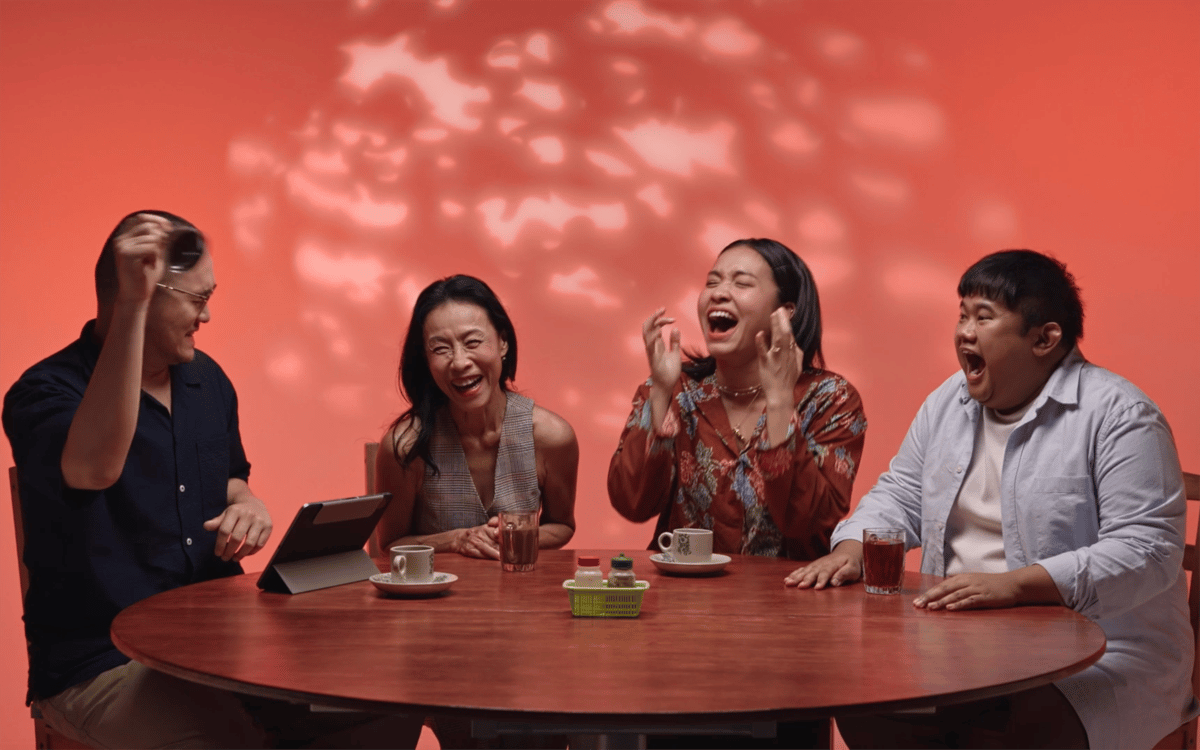
Such bold provocations are also very much present in Monstress: how does caregiver fatigue and a lack of support turn the harried mother of a special needs child (played by Oon Shu An) into an abusive figure? Given the difficult and uncomfortable nature of such explorations, it is perhaps reassuring that the artists of both theatre companies sought to be more inclusive in their creative approaches.
“It would not make sense for us to create the work in a room that reproduced the same hierarchies we were trying to question,” Claire trenchantly notes. “So part of the process was being willing to confront our own ableism, ideas of care, and the ways we are used to working. It began with a willingness to listen, to adapt, and to recognise that everyone deserves to feel safe in the room. It was not about removing disagreement but about creating enough trust for people to disagree, question and contribute freely.”
Bodies Political
The opening show of The Studios 2026, Five Arts Centre’s Fragments of Tuah, was a bona fide hit when it premiered in Kuala Lumpur in 2025, picking up five awards in the Theatre category at 21st BOH Cameronian Arts Awards: Best Director, Best Original Script, Best Music, Best Set, and Best of 2025.
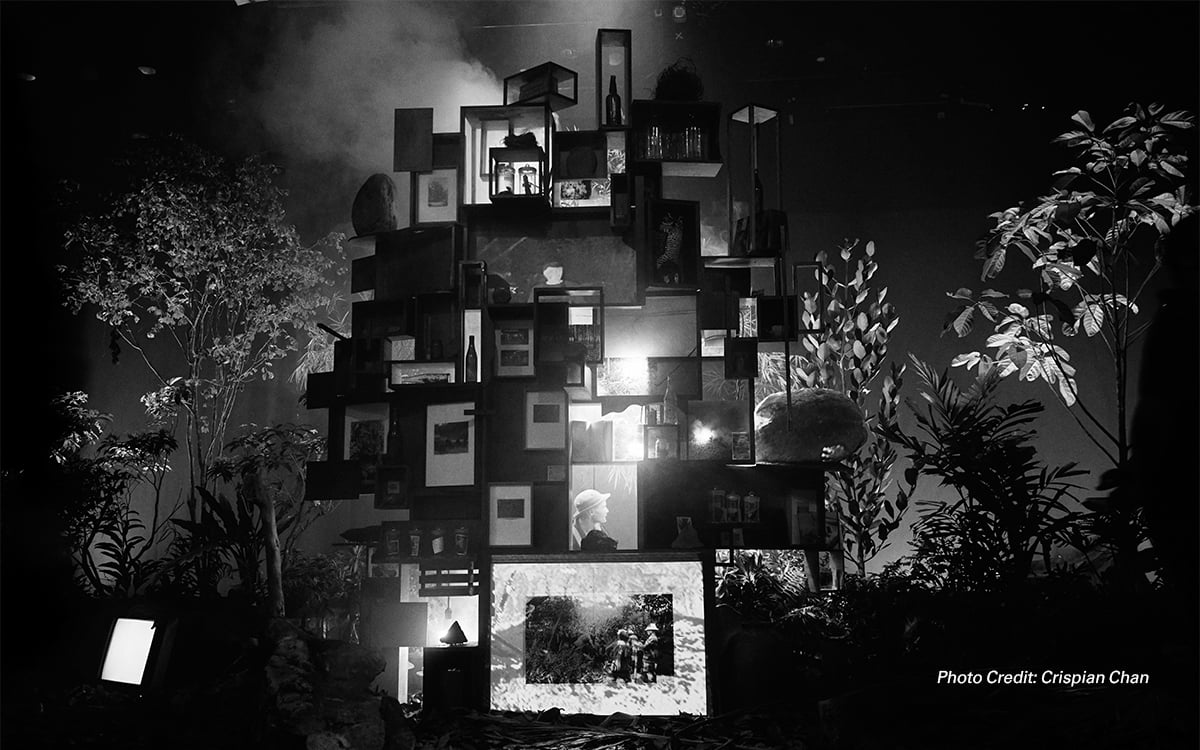
A piece of documentary theatre, it seeks to artfully unravel the construction and constructedness of the legendary Malay warrior Hang Tuah, whose varying incarnations still lend themselves to be harnessed for a variety of purposes within Malaysia today. Five Arts Centre member Mark Teh, who co-conceptualised, co-wrote, and directed the show, offers a straightforward primer about why they created a show centred on Hang Tuah:
“With Fragments of Tuah, we've found ourselves ultimately excavating how a 'national hero' is created and popularised. Through what means of storytelling? What acts of history-making, or myth-making? What networks of power, patronage and propaganda? In doing so, we are also scrutinising the power of stories and storytelling—to consider how these can be instrumentalised, distorted, and weaponised.”

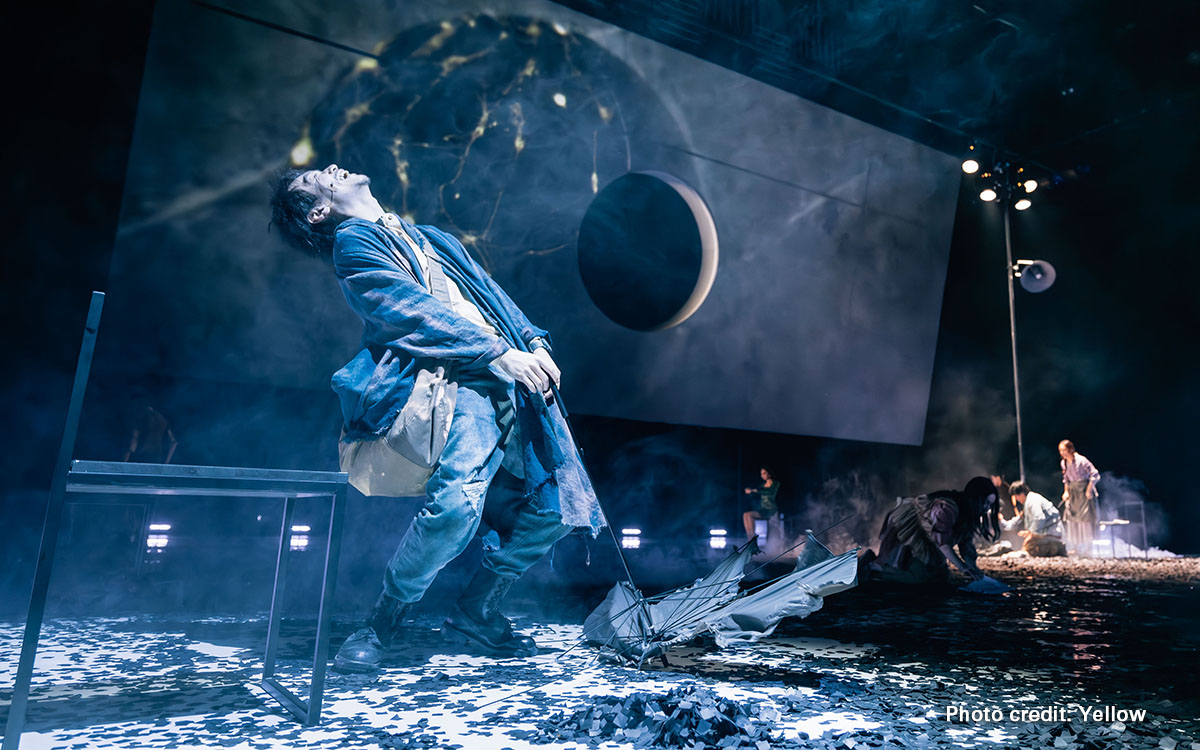
Such an impulse to interrogate the power differential inherent in narrativising at various levels—personal, political, historical—is also at the very heart of Blind Runner, the second show in The Studios 2026 lineup. After highly successful showings in Venice and New York, Iranian playwright/director Amir Reza Koohestani and Mehr Theatre Group bring their sparse, finely-observed piece that revolves around three characters: a husband, his wife (a jailed political prisoner), and a blind woman. When asked about the overarching focus of The Studios’ programming focus, Koohestani however offers a productive resistance of such figurativeness:
“Coming from Iran, I didn't learn [about] power as an abstraction—you learn early where the cameras are, which sentence you finish only in your head…[So] I've never cared for power as spectacle. Kings, tribunals, the loud machinery—none of it interests me. What I'm after is its smallest unit: two people, a room, the distance between them.” Koohestani’s tightly-circumscribed notion of power is hence expressed in Blind Runner as theatrical paucity: two actors, minimal lighting, and a stripped-back set.
Fragments of Tuah, on the other hand, pulls together an excess of material about Hang Tuah, which coalesce to produce, in Teh’s words, a “layered collage of perspectives and materials drawn from archival texts, schoolbooks, songs, state slogans…I sometimes describe what we do in our performances as making visible or apparent a kind of collective 'editing machine'.”
Despite its apparent sparseness, Blind Runner still manages to splice together a multitude of perspectives live onstage as well. Koohestani explains that he “[uses] live cameras that follow and re-frame the performers in real time, so the audience feels two things at once: the pleasure of watching, and the menace of it. This is what theatre can do that no other form can—it puts living bodies in the same room, at the same minute, as you. You're not looking at a surveillance image. You're performing it. The watching is yours, and that complicity is the point; it can't be edited out.”

Bodies Indivisible
Since its inception in 1994, Belgian theatre collective Ontroerend Goed has carved out an international reputation for staging works that require active audience involvement, blurring the boundaries between theatre, gameplay, performance art, and social experiment. (Their name is a Dutch pun, simultaneously meaning “touchingly good”, and “real estate”.)
“I don't think about power, I think about authorship…[and] the dynamic between author, performer, and audience member,” says Alexander Devriendt, artistic director of Ontroerend Goed. “For Handle With Care, I have not sought to discover or uncover anything about the nature of power. I am more interested in how you create a show, and who has influence over the show. And of course you can see that as a power dynamic. But for me that is a consequence, and not at its core.”
In Handle With Care, the audience arrives at the theatre, and finds only a box onstage. There is no overt instruction or guidance, and the tension is broken when one audience member finally decides to open the box. Thus, the very first gesture of the work leverages social anxiety and pressure, yet over the course of the piece the interactions evolve into something much more communal and constructive.

Says Alexander, “So what the work does is hopefully offers an artistic, or personal, insight in your life. So for me, that is the point of the show. Not to create a show, but to create something that in some way has an influence on somebody's life, in a good way, of course. And in that way, we arrive at the principle of ‘Can art make the world a better place?’”
In ceding agency to the audience, Alexander and Ontroerend Goed are thus less interested in the quality of the “product” or “performance” that emerges, but the process of co-creation. And this driving desire towards cooperation is perhaps borne from the same impulse as Ingrid and Simon, and Claire and Shu An, in their respective rehearsal rooms.
Bodies Essential
In a similar vein to Devriendt, Voorendt is keen to shift the spotlight towards the potential for change. “Visibility is powerful,” she says. “Theatre can make power visible, particularly the subtle and nuanced shifts of power that happen in relationships between people… vulnerability can be unexpectedly powerful. Collaboration can be powerful. We believe that a small group of people working together can make powerful change happen.”
Oon echoes this necessity of community in resisting traditional power dynamics: “Everyone in the room really plays a part in helping each other be heard: how they manage the power the room may naturally hand to them, how to support the expression of an idea to its fullness, checking our internalised beliefs, ableism, and power structures…it really takes people who are willing to do this, and this is truly a room full of people who are as generous as they are robust in engaging with the work.”
Teh’s desire is that Fragments of Tuah renders “history more complex, meaningful, inclusive, and multi-perspectival. Power is decentralised, or at the very least reconfigured in other ways.” Koohestani, again, resists such an expansive gesture, and returns to the infinitesimal: “Power, in my work, is rarely announced. It's carried in the body. It arrives disguised as protection, as love, as the hand that keeps you from falling.”
And, Shireen sums it up in the most succinct manner: “We were drawn to potential, especially in the fragile, liminal space just before action or change. While that potential always holds the risk of harm, it equally harbours the possibility of empathy, care, and courage.”