The cinema of dance
Dance film curators from Asia demystify the genre
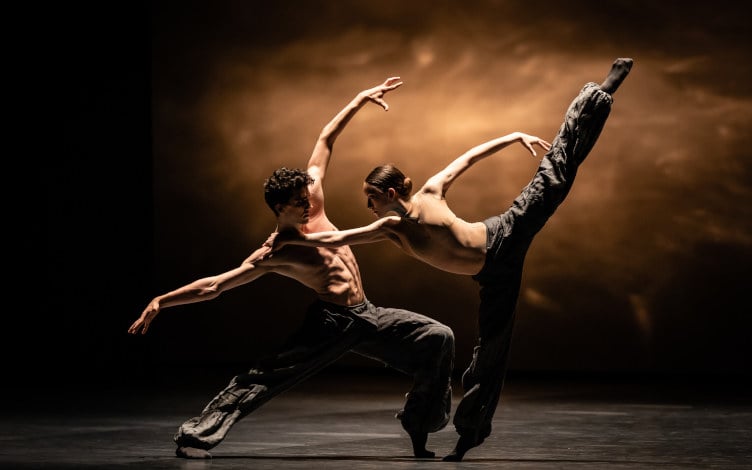
Cover image: "Memory" by Tânia Carvalho from Body-Buildings (2019), presented under Cineda:ns at da:ns festival 2021.
Dances on screen have been around for as long as the film medium, when cinema pioneers the Lumière brothers were inspired to recreate Loie Fuller’s Serpentine Dance in 1896. Today dancing bodies are everywhere in popular media, advertising and social media, from outdoor screens to the phones in our pockets.
This article focuses on cinematic films made by or with dancers, and films which have a focus on the body in movement. It gives a brief overview of dance film as a genre, and touches on its development in Asia. A second instalment will focus on how dance artists are adapting liveness for the screen, especially in pandemic times.
For this article, we caught up with Asian dance film makers and curators Elysa Wendi (Cinemovement, Singapore and Jumping Frames Festival Hong Kong), Yola Yulfianti (Imajitari, Jakarta), Madge Reyes (Fifth Wall Fest, Manila), and producer-curator Jeremy Chua (Cinemovement, Singapore).
Elusive definitions
Dance film is a genre (if it can be called a genre) known by many names—dance film, screendance, video dance, dance for camera and more. It’s difficult to pin down the different terms might mean, but it might be easier to say what they emphasise. “Dance film” highlights the cinematic aspect, while “screendance” and “video dance” also embrace dance in video installation work, livestreams and interactive technology formats. The blurry definitions point to the inter-disciplinary nature of dance film, and the potential for broad appeal to audiences from film, dance, visual arts, and mainstream movie-goers.
Maya Deren’s 1945 A Study in Choreography for the Camera is said to be the first dance film. Deren shot dancer Talley Beatty in different settings, and used film editing as a choreographic tool. Numerous choreographers and dancers around the world became the subjects for performance recordings and documentaries. Others created collaborations specifically for camera, such as the filmmakers-in-residence at the Merce Cunningham Company.
In the 1990s, public funding in North America and Europe gave dance filmmaking a boost. Some of the best known films produced in that period include film adaptations of dance works for the stage—Rosas (1997) by Belgian choreographer Anna Teresa de Keersmaeker and filmmaker Theirry de Mey, and Strange Fish (1992) by British dance company DV8 and filmmaker David Hinton. That period spurred many brilliant dance films and a worldwide community of dance filmmakers and audiences for dance films long and short. The most memorable example to cross into popular appeal is probably Wim Wenders’ 3D film tribute to Pina Bausch, Pina (2011).
There are countless approaches to dance filmmaking, but some commonly employed techniques found in whole films or extended sequences are:
- Cinematic poetic approaches to visual storytelling and non-narrative structure
- An emphasis on choreographic compositional aspects of space, time and movement qualities
- Little or no dialogue, emphasis of music and/or sound design
- Site-specific use of landscapes, architecture or public space
- The body as form rather than as character
- Editing as a choreographic tool
- Choreography for the moving camera
Newcomers to dance film may be surprised that not all films curated in dance film festivals feature dancers or even human bodies. Yulfianti observes that for many dance filmmakers who have been creating for a longer time, the body is less and less present, and everyday scenes, objects and architecture become subjects for choreography. Whereas for newer dance filmmakers, Yulfianti sees the body everywhere—equally valid, different choices.
Even within dance film, there are trends for “mainstream” curation focused on choreographic elements, and more experimental and cross-disciplinary works. For example, Wendi’s curation for the 2021 Jumping Frames Festival Hong Kong brings a focus to “Performative Documentary” as a form that “transgresses the boundaries between fiction and non-fiction, participatory and author-centric nature of creation, offering exciting imaginations for movement-based artists and filmmakers to their future experimentations”.
Wendi, Reyes and Yulfianti furrow their brows when asked to name a favourite dance film, either current or timeless. There are too many choices. Their final picks span the range of dance films.
Wendi’s pick: The Last Of England (1987), Derek Jarman
This experimental film is an important influence for me because of how it combines poetics, different filmic materials and camera movement with personal introspection on history. In an unforgettable scene, Tilda Swinton dances her powerful emotions on a burning beach.
Yulfianti’s pick: Donggeng Dari Dirah (The Sorceress of Dirah) (1992), by Sardono Kusumo and Robert Chappell
The visuals from this film are so poetic. I like that I can see a lot of detail of the body’s expression. Even on the screen, I can feel the energy of a live performance.
Reyes’ pick: Dive (2021) by Oscar Sansom
I’m enamoured of the surrealism and wit in this new film.
The screen as the stage
Up till the arrival of the COVID-19 pandemic, most dance film was considered by mainstream dance practitioners and dance audiences to have only a niche appeal. For them, the live stage performance remained the medium of choice, while film and video were primarily means of documentation.
The current pandemic and ensuing lockdowns have changed that. With theatres and performing arts festivals closed or severely restricted, the screen has become the stage and the theatre. Many dance-makers and film makers found themselves suddenly navigating a new medium together. Theatre dance audiences have learned new ways of seeing that will change dance spectatorship forever.
This is a juncture where the creativity and expertise of established dance filmmakers and curators come to the fore, to inspire and support other artists venturing into this medium.
“The stage is wherever you want to put it,” says Reyes. “People are starting to appreciate dance in different formats, out of necessity. Art changes with the times. You can’t stop dance from progressing.”
Mulling that dance film is still best experienced in the cinema rather than the distracting environment of the home or on mobile devices, Yulfianti suggests with a laugh that the audience should receive instructions on how to watch dance films at home.
Dance film platforms in Asia
Compared to live performance dance festivals or film festivals, there are still just a handful of dance film and video dance platforms in Asia. The pioneering platforms were the Dance and Media Japan International Dance Film Festival (2003-present) and Jumping Frames Festival Hong Kong (2004-present), followed by the Dance on Film programme of the Singapore Arts Festival (2010-2012), the Cinemovement platform in Singapore (2015-present), ROLLOUT Dance Film Festival Macao (2016-present), the Cineda:ns programmes of the Esplanade da:ns festival (2016-present), Seoul Dance Film Festival (2017-present) and Imajitari festival in Jakarta (2018-present). The Fifth Wall Fest in Manila (2020) was most recently born from the pandemic.
All the above initiatives aim to introduce dance film to wider audiences and to pollinate Asian dance film (and in some cases video dance). Besides screenings, various platforms include workshop and development programmes, or produce Asian dance film work.
At da:ns festival, this year’s Cineda:ns offerings are curated by Cinemovement. They comprise the documentary Being Jerome Bel, audiovisual architecture project Body-Buildings, and the collaborative dance and film project Hybrid Motion, comprising four dance shorts, eight artist encounters.
Cinemovement curator Jeremy Chua describes this year’s programming as “a showcase of diverse approaches towards the topic of using film language in the action of watching a dance, a body, a subject, a performance… The idea was not only to bring different types of audiences to the show, but for the viewers to also experience how cinema language, used differently, can result in different experiences in ‘watching’.”
Thanks to Alfonse Chiu for contributions to this article.
Explore further
The Evolving Story of Dance on Film: An overview of new forms then and now, Dance International, 18 May 2018
Screendance: Inscribing the Ephemeral Image by Douglas Rosenberg (Oxford University Press, 2012)
Dancefilm: Choreography and the Moving Image by Erin Brannigan (Oxford University Press, 2011)
Making Video Dance by Katrina McPherson (Routledge, 2006)
Envisioning Dance on Film and Video, Ed. Judy Mitoma (2003)
Dance Media Japan
Jumping Frames Festival (Hong Kong)
ROLLOUT Dance Film Festival Macao
Fifth Wall Fest (Philippines)
Cinemovement (Singapore)
Seoul International Dance Film Festival (in Korean only)