Fable-ous fun with hand gestures and movements
Teach students how to create fables as they learn about animal hand gestures and movements used in Indian classical dance.
Recommended time: 60 minutes
Outcomes
- Students will be able to compose an animal fable.
- Students will use movements and gestures to communicate ideas visually.
Objectives
- Identify different animal hand gestures in bharatanatyam.
- Create hand gestures and movements related to animals.
- Identify the key features of a fable.
- Create and dramatise an animal fable by combining simple narration and hand gestures and movements.
Activity 1: Watch and think In this activity, students will watch an Indian classical dancer tell a story through hand gestures. After watching the video, get students to think about the questions below and share their answers.
1. What is the title of the story in the video?
2. Who/What are the two characters in the story?
3. What is the moral of the story?
4. The story being told in the video is a fable. What do you think are some features of a fable?
5. Other than narration, what are some other ways you can tell a story?
6. What dance form is being used to tell the story in the video and where do you think this dance form comes from?
7. The dancer in the video uses hand gestures to represent objects and ideas. What are hand gestures called?
8. Do you know of any other dance form that uses hand gestures and body movements to tell stories?
Download and refer to Handout 4: Educator’s Notes on Fable-ous Fun with Hand Gestures and Movements for suggested answers and notes to facilitate the discussion with your students.
Activity 2: Animal Hand Gestures
Activity 2: Animal Hand Gestures
In this activity, students will learn other hand gestures that bharatanatyam dancers use to depict animals.
Task 1
Get students to complete the following quiz.
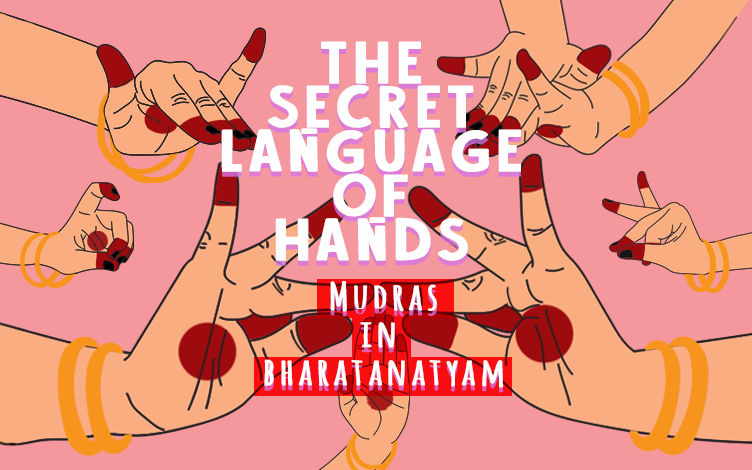
A main feature of bharatanatyam is the use of hand gestures. Hand gestures can sometimes act as a form of language to help tell a story. A hand gesture in bharatanatyam can represent many things like animals, ideas, objects or actions, depending on the story being told.
The following hand gestures can be used to represent animals. Can you guess what the animals are?
This animal slithers around...
Snake
Anteater
This looks like a...
Frog
Deer
This animal squeaks!
Mouse
Squirrel
This animal glides in water.
Sea otter
Fish
What animal do you think this could be?
Horse
Sparrow
Task 2
Share with students that dancers are often in motion. For example, if a dancer is depicting a certain animal, he or she might mimic the movements of the animals, not just with their hands, but with their bodies too.
Instruct students to try out the five animal mudras from the quiz above. Ask students how they would move their hands and bodies so that the movements are like the animals that are being represented. Students can take turns sharing their movements with the class.
Activity 3: Animals Traits
In this activity, students learn to use adjectives to describe animal traits, before coming up with their very own animal hand gestures and movements.
Task 1
Refer to Handout 1: Nouns & Adjectives. In the nouns column, get students to come up with a list of animals. In the adjectives column, instruct students to think of adjectives that can be used to describe the animals' traits.
Task 2
This can be done individually or as a group. Referring back to the list they have created, get students to pick three animals. Come up with a hand gesture to represent each animal.
Next, extend the hand gesture into movements that will portray the animal traits. Do not use any speech.
Activity 4: Fable-ous Fun
In this activity, students learn more about the features of a fable and collaborate to write and dramatise an original fable.
Task 1
Get students to recall what their answers were to Activity 1, question 4. What were some features of a fable that they have identified? List it on the board before explaining to them the features of a fable.
Refer students to Handout 2: Features of a Fable. Instruct them to read the fables and identify the characters, setting, problem, solution and moral for each of the stories. Ask them if the two stories fit the structure of a fable.
Task 2
Refer students to Handout 3: Fable Graphic Organiser. Get students into groups to create a plan for their own fable by filling in the graphic organiser. Teacher may refer to Handout 4: Educator's Notes on Fable-ous Fun with Hand Gestures & Movements for a list of suggested settings, problems and morals students may want to use in their stories.
After students have completed the task, give them time to write and dramatise their original fable by incorporating narration with simple hand gestures and movements of the animals mentioned in their fable. Each group to take turns presenting their completed fable.
Conclude the lesson by asking three things students have learned about fables, two things about Indian classical dance and one thing related to the art form they would like to find out more about.