
Thovil Dancers from Sri Lanka: One Dance to Heal Them All

Tibetan Buddhist Monks: There and Back Again

Balinese Performers: The Fellowship of the Ritual Arts

Rituals and Routes
Thovil Dancers from Sri Lanka: One Dance to Heal Them All
More than just a folk performance
More than just a folk performance
“When we perform for entertainment, the act can be more relaxed. But if you are treating a patient, it should be done with greater caution. Because if it goes wrong, the patient will die.”
As leader and performer Buddhika Ranaweera explained, poker-faced and plainly, in the corridor outside the dressing room, every thovil dance is believed to serve a specific purpose—for childbearing, a good harvest, even protection from witchcraft, nightmares and temporary insanity. His dancers bustled about, preparing for the ritual performances that were about to take place that evening.
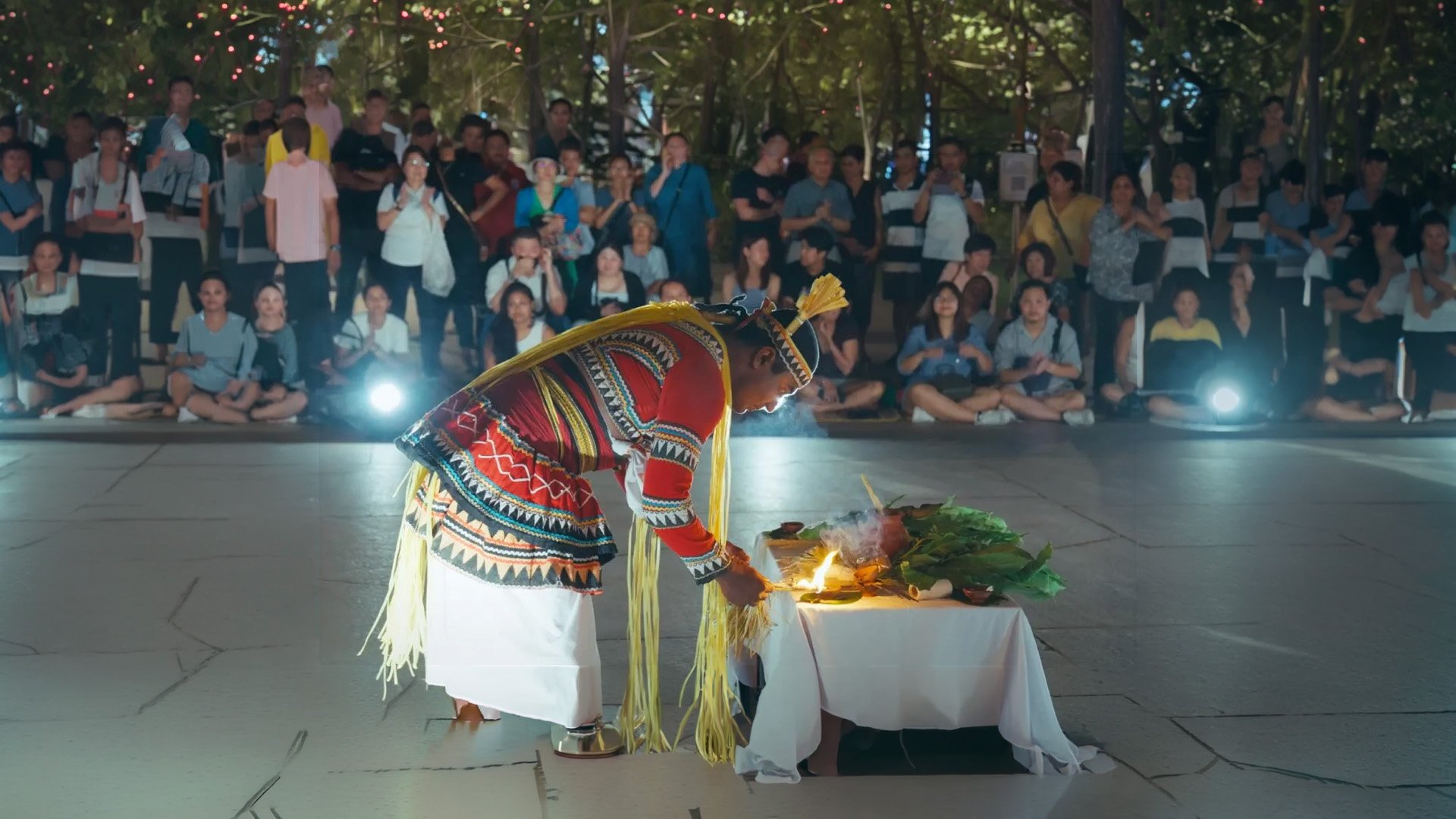
Thovil, or devil dances, are ritualistic practices of healing aimed at exorcising demons that trouble a patient, whether through illness or misfortune. These rituals are believed to have originated from Southern India and were adapted by the Sinhalese.
For the 16th edition of A Tapestry of Sacred Music, Buddhika and a company of dancers from Sri Lanka presented more than 10 different excerpts of thovil dances in Apr 2025 at the Esplanade Courtyard. A complete thovil ceremony, however, is rare and often an overnight affair, as it comprises a series of dances. According to Buddhika, this is not performed often these days, as the full experience is costly, and people are busy; shorter formats are thus preferred and performed.
Thovil ceremonies are broadly categorised into dances with and without masks. In masked dances, fearsome expressions are carved into wood—often with bulging eyes, a protruding nose and gaping mouth—representing both the curse and cure. Ancient chants and dances are typically passed down from father to son through generations, with training often beginning in childhood.
Friendly yet reserved, members of the group introduced their masks and dances, as well as their motivations for learning and performing these thovil dances. “Some do art as a job, others for the pleasure. For us our career itself is the art,” said one of the dancers. Group leader Buddhika’s 15-year-old son was among the dancers who were in Singapore. Trying to hide it but visibly beaming with pride, Buddhika told us that his son has just begun showing interest in taking on the mantle of carrying on this cultural art form—mysterious, beautiful and steeped in history reaching back to Sri Lanka’s pre-Buddhist past.
Watch the video for insight into why this is beyond a performance for the dancers from Sri Lanka.

These videos were commissioned by Esplanade Offstage as part of A Tapestry of Sacred Music, presented by Esplanade – Theatres on the Bay annually.