RUDRA's reality: A Vedic metal crash course
10 headbanging highlights from Singapore’s metal pioneers
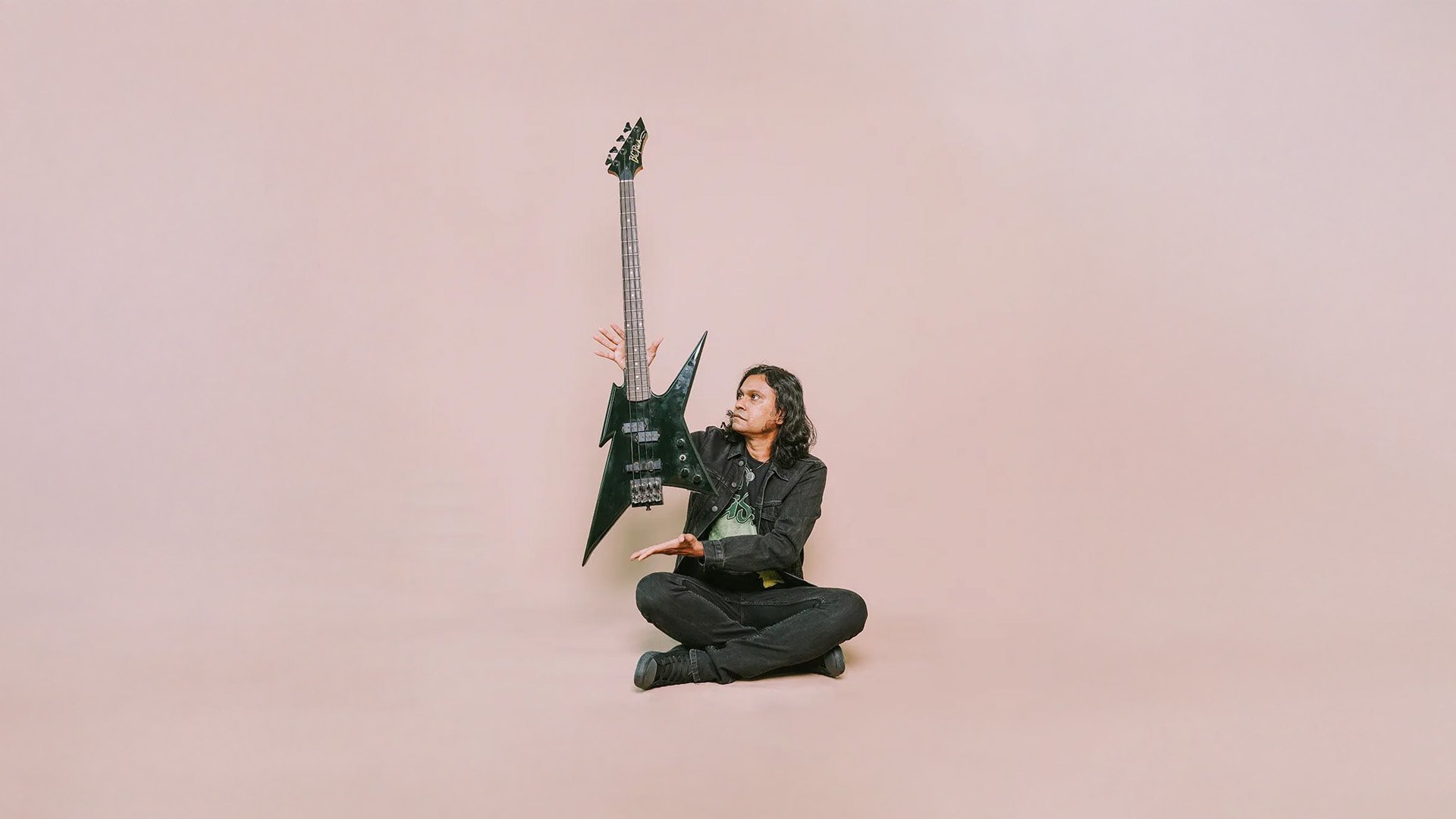
RUDRA is revered. When it comes to the pantheon of Singaporean metal, it’s somewhat literal too: named after the Hindu god of death and destruction, Rudra are pioneers of a powerful sound worthy of its godly namesake. First formed in 1992 by vocalist and bassist Kathir, alongside drummer Shiva and founding guitarist Bala, the band quickly emerged from the busy 1990s metal underground, inventively and intensely inspired by their cultural surroundings. Blending Carnatic percussion and foregrounding traditional Sanskrit chants into a blackened death metal backdrop—fed on a steady diet of classic acts like Bathory, Sepultura and more—their avant-garde approach, lyrically informed by Kathir’s devoted study into Hindu texts and philosophy, blazed the trail to a sound uniquely their own: one they dubbed Vedic metal.
As guitarists Devan and Vinod joined the picture over a consistently brilliant 33-year-run, their aggressive sound grew with ambitious experimentation, an attitude that has fueled a deep and conceptual discography: from the Brahmavidya trilogy, three blazing records that explore the Brahman concept of ultimate reality, to 2013’s rta, a record that responds to Valmiki’s classic Ramayana. That artistic depth has also allowed them to work across cultural borders: just last year, they scored puppetry group The Finger Players' theatre production Transplant, blending Mandarin lyrical elements into their signature dark sound.
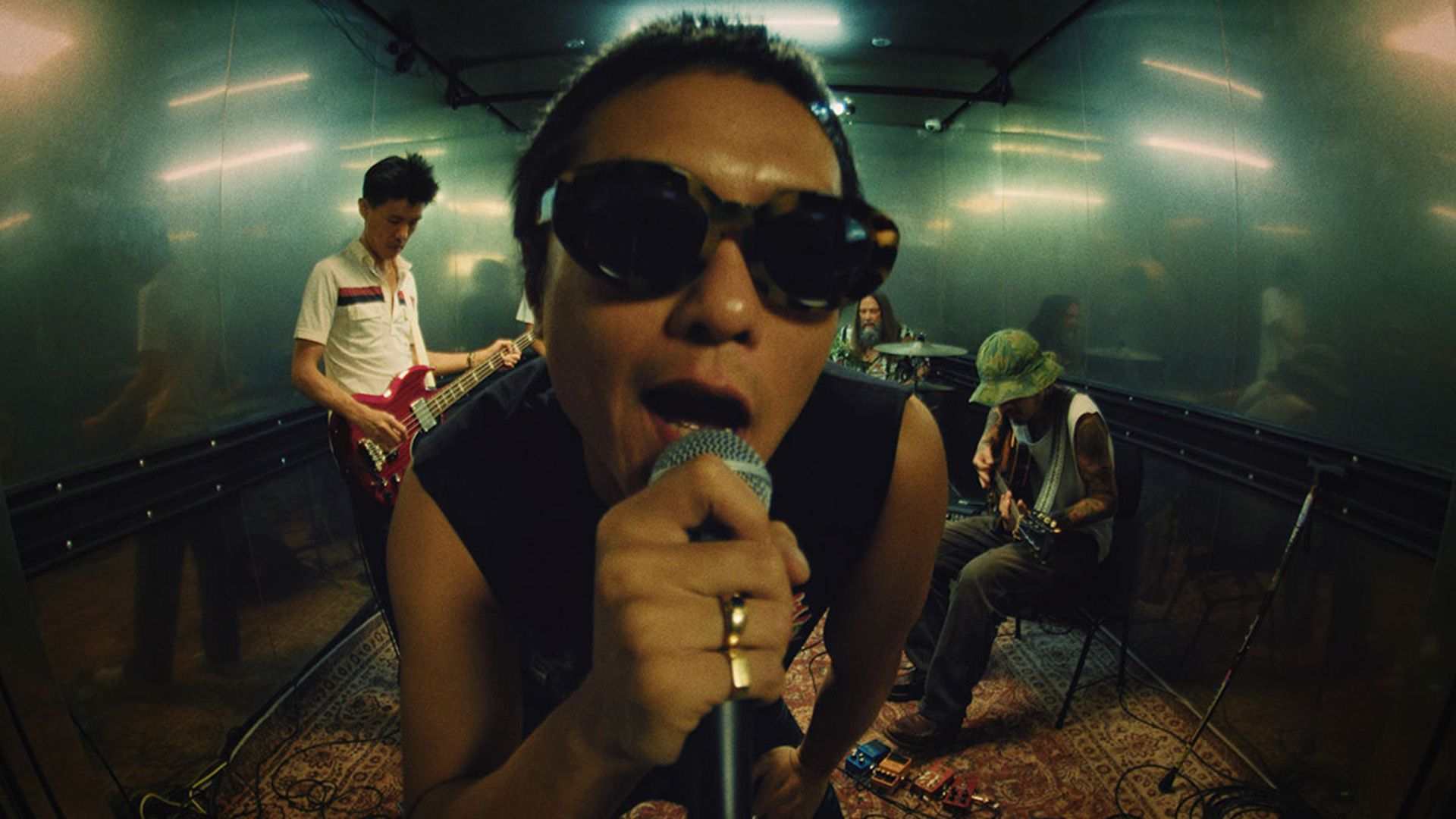
Now one of Singapore’s most long-standing metal acts, RUDRA are no strangers to the Esplanade stage either. In fact, it’s been somewhat a stomping ground for them: their multiple Baybeats headlining spots aside, their most recent Kaala Utsavaam performance in 2021 presented a memorable collision of worlds, blending their powerful distortion and blast beats with the serene poise of three Indian classical musicians. But for Cosmic Dissolution, their performance with Resound Collective for this year’s festival, the metal veterans are planning to rock the Esplanade on entirely different terms. Preparing a sprawling 14-song set with a 56-piece orchestra, led by veteran bandleader Chok Kerong, the band admits they are re-learning many things. “For the orchestra, we have to play exactly as we did on record,” explains Shiva, often one to improvise and groove along to the quartet’s trademark intensity. “It’ll still be metal, but it’ll be epic in a different way.”
Whether you’re a fervent fan or a first-timer, here’s 10 RUDRA essentials to get you in the headbanging mood, no matter the stage. From death-metal classics to spiritual deep cuts, we’ve got the story covered for you.

1 | Ananda (1998)
Crafting Vedic metal wasn’t always part of RUDRA’s gameplan. Released in 1998 on their self-titled debut, this old favourite began its life as a bonus track—at first a stray tag-along attached to an originally 10-song album. “It's really old-school and it was a last minute inclusion,” shares Shiva about the track, which was packaged along the cut No War. With the track’s mix helmed separately by Leonard Soosay (now owner of Snakeweed Studios), the band was given the liberty to do something slightly different.
While admittedly not “a blast-beat kind of band”, the track marked the first building blocks of RUDRA’s distinct approach. “I remember I was with [former guitarist] Bala, and so I was told by Kathir for both of us to just take care of it,” Shiva shares. “It was all quite different, whether it was the guitar distortion or the effected vocals. We were a death and blackened metal band, and these two songs opened up the path,” Shiva shares. With a title literally translating to ‘Happiness’, the song marks Kathir’s first probes into Vedic psychology as lyrical inspiration. “The track reflects on the paradox of human longing: our endless pursuit of happiness (Ananda) often leads to sorrow,” he explains. “It questions the nature of happiness: is it external and fleeting, or intrinsic and abiding?”
2 | Aryaputra (2001)
Embarking on their second album, The Aryan Crusade—now considered by many metalheads as a seminal release—Aryaputra is a statement piece for the band, capturing a newly solidified musical identity, as well as the influence of new members in the mix. “Kannan was more of a black metal guy, and Selvam was more into thrash like Pantera or Megadeth. But being RUDRA, we played in our own distinctive style,” Shiva says of the era.
“Opening with the strings, you knew that the blast was coming, but you didn’t know how or when,” recounts Vinod about the song, who, during the song’s release, was still a devout fan of the band. “I can still remember being quite blown away.” Often questioned about their beliefs and lyrical connotations (in part due to the album’s title), the song stems from a place of dignity, seeking to reclaim the concept of the Aryan from colonial and fascist appropriation. “In the Sanskrit lexicon, Arya refers to nobility of thought and character. Aryaputra, translated as “Children of the Noble Ones” takes pride in a call to wisdom,” Kathir explains. “This song confronts distorted histories and restores philosophical dignity to a misunderstood word.”
The mid-tempo thrash banger has since become a live staple—often serving as an electrifying opener. When asked about the song’s fan favourite status, Vinod has a simple explanation: “It’s just an easy song to headbang to,” he admits, laughing. “When you see the crowd headbanging, we start enjoying ourselves, and the whole gig becomes easier.” A rallying cry seeking to dispel mistaken notions of the band themselves, it’s perhaps fitting that the song sets the scene for RUDRA’s sets: charged with undeniable power and identity.
3 | Rudrapatni (2001)
While previously branded simply as an ‘extreme metal’ band, the acclaim of The Aryan Crusade started bringing them a new reputation. As the band booked its first tours off the album’s buzz, they found themselves cementing a new sound of their own entirely: coining the term Vedic metal. “We didn’t want to follow the mold of other bands, and what better way than using the rich culture of being Indian?” Shiva shares, when asked how the band coined the Vedic metal moniker. “It was the seed that started everything—to be different, and to move towards offering something unique, and play music that we’re happy to play.”
Rudrapatni is a song that exemplifies this approach: lyrically dedicated to Kali—Rudra’s consort and the Hindu goddess of time and death—the band turns in an atmospheric and ominous black metal affair, with an ending laden with haunting chants, laced with reverb and delay. “The song presents Kali not just as destroyer, but as the mirror of Truth, the Shakti (divine feminine power) that consumes illusion to reveal reality,” Kathir says of its themes, speaking to the goddess as an embodiment of primal force and dissolution.
4 | Asura Mardhini (2003)
Conceptually influenced by the Mahabharata War and written during a time of political tension, Kurukshetra, RUDRA’s third record, brought the band’s music to a darker, more intense place. Influenced by their preferences for black metal, particularly from former guitarist Kannan, the album took a faster, blast beat-laden approach, while adopting the genre’s rawer production style.
Asura Mardhini, in particular, is a moment of beauty against the album’s serrated, aggressive backdrop. Clean, echo-laden guitars quickly give way to a chugging ode to the goddess Durga, with riffage inspired by Mahishasura Mardhini Stotram, a traditional devotional tune. Narrating the goddess’ strength in slaying evil—the demon Mahishasura—and transforming it to an ode to a source of inner power, the band gives weight to the prayer, blasting through blackened death metal passages that eventually melts into a whammy-loaded solo.
“For Indians, it is a tune that many people can recognise. It begins soothing and it becomes extremely heavy,” Devan says, mentioning his preference for clean guitars common in the heavy metal subgenre. “The song has a distinctive melody that I’ve grown up with,” Vinod adds. “This encompasses how RUDRA can be so raw and heavy, while also lyrically touching on this deity—something many can identify with.”
5 | The Pathless Path to the Knowable Unknown (2005)
Now firmly established with a unique sound, the band sought to solidify the production elements of their music, which was previously largely self-managed. “The way Primordial [I] started was us trying to get into a more modern sound,” Shiva says of their fourth album, which marked the band’s first project with a producer, as well as recordings with click tracks. The result was a refined RUDRA that was air-tight, with a denser, more complex sound than before. Alongside the band’s increased musical ambition, Kathir also expanded its conceptual scope, beginning to draw on explicit inspirations from Vedic philosophy. Taking elements of the Vedanta (a spiritual system) and scriptural knowledge as foundation, the record kickstarted a trilogy of albums, dedicated to the Brahmavidya: The Pathless Path, in particular, draws from the Kena Upanishad (a Vedic Sanskrit text), reflecting on a paradox of self-knowledge.
Today, the song is easily one of the band’s most iconic tracks—but at first, the band could barely even understand its potential. “That was the last track we did for the album, and it was the song we hated the most,” Shiva shares about what is now arguably one of the band’s most iconic tracks. “I didn’t know how, but it was only after we started playing it live, it became our anthem.” It’s not hard to see why: punctuated by a powerful galloping riff, the band hones in on an infectious chant devoted to Shiva, a motif that transfixes live crowds into a trance-like, ritualistic state. In its strange way, the song seems to embody its own central teaching: “It is known to him to whom It is unknown.”
6 | Hymns from the Blazing Chariot (2008)
As the band headed back into the studio for Transcendental I, the second entry in the Brahmavidya trilogy, the mission was clear for the quartet: everything harder, faster, stronger. “We wanted to go as fast as possible and go for epicness,” Devan admits, who also sought to incorporate more Indian modes into the riffing process. “It was digital, clean and almost very perfect,” reflects Shiva on the band’s approach during the trilogy.
The precision allowed the band to maximise the impact of their dense arrangements: referencing bands like Emperor, the band jam-packs the pummeling cut with machine-gun blast beats, thrashy guitars and ominous blackened passages, before signing off with a blistering solo loaded with frenzied tapping, hammer-ons and pinch harmonics. The song’s explosive intensity fits its dramatic lyrical picture: quoting directly from the epic Bhagavad Gita for its chorus, the band depicts the mental state of warrior-prince Arjuna, as he enters the battlefield in a moment full of tension and pain—urging inner detachment, clarity of action, and surrender to the self. Satisfyingly maximalist, the song is a blood-pumping climax for many of RUDRA’s sets—and a high point in Singapore’s long-running metal canon.
7 | The Sleepless Lullaby (2022)
Themed after eight female teachers of wisdom, their tenth album Eight Mahavidyas, marked a more psychedelic direction, with extended song lengths influenced by their experiences working on longer medley forms in their live performances. The Sleepless Lullaby takes things in a sludgy direction for the band, moving ominously with a droning, ritual-inspired pulse. “It’s just a ride and the kick, but it comes along with its own rhythm. Good music has to be simple,” Shiva shares about the crushing opening sequence, held together by a crushing, palm-muted guitar riff by Vinod.
Inspired by the enlightened queen Madalasa, this track’s spirit brings to life her timeless lullaby—one that teaches non-duality instead of comfort. “Rather than singing her son to sleep, Madalasa awakens him to the truth: “You are not this body of five elements. Why cry?” The lullaby becomes a meditation on detachment, the illusory nature of form, and the liberating insight that Consciousness is the true Self. So I wrote, "A lullaby that wakes you up” as the opening line,” Kathir explains about the song.
The deep cut’s steady—even patient—pace is something challenging the band even today. “I need to play the blast beat at that exact tempo, and I can’t compromise on that. You just want to jam and add in fills here and there, but you don’t want to upset the other musicians,” Shiva notes, looking ahead to the track’s rendition for their Cosmic Dissolution performance. “With 56 in the orchestra, I can’t play the fool.”
Eight Mahavidyas also marked Devan’s return to the band, after the guitarist previously departed to focus on his personal life. “To be honest, it didn’t feel like I was away for a decade. It was seamless actually,” Devan shares about the gap. As riffs were collected and exchanged between the band, RUDRA found themselves reinvigorated creatively—and in line with previous albums, the band crafted Auspicious Widow to close the record with a familiar bang. “If you look at the previous albums, the last song is always the heaviest, to bring it home. We wanted to take that path too for Auspicious Widow,” Vinod correspondingly notes. Face-melting and fast-paced, the track comes loaded with tremolo-picked passages and brutal tones, while also at the same time marking the band’s first track written in Tamil. Drawing from a poem by 18th-century mystic Avudai Akkal, a teacher of non-dualism, Kathir honours her words as a spiritual beacon, turning the figure into a source of strength, transcending social stigma.
A serene rendition of Death, the opener to their Ramayana-themed record rta, this live take was recorded for Conjuration of Vibrations in Duality, as part of their special 2021 Kaala Utsavam performance with three Indian classical musicians—an ensemble which included vocalist Aditi Gopinathan, flautist Raghavendran Rajasekaran and mridangam player Viknash Balakrishnan. Here, Shiva’s blast beats and the band’s brutal riffing blend and contrast seamlessly with Gopinathan’s ragas and mridangam rhythms, creating a sublime atmosphere that mirrors the epic text’s opening scene. Angered by a crane’s killing by a hunter, the band paints the grief and rage of the sage Valmiki, the spark for the Ramayana’s first shloka (poetic verse)—an act that gives rise to legend itself. “The song highlights how grief became the seed of poetic inspiration, death giving rise to spiritual and literary immortality,” Kathir explains. While RUDRA’s blazing shred-fests can often conjure images of darkness and terror, the performance showcased the quartet’s power in service of lighter, evocative moments of poetic beauty.
“Practicing with them was eye-opening,” Devan notes, praising their classical ensemble-mates for their poise and polished musicianship. “No disrespect to the band, but she really stole the show,” Shiva shares honestly about Gopinathan’s performance. “She can actually do the ragas in the way that they were meant to be. And Viknash, he counted in a different way, but somehow we were able to communicate.” Today, the band counts the performance as amongst their career’s greatest achievements, both as musicians and on personal terms.
10 | Persecute Identities (2025)
Responding to the psychedelic tangents of Eight Mahavidyas, the band’s eleventh album, Antithesis, was intentionally an aggressive back-to-basics for the band. “The primary goal was to shorten the songs,” Vinod admits with a laugh. “But at the same time, we always wanted the same things, heavy, in-your-face, all those standard words.” Persecute Identities is an omnibus of everything the band has loved about their sound: catchy, chugging riffs, melodic chants, and distorted brutality. “A few songs on our new record probably could belong on Kurukshetra,” Shiva remarks on the album’s stylistic edge. Meanwhile, Kathir’s lyrics, drawing from the Sanskrit hymn Dashashloki, confront the nature of identity as a fluid and fragile construct.

In a strange way, the concern relates to the band too: as majestic and monolithic the RUDRA sound may be, the band does not necessarily see Vedic metal as simply a static genre. “We did compose a new set of eight tracks after this, in a different approach altogether,” Shiva shares.
"But one thing that’s not going to change: we will keep making music that we want to hear together."
– Devan, RUDRA