 Now Playing
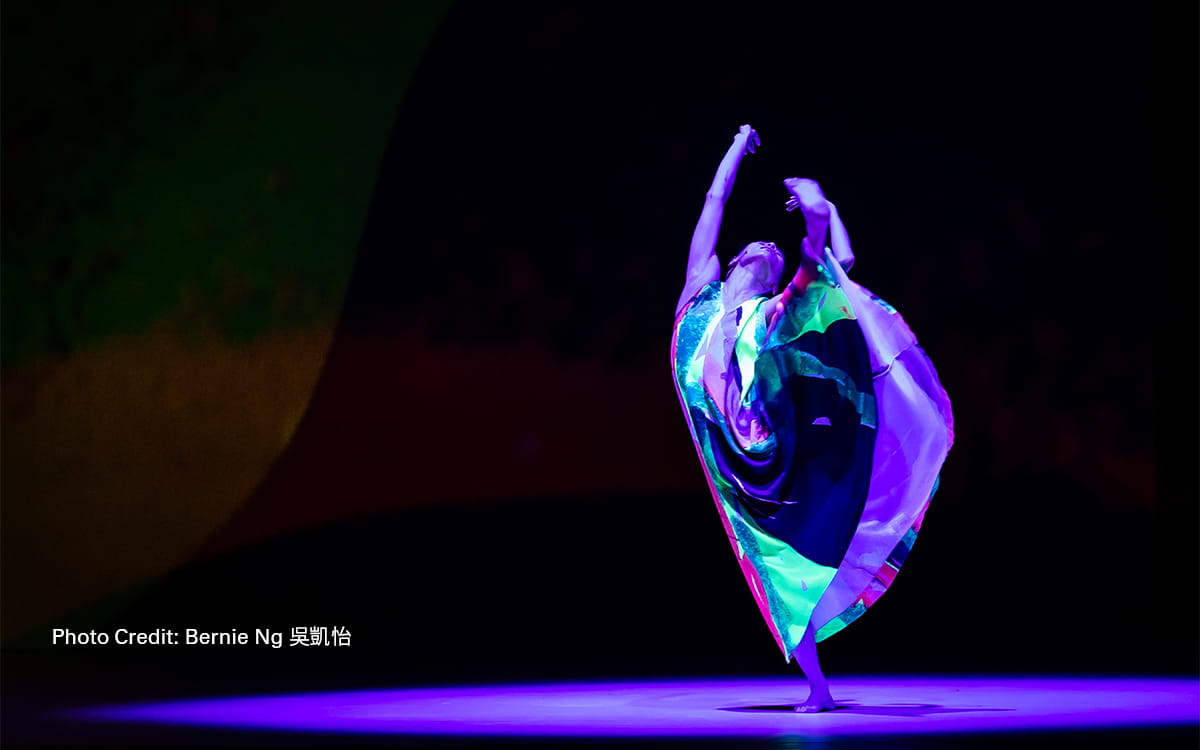
13 Tongues
26:49
 Now Playing
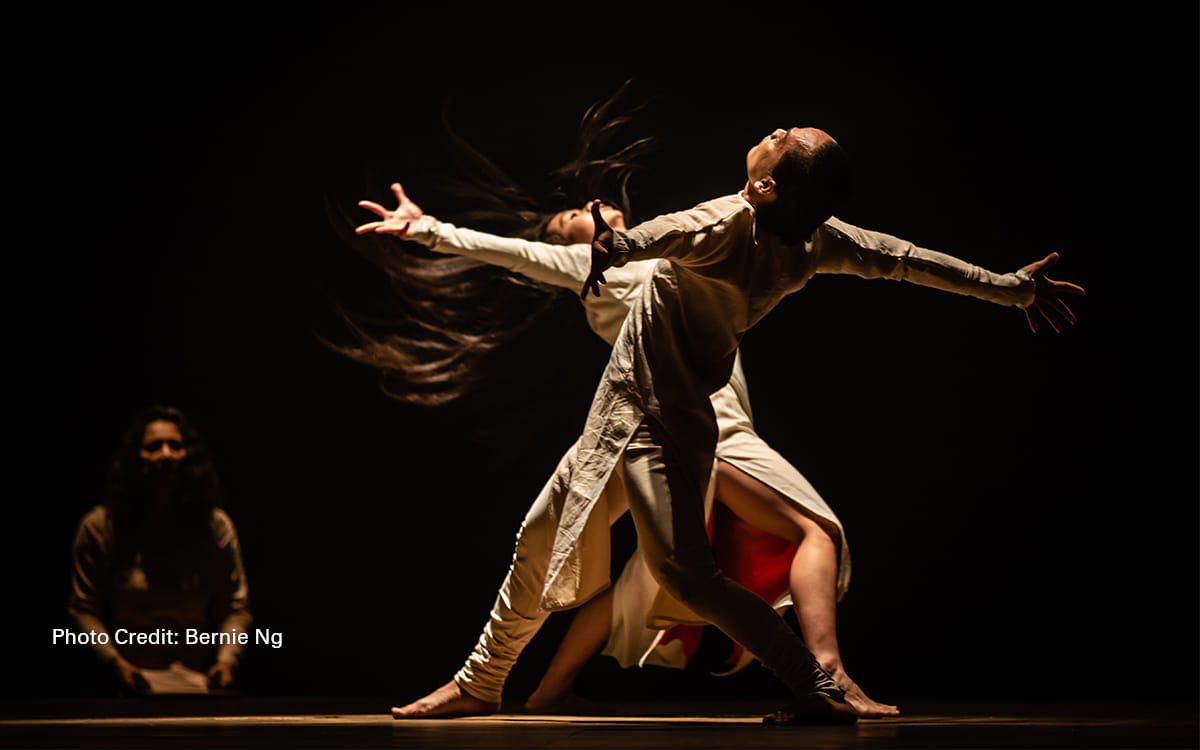
Until the Lions
31:32

Time taken : >15mins

Premieres 10 Oct 2025, 12pm
Available online until 31 Mar 2026, 11.59pm
Dance comes from life, and so it is constantly evolving, transforming, growing, ageing. Dance also comes from society, and so dance reflects society’s motions—the beauty and tensions of coexistence. Dance also comes from history, some that is recorded in text and some merely on the body. As in history, it is discarded from and added to.
The alarm at the loss of gestures once innate to the soul’s expression got many earlier dance seniors of yore to ask how dance may to be passed on to another generation. They set a fixed repertoire and systems for learning, rules for creating. Perhaps this act of freezing helped the dance form be remembered better. But in doing so, perhaps it was forgotten, that dance comes from life.
As seen in Replay – Screenings from the Esplanade Archives, some choreographers in the last few decades, however, are breaking the mould—they treat dance like oral culture, allowing diversity. They treat their nightly dreams as choreographic visions, bringing animal moves into structured lines. They take inspiration from across global traditions of movement—not to simply incorporate, but to understand its principles and apply those principles to their own form. They are bridging traditional and contemporary approaches to dance-making.
They are asking questions—why may this way of dancing this dance not be part of the oeuvre? They are introducing contemporary themes and narratives to question traditional myths and unpack epic narratives. They are bringing the streets of their cities onto the theatre stage. This series Pathbreakers in Dance, curated by Esplanade as part of Replay, showcases the works of chosen choreographers and companies on this offbeat train in all their ferocity and tenderness.
Texts by Parvathi Ramanathan
Cloud Gate Dance Theatre of Taiwan (Taiwan)
Commissioned by National Performing Arts Center – National Theater & Concert Hall, Taipei
As a child in the 1980s, Cloud Gate Artistic Director Cheng Tsung-lung would contribute to the family business by helping his father sell slippers on the streets of Bangka/Wanhua, the oldest district of Taipei. Bangka/Wanhua was known for its vibrantly diverse and bustling street scene that embraced religious and secular life, rich and poor, work and play, legal and illegal activities.
The young Cheng was transfixed by his mother’s accounts of the legendary 1960s street artist and storyteller known as Thirteen Tongues who had adopted Bangka/Wanhua for his informal stage. It was said that Thirteen Tongues could conjure up all the Bangka/Wanhua characters—high and low born, sacred and profane, men and women—in the most vivid, dramatic and fluently imaginative narratives. Thirty years on Cheng’s fascination for Thirteen Tongues became his inspiration as he transformed his childhood memories into dance.
Cloud Gate’s dancers, trained in meditation, qi gong, martial arts, modern dance and ballet, make their mastery evident with enigmatic movements that shift between floating and grounded, swift and steady, fluid and choppy, sharp and subtle. In the excerpts presented as part of Esplanade’s online screenings, the camera performs as an additional dancer, taking the audience to the heart of the movement. The music accompanying 13 Tongues ranges from Taiwanese folk songs to Taoist chant to electronica. The stage is awash with projections of brilliant colours, shapes and images, and the dancers gather, interact, separate and re-gather in a thrilling representation of the clamour of street life.
As the religious heritage of ancient Bangka/Wanhua fuses with the secular space it is today, so time appears to dissolve. The spirit realm and the human realm also coalesce as the audience is taken on an immersive journey—via imagination and storytelling that recalls the art of Thirteen Tongues—through centuries of human endeavour, behaviour and belief.
Choreography: Cheng Tsung-lung
Music: Lim Giong
Art Design: Ho Chia-hsing
Lighting Design: Shen Po-hung
Projection Design: Ethan Wang
Costume Design: Lin Bing-hao
Voice Coach: Tsai Pao-chang
Commission: National Performing Arts Center – National Theater & Concert Hall, Taipei
Akram Khan Company (United Kingdom)
With Until the Lions, celebrated dance artist and choreographer Akram Khan delves into the story of a fascinating character from the Mahabharata—Amba who later appears in the form of Shikhandi. Khan’s creation is inspired by the poetry collection of the same name penned by Karthika Nair, where she explores the epic tale from the perspective of marginalised women characters. This excerpt is from the archival recording of the 2018 production at Esplanade.
Amba and her reincarnated transgender persona of Shikhandi are each pushed by a powerful raison d’être shaped by their society’s gender-based injustices. Their role in the Mahabharata revolves around the principle character of Bheeshma. However, the performance centres Amba and Shikhandi as characters that regain hold of their narrative. Driven by wrath and the desire for justice, they challenge the norms of society. They confront Bheeshma and compel him to reflect on his wrongdoing towards Amba in his final dying hours on the battlefield.
While rooted in Hindu mythology, the story is one of universal resonance revolving around love, betrayal and revenge. What comes across prominently though is the theme of steadfastness—Bheeshma is steadfast in his oath of celibacy, and Amba by her penance. The performers in Until the Lions reflect this. They dance together, magnetically close and in sync—yet drifting and yanked apart in their divergent paths. Drumbeats, claps and shouts drive the sonic pulse and embodied movements throughout the show.
The performance was created when Khan was crossing a certain threshold of age at 40 years and reconsidering the capacities of his body to fully accomplish the movement he envisioned in his choreographic mind. Until the Lions, which had its world premiere in 2016, is thus marked by transition: the choreographer’s own transition in age; Amba’s reincarnation and eventual gender transition to Shikhandi; the transition of knowledge to wisdom and the queering of narrative timelines.
Director / Choreographer: Akram Khan
Narrative Concept/Scenario/Text: Karthika Naïr
Visual Design: Tim Yip
Lighting Design: Michael Hulls
Original Music Score composed by Vincenzo Lamagna, in collaboration with Sohini Alam, David Azurza, Yaron Engler, Akram Khan, Joy Alpuerto Ritter
Dramaturg: Ruth Little
Assistant Director: Sasha Milavic Davies
Assistant Choreographer: Jose Agudo
Voice-over: Kathryn Hunter
Dancers: Ching-Ying Chien, Joy Alpuerto Ritter, Rianto
Musicians: Sohini Alam, Joseph Ashwin, David Azurza, Yaron Engler
Connect with luminaries and compelling stories from Singapore and the region’s performing arts history through Esplanade's first extensive release from its rich archives and those of longstanding artistic collaborators. Experience over 30 full recordings, films and excerpts of performances, across nine thematic collections. Available on Esplanade Offstage from 10 Jul 2025 to 31 Mar 2026. Find out more.

If you’ve enjoyed Replay – Screenings from the Esplanade Archives, help us do more. With as little as one dollar, you can support Esplanade’s mission to make the arts accessible to everyone through original content and gems from our archives, freely available online. As a charity and not-for-profit organisation, every contribution helps keep the arts alive and within reach for all.
Support usContributed by:
Parvathi Ramanathan is a dancer, researcher and writer who has early morning affairs with poetry. She has a foundation in classical Indian dance forms bharatanatyam and odissi and is a certified Dance Movement Therapy Facilitator. In her artistic practice, she engages with the body as a repository of layered identities, immersed in collective political conundrums and affective states. Parvathi holds an MPhil in Theatre and Performance Studies from Jawaharlal Nehru University, New Delhi. Currently based in Berlin, she writes for various dance publications including Tanzschreiber and is a columnist at Tanzraumberlin. She is the co-editor of the journal Indent: the Body and the Performative and designs the Indent Lab.