Finding success in music has never been tougher

Published: 31 Mar 2026

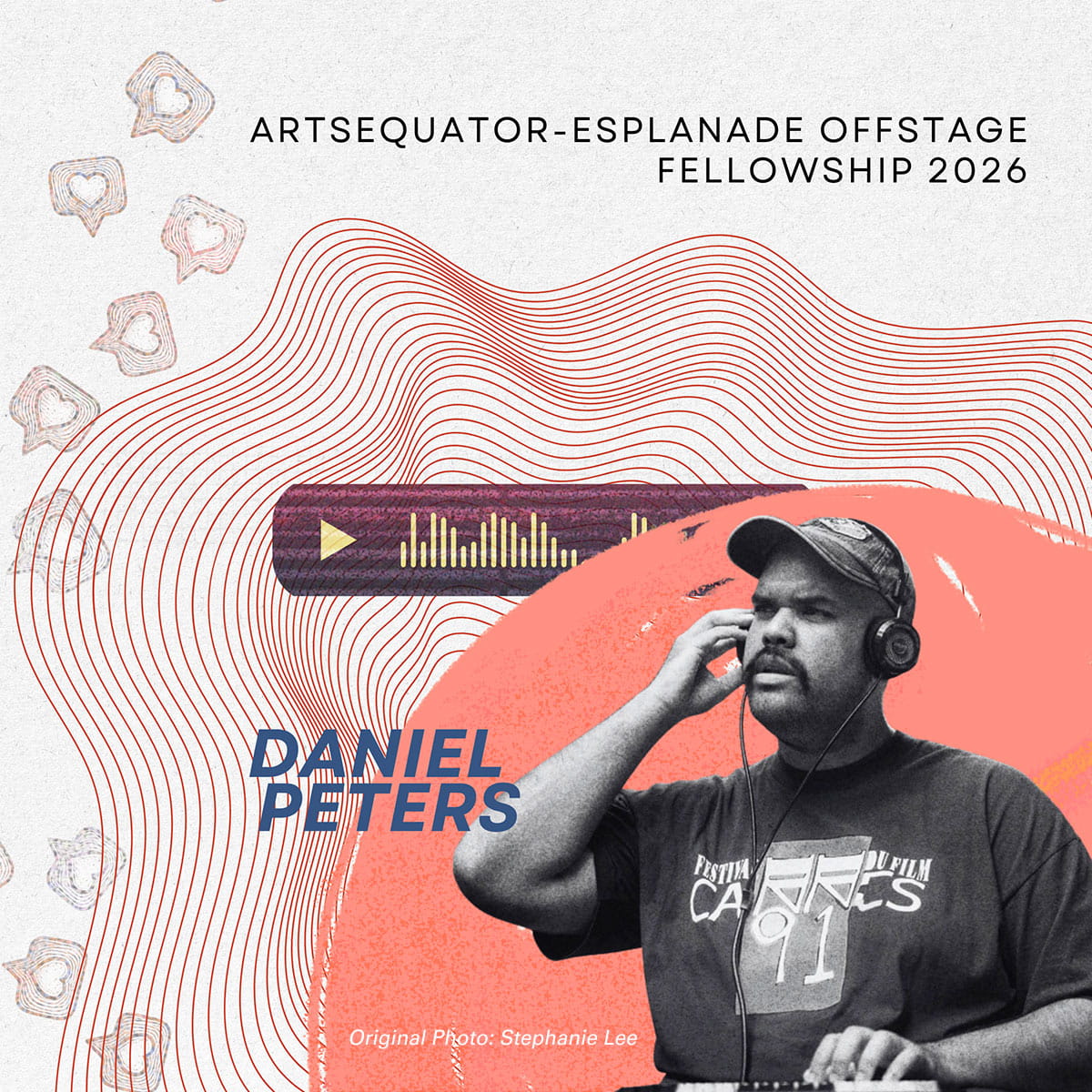
By: Daniel Peters

Time taken : ~10mins

Co-presented by ArtsEquator and Esplanade – Theatres on the Bay, the ArtsEquator-Esplanade Offstage Fellowship 2026 commissions the development and publication of four opinion pieces that are topical, of the moment and reflect critically on contemporary performing arts in Singapore and Southeast Asia. Selected by both arts organisations, the four fellows are mid-career or emerging Singapore cultural practitioners and writers.
In this article, writer Daniel Peters explores what it means to make it in music in an era of AI, slop and social media.
I was 31 when I first found out about The Cutest Pair, but I felt 50.
It’s not that music discovery and curiosity ends at a certain age—unlike what studies tell you, there’s always a whole world of music to engage with, no matter how old you are. But learning about the instant virality of the song, written by a teenage singer-songwriter named Regina Song, was blindsiding, like I was catching up to old news I should’ve known about.
It was over word-of-mouth, and not on social media, that I learned about Song’s conquest on TikTok, a platform I’ve long stopped using in hopes of cutting down my doomscrolling habits (not so successful with Twitter). A quick search online brought up gushy headlines about Song by Mothership and The Straits Times published months prior. It was very old news.
The stories proclaimed an overnight phenomenon—how The Cutest Pair, awarded the “#1 local song by a female artist”, has ostensibly made Song “famous” and “the voice of a new generation”—with her success attributed to sudden large swathes of listeners from all over the globe.
Such headlines persisted through 2025, placing her in the spotlight as the country’s latest success story. It’s a remarkable feat for any artist to gain, as of writing, over 600,000 monthly listeners on Spotify, and an independent one at that. Part of the story was the amazement new fans had expressed when they discovered Song is indeed Singaporean. All they knew, and what listeners abroad knew, was that they liked the song, and that they now like Song.
An occurrence like this to happen, where Singaporeans discover a Singaporean artist on a global platform, is truly novel. To get attention, and to benefit from it in the long run, is usually termed as “making it”. Anyone in music may admit to entertaining the idea of “making it”—that is, to graduate to a level of success that guarantees a level of stardom, credibility and/or stability—and it’s an idea that’s persisted for a long time. Not every artist seeks it out, or cops to it, but it is a concept imaginably more desirable as a goal when music becomes less sustainable to one’s livelihood.
And music, these days, is barely sustainable.
When talking about the idea of “making it” in music in Singapore, it is usually hand-waved by the supposed economic realities of our market: with Singapore being a small country in both geography and populace, opportunities for live music are small, the number of venues is small, audience turnout and interest are small, that’s just the way it is, etc. There’s the consumer angle: our spending power and ability to engage with culture at a comfortable pace—in this case, attending shows, buying albums and merchandise, streaming their music regularly—all under economic conditions that range from “liveable” to “eating grass-able”. Then, perhaps, there’s the tension about whether legitimacy is attained only when validated by a Western audience, which we believe live in an ecosystem much more accomplished and friendly to local scenes.
Beneath all of that, there’s the question: What in the world is “making it”? And what does that entail? Is the goal one of financial stability or artistic credibility or both? It’s why the headlines—though understandably worded to capture mainstream attention and, with it, the feeling of an exciting newsworthy moment—were a little weird to read. A viral moment is just a moment. Letting the algorithm dictate success, especially when it’s relayed as feel-good success stories, can be detrimental to these artists.
By the end of a whirlwind 2025, Song had released a four-track EP titled the gates and toured across the region. She continues to engage with fans on TikTok by posting short-form skits, covers and promotional clips for any new material.
@sleepyreggy the cutest pairrrr ♡
♬ the cutest pair live - Regina Song
What Song is doing on TikTok has become a prevailing belief for young artists—where your promotional machine must be self-maintained, or at least to maintain the appearance of it—in order to keep fans’ interest. This hasn’t come easy to Song, who revealed in a conversation with The Straits Times’ Eddino Abdul Hadi that she has had to “make posting become a habit” and “play this game of posting every day” in order to capitalise on the attention she started to receive.
Before the sudden popularity of The Cutest Pair, which seemingly happened by chance via TikTok’s algorithmic magic, Song was juggling writing, recording, studying and part-time work—not including creating content. After the song struck virality, she’s still largely playing the same game she did before, just with a larger audience. “It feels like a constant cycle of having to chase and find new shiny facets of yourself to show,” Song, a full-time musician, told Eddino. Fame and success have always been ephemeral, with a large amount of work (and/or an unimaginable amount of luck) behind it to make it happen. It does, however, seem like artists are required to do much more than writing, recording and performing music to keep the train going. They now also have to market themselves.
Filipino pop artist ena mori—whose brand of stirring electronic pop has resulted in overseas gigs in front of thousands, along with being managed by the same folks behind Aurora and Sigrid—is in a similar boat. Though without her own TikTok hit to capitalise on, mori, too, posts regularly on the platform about her music, her life or any random moments in her day. It appears, like Song, ena mori supplements her music with content to make it worthwhile for the limited attention of her followers (and, ideally, those pulled in by the algorithm on the endless scroll).
@enabananamori I can’t clean and create at the same time #fyp ♬ Colonie Céleste - Sky People Station - Jean-Jacques Perrey
Ena mori makes music in a country where its pop music industry has been “thriving” and “flourishing” in recent years. Though those working outside of the major label ecosystem are not benefitting from it but “could boom if given the proper platform and funding,” live music promoter and musician Ahmad Tanji told Rolling Stone Philippines, due to the sheer amount of talent in its many sprawling cities.
To fund a trip to her gig at SXSW in Austin, Texas, ena mori performed benefit gigs and sold clothes straight out of her wardrobe, telling NME: “Coming from a Southeast Asian country, it feels like you need to put in double the effort for something as significant as playing a show in America.” Even if the golden hand of global virality touches any artist in our region, the economic realities of engaging with these far-flung audiences in person—which is still the most effective way for artists to build lasting fanbases—do not simply disappear.
When asked about the biggest challenge a full-time artist faces in Singapore, Song paused before offering that “there is not really a structure for rising artists to be discovered” here. This is somewhat true. Even with mentorship programmes, generous grants, or primetime Baybeats festival slots, Singapore’s music ecosystem is still woefully underdeveloped, with a DIY scene that has had to survive one venue closure after another, an active roster of studio producers you can count on one hand, and independent labels launching and folding in quick succession. Emerging musicians like Song resort to social media to accrue attention on their own.
Live music for anything that’s not a stadium show is a tenuous business, and it’s not just a Singapore problem—in the UK, it’s a full-on crisis. Though perhaps, it can be called a crisis because there was once a thriving live music scene anchored by small and emerging artists, and now there isn’t. In Singapore, despite the legacy of venues like The Substation, we’ve had little to show for it when such spaces—along with Decline, EBX Live House, Lithe House, Pink Noize, all spaces that once welcomed young and promising music artists—have disappeared. The ones left are either floating by or hanging by a thread.
“
”
Consumption is a word that truly diminishes how we engage with art, along with the personal and incalculable fulfillment that comes with it. It is also, admittedly, the most useful term in music when discussing metrics.
And, boy, is music loaded with metrics these days: every artist page on Spotify – the streaming platform of choice—discloses the amount of fans and streams they’ve accrued. Those numbers are swayed by which playlist their music lands on, or whether the song gains steam on TikTok as a ‘sound’. That’s not counting social media followers, a metric which indicates popularity but says little about actual engagement with the artist’s output. The latter is what we can frame consumption as.
Access to music is no longer an issue—most artists remain on Spotify, save for a handful who’ve pulled out in protest over the sad state of streaming royalty payments or the company’s hugely objectionable ties to genocidal warfare. Your access to music, depending on how you use the platform, is shaped by algorithms that analyse and anticipate your listening habits. Or they’re carefully curated playlists, indicated by mood and style that could most appeal to you.
So if we were to argue about “making it” as an artist, it should then involve achieving high numbers on these platforms… right? If recent trends continue, nope. Not when you consider the recent and unsettling rise of AI-generated music accruing millions of streams that is also displacing real artists on popular playlists. Whether those streams were inflated by bot farms doesn’t matter, as Spotify’s algorithms—and true nature as a tech company—ensure such music will end up on your radar, eventually. Apparently, up to 97% of people can’t tell the difference either. Unless robust guidelines are set in place, it’s here to stay.
Our consumption of music through Spotify and other streaming platforms matters because it’s made music a part of our lifestyle. The act of consumption is, at its root, passive: wherein is a desire for a mood setter, a stimulant, a tranquiliser, a form of social currency.
There’s utility in consumption, as streaming numbers accrued by artists absolutely helps with visibility. It does, however, skew our perception of music’s value—it can set the stage for an AI-generated artist named Sienna Rose going viral for simply hitting benchmarks for what algorithms believe users find most appealing in the music they stream. Aesthetics are easier to measure as data than artistic expression. It’s now rightly berated as “AI slop”, but slop persists because it is based on the passive listening habits we’ve cultivated on the platform. The one thing that artists get out of streaming, above all else, is visibility. Even that’s now under threat.
The National Arts Council’s last survey on music consumption in Singapore, published in 2022, showed that streaming was increasingly becoming the medium of choice for Singaporeans. In the study, the country’s 15- to 24-year-old demographic—one that’s arguably most open to newer artists—uses Spotify as their main platform for discovery, and they listen to music the most during their downtime. When such a generation is constantly feeling “burnt out” and “stressed”, it starts to make sense why Spotify is being used as a mood generator rather than a robust tool for music exploration and enjoyment. AI music is surely primed to serve the former. On how we got here, the book Mood Machine by Liz Pelly is an absolutely worthwhile read.
Last September, a study by MiDiA claimed that, for teenagers and young adults, TikTok virality is less likely to translate to discovering and supporting artists. This isn’t the case for Song, who enjoyed a meteoric jump in listener count and visibility after her moment of virality. But one can imagine it has now introduced higher stakes this early in her career, in part judging by her continual output of content on TikTok. “I got my work cut out for me,” Song admitted in her Straits Times conversation.
A few years back, grindcore band Wormrot made similar national headlines, specifically for their unprecedented inclusion on the line-up of Glastonbury Festival in 2017. It was another “success” story, except what preceded and followed that story are years of arduous touring and promotion—like other Singaporean bands who’ve attained a certain level of recognition overseas, such as indie rock bands Forests and Subsonic Eye, their overseas treks are entirely self-funded.
Wormrot also exists in a micro-genre where fans are more discerning and devoted; it’s where the band can carve their own sustainable niche, as sales for albums and merchandise are driven by a narrower and more enthusiastic audience. Even then, attempting to make music full-time is an endeavour that’s proving to be more impossible with each passing year. Despite the promotional power of streaming and social media, royalty payouts are still paltry, and artists are forced to resort to live music and merch sales to stay afloat.
It’s important to note that royalty payouts are not issued at a fixed rate en masse. For example, royalty payouts for streams from premium accounts are higher than those from free accounts. And in certain countries, where Spotify premium subscriptions are priced more competitively—for example, India (S$2.71), Malaysia (S$5.66) or the Philippines (S$3.60)—the platform pays artists a lower rate per stream from these listeners compared to those listening from Singapore (S$11.98), Hong Kong (S$12.73), or the US (S$16.60). When Spotify says they’ve paid over US$11billion to the music industry last year, think about where that money goes and to whom.
Touring overseas, especially when it’s self-funded, is a tough and thorny calling that not all artists can endure, as ena mori illustrated. And it’s not the question of ‘how’ they do it, as it shouldn’t be an argument that artists must suffer to attain success, no matter what the rubrics of capitalism demands. What “making it” does look like now is perhaps acquiescing to, well, the user consumption habits of the biggest streaming platform in the world. From there, unfortunately, building momentum and longevity will be entirely up to them, the independent artists. For Singaporean artists to “make it” isn’t just appealing to an audience outside of Singapore, but to appeal to a consumer base and where in the world (or on which platform) it may be.
So, where that possibly leaves most of us in—the fans, the spectators, the music lovers—is a position of not what we choose to do, but what we decide not to do. Do we leave our streaming platforms to do the work for us to decide what we listen to? Do we continue to discover music simply based on our passing moods? Do we even continue to pay for Spotify?
It’s a pessimistic note to leave this on, of course. It would be terrific if artists like Song wouldn’t need to be concerned about making content or “making it”, but to simply make. It can start with us making time to attend shows and buy merchandise. But it can also start with us making better use of these platforms—tracking and adding new albums into our libraries for future listens, discovering similar artists through editorial recommendations, creating our own playlists, sharing music with others. You can also do away with streaming altogether and buy music on Bandcamp. As people who actively listen to music, we can either be listeners or consumers—an audience for music or a target base for slop. The algorithm shouldn’t decide that for us.
Contributed by:
Daniel Peters is a culture writer in Singapore whose writing can be found in NME, Bandwagon, Rice Media, FZINE, Esplanade Offstage and more.
The views and opinions expressed in this article are solely that of the writer and do not necessarily represent the views, position and policies of The Esplanade Co Ltd and ArtsEquator.
Co-presented by ArtsEquator and Esplanade – Theatres on the Bay, this initiative commissions the development and publication of four opinion pieces that are topical, of the moment and reflect critically on contemporary performing arts in Singapore and Southeast Asia.