Exploring artistic strategies in reimagining the Bard

Published: 10 Apr 2026

By: Fasyali Fadzly

Time taken : >15mins

Many Malaysians like me first encounter Shakespeare when studying drama at university. My introduction happened during my Diploma in Theatre at Universiti Teknologi MARA (UiTM), where I took a Shakespearean Classical Acting course led by Ahmad Yatim, an acclaimed Malaysian actor. In class, we used a Malay translation of A Midsummer Night’s Dream. I played Oberon, the jealous king of fairies and husband to Titania along with another character whose name I can’t recall. This was my initial exposure to Shakespeare; though I’d heard the famous phrase “to be or not to be”, I had little interest in analysing the text (Hamlet) or Western classics back then. We were told A Midsummer Night’s Dream was a comedy, but I didn’t find it humorous, nor did I fully grasp the story. Memorising my lines was tough—even in Malay, the meaning eluded me. For our final assessment, we performed in a small studio. I earned a B for the course, which wasn’t surprising since I hadn’t memorised everything—in the words of the minor comic character Snug, “I am slow at study.”
Two years later, while I was pursuing my bachelor's degree, a visiting American professor, Jim O’Connor, came to teach for a year. He taught Basic Directing and Advanced Directing for my class and was assigned to direct a final year performance for another class. He chose Impian Malam di Tengah Musim Panas (in short, Mimpi or ‘Dream’), a Malay-translated version of A Midsummer Night’s Dream—the same text I had used two years earlier. As a directing student, my classmates and I sat in his rehearsal room and learned about the role of the director. By attending his classes and observing his process, I discovered that working on Shakespearean texts is a very interesting process.
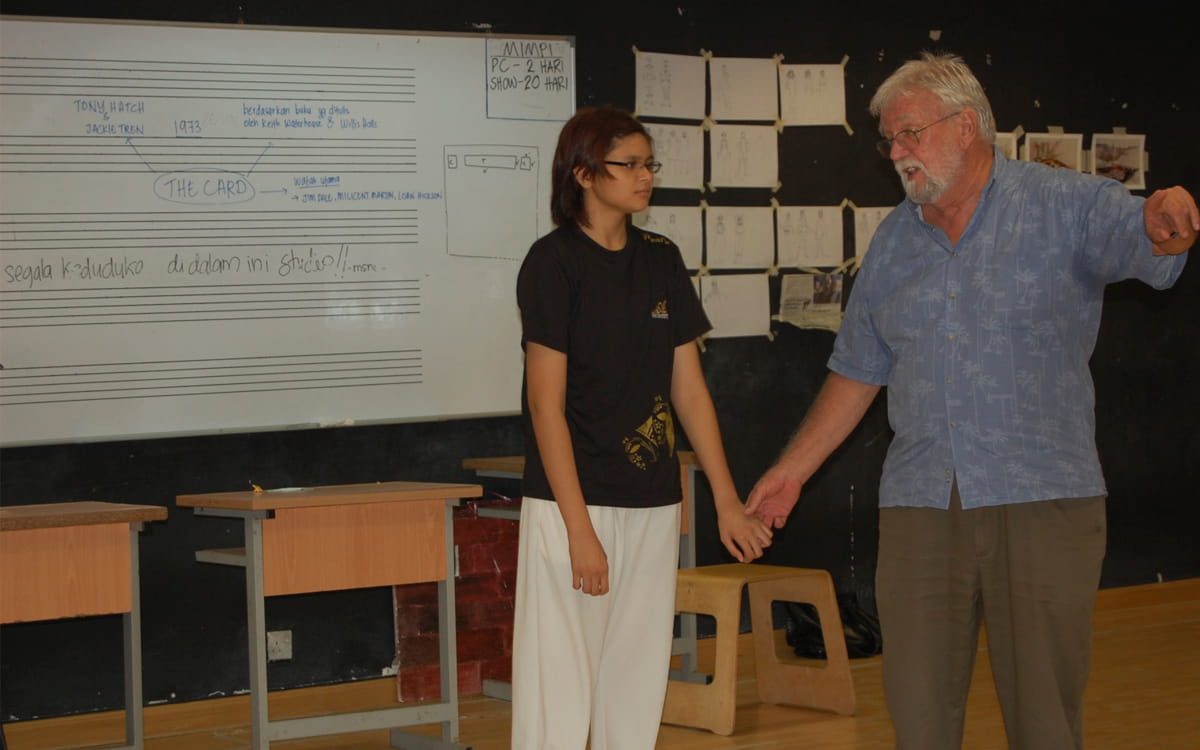
Jim O'Connor, visiting American professor and director, working with a student during a rehearsal for <em>Mimpi</em>. Photo Credit: Hanura Akbar
What amazed me even more was that Jim did not understand Malay at all. He used the original English text side by side with the Malay text to direct the students. Because he truly understood the text line by line, and the translation was very accurate, he was able to direct it effectively. This experience opened my perspective on the challenges and opportunities of performing Shakespeare in Malay(sia). Prior to this, and due to my limited experience with local theatre performances at that time, I always thought that Shakespeare was boring and could only work in English. For the final performance, I later realised that this is actually a comedy play. I laughed so hard, and it made me want to gain a better understanding of Shakespeare.
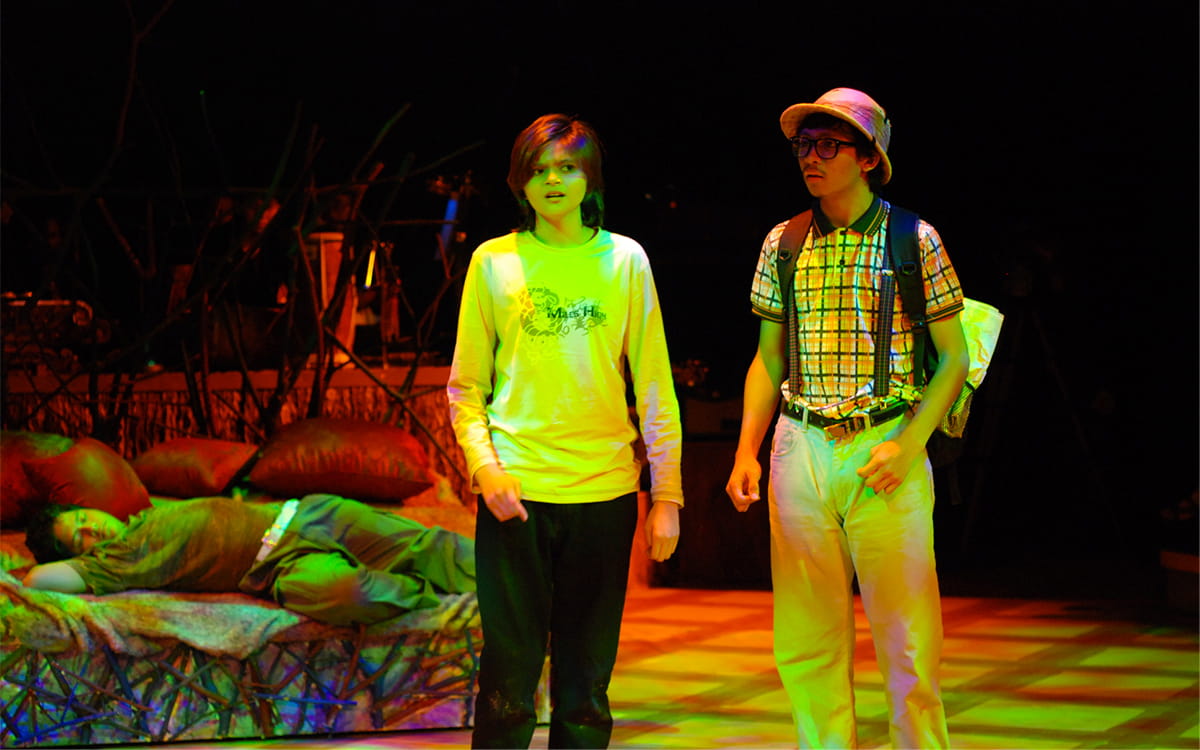
Demetrius (Shukri Tahir) and Helena (Hanura Akbar) in the forest scene from <em>Mimpi</em> (2009), directed by Jim O’Connor. Photo Credit: Hanura Akbar
Few Malaysian (or Malay speaking) theatre makers have had significant exposure to Shakespearean texts and plays. Today, most schools and higher learning institutions in Malaysia no longer offer dedicated courses on Shakespeare, unlike when I studied the subject at university more than 15 years ago.
The subject has largely been dropped from the syllabus. At ASWARA, the arts academy where I currently work, students are introduced to Shakespeare in courses such as Classical Theatre Production, which also covers other canonical Western texts like those of the Greeks, Chekhov, and Molière. Other universities may briefly cover Shakespeare, often squeezing him into a single week within a broader Western Theatre course.
It seems that only international schools—which follow international standards and syllabuses—regularly expose students to Shakespeare or stage his works. Furthermore, in Malaysia, the only theatre company dedicated to performing Shakespeare is the KL Shakespeare Players, co-founded by Lim Soon Heng and Lim Kien Lee. Their performances are typically in English, whether in the original language or in a simplified version. As far as I know, there is no dedicated Shakespeare theatre company performing in Malay. For context, it is common in Western countries for each big city to have its own Shakespeare company performing the Bard’s works.
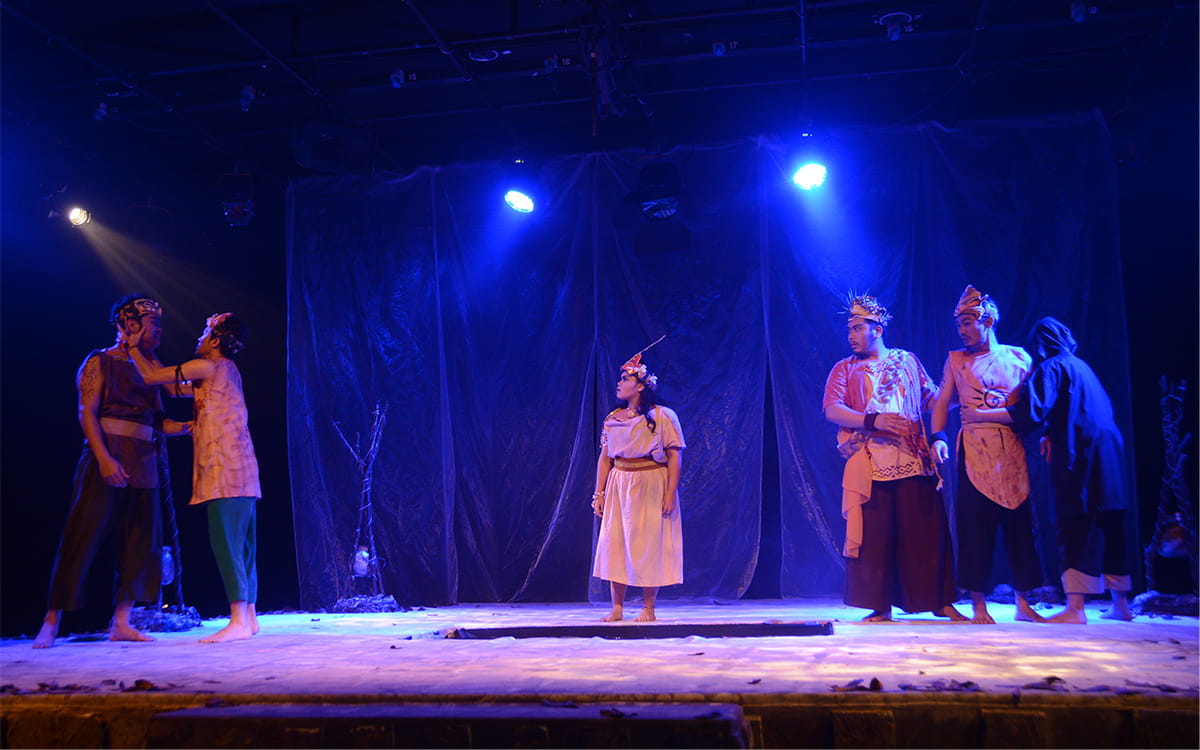
Students from the ASWARA Theatre Programme chose to stage <em>Hamlet</em> (2016) in Malay as their final-year production.
Tracing the history of Shakespeare in the Malay world, academic Nurul Farhana Low documented the earliest known production in her paper, Bangsawan Shakespeare in Colonial Malaya. According to her research, a performance of Hamlet was publicised in the local newspaper, Straits Echo, on 16 January 1907. It was staged by the Opera Indra Permata. Following this, the earliest known printed Malay translations of Shakespeare’s works were produced by Za’ba around 1929–1930, during his tenure at the Literature Department of Sultan Idris Training College. Notable works such as Hamlet, King Lear and The Tempest were translated, though not in their original dramatic form. Instead, they were published as simplified and summarised stories intended for reading rather than performance. The distribution of these printed materials mirrored the broader trends of modernisation, technological advancement, and the democratisation of knowledge at the time, as books became more accessible to readers throughout the country, especially in schools.
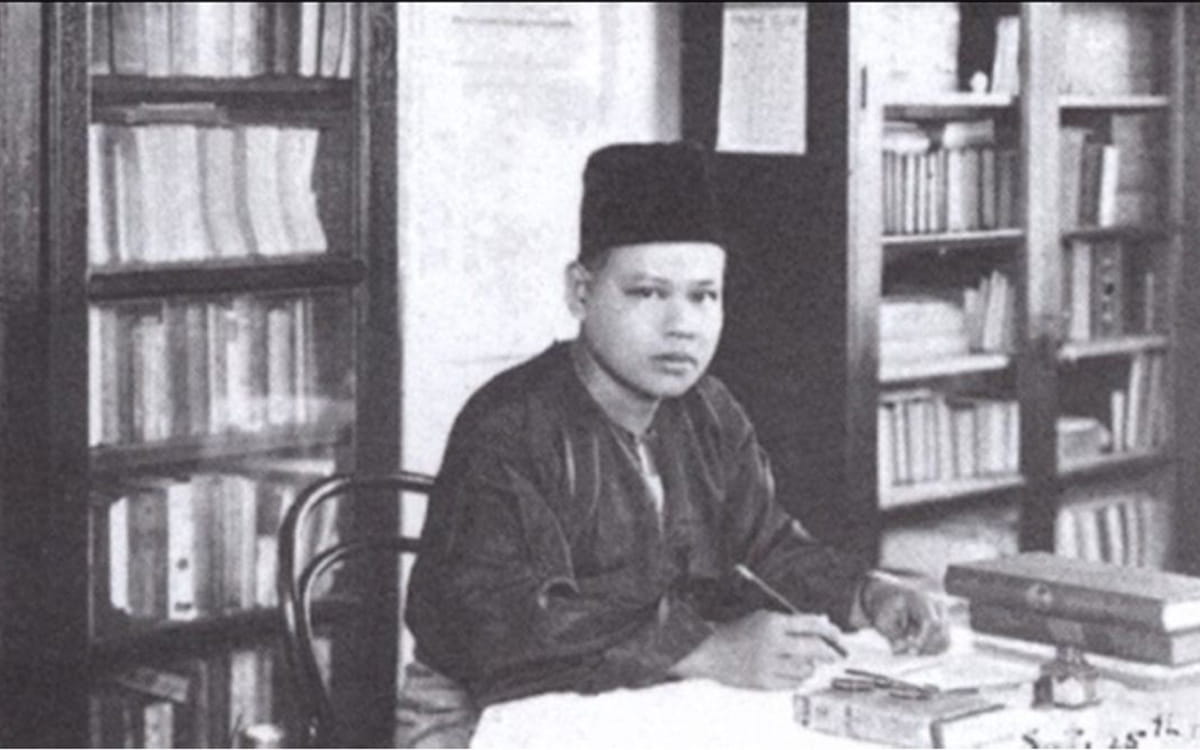
Za'ba at his desk, later honoured with the title <em>Pendeta</em> (a revered Malay scholar and thinker) for his lifelong commitment to elevating the Malay language and translating important works from English and Arabic into Malay.
In the 1960s, as technology spread throughout the region, Shakespeare’s works were adapted across various mediums beyond just stage performances and book publications. In June 1964, Tepok2 Ayer di-Dulang a Malay adaptation of As You Like It, was broadcast on Television Singapura. This translation and adaptation by Rahman Yusoff featured prominent theatre and film actors from Singapore at the time. Meanwhile, in Kuala Lumpur, the same play was translated as Sa-suka Hati-mu by Fatimah Hamid Don (who later became Malaysia’s first female professor) and Adibah Amin (who would become a highly respected writer), and was performed at Lembah Pantai Teacher Training College. The production was a success, restaged several times at various venues.
In 1965, film director Hussain Hanif released Istana Berdarah, a film adaptation of Macbeth. These adaptations exemplify how Shakespeare gained popularity through diverse media and technology during that era. Additionally, the establishment of many teacher training colleges increased exposure to Western literature, as their students—future teachers—had limited access to local textbooks and were influenced by the legacy of colonial English education. This contributed to the spread of Shakespeare’s works, many of which were translated into Malay.
In the 1970s, Penerbit Universiti Malaya Kuala Lumpur produced Malay translations of major Shakespeare plays. Besides A Midsummer Night’s Dream, other translated works included Hamlet, Macbeth, The Tempest, Antony and Cleopatra, Othello, King Lear, and The Merchant of Venice. These translations were regarded as highly accurate and linguistically faithful to the English originals. Some are still performed and used by professionals and students across the country.
Circa 2011, I also had the experience of translating The Comedy of Errors into Malay. It took me nearly six months to complete the first draft. Through this gradual process, I learned to appreciate Shakespeare’s genius. Although The Comedy of Errors itself is an adaptation of Plautus’ Menaechmi, Shakespeare left his mark by introducing a more complex plot, additional characters, and brilliant use of language. I chose this play without initially considering how it resonates with the Malay maritime culture that existed during the same period as the play’s late 16th century setting. I even contemplated translating The Tempest and Twelfth Night to create a “Shipwreck Trilogy,” as these three plays could easily be relocated to the Malay world and maritime society. I viewed this exercise as an enjoyable way to deepen my understanding of Shakespeare. In doing so, I realised the politics of translation—the choices of what to carry forward and what to omit. Not everything written by the Bard can be translated word for word.
As a director and playwright, I found that my translation needed to work on stage and be understood by the audience, especially when heard aloud. My main challenge was to preserve the poetic quality of the language while ensuring it was familiar to Malay sensibilities. The similarities with Malay poetry forms like syair and pantun can be incorporated into prose and soliloquies, but it is not just about capturing linguistic beauty—it is also about conveying culture, character experience, and the psyche of society. This experience is not unique to me; I have found that many artists attempt to relocate Shakespeare into contemporary contexts.
In 2018, Dato’ Seri, the father-son duo Muhammad Ali Hashim and Omar Ali's version of Macbeth resonated strongly with the political turmoil in Malaysia at the time. The play though was relocated and reimagined in a post-independence Malaya-like country called Pertiwi. The character's name too has been altered to highlight the significance of the fictional country. The first production was staged in 2016, before the fall of Barisan Nasional, and later under the newly elected Pakatan Harapan government. Macbeth’s ambition to seize the throne closely mirrored former Prime Minister Najib’s efforts to regain political support but failed to do so. Lady Macbeth’s character can also be associated with Najib Razak’s wife, Rosmah Mansor, who is perceived by many Malaysians as a dominant presence behind the ‘throne’, symbolising ambition, influence, and the unseen forces that may drive political power. The theme of abuse of power is prominently depicted in the play, reflecting the prevailing political climate in Malaysia at the time. I attended the second staging performance, which felt distinctly different and offered greater interpretive depth. My review was published on Critics Republic.
The most recent adaptation of Macbeth was created by Norzizi Zulkifli in 2024, using the traditional theatre art form known as randai. Randai, originating from the Minangkabau ethnic culture, combines silat (a form of martial arts), acting, and music typically telling folk stories with meaningful messages. Like other traditional theatres, randai has distinct forms and rules. Norzizi’s Randai Macbeth experimented with the randai form and localised the story of Macbeth. Traditional randai performances feature circular formations, with an ensemble of eight to 20 actors who sing, dance, and play various minor roles. While traditional music, singing and costumes are maintained, modern elements like projection technology and set design have been added.
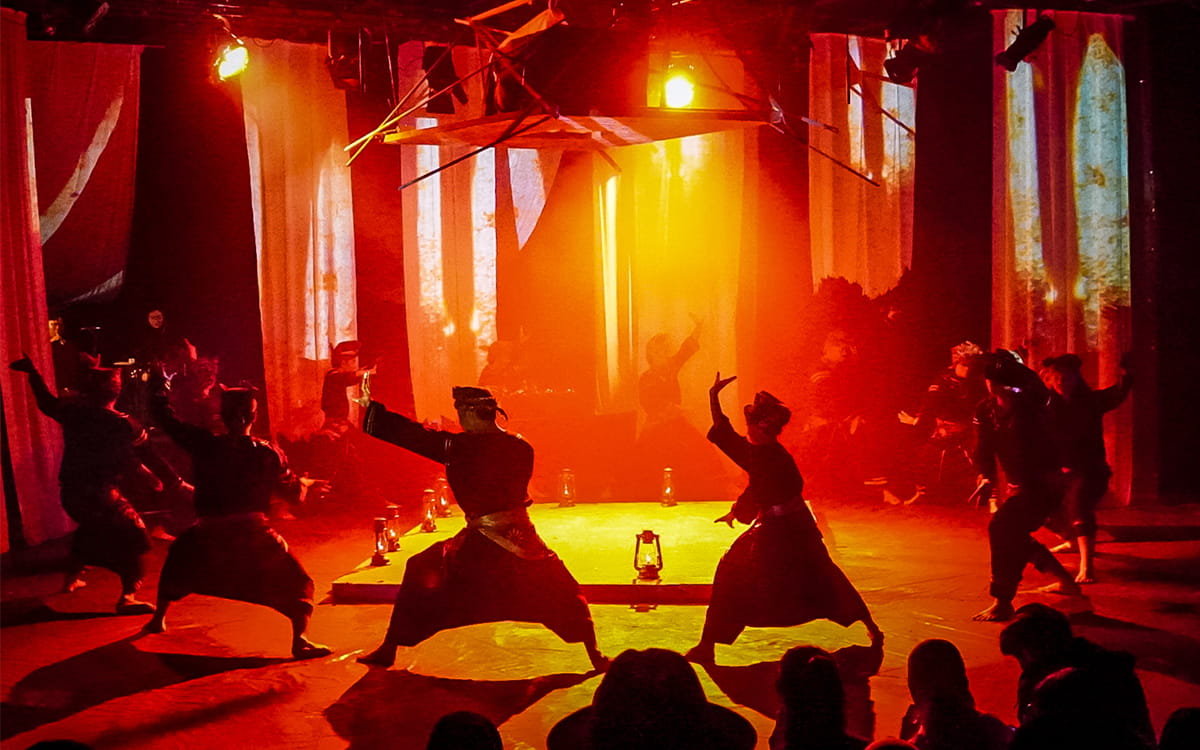
<em>Anak randai</em> move in a circular formation, executing <em>silat</em> choreography. Photo credit: Pusat Seni Pentas Tradisional (PuTra), ASWARA.
Norzizi preserved the plot and poetic language but edited the script to make it accessible to audiences less familiar with Shakespeare. Some characters and scenes were omitted. Her negotiation revolves around how to keep the storytelling feeling more episodic rather than Aristotelian dramatic. This is probably because some scenes were cut, making it more concise and focused on the main plot. However, certain scenes were kept as she saw the potential for merging cultures within the plot. For example, she retained and changed the opening scene to feature local shamanism and black magic by 'nenek kebayan' instead of witches. In that early scene, she gave a sense of familiarity to the audience, indicating that this story is situated in the Malay world. She also cleverly merged the role of women in Minangkabau culture into the character of Lady Macbeth. She wore a headgear called tanduk karabua, symbolising the parallel between her role and status in Minangkabau society and the original text.
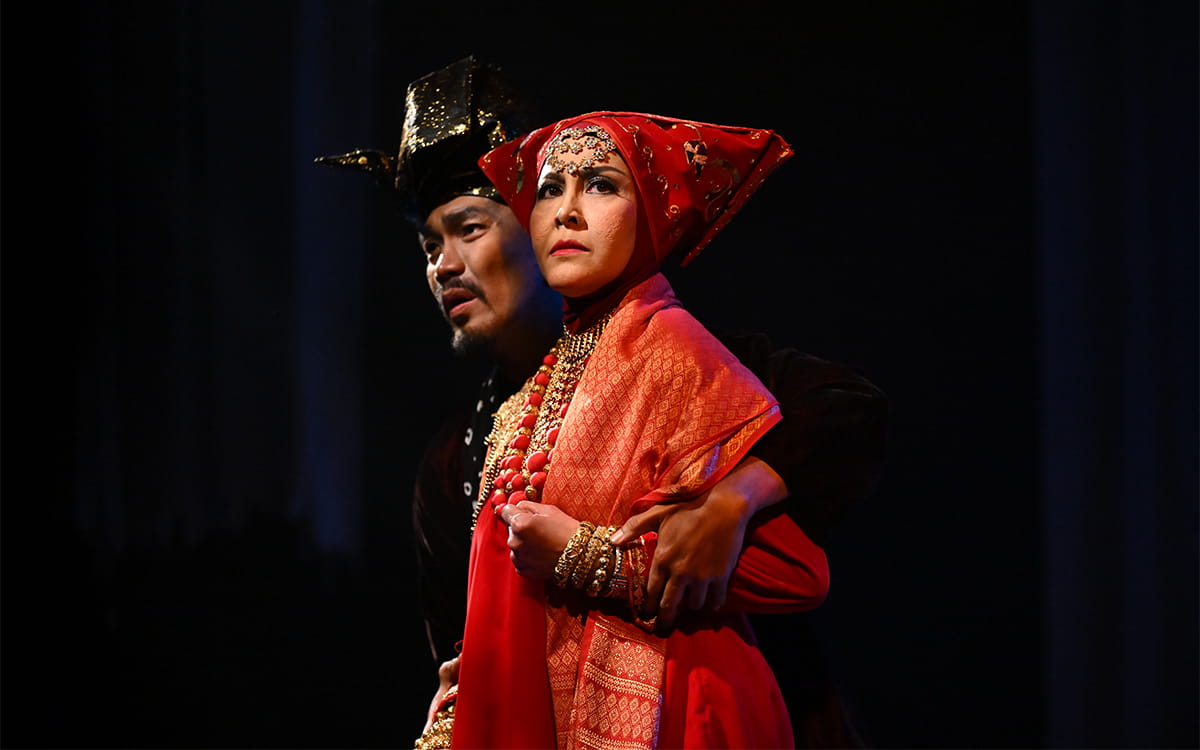
Macbeth (Che Kem) and Lady Macbeth (Juhara Ayob) plotting the murder in <em>Randai Macbeth</em> (2024). Che Kem won Best Actor in a Leading Role, while Juhara Ayob received Best Supporting Actor at the Boh Cameronian Arts Awards 2025. Photo credit: Pusat Seni Pentas Tradisional (PuTra), ASWARA.
This was not the first time Norzizi worked with Shakespearean texts in traditional theatre forms. Her past productions include Makyong Titis Sakti (2018), an adaptation of A Midsummer Night’s Dream using the makyong theatre form. Her doctoral thesis production, Throne of Thorns (2017) also explored traditional Malay theatre performance techniques focusing on makyong in producing a contemporary performance through The Tempest. Her next project will see her adapting The Comedy of Errors into the makyong tradition, drawing from my Malay translation. It is scheduled to premiere in July 2026 in Kuala Lumpur. Norzizi’s interest in intercultural performance and hybridisation of East-West elements extends to other Western canonical works such as Medea, Oedipus and many more.
Another recent production, this time across the Causeway, was Teater Ekamatra’s Bangsawan Gemala Malam in 2022, adapted by Malaysian playwright Ridhwan Saidi and directed by visionary Singaporean director Aidli ‘Alin’ Mosbit. Ekamatra’s version retained nearly the original plot structure and marked the first Malay translation since Ahmad Yatim’s work in the 1970s for Penerbit Universiti Malaya. Ridhwan’s translation uses contemporary language and colloquial expressions, contrasting Ahmad Yatim’s more poetic and classical approach that embraced Malay poetic qualities. Ridhwan bravely reflects the urban and multicultural society of Singapore (and/or Nusantara), visually evident through the costume and set design. The bangsawan elements and format were cleverly reinvented to suit the contemporary Singapore setting.
Reflecting on Ridhwan’s translation, I was particularly struck by his bold decisions with the mechanical characters. Character names were adapted to days of the week—Robin Starveling as Ahad, Peter Quince as Isnin, Snug as Selasa, Nick Bottom as Rabu, Flute as Khamis, Tom Snout as Sabtu, and the head of fairies, Puck as Kelembai—giving the cast a familiar Malay identity. The mechanicals’ lower status was highlighted through their casual, colloquial speech and relaxed acting style, with English words occasionally mixed into the Malay dialogue, creating a playful, unpredictable blend that enhanced the fun of the adaptation. This also extends to certain scenes involving the lovers—Hermia, Helena, Demetrius and Lysander.
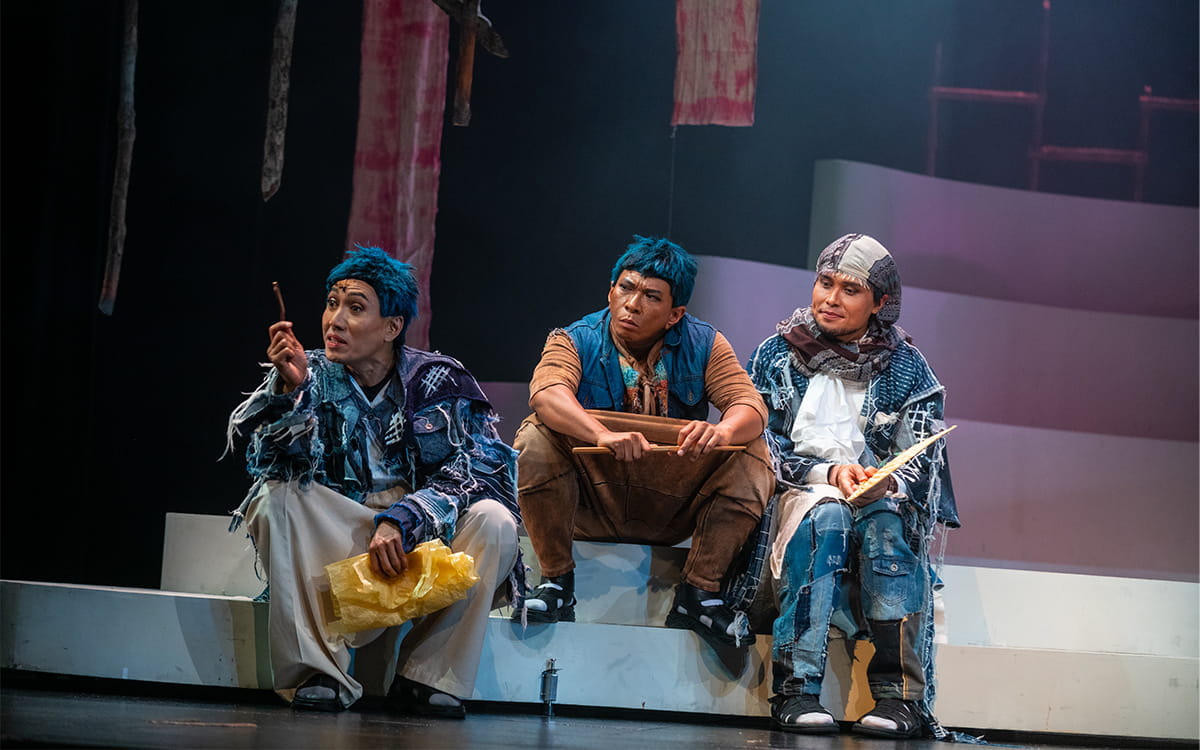
The Mechanicals devised their play in <em>Bangsawan Gemala Malam</em> (2022), dressed in patched denim jackets and loosely worn <em>seluar-sarong</em> silhouettes. Photo Credit: Teater Ekamatra
In terms of music, the performance blended modern pop arrangements with traditional sounds—gendang and gamelan weaving through the songs, creating a soundscape that felt both rooted and refreshingly contemporary. This fusion reminded me how translation and adaptation are not just about words, but also about evoking atmosphere and place.
Before seeing the recorded performance, I asked Ridhwan if Bottom still turned into a donkey in his adaptation, and he confirmed that he did. Yet, imagining this scene in the Malay world, I couldn’t help but think how much funnier it would be if Bottom became a wild boar instead. Perhaps that’s a change I’d explore in my own future adaptation. These small details—names, language, even the shape of a magical transformation—reveal the endless ways Shakespeare can be made new for each culture and era, and how every adaptation is also a reflection of the artist’s own journey and sense of play.
Despite the many Shakespeare productions over the years, they have been largely concentrated in major cities within the contemporary Malay world. Due to limited documentation, discussion, and visibility, productions from other regions such as Malay communities in Borneo, the Riau Islands, and elsewhere in the diaspora are rarely discussed or promoted. Thus, adaptations from Malaysia (particularly Peninsular Malaysia) and Singapore alone do not yet represent the entire Malay world.
Shakespeare productions in the Malay context show endless possibilities for adaptation, driven by artists’ focus on experimentation and creative presentation. Directors use political, cultural, and linguistic perspectives to reinterpret the Bard’s works for local audiences within a dynamic Malay culture that evolves with contemporary influences. Some advocate for preserving tradition, but history reveals adaptability is central to Malay identity.
The blending of Shakespeare and Malay performance grows naturally, encouraging translation, adaptation, and artistic innovation. Rather than cultural loss, this cross-cultural engagement allows local traditions to be seen anew, while Western influences are critically examined. Performing Shakespeare in the Malay world modernises the playwright, not Malay culture; traditional forms like makyong and bangsawan remain contemporary through ongoing reinvention, inviting Shakespeare into Malay culture.
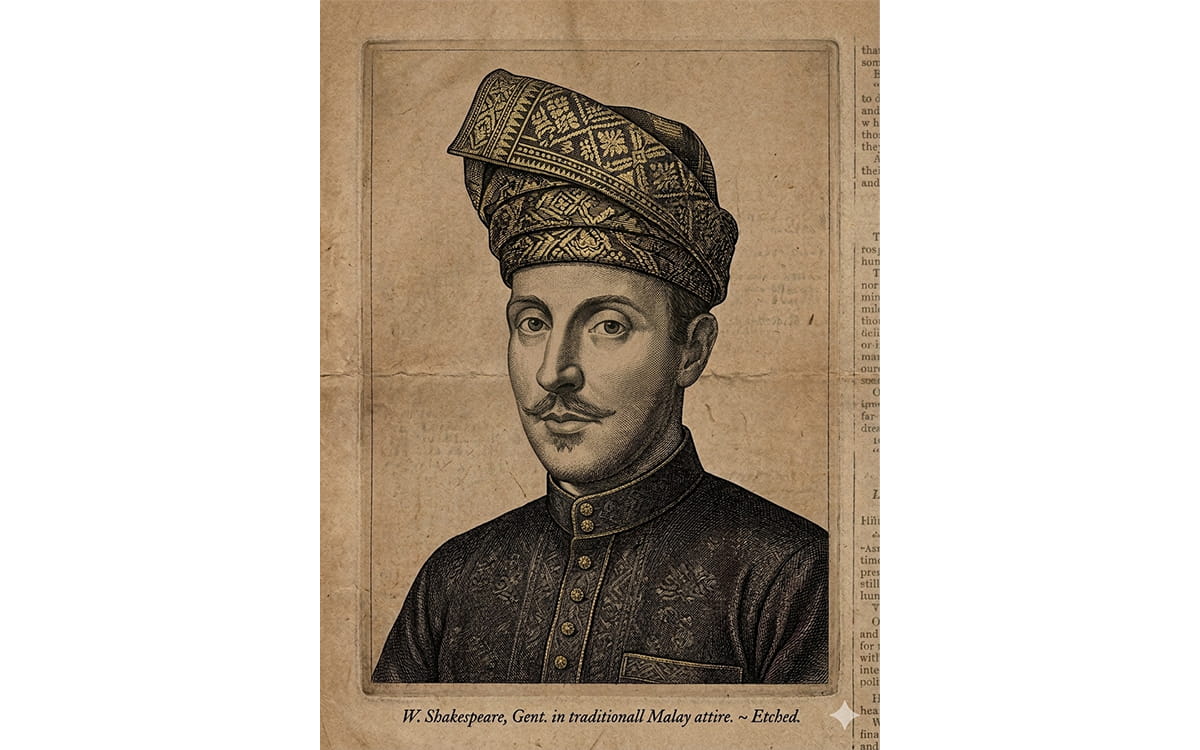
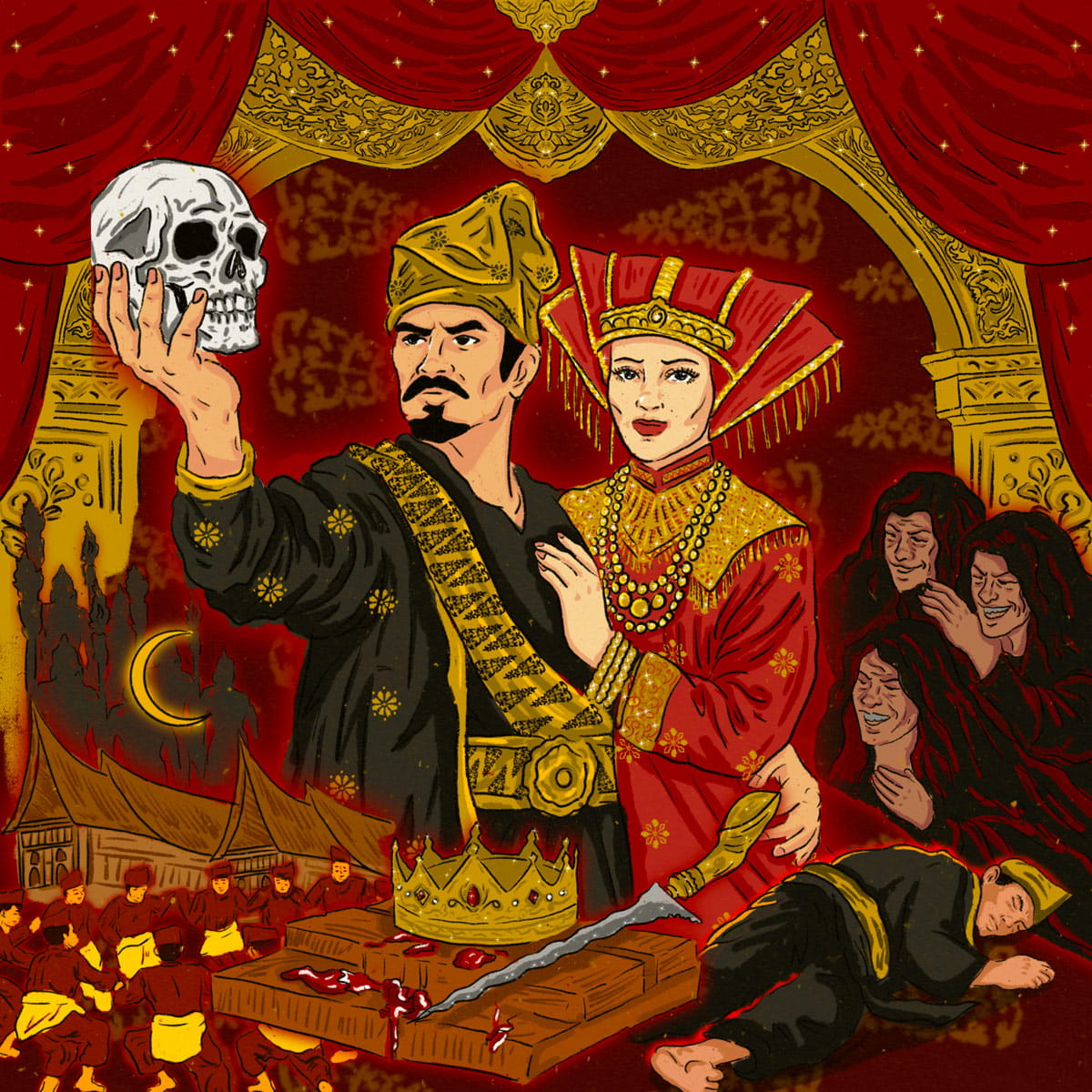
In the spirit of this essay, writer Fasyali Fadzly has generated an image of William Shakespeare depicted in Malay attire using Gemini AI.
Contributed by:
Fasyali Fadzly is a theatre director, playwright, researcher, and educator in Malaysia. His work spans directing, writing and translation, with productions and scholarly contributions presented both locally and internationally. Fasyali regularly publishes reviews and essays in notable platforms, and his translation efforts have brought significant English-language plays into Malay. He is an active contributor to the MY Art Memory Project as a researcher and serves the performing arts community as a grant panelist, jury member, moderator and judge. Currently, he is pursuing doctoral studies in theatre at Universiti Malaya, focusing on innovative approaches to Malaysian theatre historiography.
Acknowledgement:
Abdullah, Nurul Farhana Low Bt (2009), Bangsawan Shakespeare in Colonial Malaya, in Huang, ACS & Ross CS (eds.), Shakespeare in Hollywood, Asia and Cyberspace, pp. 139-151.
Afiq Adil. (2025, July 4). 5 ciri penterjemahan Pendeta Za'ba. Akademi Jawi Malaysia. https://www.akademijawi.my/post/ciri-penterjemahan-pendeta-za-ba
Finn Anuar @perempuanmelawanart.
Finn is a self-taught artist. In 2017, she founded Perempuan Melawan Art in Johor Bahru, Malaysia.