A. Sachithananthan

Tisa Ho Ng

Tan Chin Nam

Donald Moore

S. Rajaratnam

Robert Liew

Perng Peck Seng

Othman Wok

Ong Teng Cheong

Liew Chin Choy

Koh Seow Chuan

Khor Kok Wah

Kenson Kwok

Juliana Lim

Edmund Cheng Wai Wing

Christine Khor

Choo Thiam Siew

Arun Mahizhnan

William Lim

Tommy Koh

Theresa Foo

Michael Wong Pakshong

Liu Thai Ker

TributeSG
Liew Chin Choy
Established arts administrator in Singapore.
“Arts administrators in Singapore must be
sensitive to the multi-ethnic make-up of its
society with a good understanding and
appreciation of the multicultural arts of its
diverse arts groups. This is critical for
establishing a close rapport with the arts
community and for the success of arts
programmes and activities.”
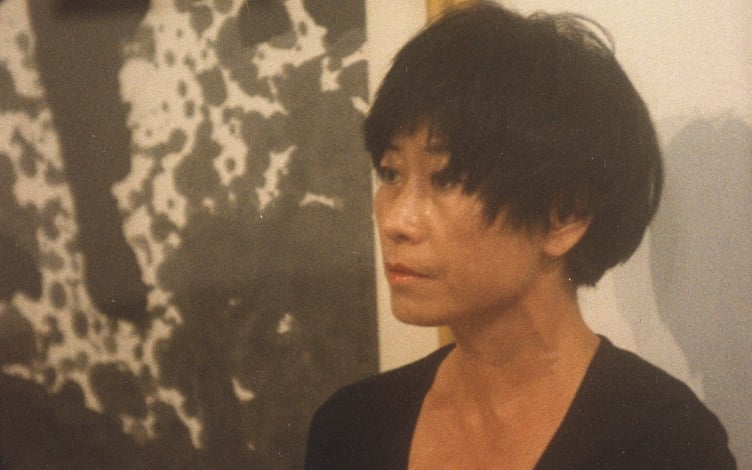
Liew Chin Choy is an established arts administrator in Singapore who became involved in the arts fortuitously in the early ’80s at a time when the fledgling arts scene in Singapore lacked professionals and was made up mostly of volunteers. He went on to become an important figure in Singapore arts, pioneering and initiating several national arts events that built a foundation for the successful development of the arts in Singapore today. He then contributed his services to the Singapore Arts Festival, the Singapore Symphony Orchestra, the Nanyang Academy of Fine Arts, and Ossia Music School, which he currently heads.
Born in 1946 in Kuala Lumpur, Malaysia, Liew Chin Choy moved to Singapore for his early education. Graduating with an Honours degree in 1970 from the University of Singapore, he joined the Singapore Administrative Service, setting himself on a serendipitous career in the arts that would take him through several postings to a number of ministries and departments.
In his civil service career, Liew gained valuable knowledge of civil service administration and contributed in various capacities to the creation and implementation of national policies and programmes through postings to organisations such as the Ministry of Culture, Ministry of Community Development, Ministry of Defence, the Public Service Commission, and the Ministry of Information and the Arts.
It was his time as a cultural affairs officer with the Ministry of Culture that marked a significant milestone in his career as Liew became involved in the organisation of national initiatives in the heritage, arts and cultural realms. He also became active in contributing to intra-ASEAN cultural exchanges with the support of the ASEAN Committee on Culture and Information, frequently leading Singapore delegations consisting of arts administrators and artists to ASEAN cultural events around Southeast Asia.
The Singapore arts scene at the time was made up of a few cultural bodies and various amateur arts societies and organisations that lacked representation and proper infrastructure. Liew was tasked to help spearhead these arts societies and also arts festivals that brought together disparate art groups to produce different arts activities. With generous support of multinational corporations sited in Singapore, Liew and his team established several arts festivals that catered to all genres and presented them at a national level.
The arts scene in the ’70s and ’80s had few cultural bodies, which were mostly struggling, poorly financed amateur groups run by volunteers who were not adequately trained in arts administration. Arts productions also lacked professionalism in their stagings, leading Singapore to be described harshly as a cultural desert. In this environment, Liew and his fellow pioneering administrators were tasked with the responsibility to reinvigorate the arts by spearheading national arts and cultural initiatives from which Singapore arts and cultural groups could participate and benefit. These initiatives included the annual Shell Drama Festival; Young People’s Festival; Traditional Theatre Festival; Dance Festival; Annual Playwriting Competition; and the Annual Short Story Writing Competition. With these, the Singapore arts scene gained a useful foundation on which it could develop and mature.
Liew was involved with the Singapore Arts Festival from 1984 to 1999. He contributed in various capacities, chairing festival logistics and the ticketing committee and introducing an electronic ticketing system that was the forerunner to the system used today. In 1990, Liew became the festival’s programming director. That same year, the Festival of Asian Performing Arts was initiated by the National Arts Council, and Liew was tasked to be its programming director as well. He went on to serve the two festivals in this capacity until their merger in 1999.
Liew was then seconded by the National Arts Council to the Singapore Symphony Orchestra where he served as general manager. There, he played a key role in strengthening and improving the administration of the orchestra. In 2004, Liew joined the Nanyang Academy of Fine Arts as vice-president of administration and oversaw a critical period of its reorganisation and also its fundraising events which benefitted students with financial difficulties. In 2012, Liew became the vice-president of campus development and management.
A year later, Liew left the academy to begin a career as an arts entrepreneur. He joined Ossia Music School as its head, overseeing the school’s eight branches in Singapore.
For his contributions to the arts in Singapore, Liew received the Pingat Pentadbiran Awam (Gangsa) (Public Administration Medal [Bronze]) at the National Day Awards in 1999.
Besides his role at Ossia Music School, Liew also currently serves as a volunteer member of the board of directors of OperaViva, member of the Media Development Authority’s Arts Consultative Panel, governor and treasurer of the Federation of Asian Cultural Promotion, and an advisor to Apsaras Arts.
Timeline
1946
Born in Kuala Lumpur, Malaysia.
1966 to 1970
Attended University of Singapore. Graduated with Honours degree in History.
1970 to 1972
Administrative assistant, Ministry of the Environment.
1974 to 1976
Assistant Superintendent of Customs, Customs & Excise Department.
1976
Head, Naval Personnel Department, Ministry of Defence.
1977 to 1983
Senior Administration Assistant, Public Service Commission.
1982 to 1985
Cultural Affairs Officer, Ministry of Culture.
1984 to 1990
Chairman, Logistics & Ticketing Committee, Singapore Arts Festival.
1985
Director, Singapore Arts Festival.
1985 to 1989
Deputy Director, Ministry of Community Development.
1990 to 1996
Deputy Director, Ministry of Information and the Arts.
1990 to 1999
Programming Director, Singapore Arts Festival.
Programming Director, Festival of Asian Performing Arts.
1999 to 2004
General Manager, Singapore Symphony Orchestra.
2000 to 2011
Member, management committee, Singapore National Youth Orchestra.
2003 to Present
Advisor, Apsaras Arts.
2004 to 2012
Vice-President (Administration), Nanyang Academy of Fine Arts.
2008 to Present
Member, Board of Directors, OperaViva.
2009
Awarded the title Kala Poshaka Mani by Apsaras Arts for his support to the Indian performing arts in Singapore.
2012 to 2013
Vice-President (Campus Development & Management), Nanyang Academy of Fine Arts.
Feb 2013 to Present
Director and Head, Ossia Music School.
Image Gallery


TributeSG celebrates the arts community’s most senior members, and those who have made a lifetime of contribution to the arts. These artists, administrators, educators, patrons, and champions include many Singapore arts pioneers who laid the foundations of the vibrant arts and cultural scene we enjoy today. The many profiles in TributeSG let us into the minds and worlds of these pioneers, and help us understand our shared arts heritage. When we revisit their works and rediscover their journeys, we learn where we came from and how we came to be. Collectively, their stories tell the tale of the making of a nation’s artistic identity.
In putting together this collection, the TributeSG team consulted an external advisory panel, consisting of Arun Mahiznan, Choo Thiam Siew, J. P. Nathan, K. K. Seet, Kwok Kian Chow, and Iskandar Ismail. Those selected to be profiled in TributeSG met one of the following criteria: they were at least 60 years of age as of 12 Oct 2016, or deceased, or had received national recognition in the form of the Cultural Medallion. This journey of arts archival officially came to a close on 12 Oct 2016, after four years of extensive research, interviews and collation of information graciously provided by the TributeSG pioneers, their families and peers. TributeSG also benefited from enthusiastic help from like-minded friends and organisations who supported Esplanade’s cause—to remember, honour and celebrate Singapore’s arts pioneers.